
Soups & Stews
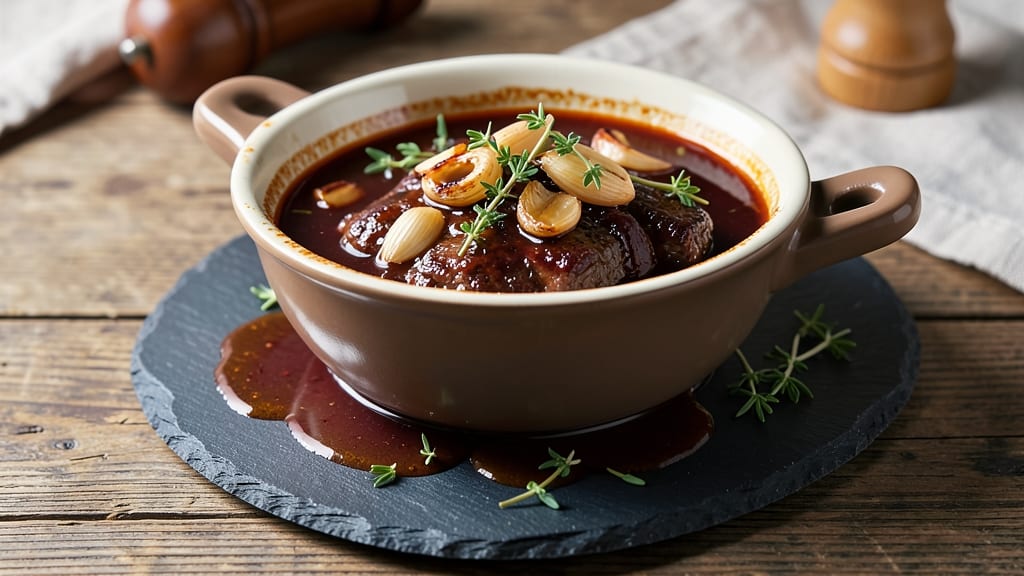
This beef base au jus recipe transforms simple pan drippings into a rich, umami-packed sauce that elevates any protein dish. The secret lies in deglazing the pan with wine and broth, capturing every flavorful scrap while building depth through slow reduction. What starts as a humble collection of beef remnants becomes a velvety sauce with layers of savory complexity—perfect for drizzling over roasts, steaks, or even casseroles.
The process is straightforward but requires patience: brown the beef thoroughly, then deglaze with wine to dissolve fond (those flavorful browned bits). Add aromatics like shallots and herbs, then simmer until the liquid reduces to a glossy, concentrated sauce.
The result is a sauce that's rich enough to stand alone but versatile enough to complement any main dish.
This au jus keeps beautifully in the fridge for up to 5 days, making it ideal for meal prep. For longer storage, freeze it in ice cube trays for easy portioning—just thaw and reheat when needed.
The sauce thickens naturally as it cools, but a cornstarch slurry can adjust consistency if desired.
Whether you're finishing a Sunday roast or adding depth to weeknight steaks, this au jus delivers restaurant-quality flavor with minimal effort. The key is letting the sauce work its magic through slow reduction, transforming simple ingredients into something extraordinary.
Ingredients for beef base au jus
Eleven simple yet transformative ingredients elevate humble beef drippings into velvety au jus sauce.
| Ingredient | Amount | Notes |
|---|---|---|
| Beef Drippings 🥩 | 2 cups | From roasted or browned beef |
| Dry Red Wine 🍷 | 1 cup | Bold, full-bodied variety |
| Beef Broth 🥫 | 2 cups | Low-sodium preferred |
| Shallots 🧅 | 2 whole | Minced, for aromatic base |
| Garlic Cloves 🧄 | 4 cloves | Minced, for depth |
| Fresh Thyme 🌿 | 2 sprigs | Or 1 tsp dried thyme |
| Fresh Parsley 🌿 | ¼ cup | Chopped, for brightness |
| Tomato Paste 🍅 | 1 tbsp | For subtle sweetness |
| Unsalted Butter 🧈 | 2 tbsp | For richness |
| Diamond Crystal Kosher Salt 🧂 | 1 tsp | Adjust to taste |
| Black Peppercorns 🌶️ | ½ tsp | Freshly cracked |
The foundation begins with beef drippings—collect those golden brown bits from roasted beef, as they carry concentrated umami. For wine, bold reds like Cabernet Sauvignon or Merlot work best, as their tannins integrate beautifully into the sauce. Beef broth should be low-sodium to avoid overpowering the delicate balance; Kirkland Signature or Pacific Foods brands are excellent choices. Shallots and garlic are non-negotiable for that classic French aroma—freshly minced releases their full potential, though jarred minced garlic works in a pinch. Thyme and parsley add herbal layers, with fresh thyme providing the most vibrant flavor (dried works at one-third the amount).
No red wine? Substitute with additional beef broth and a splash of balsamic vinegar for depth. Fresh herbs unavailable? Dried thyme and parsley suffice, though the flavor will be subtler. The tomato paste can be omitted entirely if you prefer a purer beef flavor, but it adds a subtle sweetness that rounds out the sauce. For richness, unsalted butter is essential—it emulsifies the sauce beautifully, creating that signature velvety texture. If you're sensitive to acidity, reduce the wine by half a cup and add an extra quarter cup of broth to maintain balance. The salt should be added gradually, tasting as you go, as the drippings and broth may already contain significant sodium.
This au jus reaches peak flavor after 24 hours of refrigeration, as the flavors meld and intensify. Store in an airtight container in the fridge for up to 5 days, where it will thicken naturally. For longer storage, freeze in ice cube trays—thaw and reheat gently for perfect consistency. If the sauce thickens too much upon reheating, whisk in a slurry of 1 tsp cornstarch mixed with 1 tbsp cold water until smooth. The sauce is incredibly versatile, so make a double batch—it disappears quickly when drizzled over steaks, roasts, or even mashed potatoes.
Why You'll Love This Recipe
- Here’s the thing: this costs pennies but tastes like a steakhouse. Beef drippings are free if you’re roasting a whole cut, and the wine adds depth without breaking the bank. Plus, it keeps in the fridge for days—meaning fewer takeout nights and more money saved. Win-win.
- Uses What You’ve Got: I swear by this recipe because it turns scraps into gold. That beef drippings pan isn’t trash—it’s the secret weapon. Just deglaze with red wine, toss in shallots and garlic, and boom: rich, restaurant-quality base without a single extra trip to the store.
- Deep, Wine-Kissed Richness: The red wine cuts through the richness of the beef drippings while the shallots and garlic caramelize into something irresistible. It’s not just flavor—it’s layered flavor, the kind that makes you pause mid-bite and think, “Wait, how did they do that?”
- Sauce for Everything: This base is my go-to for weeknight dinners, holiday leftovers, or when I’m feeding a crowd. Drizzle it over roasted potatoes, use it to deglaze a pan for gravy, or serve it as-is with crusty bread. It’s the ultimate blank canvas that never lets you down.
Step-by-step instructions for beef base au jus recipe
Transform simple ingredients into a rich, velvety pan sauce with this professional technique.
Sauté Aromatics in Beef Drippings
Place a heavy-bottomed saucepan over medium heat and add the 2 cups beef drippings. Let them warm for 2 minutes until they begin to shimmer—this ensures they're hot enough to properly render the aromatics without burning.
Add the 2 whole minced shallots and 4 cloves minced garlic, stirring constantly for 3-4 minutes until the shallots turn translucent and the garlic becomes fragrant. The shallots should soften but not brown—this prevents bitterness. Here's the thing: if you smell burning, immediately reduce the heat to low and let the pan cool slightly before continuing.
Stir in the 2 sprigs fresh thyme and let them cook for 1 minute to release their essential oils. Remove the thyme sprigs with a slotted spoon and set aside for garnish later. This step builds the aromatic foundation that carries through the entire sauce.
Deglaze with Wine and Reduce
Pour in the 1 cup dry red wine and immediately scrape up all the browned bits from the bottom of the pan using a wooden spoon. These bits, called fond, contain concentrated flavor that dissolves in the wine. Let the mixture simmer over medium-high heat until reduced by half—about 4-5 minutes.
Watch carefully as the wine reduces: you'll see the liquid transform from ruby to a deep amber color. This reduction process intensifies the wine's flavor and removes the alcohol. If the mixture starts to stick, add ¼ cup beef broth to deglaze, but try to avoid this if possible—it dilutes the sauce.
Stir in the 1 tbsp tomato paste and cook for 1 minute until it loses its raw taste. This adds subtle sweetness that balances the sauce's acidity. The paste should be completely dissolved and incorporated into the base.
Build the Sauce with Broth and Butter
Pour in the 2 cups beef broth and bring to a gentle simmer over medium heat. Add the 1 tsp Diamond Crystal kosher salt and ½ tsp freshly cracked black peppercorns. Let the sauce simmer uncovered for 10-12 minutes until it thickens slightly and reduces by about ¼.
You'll know it's ready when the sauce coats the back of a spoon and leaves a visible trail when you run your finger through it. This consistency ensures the sauce clings beautifully to meats. If it reduces too quickly, add 1-2 tablespoons broth at a time to reach your desired thickness.
Remove the pan from heat and stir in the 2 tbsp unsalted butter, one tablespoon at a time, until fully melted and emulsified. The butter adds richness and helps create a glossy finish. Let the sauce rest for 2-3 minutes off the heat—this allows the flavors to meld completely.
Finish and Garnish Professionally
Strain the sauce through a fine-mesh sieve into a clean saucepan, pressing gently on the solids with a wooden spoon to extract maximum flavor. Discard the solids. This step ensures a silky, professional finish without any herb bits.
Return the sauce to low heat and stir in the ¼ cup chopped fresh parsley. Taste and adjust seasoning—you may need to add more salt or pepper depending on your beef broth's saltiness. The parsley adds freshness that cuts through the richness of the sauce.
Serve immediately over sliced roasts, grilled steaks, or as a dipping sauce for crusty bread. For best results, keep the sauce warm in a slow cooker on low heat if serving family-style. The sauce should be glossy, velvety, and packed with deep umami flavor that complements any beef dish.
Pro Tips For Making Beef Base Au Jus
- DEGLAZE HOT, NOT LUKEWARM: The second you pull that beef off the pan, hit the drippings with wine while the pan is still screaming hot. I used to let it cool first—big mistake. Cold drippings mean a thin, watery sauce instead of a rich, glossy reduction. Keep that heat going until the wine stops sizzling, then let it simmer.
- MINCE SHALLOTS FINE, NOT CHUNKY: Tiny shallots dissolve into the sauce instead of sitting like little rocks. Use the flat side of your knife to press them against the cutting board in a grid pattern, then slice thinly. I learned this after tasting a sauce where I’d just hacked them into uneven pieces—noticeable difference.
- STRAIN THE BROTH, NO MATTER WHAT: Even good beef broth can turn your au jus cloudy if you don’t strain it first. Use a fine-mesh sieve or cheesecloth to remove any sediment before adding it to the pan. I skipped this once and ended up with a muddy sauce that lacked brightness—now I never skip it.
- TOAST GARLIC UNTIL GOLDEN: Don’t just toss in raw garlic cloves—sizzle them in the drippings for 30 seconds until they’re fragrant and just turning golden. This adds depth without bitterness. I was skeptical until I tried it: the sauce went from good to actually delicious with that extra step.
Serving suggestions for beef base au jus
Roast Perfection
This au jus transforms any beef roast into a showstopper. Slice the roast against the grain into ¼-inch thick pieces and arrange on a warm platter. Drizzle generously with the warm au jus, then garnish with a sprinkle of fresh parsley and a few thinly sliced shallots for color contrast.
For extra drama, add a drizzle of truffle oil—just ½ teaspoon elevates the dish to restaurant quality. 🥩
Steak House Style
Serve your au jus as a dipping sauce for perfectly cooked steaks. I recommend using ribeye or New York strip steaks, sliced into ½-inch thick medallions. Place the steaks on a warmed platter with the au jus in a small gravy boat or ramekin at each place setting.
Add crispy fried shallots on the side for crunch—just 2 tablespoons per person adds texture without overpowering.
Comfort Food Upgrade
Elevate classic comfort foods with this au jus. Pour it over creamy mashed potatoes or buttery egg noodles for instant restaurant-style appeal. For a hearty meal, serve over roasted root vegetables like carrots, parsnips, and potatoes.
I like to toss ½ cup au jus with 1 cup cooked vegetables and a pat of butter before roasting at 400°F for 15 minutes to caramelize the flavors. 🌟
Bread Service
Turn your au jus into a dipping sauce for crusty bread. Toast baguette slices in a 400°F oven for 5-7 minutes until golden and crisp. Arrange them on a wooden board with the warm au jus in a small bowl at the center.
For a gourmet touch, add thinly sliced prosciutto or aged cheddar cubes on the side. This makes an excellent appetizer or side for casual gatherings.
Meal Prep Hack
Make this au jus ahead of time and store it in glass jars in the fridge for up to 5 days. When ready to serve, reheat gently on the stovetop over low heat and stir in 1 tablespoon butter to restore its velvety texture.
I often prepare a double batch and freeze half in ice cube trays—just thaw and reheat as needed. This makes it perfect for busy weeknights when you want restaurant-quality flavor with minimal effort. ⏰
Nutrition facts
Frequently asked questions
Can I make this au jus without wine?
Yes! Replace the 1 cup red wine with 1 cup beef broth plus 1 tablespoon balsamic vinegar for depth. The vinegar adds acidity to balance the richness, while the extra broth maintains the sauce's consistency. For a non-alcoholic version, you can also use apple cider vinegar instead of balsamic.
Why does my au jus turn out too thin?
This usually happens if you didn't reduce the sauce enough or added too much broth. Simmer the sauce uncovered for an extra 5-10 minutes to thicken it naturally. If it's still too thin, mix 1 teaspoon cornstarch with 1 tablespoon cold water and whisk it into the sauce while heating. Cook for 1-2 minutes until it thickens to your desired consistency.
How do I use leftover au jus?
Store leftovers in an airtight container in the fridge for up to 5 days. Reheat gently on the stovetop over low heat and stir in 1 tablespoon butter to restore its velvety texture. For longer storage, freeze in ice cube trays—thaw and reheat as needed. This makes it perfect for last-minute drizzling over steaks, roasts, or even pasta.
Can I make this au jus with chicken or pork?
While this recipe is designed for beef, you can adapt it for chicken or pork by using their respective drippings and broth. For chicken, add 1 teaspoon poultry seasoning and a splash of lemon juice to brighten the flavor. For pork, substitute apple cider vinegar for the wine and add ½ teaspoon smoked paprika for depth. The technique remains the same—just adjust the seasonings to match the protein.
What's the best way to store au jus for meal prep?
For short-term storage, keep it in a sealed glass container in the fridge for up to 5 days. For longer storage, freeze in ice cube trays—once frozen, transfer the cubes to a freezer bag. Thaw overnight in the fridge and reheat gently. To prevent skin formation, press plastic wrap directly onto the surface before sealing the container. Label with the date for easy tracking.