
Sauces & Condiments
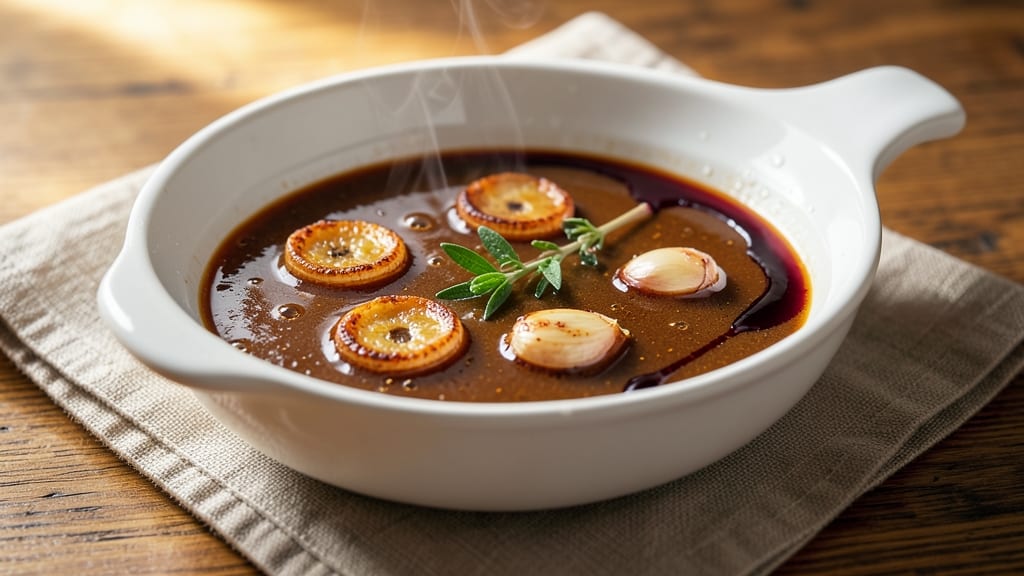
This au jus sauce recipe with beef broth transforms simple roasted bones into liquid gold—deep, savory, and packed with umami that elevates any beef dish. The secret lies in capturing those precious drippings and building layers of flavor through slow simmering with aromatics.
I developed this method after years of frustration with store-bought versions that lacked the richness of homemade.
The process is straightforward but yields restaurant-quality results. You'll need just five key ingredients—beef broth, meat drippings, shallots, garlic, and a splash of red wine—and a method that turns basic pantry staples into something extraordinary.
The sauce reduces to a glossy, velvety consistency that clings beautifully to roasted beef or steak.
What makes this recipe special is its adaptability. Use it to drizzle over your favorite roast, serve it as a dipping sauce for crusty bread, or even transform leftovers into a quick pan sauce.
The umami depth comes from properly simmering the broth with aromatics, creating a sauce that's both simple and sophisticated.
Ready in under 30 minutes, this sauce delivers the kind of flavor that makes weeknight dinners feel like a special occasion. The technique is foolproof, and the results are always impressive—no matter how busy your schedule. Let's get started!
Ingredients for au jus sauce recipe with beef broth
Five essential ingredients transform humble beef drippings into velvety umami perfection.
| Ingredient | Amount | Notes |
|---|---|---|
| Beef Broth 🍲 | 4 cups | High-quality, homemade preferred |
| Beef Drippings 🥩 | ½ cup | From roasted beef bones |
| Shallots 🧅 | 3 whole | Finely minced, about 0.25 cup |
| Garlic Cloves 🧄 | 4 cloves | Minced, about 1 tbsp |
| Dry Red Wine 🍷 | ½ cup | Bold variety like Cabernet Sauvignon |
| Fresh Thyme Leaves 🌿 | ¼ cup | Or 1 tsp dried thyme |
| Black Peppercorns 🌶️ | 10 whole | Crushed, about 0.5 tsp |
| Unsalted Butter 🧈 | 2 tbsp | Cold, for finishing |
| Diamond Crystal Kosher Salt 🧂 | 1 tsp | For seasoning |
The beef broth serves as the foundation—homemade is ideal, but high-quality store-bought like Kirkland Signature or Annie's works beautifully. For the drippings, roast a beef bone (like a knuckle or short rib) until deeply browned, then scrape up all the caramelized bits with a spoon—this is pure flavor gold. Shallots and garlic should be finely minced to dissolve completely into the sauce; don't skip the crushing of peppercorns, as their oils add subtle depth. The red wine must be dry and bold—Cabernet Sauvignon or Merlot are my go-to choices, but whatever's open in your fridge works too.
No red wine? Substitute beef broth with 1 tbsp balsamic vinegar for acidity. Fresh thyme is preferable, but dried thyme at one-third the amount suffices in a pinch. For extra richness, add 1 tbsp of beef fat or bacon drippings instead of butter. The butter at the end is non-negotiable—it emulsifies the sauce for that signature glossy finish. If you're using pre-minced shallots or garlic from a jar, rinse them thoroughly to remove excess preservatives that can alter the sauce's flavor profile.
This sauce peaks when freshly made but reheats beautifully—simmer gently on the stove, stirring occasionally, until just warmed through. For storage, let it cool completely, then transfer to an airtight container where it keeps 5-7 days in the refrigerator. Freeze for up to 3 months by portioning into ice cube trays; thaw in the fridge overnight. The sauce thickens as it cools, so add a splash of warm broth when reheating if it becomes too stiff. Always taste before serving—adjust salt or acidity as needed.
Why You'll Love This Recipe
- Here’s what sold me: it tastes like a fancy restaurant dish but costs next to nothing. A splash of wine, a handful of shallots, and whatever broth you have on hand—no fancy ingredients, just ridiculously good flavor. My wallet and my taste buds both approve.
- Uses Pantry Staples: I swear by this recipe because it’s all about what’s already in my fridge. That rich beef drippings from last night’s roast? Yes, please. No last-minute grocery runs—just chop shallots, crush garlic, and let the wine do its magic. Honestly, it’s the kind of sauce that makes me feel like a chef without the fuss.
- Deep Umami Magic: The combo of beef broth, red wine, and caramelized shallots? Chef’s kiss. That wine cuts through the richness, while the drippings add a smoky depth you just can’t get from a jar. It’s the kind of flavor that makes you pause mid-bite—like a little French bistro in your own kitchen.
- Leftovers That Shine: I make this on Sunday for a reason: it’s perfect for meal prep. Toss it with roasted veggies, use it as a dip, or drizzle it over a simple steak sandwich. Between us, I’ve even frozen it—thawed and reheated, it’s still better than takeout. (Yes, even on a Tuesday night.)
Step-by-step instructions for au jus sauce with beef broth
Here's how to craft a velvety au jus with deep umami richness using only these ingredients.
Bloom the Aromatics in Beef Drippings
Heat the 0.5 cup beef drippings in a medium saucepan over medium-low heat. Add the 3 whole shallots and 4 cloves garlic cloves, stirring constantly for 3-4 minutes until the shallots soften and turn translucent. This slow cooking prevents burning while extracting maximum flavor.
Next, add the 10 whole black peppercorns and 0.25 cup fresh thyme leaves. Stir for another 1 minute until the thyme releases its piney aroma and the peppercorns darken slightly. The drippings should smell rich and complex—this is the foundation of your sauce's depth. If the mixture starts to brown too quickly, reduce the heat slightly to maintain gentle cooking.
Deglaze with Red Wine
Pour in the 0.5 cup dry red wine and increase the heat to medium-high. Bring to a simmer and let it reduce by half—this takes about 3-4 minutes. The wine will initially bubble vigorously, then settle into a gentle simmer as it reduces. This step is critical for building flavor; don't rush it.
Use a wooden spoon to scrape up any browned bits from the bottom of the pan. These fond bits, called suquet, contain concentrated flavor that dissolves into the wine. Once reduced, the mixture should coat the back of a spoon—a sign the wine's alcohol has evaporated and its essence remains.
Build the Sauce with Beef Broth
Add the 4 cups beef broth and the 1 tsp Diamond Crystal kosher salt, then bring to a gentle simmer. Reduce the heat to low and let it cook uncovered for 20-25 minutes. Skim off any foam or impurities that rise to the surface with a spoon, as these can make the sauce cloudy.
Stir occasionally to prevent sticking, but avoid constant stirring which can break down the sauce's texture. You're aiming for a velvety consistency—when the sauce coats the back of a spoon and leaves a slight sheen, it's ready. The sauce should smell intensely of beef, thyme, and wine, with a subtle peppery note.
Finish with Butter for Richness
Remove the sauce from heat and let it cool slightly for 2-3 minutes. Add the 2 tbsp unsalted butter, stirring until fully melted and incorporated. The butter will emulsify with the sauce, creating a silky, luxurious finish. Taste and adjust the seasoning if needed—you may need a pinch more salt to balance the acidity from the wine.
Strain the sauce through a fine-mesh sieve into a clean saucepan to remove any herbs or peppercorns. Return it to low heat and keep it warm until serving. The finished au jus should be glossy, with a deep red hue and a rich, layered flavor that complements roasted beef perfectly. Serve immediately for the best texture and flavor.
Pro Tips For Making Au Jus Sauce Recipe With Beef Broth
- Sweat Shallots Slowly: I used to rush this step and end up with bitter, browned bits instead of silky fond. Cut shallots into even ¼-inch slices, cook them on medium-low with a pinch of salt until soft and translucent—about 8-10 minutes. If they start to color, you’re going too fast, and that’s when flavors turn harsh.
- Strain Twice for Clarity: Skim the pan after deglazing with wine, but don’t stop there—strain the broth through a fine-mesh sieve and a coffee filter for that restaurant-worthy smoothness. The extra step catches tiny particles that ruin the silky texture, especially if you’re using store-bought broth that’s already cloudy.
- Deglaze Hot, Simmer Cold: Pour the red wine into the screaming-hot pan right after removing the meat—this shocks the fond into dissolving. Then immediately add cold beef broth to stop the alcohol from cooking off too fast. The contrast keeps the sauce balanced, not boozy or flat.
- Save the Drippings Right: Don’t just scrape the pan—let it cool for 5 minutes, then scrape up the congealed fat with a rubber spatula. Store it in an ice cube tray; frozen drippings are easier to measure later and add depth to future sauces without greasing the whole pan. (Yes, even if you’re impatient like me.)
Best sauces and condiments for these flavors
Classic Red Wine Reduction
This sauce's backbone is the red wine reduction, where the alcohol cooks off to reveal deeper, caramelized flavors. I always use Cabernet Sauvignon for its bold tannins, but Merlot or even Chianti work beautifully.
The key is reducing the wine by half—this takes about 3-4 minutes on medium-high heat. If you don’t have wine, substitute ½ cup beef broth + 1 tbsp balsamic vinegar for acidity, though the depth won’t be identical. 🍷
Umami Boosters
For extra umami punch, add 1 tsp fish sauce or ½ tsp Worcestershire sauce when building the sauce with broth. These ingredients amplify the beefy richness without overpowering. I also love adding 1 tsp soy sauce for a subtle salty depth—just taste as you go.
If you’re using store-bought beef broth, opt for low-sodium to control seasoning better.
Herb Variations
Fresh thyme is classic, but don’t be afraid to experiment! Swap in rosemary for an earthy twist or tarragon for a slightly peppery note. For a herbaceous finish, add 1 tbsp chopped parsley after straining.
If you prefer dried herbs, use ⅓ the amount—they’re more concentrated. Just remember, herbs should complement, not dominate, the beefy base.
Thickening Tricks
If your sauce is too thin, simmer uncovered for 5-10 more minutes to reduce further. For a glossy finish, whisk in 1 tsp cornstarch mixed with 1 tbsp cold water at the end.
Alternatively, add 1 tbsp cold butter at the last minute—it emulsifies beautifully. Avoid over-thickening, though; au jus should remain velvety, not heavy.
Acidity Balance
The red wine adds natural acidity, but if your sauce tastes flat, brighten it with ½ tsp lemon juice or 1 tsp apple cider vinegar. For a tangy kick, a splash of red wine vinegar works too.
Always taste as you go—adjusting seasoning at the end is a rookie mistake. The goal is brightness, not sourness.
Make-Ahead Magic
This sauce tastes even better the next day! Store it in an airtight container in the fridge for up to 5 days. Reheat gently on the stove—never microwave, or it’ll break down.
If it thickens while cooling, thin with warm broth before reheating. Freeze for up to 3 months in ice cube trays for portion control. Just thaw overnight in the fridge. ✨
Nutrition facts
Frequently asked questions
Can I make this au jus sauce without red wine?
For a non-alcoholic version, replace the 0.5 cup red wine with ½ cup beef broth + 1 tbsp balsamic vinegar to maintain acidity. The sauce will still develop rich flavor, though the depth from wine reduction won't be identical.
How do I get the best flavor from beef drippings?
Roast your beef bones or meat until deeply browned for maximum flavor. After roasting, scrape up all caramelized bits from the pan—these contain concentrated umami. Use 0.5 cup of these drippings for the sauce, and don't skip scraping the fond from the bottom of the pan.
Why did my sauce turn cloudy?
Cloudiness usually means proteins or impurities weren't removed. Skim foam during simmering and strain the sauce through a fine-mesh sieve before serving. For extra clarity, chill the sauce first—fat rises to the top and can be spooned off before reheating.
Can I use this sauce for other proteins?
While designed for beef, this sauce works beautifully with lamb, venison, or even hearty mushrooms. For poultry, reduce the beef drippings to ¼ cup and add 1 tsp poultry seasoning instead of thyme. The wine and broth base remains versatile!
How do I store leftovers?
Transfer cooled sauce to an airtight container and refrigerate for up to 5 days. For longer storage, freeze in ice cube trays (thaw in fridge) or portion into freezer bags for up to 3 months. Reheat gently on low—never microwave—to preserve texture.