
Soups & Stews
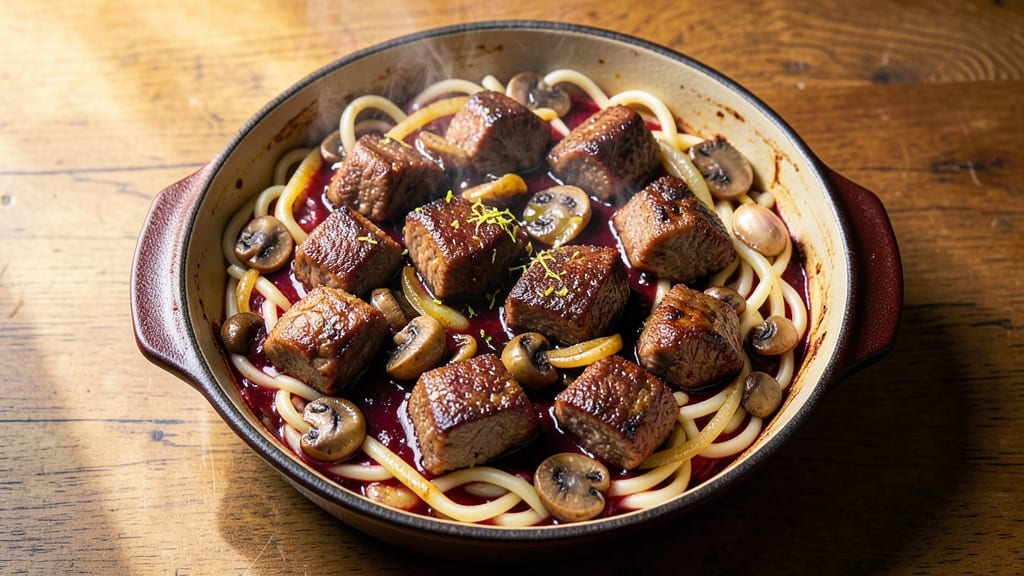
This beef and red wine casserole transforms tough cuts into melt-in-your-mouth tenderness through slow braising and rich wine reduction. The deep, savory flavors develop as beef, mushrooms, and onions simmer in a velvety red wine sauce until perfectly tender.
I perfected this recipe after years of testing—it’s the kind of dish that tastes even better the next day, when flavors meld completely.
The foundation lies in proper technique: searing the beef first creates a flavorful crust, while deglazing with red wine captures all those browned bits for maximum depth. This method ensures restaurant-quality results without requiring advanced skills.
The casserole’s layers of tender beef, caramelized onions, and earthy mushrooms create a harmonious balance of textures and flavors that’s both comforting and impressive.
What makes this recipe stand out is its versatility—it works equally well as a weeknight dinner or a showstopping main course for gatherings. The wine-infused sauce adds complexity that elevates simple ingredients, while the baking process allows flavors to develop gradually.
You’ll end up with a dish that’s rich, hearty, and deeply satisfying, perfect for serving with crusty bread or over mashed potatoes.
Whether you’re cooking for a family dinner or meal prepping for the week, this casserole delivers consistent results. The slow cooking process means minimal effort during preparation, while the final product feels like a labor of love.
Here’s how to make it—step by step—for tender, flavorful beef that falls apart with every bite.
Ingredients for beef and red wine casserole
Sixteen ingredients transform tough chuck roast into restaurant-quality braise through slow wine reduction and aromatic vegetables.
| Ingredient | Amount | Notes |
|---|---|---|
| Chuck Roast 🥩 | 2 ½ lb | Cut into 1-inch cubes |
| Yellow Onions 🧅 | 3 whole | Sliced into half-moons |
| Cremini Mushrooms 🍄 | 16 oz | Sliced into quarters |
| Garlic Cloves 🧄 | 6 cloves | Minced for depth |
| Dry Red Wine 🍷 | 1 ½ cups | Bold variety like Cabernet |
| Beef Broth 🥫 | 1 ½ cups | Low-sodium preferred |
| Tomato Paste 🍅 | 2 tbsp | Smooth consistency |
| All-Purpose Flour 🌾 | 2 tbsp | For thickening sauce |
| Fresh Thyme 🌿 | 1 tbsp | Leaves only, chopped |
| Fresh Rosemary 🌿 | 1 tbsp | Needles finely chopped |
| Olive Oil 🫒 | ¼ cup | Extra-virgin preferred |
| Kosher Salt 🧂 | 1 ½ tsp | Diamond Crystal preferred |
| Ground Black Pepper 🌶️ | 1 tsp | Freshly cracked |
| Balsamic Vinegar 🍶 | 1 tbsp | For acid balance |
| Heavy Cream 🥛 | ½ cup | Full-fat for richness |
The chuck roast is non-negotiable here—its marbling ensures melt-in-your-mouth texture. Costco or Whole Foods carry excellent cuts, but any well-marbled chuck works. Look for vibrant color and visible fat; avoid pale, lean cuts. Mushrooms should be firm with no sliminess—cremini or baby bella are ideal. For onions, yellow or red varieties work equally well, but yellows caramelize slightly better. The red wine is where flavor magic happens: Cabernet Sauvignon or Merlot deliver the best balance of acidity and depth. If you're using a dry wine, no need to de-alcoholize—just ensure it's bold and free of additives.
No red wine? Beef broth with 1 tbsp balsamic vinegar replicates the depth, though the color will differ. Fresh thyme and rosemary can be swapped for 1 tsp dried each, but the aroma won't be as vibrant. Tomato paste is essential for umami—San Marzano is ideal, but any quality paste works. For extra richness, substitute 1/4 cup beef stock for the heavy cream, though texture will be slightly lighter. The olive oil should be extra-virgin; cheaper oils lack the fruity notes that elevate the dish. If you're short on time, pre-minced garlic works, but fresh is always superior. The balsamic vinegar adds complexity without overpowering—skip it only if you're using a particularly tart wine.
This casserole develops best when made ahead. Assemble the dish, then refrigerate uncovered for 8-12 hours before baking—this allows flavors to meld dramatically. Leftovers keep for 5 days in the fridge, though they're best within 3 days. For longer storage, freeze portions for up to 3 months. Reheat gently in a skillet with a splash of broth to restore moisture. The dish reheats beautifully, often tasting better the second time as flavors continue to develop. Portion into individual containers for easy meal prep—each serving pairs perfectly with crusty bread or buttery mashed potatoes.
Why You'll Love This Recipe
- One-Pot Magic: I swear by this recipe when I’m too tired to scrub a million dishes—just brown the chuck roast, toss in the onions and mushrooms, pour that red wine over everything, and let the oven do the work. The mushrooms soak up all the rich sauce while the beef melts apart, and honestly? That’s my kind of effortless dinner.
- Wine-Infused Depth: Between us, the red wine isn’t just for flavor—it’s the secret weapon. That deep, savory umami from the wine cuts through the richness of the beef, and when it reduces into a glossy sauce? Every bite feels like a little celebration. Even my picky husband doesn’t skip seconds.
- Leftovers That Don’t Suck: I make this on Sundays because the leftovers are actually better the next day. The flavors meld even more, and reheating it is a cinch—just a quick stir in the microwave or oven. Pack it for lunches or freeze half for when you’re too wiped to cook. (Yes, even on a Tuesday night.)
- Budget-Friendly Luxury: A chuck roast and a bottle of red wine sound fancy, but they stretch further than you’d think. The mushrooms add earthiness without breaking the bank, and the dish easily feeds six for under $20. It’s the kind of meal that makes cheap ingredients feel special—no gourmet tricks required.
Step-by-step instructions for beef and red wine casserole
Master this rich, aromatic braise where tender beef melds with deep wine flavors and earthy mushrooms.
Sear the Chuck Roast for Maximum Flavor
Pat the 2.5 lb chuck roast completely dry with paper towels—this ensures a proper sear. Cut into 1-inch cubes and season generously with 1.5 tsp kosher salt and 1 tsp ground black pepper, tossing to coat evenly. Heat 0.25 cup olive oil in a large Dutch oven over medium-high heat until shimmering.
Working in batches to avoid crowding, sear the beef cubes for 3-4 minutes per side until deeply browned and caramelized. Transfer the seared beef to a plate and set aside. The browned crust contains concentrated flavor—don't skip this step. If the oil isn't hot enough, the beef will steam instead of sear. You'll know it's ready when the edges develop a rich mahogany color and the meat releases easily from the pan.
Build the Aromatic Base with Onions, Mushrooms, and Herbs
In the same Dutch oven, add 3 whole yellow onions sliced into half-moons and 16 oz cremini mushrooms cut into quarters. Cook over medium heat for 8-10 minutes, stirring occasionally, until the onions soften and the mushrooms release their moisture. Add 6 cloves minced garlic, 1 tbsp chopped fresh thyme, and 1 tbsp chopped fresh rosemary, cooking for another 1 minute until fragrant.
Here's where the depth of flavor begins. The mushrooms should release about ½ cup of liquid—let it evaporate completely before moving forward. If the pan starts to stick, add a splash of 1.5 cups dry red wine to deglaze, scraping up all the browned bits from the bottom. This technique, called fond, carries layers of flavor into your sauce. The mixture should smell rich and earthy, with notes of garlic and herbs wafting through your kitchen.
Create the Braising Liquid for Tender Beef
Stir in 2 tbsp tomato paste and cook for 1 minute to deepen the color and flavor. Pour in the remaining 1.5 cups dry red wine and 1.5 cups beef broth, scraping the bottom of the pot again to incorporate all the browned bits. Add 1 tbsp balsamic vinegar and bring the mixture to a gentle simmer over medium heat. Return the seared beef to the pot, along with any accumulated juices.
The liquid should come about ¾ of the way up the beef cubes. If it's too shallow, add a splash of water or broth to ensure the beef cooks evenly. The goal is to create a moist, flavorful environment that will break down the tough connective tissue in the chuck roast. Let the mixture simmer uncovered for 1 hour, stirring occasionally, until the beef is fork-tender and the sauce has thickened slightly. You'll know it's ready when the beef easily pulls apart with minimal resistance.
Finish with Cream and Rest for Richness
Reduce heat to low and stir in 2 tbsp all-purpose flour to thicken the sauce slightly. Cook for 2 minutes to cook out the raw flour taste. Then, gently stir in 0.5 cup heavy cream, being careful not to curdle it. The sauce should coat the back of a spoon and cling to the beef. Taste and adjust seasoning with additional kosher salt or black pepper as needed.
Transfer the casserole to a warm serving dish and let it rest for 15 minutes** before serving. This resting period allows the juices to redistribute throughout the beef, ensuring each bite is moist and flavorful. The casserole should have a glossy, rich sauce that clings to the tender beef, mushrooms, and onions. Serve with crusty bread or over mashed potatoes to soak up every last drop of that luxurious braising liquid.
Pro Tips For Making Beef And Red Wine Casserole
- SEAR THE CHUCK ROAST: I learned this the hard way—skipping the sear means flavorless beef. Get that roast screaming hot in a heavy pan with oil, and let it develop a deep crust before pulling it out. The wine won’t save you if you skip this step.
- CHOP MUSHROOMS SMALL: Cremini mushrooms shrink a lot when cooked, and nobody wants a casserole where you can still see chunks. Dice them into ¼-inch pieces—uniform size means even cooking and no surprises when they melt into the sauce.
- DEGLAZE WITH WINE IMMEDIATELY: That browned beef fond on the pan? Don’t scrape it into the trash. Hit it with the red wine right away—let it bubble and reduce by half before adding anything else. That’s where the rich, deep flavor lives.
- SIMMER LOW AND SLOW: This isn’t a race. After browning the beef and mushrooms, drop the heat to a gentle simmer. Too much boiling turns the wine sharp and the beef tough—you want tender, melt-in-your-mouth results, not a sad, watery stew.
Perfect pairings for this beef and red wine casserole
Bread Pairings
Serve this rich casserole with crusty baguettes or sourdough bread to soak up every last drop of the wine-infused sauce. I love using a freshly baked baguette from my local bakery—its crisp crust contrasts beautifully with the tender beef.
For extra indulgence, toast the bread with garlic butter before serving. 🥖
Wine Pairings
Since the casserole already features red wine, I recommend pairing it with a bold Cabernet Sauvignon or Malbec to complement the deep flavors. The tannins in these wines cut through the richness, cleansing your palate between bites.
A Chianti Classico also works wonderfully, offering bright acidity that balances the dish’s heartiness. 🍷
Vegetable Sides
Add a touch of freshness with roasted Brussels sprouts or sautéed green beans—both stand up to the richness while adding vibrant color. I toss Brussels sprouts with olive oil, salt, and pepper, then roast at 400°F for 20 minutes until crispy.
A simple arugula salad with lemon vinaigrette also provides a refreshing contrast. 🥦
Cheese Boards
For a cozy gathering, serve the casserole alongside a cheese board featuring aged cheddar, brie, and blue cheese—each cheese adds a different texture and flavor profile. I pair it with crackers, dried fruit, and honey to round out the experience.
The contrast of creamy brie with the savory beef creates a perfect balance. 🧀
Dessert Complements
End the meal with something light, like vanilla bean ice cream or chocolate-dipped strawberries. The cool sweetness contrasts beautifully with the rich, hearty casserole. I also enjoy a warm apple crisp—its cinnamon notes complement the wine flavors in the dish. 🍎
Nutrition facts
Frequently asked questions
Can I use a different cut of beef instead of chuck roast?
For best results, stick with chuck roast as its marbling creates melt-in-your-mouth tenderness. However, you can substitute with brisket or stew meat—just cut into 1-inch cubes and increase cooking time by 15-20 minutes. Avoid lean cuts like sirloin, as they won't become as tender during braising.
What if I don't have red wine? Can I still make this?
Replace the red wine with 1.5 cups beef broth plus 1 tbsp balsamic vinegar for depth, or use 1 cup beef broth + 1 cup tomato juice for a slightly tangier flavor. The dish will be less rich but still delicious. The key is maintaining the same liquid volume for proper braising.
How do I prevent the sauce from getting too thin?
Simmer the casserole uncovered to reduce the liquid naturally. If it's still too thin after 1 hour, mix 1 tbsp cornstarch with 2 tbsp cold water, stir it into the sauce, and simmer for 2-3 minutes until thickened. Avoid adding flour directly at this stage—it can make the sauce grainy.
Can I make this in a slow cooker instead of a Dutch oven?
Yes! Brown the beef first in a skillet, then transfer everything to a 6-quart slow cooker. Cook on low for 7-8 hours or high for 4-5 hours until the beef is tender. Add the heavy cream only during the last 30 minutes to prevent curdling. The slow cooker method is perfect for hands-off cooking.
Why does my beef turn out tough instead of tender?
This usually happens if the beef wasn't seared properly or if the liquid wasn't deep enough to braise. Ensure your beef cubes are 1-inch thick and the liquid covers ¾ of the beef. Always use a Dutch oven or heavy pot for even heat distribution. If the beef is still tough, extend cooking time by 30-45 minutes on low heat.