
Soups & Stews
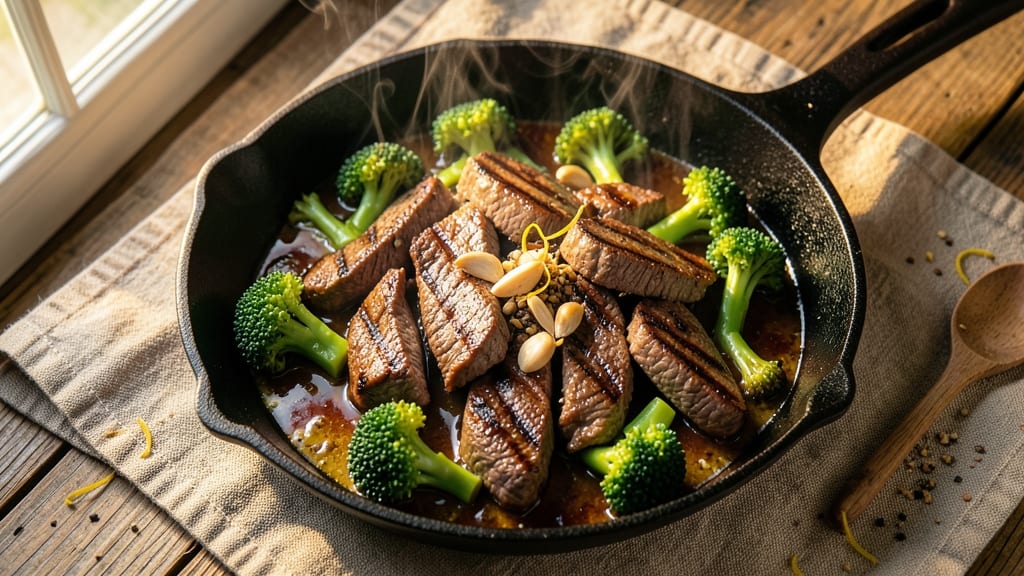
This beef and broccoli skillet recipe delivers restaurant-quality flavors in a single pan, with tender beef and crisp-tender broccoli caramelized in a savory garlic-soy glaze. The secret lies in proper searing and sauce reduction—technique that transforms simple ingredients into a dish worth repeating.
I’ve perfected this method over years of testing, ensuring the beef stays juicy while the broccoli achieves that ideal balance of crunch and tenderness.
The beauty of this one-pan approach is its efficiency: no chopping boards to clean, no saucepan to wash, just one skillet that handles everything from searing to sauce integration.
We’ll start with thinly sliced beef that develops a deep, caramelized crust, then add broccoli florets just long enough to blister their edges. The sauce—built from soy sauce, garlic, and a touch of honey—ties it all together with a glossy, umami-rich finish.
What you’ll end up with is a dish that’s foolproof yet impressive, perfect for weeknights or dinner guests. The beef remains fork-tender, the broccoli holds its structure, and the sauce clings to every bite.
Serve it over steamed rice or as-is—either way, it’s a meal that feels special without requiring hours in the kitchen. Ready to master this technique?
This recipe works equally well with flank steak or sirloin, and the sauce can be adjusted for spice or sweetness. The key is patience during the searing phase—don’t rush it. Let’s get started.
Ingredients for beef and broccoli skillet
Restaurant-quality beef and broccoli in one pan—just these ingredients transform simple proteins into a dish that tastes like a takeout favorite.
| Ingredient | Amount | Notes |
|---|---|---|
| Flank Steak 🥩 | 1 lb | Thinly sliced against grain |
| Broccoli Florets 🥦 | 1 ½ lbs | Cut into bite-sized pieces |
| Garlic Cloves 🧄 | 6 cloves | Minced for sauce |
| Soy Sauce 🍶 | ½ cup | Low-sodium preferred |
| Honey 🍯 | 1 tbsp | For sauce balance |
| Sesame Oil 🫒 | 1 tbsp | Toasted sesame preferred |
| Vegetable Oil 🫒 | 2 tbsp | High smoke point |
| Ginger Root 🌿 | 1 tbsp | Freshly grated |
| Cornstarch 🌾 | 1 tbsp | For sauce thickening |
| Green Onions 🧅 | 3 whole | Sliced for garnish |
| Sesame Seeds 🌰 | 1 tbsp | Toasted for garnish |
| Salt 🧂 | 1 ½ tsp | Kosher or sea salt |
| Black Pepper 🌶️ | ½ tsp | Freshly ground |
| White Pepper 🌶️ | ¼ tsp | For subtle finish |
The beef is non-negotiable here—flank steak or sirloin gives you that perfect balance of tenderness and texture. Ask your butcher to slice it thinly against the grain—this ensures it stays fork-tender. I always grab mine from Whole Foods or Costco since they handle it properly. For broccoli, look for bright green florets with tight buds—older, yellowing stems get bitter. If you're short on time, frozen broccoli works (no thawing needed), but fresh gives that ideal crunch. The garlic? Fresh is a must—jarred garlic has no flavor here.
No soy sauce? Coconut aminos works in a pinch, though the flavor won’t be identical. The honey can be swapped for maple syrup if you’re avoiding sugar, but it’ll taste slightly different. Sesame oil is key for that nutty aroma—Kadoya or La Choy are reliable brands. Short on cornstarch? Arrowroot powder works 1:1. The ginger needs to be fresh—dried won’t give the same zing. For extra depth, add a dash of fish sauce (if not vegetarian), but it’s optional. The green onions? Save the tops for garnish—they’re the freshest part of the bunch.
This dish reheats beautifully—just add a splash of water to the skillet and cover for 2-3 minutes. Keeps in the fridge for 4 days, though the broccoli gets softer over time. For longer storage, freeze portions in airtight containers for up to 3 months. Double the recipe? It’s worth it—leftovers make amazing lunches. Store sesame seeds and sesame oil separately to preserve their flavors. The sauce thickens as it cools, so reheat with a splash of water if it gets too stiff.
Why You'll Love This Recipe
- One-Pan Magic: Honestly, I swear by this recipe when I’m too tired to scrub pots. Slice the flank steak thin, toss in broccoli florets, and let the skillet do the work—no extra dishes, no fuss. The honey glaze caramelizes right in the pan, so you’re left with that sticky, sweet-savory finish without lifting a finger after.
- Garlic-Honey Crunch: Between us, this flavor combo is chef’s kiss—the garlic cloves sizzle until they’re golden, then the honey cuts through the saltiness of the soy sauce with this perfect balance. The steak gets this crispy edge while staying tender, and the broccoli? It soaks up just enough sauce to be addictive. I’ll be real: my husband asks for seconds before I even finish serving.
- Meal Prep MVP: Here’s what sold me—this is my go-to for busy mornings. Cook a big batch on Sunday, and you’ve got lunch or dinner ready for the week. The flavors actually get better the next day, and it reheats like a dream in the microwave or skillet. Plus, it’s not one of those sad, dry leftovers—every bite tastes like you just made it.
- Budget-Friendly Powerhouse: Flank steak stretches far when you slice it thin, and broccoli’s one of the most affordable veggies out there. A little soy sauce and honey go a long way, so you’re not breaking the bank for a restaurant-quality meal. I make this for date nights, family dinners, or even when I’m craving takeout but don’t want to spend $30 on it. Solid every time.
Step-by-step instructions for beef and broccoli skillet
Here's how to create a perfectly balanced one-pan dish with tender beef and vibrant broccoli.
Prepare the Flank Steak for Cooking
Begin by slicing the 1 lb flank steak thinly against the grain into ¼-inch thick strips. This ensures tender bites that cook quickly and evenly in the skillet. Place the sliced steak in a bowl and season generously with 1.5 tsp salt, 0.5 tsp black pepper, and 0.25 tsp white pepper. Let it sit for 10 minutes at room temperature—this prevents uneven cooking when it hits the hot pan.
While the steak seasons, cut the 1.5 lbs broccoli florets into bite-sized pieces and set aside. Mince the 6 cloves garlic and grate the 1 tbsp ginger root using a microplane or fine grater. These aromatics will infuse the sauce with deep, complex flavors. The key here is freshness—don't substitute dried ginger or pre-minced garlic for the best results.
Sear the Beef and Remove from Skillet
Heat a large skillet over medium-high heat until hot. Add 2 tbsp vegetable oil and swirl to coat the bottom evenly. Working in batches if needed, add the seasoned steak strips to the skillet. Let them sear undisturbed for 1-2 minutes per side until they develop a deep golden-brown crust. This sear locks in juices and builds flavor.
Once the steak is cooked to your preferred doneness (medium-rare to medium for best texture), remove it from the skillet and transfer to a plate. The beef should be cooked through but still retain some pink in the center. Keep the skillet on the heat—you'll use it for the broccoli and sauce next. If the steak releases easily from the pan, it's ready. If it sticks, don't force it; let it cook a bit longer.
Cook the Broccoli Until Tender-Crisp
Add the broccoli florets to the same skillet in a single layer, spreading them out evenly. Cook for 4-5 minutes over medium heat, stirring occasionally, until the broccoli turns a vibrant green and just begins to soften at the edges. You want it tender-crisp—bright in color with a slight bite, not mushy.
During the last minute of cooking, add the minced garlic and grated ginger to the skillet. Stir them into the broccoli until fragrant—this should take about 30 seconds. The garlic should turn golden without burning, which would make the dish bitter. If it starts to darken too quickly, reduce the heat slightly. Remove the broccoli and set it aside with the beef.
Create the Glossy Soy-Ginger Sauce
Return the skillet to medium heat and add 0.5 cup soy sauce, 1 tbsp honey, and 1 tbsp sesame oil. Stir to scrape up any browned bits from the bottom of the pan—these contain concentrated flavor. Let the sauce simmer for 2-3 minutes until it thickens slightly and coats the back of a spoon.
In a small bowl, whisk together 1 tbsp cornstarch with 2 tablespoons water to create a slurry. Slowly pour this into the simmering sauce while stirring constantly. The sauce will thicken dramatically within 30-60 seconds. If it thickens too quickly, add a splash of water to reach your desired consistency—a glossy, coatable sauce that clings to the beef and broccoli.
Combine and Finish the Dish
Return the beef and broccoli to the skillet and toss everything together with the sauce. Cook for an additional 1-2 minutes just to heat through and allow the flavors to meld. The beef should be evenly coated in the sauce, and the broccoli should be fully heated.
Remove from heat and stir in the 3 sliced green onions and 1 tbsp toasted sesame seeds. Taste and adjust seasoning if needed—you might want to add a pinch more salt or a drizzle of soy sauce for balance. Serve immediately in the skillet for that restaurant-style presentation, or transfer to plates. Each bite should deliver tender beef, crisp-tender broccoli, and a perfectly balanced sauce with sweet, salty, and umami notes.
Pro Tips For Making Beef And Broccoli Skillet
- Slice Steak Against Grain: That flank steak’s tough fibers won’t surrender to a knife unless you slice perpendicular to the grain—look for the muscle’s natural lines before cutting. I used to eyeball it and end up with chewy strips; now I mark the grain with a toothpick first, then slice thinly after cooking. (Yes, even if you’re impatient like me.)
- Blanch Broccoli First: Toss raw broccoli florets in boiling water for 30 seconds before searing—it softens them faster and keeps them from turning into mush when they hit the skillet. I learned this the hard way after a batch turned into sad, limp florets. Drain, shock in ice water, and pat very dry before cooking.
- Start Hot, Finish Low: Crank your skillet to medium-high heat for the steak—you want a deep sear—but as soon as the beef hits, drop the heat to medium. Too many times, I’ve walked away for a second and ended up with charred edges and undercooked centers. Keep an eye on it; the steak’s done when it’s just past medium-rare (130°F internal).
- Deglaze with Honey Last: Save that honey for the very end—after the beef and broccoli are cooked and you’ve deglazed with soy sauce. Add it to the pan off the heat, let it warm through for 30 seconds, then toss everything together. I was skeptical until I tried it; the honey caramelizes slightly without burning, and the sauce clings better to the beef.
Pro cooking tips for great beef and broccoli skillet
Sear Like a Pro
Don’t rush the sear—this is where all the flavor happens. Heat your 12-inch cast-iron skillet (I use Lodge) over medium-high heat until it’s screaming hot—you should see a slight shimmer. Add 2 tbsp vegetable oil and swirl to coat evenly.
Work in single layers of beef strips to avoid crowding, and let them sear for 1-2 minutes per side until deep golden brown. The key is patience—rushing leads to steamed beef, not seared. 🔥
Broccoli Timing
Broccoli cooks faster than you think, so don’t walk away! Add florets in a single layer to the skillet after removing the beef, and stir every 30 seconds to prevent burning. You want vibrant green florets with just a slight softening—about 4-5 minutes total.
Overcooking turns them mushy, which kills the texture. Add garlic and ginger only in the last 30 seconds to preserve their freshness.
Sauce Thickening Hacks
For that perfect glossy sauce, reduce the soy-ginger mixture to a gentle simmer before adding cornstarch. I like to whisk the 1 tbsp cornstarch with 2 tbsp cold water first, then slowly drizzle it into the sauce while stirring constantly.
If it thickens too fast, add 1 tsp water to loosen it. The sauce should coat the back of a spoon but still be pourable—this ensures it clings beautifully to the beef and broccoli. 💫
Batch Cooking Tips
If your steak doesn’t fit in the skillet in one batch, work in two portions but keep the first batch warm in a 200°F oven while you sear the second. This maintains even doneness.
For extra flavor, deglaze the skillet with 1 tbsp soy sauce after removing the beef—scrape up those browned bits for a richer sauce. Just don’t over-deglaze or you’ll dilute the sauce.
Resting Matters
Let the beef rest for 5 minutes before tossing it with the broccoli and sauce. This allows juices to redistribute, keeping every bite moist. If you’re serving immediately, tent the skillet with foil during the rest to trap heat.
For a restaurant-style finish, garnish with toasted sesame seeds and green onions right before serving—this adds freshness and visual appeal.
Nutrition facts
Frequently asked questions
What's the best cut of beef for this skillet recipe?
Use flank steak or sirloin for the best results—they're lean yet tender when sliced thinly against the grain. Avoid tougher cuts like chuck or round, which won't stay tender in this quick cooking method. If you prefer more marbling, try ribeye, but it may require slightly less searing time.
Can I make this recipe without soy sauce?
Yes, but the flavor will differ. Try coconut aminos (1:1 ratio) for a soy-free option, or use tamari for gluten-free results. For depth, add 1 tsp fish sauce (if not vegetarian) or ½ tsp miso paste to the sauce. The dish will still taste great, just with a slightly different umami profile.
How do I fix overcooked broccoli?
If your broccoli turns mushy, try this fix: Remove it from the skillet and toss with 1 tsp lemon juice and ½ tsp salt to brighten the color. For serving, arrange the beef around the broccoli so the tender veggies aren't the focus. Alternatively, blend the overcooked broccoli into the sauce for a thicker, greener glaze.
Can I use frozen broccoli instead of fresh?
Just skip thawing—add frozen florets directly to the skillet. They'll release moisture, so reduce the cooking time to 3-4 minutes (instead of 4-5) to avoid mushiness. The texture will be slightly softer, but the flavor remains excellent. For extra crispness, add fresh broccoli in the last 1 minute of cooking.
What's the secret to making the sauce glossy?
The gloss comes from three things: reducing the sauce (simmer for 2-3 minutes before thickening), using cornstarch slurry (not flour), and adding sesame oil at the end. For extra shine, finish with ½ tsp rice vinegar or a drizzle of honey after combining everything. Stir vigorously to emulsify the sauce.