
Sauces & Condiments
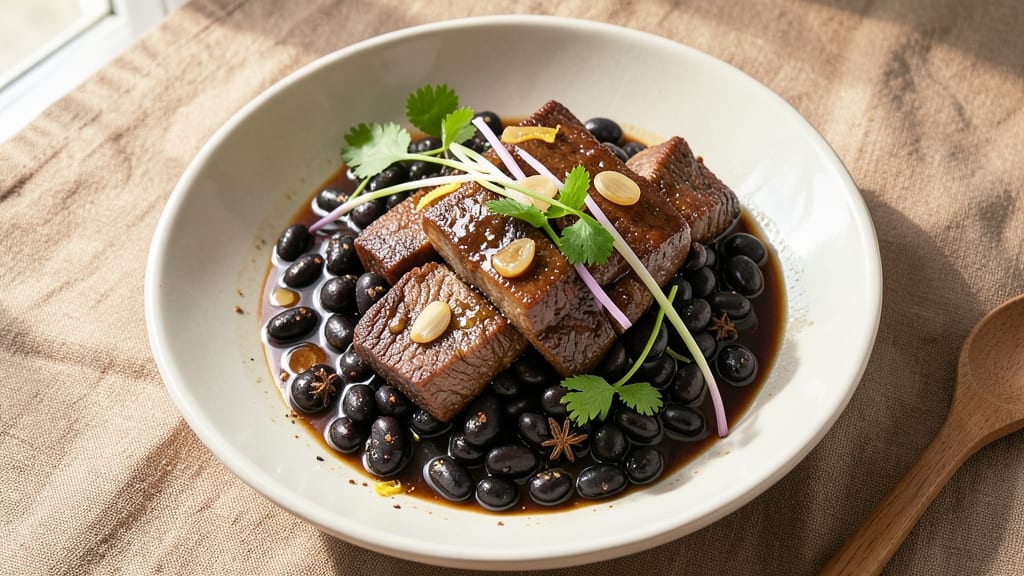
This beef and black bean Chinese sauce transforms simple ingredients into a restaurant-worthy dish that balances rich umami with tender beef and silky black beans. The secret lies in a slow-braised sauce that caramelizes into a glossy, savory glaze—perfect for tossing with noodles or serving over steamed rice.
I developed this recipe after years of adapting home-cooked versions of my favorite Chinese takeout, where the sauce was always the star.
The process starts with searing thinly sliced beef until just browned, then simmering it in a fragrant blend of soy sauce, star anise, and black beans until tender yet still holding its shape.
The sauce thickens into a velvety consistency that coats every bite, while preserved vegetables add texture and depth. Unlike many Chinese recipes that rely on deep-frying, this method delivers bold flavor with minimal oil—just 2 tablespoons for the entire dish.
What you'll end up with is a dish where each component—tender beef, chewy black beans, and glossy sauce—works in perfect harmony. The aroma alone will have everyone at the table anticipating the first bite, while the balance of salty, sweet, and umami flavors makes this a weeknight favorite.
Serve it over steamed rice or noodles for a complete meal that feels both comforting and sophisticated.
This recipe is designed for flexibility—use it as a quick weeknight dinner or prepare ahead for meal prep. The sauce keeps well in the fridge for up to 5 days, allowing you to build the dish whenever you're ready. Let's get cooking!
Ingredients for beef and black bean sauce chinese
Simple pantry staples and a few specialty finds create this restaurant-style Chinese sauce.
| Ingredient | Amount | Notes |
|---|---|---|
| Thinly Sliced Beef 🥩 | 1 ½ lb | Sirloin or flank steak preferred |
| Black Beans 🫘 | 1 cup | Drained and rinsed |
| Light Soy Sauce 🍶 | ½ cup | Kikkoman preferred |
| Dark Soy Sauce 🍶 | 1 tbsp | For color depth |
| Star Anise Pods 🌿 | 2 whole | Crushed lightly |
| Garlic Cloves 🧄 | 6 cloves | Minced finely |
| Ginger Root 🌿 | 1 tbsp | Fresh, grated |
| Preserved Vegetables 🥬 | ½ cup | Chopped, like pickled mustard greens |
| Sesame Oil 🫒 | 1 tbsp | Toasted sesame oil |
| Cornstarch 🌾 | 1 tbsp | For sauce thickening |
| Vegetable Oil 🫒 | 2 tbsp | For searing beef |
| Green Onions 🧅 | 3 whole | Sliced for garnish |
| Steamed Rice 🍚 | 2 cups | Cooked, for serving |
| Salt 🧂 | ½ tsp | Adjust to taste |
| Black Pepper 🌶️ | ¼ tsp | Freshly ground |
The beef is everything here—sirloin or flank steak slices thinly against the grain for tenderness. Costco or Asian markets usually carry pre-sliced beef for stir-fry, but if you're slicing yourself, use a sharp knife and freeze the meat for 20 minutes first. Black beans? Canned low-sodium is fine, but rinse them well to cut excess salt. Star anise can be found in the spice aisle of most grocery stores, or order online if your local store doesn't carry it. For preserved vegetables, pickled mustard greens are classic, but any preserved veggie—like daikon or napa cabbage—works too.
No light soy sauce? Dark soy sauce plus a pinch of sugar mimics the flavor. Swap star anise for 1 tsp ground anise if you can't find the pods. Fresh ginger is ideal, but 1/2 tsp ground ginger works in a pinch. The cornstarch is crucial for thickening—don't skip it! If you're short on time, 1 tbsp arrowroot powder does the same job. For extra umami, add 1 tsp fish sauce (if not vegetarian) or 1/2 tsp soy sauce reduction to the sauce. And if you're serving this over noodles, egg noodles or udon pair perfectly with the rich sauce.
This sauce gets better as it sits—3-4 days in the fridge is ideal for flavor development. Store it in an airtight container with the lid slightly ajar to prevent a skin from forming. If you're prepping ahead, cook the beef and set it aside, then finish the sauce separately and reheat everything together. The preserved veggies can be chopped and stored in the fridge for up to 2 weeks in their brine. Freeze the sauce without the beef for up to 3 months—just thaw and reheat gently.
Why You'll Love This Recipe
- One-Pan Magic: I swear by this recipe because it’s actually one-pan—just sear the beef, toss in the black beans and star anise, and let the soy sauces work their sauce magic. No chopping, no fuss, no extra bowls to wash.
- Umami Bomb: That dark soy sauce? It’s the secret weapon—deep, caramelized richness that clings to the beef like a hug. The star anise adds this subtle, warm spice that makes it taste way more special than it takes to make.
- Lunchbox Hero: Between us, this is my go-to for meal prep. The beef stays tender, the black beans hold up, and it reheats like a dream. Pack it cold for work or microwave it for a lazy night—either way, it’s a win.
- Budget Stretch: A can of black beans, a pound of beef, and a handful of spices? This feeds four for under $10. Honestly, I make it twice a month just to keep my grocery bill in check without sacrificing flavor.
Step-by-step instructions for beef and black bean Chinese sauce
Here's how to create a restaurant-quality beef and black bean sauce that's packed with umami flavor and silky texture.
Prepare the Aromatics and Marinate the Beef
In a small bowl, combine the 6 cloves garlic cloves and 1 tablespoon grated ginger root. Crush the 2 whole star anise pods lightly with a mortar and pestle or the side of a knife—you want them to release their aroma but stay whole. Set these aside for now.
In a large bowl, mix the 1.5 lb thinly sliced beef with 0.5 cup light soy sauce, 1 tablespoon dark soy sauce, 0.5 teaspoon salt, and 0.25 teaspoon black pepper. Let this marinate for 15-20 minutes while you prepare the rest. The beef should absorb the soy sauce and begin to soften slightly—this ensures maximum flavor penetration when we cook it later.
Sear the Beef and Build the Sauce Base
Heat 2 tablespoons vegetable oil in a wok or large skillet over high heat until shimmering. Add the marinated beef in a single layer and cook without stirring for 1-2 minutes until the edges begin to brown. This initial sear creates a flavorful crust that won't dissolve in the sauce. Stir and continue cooking for another 2-3 minutes until the beef is 80% cooked—it should still have a slight pink center.
Remove the beef from the wok and set aside. In the same wok, add the prepared aromatics and cook for 30 seconds until fragrant. Add the 1 cup drained black beans and 0.5 cup chopped preserved vegetables, stirring to combine. Pour in 0.5 cup light soy sauce and 1 tablespoon dark soy sauce, scraping up any browned bits from the bottom of the wok with a wooden spoon. This step captures all the flavorful fond that would otherwise be lost.
Thicken the Sauce and Finish the Beef
Reduce the heat to medium and add 1 tablespoon toasted sesame oil to the wok. Stir in the 1 tablespoon cornstarch and cook for 1 minute to remove the raw taste. Slowly pour in ½ cup water while stirring constantly to create a smooth slurry. Let the sauce simmer for 3-4 minutes until it thickens to a glossy, coatable consistency—it should coat the back of a spoon but still be pourable.
Return the beef to the wok and toss everything together for 2-3 minutes until the beef is fully cooked and evenly coated in the sauce. The sauce should cling to the beef like a silky glaze. If it's too thick, add 1-2 tablespoons water to reach your desired consistency. Taste and adjust seasoning with additional soy sauce or salt if needed.
Serve Over Steamed Rice with Garnish
Transfer the beef and sauce mixture to a serving platter. Spoon the 2 cups steamed rice onto individual plates and top generously with the beef and sauce. Garnish with 3 sliced green onions for a fresh pop of color and brightness. The contrast between the warm, umami-rich sauce and the slightly cool rice creates an incredibly satisfying bite.
Serve immediately while the sauce is still hot and glossy. The beef should be tender yet slightly chewy, perfectly coated in that silky black bean sauce. Each bite delivers a perfect balance of savory, slightly sweet, and umami flavors that will have everyone asking for seconds.
Pro Tips For Making Beef And Black Bean Sauce Chinese
- Blister the Beef First: Hit that wok with a screaming-hot pan—get it so hot the oil shimmers like a mirage—before tossing in the beef. I learned this the hard way: cold beef steaming in a lukewarm pan just turns mushy. Those first 20 seconds of sizzling lock in tenderness and build flavor. (Yes, even if you’re impatient like me.)
- Soak Black Beans: Toss those black beans in warm water for at least 30 minutes before cooking—no, don’t skip this. Dried beans absorb liquid like sponges, and skipping the soak means they’ll either stay rock-hard or turn to mush. Rinse them well afterward, too; the starch makes the sauce gummy if you’re not careful.
- Toast the Star Anise: Crack open that star anise pod and let it sing for 30 seconds in the oil before adding anything else. That’s when it releases its deep, licorice-like aroma—don’t just toss it in like an afterthought. My grandmother swore by this, and she was right: it’s the thing that makes the sauce smell like a proper home-cooked meal, not just a quick stir-fry.
- Balance the Soy Sauces: Dark soy sauce is for color, light soy sauce is for flavor—use them both, but measure carefully. Start with 1 tablespoon dark soy for that glossy, restaurant-worthy look, then add 2 tablespoons light soy for depth. I was skeptical until I tried it: the dark sauce alone makes the dish look flat, but together? That’s when it tastes like the real deal.
Common mistakes when making perfect results
Overcooking the Beef
One of the biggest mistakes is fully cooking the beef before adding the sauce. The beef should only reach 80% doneness (still slightly pink) when you remove it for the sauce phase.
Overcooking makes it tough and dry—it needs the residual heat from the sauce to finish cooking while absorbing those rich flavors. I've ruined a few batches by letting the beef sit too long after searing, so always keep it moving through the process. 🔥
Skipping the Aromatics
Crushing the star anise and cooking the garlic and ginger is non-negotiable for that authentic depth of flavor. If you skip this step, your sauce will taste flat and one-dimensional.
I once made this recipe without crushing the star anise pods, and the result was noticeably less aromatic. Take 30 seconds to properly bloom these spices—it makes all the difference.
Ignoring the Fond
Those browned bits at the bottom of your wok (fond) contain concentrated flavor. Don't scrape them out—they should be incorporated into your sauce. After removing the beef, immediately add your aromatics and preserved vegetables, then pour in the soy sauces while scraping vigorously with a wooden spoon.
This step captures the maximum umami from your initial sear. 🌟
Rushing the Sauce Thickening
Many home cooks rush the cornstarch slurry step, leading to a gluey rather than silky sauce. The cornstarch needs 3-4 minutes of gentle simmering to fully thicken and develop its natural flavor.
Stir constantly and resist the urge to crank up the heat—medium is perfect. I've had to start over twice when I got impatient and ended up with a pasty mess.
Using the Wrong Soy Sauce
Light and dark soy sauces serve distinct purposes in this recipe. Light soy sauce provides the primary salty flavor, while dark soy sauce adds color and depth. Never substitute both with regular soy sauce—you'll lose that beautiful glossy finish and complex taste profile.
I keep both types on hand specifically for Chinese cooking, as they're essential for authentic results. 🍶
Overcrowding the Wok
Adding all the beef at once creates steam that lowers the cooking temperature and results in soggy beef. Work in batches if needed, but ideally, use a wok large enough to hold everything in a single layer.
I use a 14-inch carbon steel wok for this recipe, which gives me plenty of room. If your pan is too small, cook the beef in batches and set them aside while you build the sauce, then combine everything at the end.
Nutrition facts
Frequently asked questions about Chinese beef and black bean sauce
Can I substitute black beans with another type of bean?
While black beans are traditional, you can use adzuki beans or kidney beans for a similar texture. Avoid pinto beans—they're too soft and will break down completely in the sauce. For extra umami, try 1/2 cup fermented black beans (available at Asian markets) instead of regular black beans. Just reduce the water slightly if using these since they're saltier.
How do I make this recipe vegetarian?
Replace the beef with extra-firm tofu (pressed and cubed) or mushrooms (shiitake or oyster). For texture, marinate the tofu in soy sauce for 20 minutes before cooking. Add 1 tbsp vegetarian oyster sauce to compensate for the lost umami. The black beans will still provide plenty of hearty flavor without meat.
What's the best way to store leftovers?
Store the sauce and beef mixture in an airtight container in the fridge for up to 4 days. The sauce actually improves overnight as flavors meld. For longer storage, freeze the sauce (without beef) for 3 months. Reheat gently on low heat with 1 tbsp water to restore the silky texture. Never freeze the beef separately—it becomes tough when reheated.
Why does my sauce turn out too thick or too thin?
Thickness depends on the cornstarch-to-water ratio. For a thicker sauce, reduce water by 1 tbsp or add 1/2 tsp more cornstarch. For thinner sauce, add 1 tbsp water while stirring. The ideal consistency should coat the back of a spoon but still be pourable. If using a different thickener like arrowroot, reduce by 20% since it's more potent.
Can I use this sauce for other dishes besides rice?
Toss with udon or ramen noodles for a quick stir-fry. Use as a marinade for grilled chicken or tofu. Even better, serve over steamed buns or congee for a comforting breakfast. The sauce's versatility comes from its balanced sweet-savory profile—just adjust thickness for different textures (thinner for noodles, thicker for rice).