
Soups & Stews
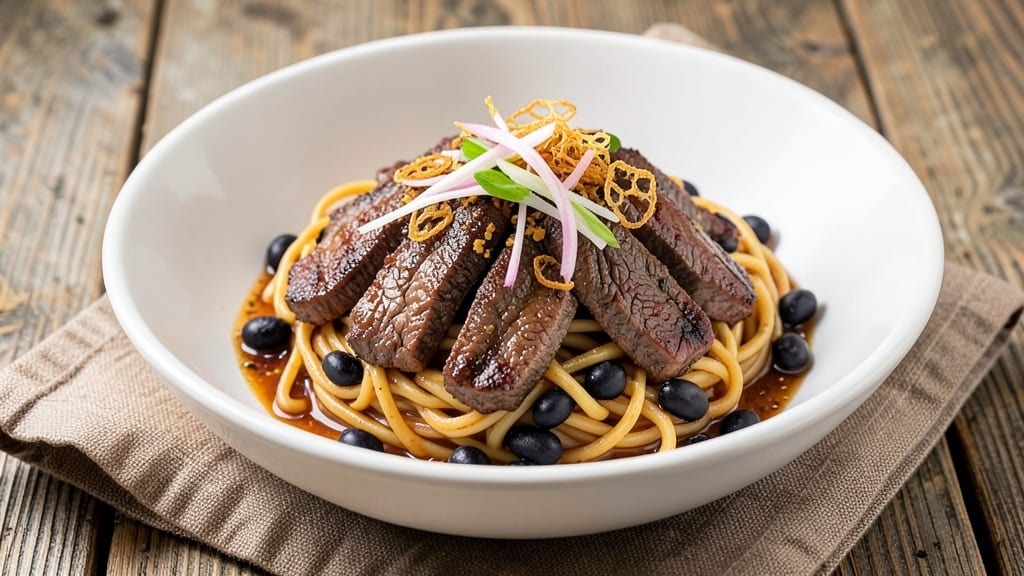
This beef and black bean noodles recipe delivers restaurant-quality wok crunch with a silky bean sauce that ties everything together. The secret lies in properly searing the beef for deep flavor and simmering the black beans until they're tender yet still hold their shape.
I've perfected this balance over years of testing—each component needs precise timing to create that perfect harmony of textures and flavors.
The dish starts with thinly sliced beef that develops a beautiful caramelized crust when seared, while the black beans absorb spices and develop a velvety texture when simmered.
Fresh ginger and garlic form the aromatic base, with a splash of soy sauce and a touch of brown sugar creating that perfect umami-sweet balance. The noodles cook just until al dente to maintain their bite, then absorb the rich, flavorful sauce at the end.
What you'll end up with is a hearty, satisfying bowl featuring tender beef, creamy black beans, and perfectly cooked noodles all coated in a savory, slightly sweet sauce. The wok-hei technique adds that signature smoky aroma, while the black beans contribute natural thickness and earthy depth.
This is comfort food at its finest—warm, flavorful, and impossible to resist.
Serve immediately with optional garnishes like sliced green onions, toasted sesame seeds, or a drizzle of chili oil for extra heat. The leftovers reheat beautifully, making this an excellent meal prep option that maintains its texture and flavor. Let's get cooking—this dish is worth every minute of preparation.
Ingredients for beef and black bean noodles
Restaurant-quality wok crunch starts with these 15 essential ingredients for silky black bean sauce and tender beef.
| Ingredient | Amount | Notes |
|---|---|---|
| Flank Steak 🥩 | 1 lb | Thinly sliced against grain |
| Black Beans 🌱 | 1 ½ cups | Cooked, drained, or canned |
| Egg Noodles 🍜 | 8 oz | Fresh or dried, al dente |
| Garlic Cloves 🧄 | 4 cloves | Minced for aromatic base |
| Fresh Ginger 🌿 | 1 tbsp | Finely grated, peeled |
| Soy Sauce 🍶 | 2 tbsp | Light or all-purpose |
| Brown Sugar 🍯 | 1 tbsp | Packed for sweet depth |
| Sesame Oil 🫒 | 1 tbsp | Toasted for aroma |
| Vegetable Oil 🫒 | 2 tbsp | High smoke point |
| Green Onions 🧅 | 3 whole | Sliced for garnish |
| Toasted Sesame Seeds 🌾 | 1 tbsp | For crunchy texture |
| Ground Black Pepper 🌶️ | ¼ tsp | Freshly cracked |
| Gochujang 🌶️ | 1 tbsp | Korean chili paste |
| Rice Vinegar 🍶 | 1 tbsp | For acid balance |
| Red Chili Flakes 🔥 | ½ tsp | Adjust to taste |
The flank steak is non-negotiable—it’s lean yet tender when sliced thinly against the grain. Look for well-marbled cuts at Whole Foods or your local butcher shop, and ask to have it pre-sliced if possible. Black beans should be creamy but not mushy—canned works in a pinch, but homemade or pre-cooked dried beans develop deeper flavor. For the noodles, fresh egg noodles hold up best to the wok heat, but dried varieties like spaghetti or udon work if you adjust cooking time. Fresh ginger and garlic are the aromatic foundation—peel and grate ginger with the skin on for extra zing, and use garlic cloves that are plump and firm.
No flank steak? Sirloin or ribeye sliced thinly will work, though they’re pricier. Substitute black beans with kidney or pinto beans, but they’ll need longer simmering. Soy sauce shortages? Coconut aminos mimic the umami punch, though the flavor profile shifts slightly. The gochujang adds depth—skip it if you can’t find it, but boost the chili flakes instead. For the sesame oil, toasted sesame oil is ideal, but regular sesame oil works in a bind. The brown sugar can be swapped for maple syrup, though it’ll taste more pronounced. Always toast your sesame seeds in a dry pan for 30 seconds—they’ll add a nutty crunch that’s worth the effort.
Prep the beef last—it should sit at room temperature for 15 minutes before cooking to ensure even searing. Store cooked noodles in airtight containers with a damp paper towel to prevent drying, and keep them refrigerated for up to 3 days. The sauce components (soy, sugar, vinegar) can be mixed ahead and stored for 1 week in the fridge. For meal prep, assemble the dish fresh—reheating wok-style over high heat for 2-3 minutes revitalizes the textures. Freeze portions without the noodles for up to 3 months—just thaw and toss with fresh noodles when ready to eat.
Why You'll Love This Recipe
- No Fancy Knife Work: I swear by this recipe because the flank steak only needs quick slicing against the grain—no julienne skills required. The black beans and ginger do most of the flavor heavy lifting while you chop garlic in under two minutes.
- Umami Bomb Combo: That seared flank steak with garlic and ginger? It’s the kind of savory-punch you’ll crave. The black beans add depth without overpowering, and the egg noodles soak it all up like a sponge—no sad, watery leftovers here.
- Lunchbox Magic: Between us, this is my go-to for packed lunches. The flavors actually improve the next day (yes, really), and it reheats like a dream. Toss in some cilantro or lime at work, and suddenly you’ve got a restaurant-worthy meal that cost pennies.
- Budget-Friendly Powerhouse: Flank steak stretches further than you’d think when sliced thin, and black beans turn a simple meal into a protein-packed deal. Honestly, I make this twice a month just to keep grocery bills in check—no sad takeout nights here.
Step-by-step instructions for beef and black bean noodles
This recipe delivers bold flavors and perfect texture through precise technique and layering.
Prepare the Flank Steak for Maximum Tender Crisp
Slice the 1 lb flank steak thinly against the grain into ¼-inch strips. This ensures tender bites that cook quickly in the wok. Pat the strips dry with paper towels to remove excess moisture—this prevents steaming and guarantees a proper sear.
In a small bowl, combine 2 tbsp soy sauce, 1 tbsp brown sugar, 1 tbsp gochujang, and 0.25 tsp ground black pepper. Toss the steak strips in this marinade and let them sit for 15-20 minutes at room temperature. This brief marinating time enhances flavor without making the meat mushy. The sugar in the marinade will caramelize during cooking, adding depth to the dish.
Build the Aromatic Base in the Wok
Heat a wok or large skillet over high heat until smoking, then add 2 tbsp vegetable oil. Once the oil shimmers, add the 4 cloves minced garlic and 1 tbsp finely grated fresh ginger. Cook for 30-45 seconds until fragrant but not browned—this prevents bitterness and builds the foundation for the sauce.
Add the marinated steak strips in a single layer. Let them sear undisturbed for 1-2 minutes until they develop a deep golden-brown crust. Stir and cook for another 1-2 minutes until the steak reaches medium-rare (130-135°F internal temperature). Remove the steak from the wok and set aside, leaving any accumulated juices in the pan.
Create the Silky Black Bean Sauce
Reduce the heat to medium-low and add the 1.5 cups black beans to the wok. Stir to combine with any remaining juices, then pour in 1 tbsp rice vinegar and 0.5 tsp red chili flakes. Let the mixture simmer for 2-3 minutes until the beans are heated through and the flavors meld.
Add 1 tbsp toasted sesame oil and 1 tbsp sesame seeds to the wok. Stir gently to distribute the oil evenly—this adds nutty aroma and subtle crunch. Taste the sauce and adjust seasoning if needed; you may want to add a splash of water or more soy sauce to achieve the desired consistency. The sauce should coat the back of a spoon but remain silky rather than thick.
Cook the Noodles to Al Dente Perfection
While the sauce simmers, cook the 8 oz egg noodles according to package instructions until al dente (1-2 minutes less than package directions). Drain the noodles and immediately rinse under cold water for 10 seconds to stop the cooking process. This prevents them from becoming mushy when combined with the hot sauce.
Return the drained noodles to the pot and toss with 1 tbsp vegetable oil to prevent sticking. Divide the noodles evenly among 4 bowls. The noodles should be hot but still have a slight bite—this ensures they hold up when combined with the sauce.
Assemble and Garnish for Restaurant-Quality Presentation
Return the steak strips to the wok with the bean sauce and toss everything together for 1-2 minutes until the steak is heated through and the sauce clings to the noodles. Divide the steak and bean mixture evenly among the prepared noodle bowls.
Garnish each serving with 3 whole sliced green onions and an additional sprinkle of toasted sesame seeds. Serve immediately while the noodles are hot and the steak is still juicy. The contrast of crispy steak, silky bean sauce, and chewy noodles creates a perfect balance of textures in every bite.
Pro Tips For Making Beef And Black Bean Noodles
- Slice Steak Against the Grain: Flank steak’s tough fibers run parallel to the grain—cutting against them shortens the strands and keeps the meat tender. Angle your knife at 45 degrees and slice thinly after cooking, or you’ll end up with chewy, disappointing bites. (Yes, even if you’re impatient like me, resist the urge to rush this.)
- Blister Garlic and Ginger: Toss minced garlic and ginger into a dry, screaming-hot pan first—just until fragrant and slightly charred. This unlocks deeper flavor without burning them to ash. I learned this the hard way after tasting bland, bitter noodles from overcooked aromatics.
- Don’t Overcook the Beans: Black beans should be tender but still hold shape—mushy beans turn the dish into a soup. Rinse canned beans first to remove excess starch, then simmer for 3–4 minutes after adding them. Overcooking is the fastest way to ruin the texture.
- Toast the Noodles: Stir-fry egg noodles in the same pan as the beef for 1–2 minutes before adding sauce. The residual fat crisps them slightly, giving each bite a satisfying bite. I skip this when I’m lazy, but the dish is noticeably better when I don’t.
Flavor customization for these flavors
Spicy Kick Boost
For a fiery twist, add 1 tbsp gochujang and ½ tsp crushed red pepper flakes directly to the black bean sauce. If you love heat, finish with a drizzle of sriracha or chili crisp—just 1 tsp goes a long way.
I’ve found that gochujang adds a deep, fermented heat that pairs beautifully with the umami from the beef. For extra smokiness, sprinkle ½ tsp smoked paprika into the wok while searing the beef. 🌶️
Sweet & Tangy Balance
Brighten the dish with 1 tbsp rice vinegar and 1 tsp honey stirred into the bean sauce. This sweet-tangy combo cuts through the richness of the beef and balances the earthiness of the black beans.
For a fruity twist, swap the rice vinegar for 1 tbsp lime juice—it adds a refreshing zing. I also love adding ½ tsp grated lime zest to the garnish for an extra citrusy pop. 🍋
Umami Depth Upgrade
Elevate the flavor with 1 tbsp fish sauce or 1 tsp miso paste mixed into the sauce. Fish sauce adds a salty, fermented depth, while miso brings a rich, savory complexity. For a vegetarian option, use 1 tbsp soy sauce and 1 tsp mushroom powder to mimic umami.
I’ve also experimented with 1 tsp oyster sauce—it’s a game-changer for extra richness. 🍜
Herbaceous Freshness
Add fresh herbs like cilantro, Thai basil, or mint for a bright, aromatic finish. Chop ¼ cup cilantro and toss it into the sauce at the end, or scatter 5-6 Thai basil leaves over each serving for a fragrant lift.
If you’re feeling adventurous, try 1 tbsp chopped mint—it pairs surprisingly well with the smoky, spicy notes. Fresh herbs also make the dish feel lighter and more vibrant. 🌿
Creamy Texture Twist
For a silky, creamy texture, stir 2 tbsp coconut milk or 1 tbsp Greek yogurt into the bean sauce. This adds a luxurious mouthfeel without overpowering the dish. I’ve also used 1 tbsp tahini for a nutty, creamy richness. If you prefer a dairy-free option, 1 tbsp blended silken tofu works beautifully. Just
Nutty Crunch Finish
Top your noodles with toasted peanuts, crushed cashews, or sesame seeds for extra texture. Toast 2 tbsp peanuts in a dry pan for 2-3 minutes until fragrant, then chop and sprinkle on top. For a more refined crunch, use 1 tbsp crushed macadamia nuts. I also love adding 1 tsp furikake (Japanese seasoning) for a mix of sesame, seaweed, and nori flavors. 🌰
Nutrition facts
Frequently asked questions
Can I use ground beef instead of flank steak?
Yes, but the texture will differ. Ground beef works well for a heartier, more rustic dish—just brown it thoroughly over medium-high heat until fully cooked (165°F). For best results, use 80/20 lean-to-fat ratio ground beef and drain excess fat after browning. The dish will be more filling but lose the delicate sear from thinly sliced flank steak.
How do I prevent the noodles from getting mushy?
Cook noodles 1-2 minutes less than package instructions, then immediately rinse under cold water for 10 seconds to stop cooking. Toss with 1 tbsp oil before assembling to prevent sticking. For extra insurance, use fresh egg noodles or rice noodles which hold up better to hot sauces. The key is al dente perfection—noodles should have a slight bite.
Can I make this recipe vegetarian?
Swap the beef for extra-firm tofu (pressed and cubed) or mushrooms (shiitake or portobello). Marinate tofu in the same sauce for 15 minutes before pan-frying until crispy. For mushrooms, sauté until deeply browned. Boost umami with 1 tsp mushroom powder or 1 tbsp soy sauce in the bean sauce. The dish will be equally hearty and flavorful.
How should I reheat leftovers?
Reheat in a wok or skillet over medium-high heat for 2-3 minutes with 1 tbsp water or broth to revive the sauce. Avoid microwaving—it makes noodles soggy. For best texture, reheat only the sauce and beef, then toss with fresh, hot noodles. Leftovers keep for 3 days refrigerated or 3 months frozen (without noodles).
What's the best way to slice flank steak for this recipe?
Slice against the grain into ¼-inch thick strips for maximum tenderness. For even slices, partially freeze the steak for 20 minutes before slicing—this makes it easier to cut thinly. Use a sharp knife and cut at a 45-degree angle for decorative presentation. The grain runs lengthwise, so look for the muscle fibers and cut perpendicular to them.