
Main Courses
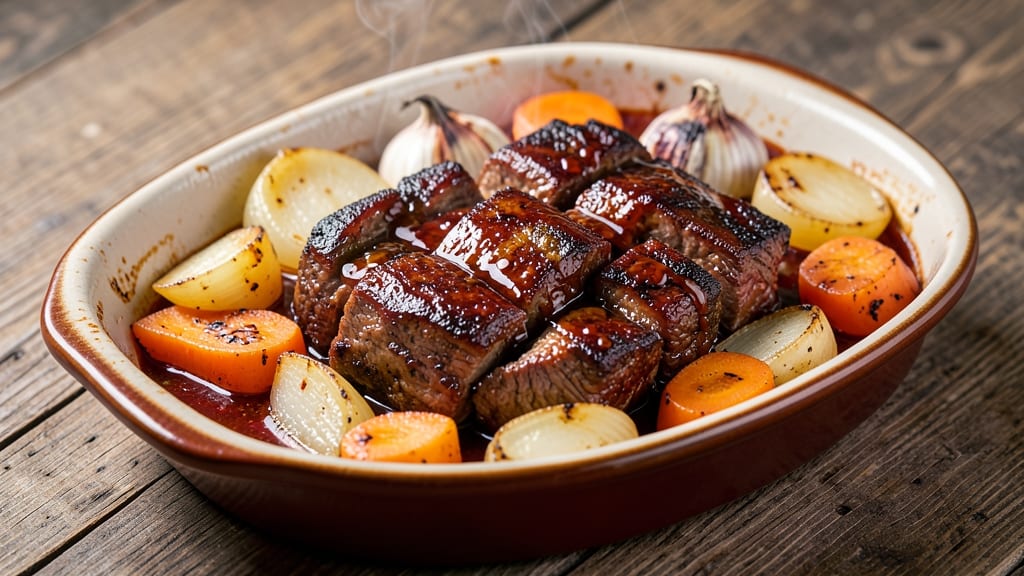
This beef ajou recipe transforms tough beef into melt-in-your-mouth perfection through slow braising—a technique that builds deep, caramelized flavors from wine, mustard, and aromatic vegetables.
The traditional Filipino stew requires patience, but the result is a rich, velvety sauce that clings to tender beef chunks like a hug from your favorite home cook.
What makes this dish special is how the mustard and wine combination creates a complex balance of tangy, sweet, and savory notes that elevate simple ingredients into something extraordinary.
The secret to authentic beef ajou lies in the slow cooking process, which allows the beef to become fork-tender while developing layers of flavor.
Unlike quick braises, this recipe demands time—typically 2 to 3 hours on the stove or 6 to 8 hours in a slow cooker—to break down the meat and meld the spices into a harmonious broth.
The key steps involve browning the beef for depth, deglazing the pan to capture flavorful bits, and simmering until the sauce thickens just enough to coat every bite without being gluey.
By the time you serve this dish, you'll have a steaming pot of beef ajou with beef that falls apart at the touch of a fork, all swimming in a glossy, aromatic sauce.
The texture is what truly sets this recipe apart: tender beef with a slight resistance, paired with vegetables that soften just enough to absorb the rich flavors. This is the kind of meal that feels like a celebration—whether you're feeding a family or treating yourself to a comforting weeknight dinner.
The beauty of beef ajou is its versatility. Serve it alongside steamed rice to soak up every last drop of that velvety sauce, or pair it with crusty bread for dipping.
For modern adaptations, you can easily make this in an Instant Pot or oven, adjusting the cooking time to fit your schedule without sacrificing flavor. Here’s how to bring this classic Filipino dish to your table with professional results.
Ingredients for beef ajou
The secret to rich, velvety beef ajou lies in these 13 simple ingredients that transform tough beef into melt-in-your-mouth perfection.
| Ingredient | Amount | Notes |
|---|---|---|
| Beef Chuck Roast 🥩 | 2 lb | Cut into 2-inch cubes |
| Dry Red Wine 🍷 | 1 cup | Bold variety like Cabernet Sauvignon |
| Dijon Mustard 🌶️ | 2 tbsp | High-quality for tangy depth |
| Yellow Onions 🧅 | 1 whole | Thinly sliced, about 2 cups |
| Carrots 🥕 | 4 medium | Peeled, sliced into 1-inch pieces |
| Garlic Cloves 🧄 | 6 cloves | Minced for aromatic base |
| Tomato Paste 🍅 | 2 tbsp | Squeeze tube preferred |
| Beef Broth 💧 | 2 cups | Low-sodium preferred |
| Bay Leaves 🌿 | 2 whole | Fresh for best flavor |
| Black Peppercorns 🌶️ | ½ tsp | Freshly cracked |
| All-Purpose Flour 🌾 | 1 tbsp | For thickening sauce |
| Olive Oil 🫒 | 2 tbsp | Extra-virgin for browning |
| Salt 🧂 | 1 ½ tsp | Kosher or sea salt |
The beef is non-negotiable—chuck roast gives you that fall-apart texture, not sirloin. Most grocery stores carry it pre-cut, but if you're buying a whole roast, ask the butcher to cube it for you. Trader Joe's and Costco usually have the best prices on chuck. For the wine, grab whatever bold red you're drinking—Cabernet Sauvignon or Merlot work perfectly. The mustard? Dijon is essential—it brings that tangy depth that sets this dish apart. Skip the pre-shredded carrots; fresh ones caramelize better.
No red wine? Beef broth with a splash of balsamic works in a pinch, though the flavor won't be identical. Fresh garlic and onions are ideal, but dried will do if you're short on time—just use half the amount. The tomato paste can be from a squeeze tube (no waste!) or a can, but San Marzano is worth the splurge if you're using canned. For the broth, low-sodium is key—you don't want to over-salt the dish. If you're making this ahead, the flavors actually improve overnight, so don't hesitate to prep it a day in advance.
This stew reheats beautifully—just add a splash of water or broth to loosen the sauce. Keeps for 4-5 days in the fridge, and freezes for 3 months if you portion it into containers. The sauce thickens as it cools, so if it's too thin when reheating, stir in a little more flour mixed with cold water. I always make double batches because it's the kind of dish that tastes even better the second day, especially with leftover rice to soak up every last drop of that rich sauce.
Why You'll Love This Recipe
- One-Pot Magic: I swear by this when I’m too tired to wash a million dishes—just toss everything in one pot, and the wine and mustard do all the work while you sip your coffee. The onions caramelize right in there, no extra pan needed.
- Wine-Infused Richness: That dry red wine? It’s not just for show—it tenderizes the beef chuck roast while adding this deep, savory depth that makes my taste buds sing. Plus, the Dijon mustard gives it a little tangy kick that balances everything perfectly.
- Leftovers That Shine: Between us, this is my go-to for meal prep because reheated beef ajou is still amazing—just add a splash of water to keep it moist. Honestly, I’ve had it cold in sandwiches, and it’s still solid.
- Budget-Friendly Crowd-Pleaser: A chuck roast stretches for a week’s worth of lunches, and the veggies (onions, carrots) are cheap staples. I’ll be real: this feeds six for under $20, and no one complains—even my picky teenager asks for seconds.
Step-by-step instructions for French-style beef stew
Here's how to make this rich, mustard-kissed beef stew that tastes like a Parisian bistro.
Sear the Beef for Deep Flavor
Pat the 2 lb beef chuck roast dry with paper towels and cut it into 2-inch cubes. Heat 2 tablespoons olive oil in a large Dutch oven over medium-high heat until shimmering. Working in batches, add the beef cubes and sear for 3-4 minutes per side until deeply browned. This step creates the Maillard reaction that builds rich, caramelized flavor.
As you sear, don't overcrowd the pan—work in batches if needed. The beef should release easily when ready, with a deep golden crust forming. Transfer the browned beef to a plate and set aside. You'll use that beautiful browned fat later to build the sauce.
Build the Aromatic Base
In the same Dutch oven, add 1 whole yellow onion (thinly sliced) and cook for 5 minutes until softened and slightly golden. Add 4 medium carrots (sliced into 1-inch pieces) and 6 cloves garlic (minced) to the pot, stirring to combine. Cook for another 3 minutes until the onions are translucent and the garlic is fragrant.
Here's where the magic begins: Stir in 2 tablespoons tomato paste and cook for 1 minute to deepen its flavor. Pour in 1 cup dry red wine and scrape up any browned bits from the bottom of the pot with a wooden spoon. Let the wine simmer for 3-4 minutes until reduced by half—this concentrates the flavors and forms the foundation of your sauce.
Create the Mustard-Wine Sauce
Reduce heat to medium-low and stir in 2 tablespoons Dijon mustard, 2 cups beef broth, 2 whole bay leaves, and 0.5 teaspoon black peppercorns. Bring to a gentle simmer, then return the beef to the pot. Sprinkle with 1.5 teaspoons salt and stir gently to combine. The liquid should just cover the beef—if it looks too thin, reduce it slightly by simmering uncovered for 5 minutes.
This is where patience pays off. Let the stew simmer gently for 1 hour, partially covered, stirring occasionally. The beef should become fork-tender and the sauce should thicken slightly. If the sauce gets too thin during cooking, uncover and simmer for a few minutes to reduce it.
Thicken and Finish the Stew
After 1 hour, the beef should be tender but still firm. Sprinkle 1 tablespoon all-purpose flour over the top and stir gently to distribute evenly. Let the stew cook uncovered for another 10-15 minutes, stirring occasionally, until the sauce has thickened to a velvety consistency that coats the back of a spoon.
Taste and adjust seasoning if needed—add more salt if the broth tastes bland, or a splash more wine if the mustard flavor needs balancing. Remove the bay leaves before serving. This French-style beef stew should have a rich, glossy sauce that clings beautifully to each tender piece of beef.
Rest and Serve with Confidence
Let the stew rest for 10 minutes before serving. This allows the flavors to meld completely and the sauce to thicken further. Serve hot, with crusty bread to soak up every last bit of that luxurious mustard-wine sauce. The beef should be fork-tender with a perfect balance of wine, mustard, and herbaceous notes.
For an authentic touch, garnish each serving with fresh parsley if you have it. The contrast of bright green against the rich red sauce makes it look as good as it tastes. This stew keeps well in the refrigerator for up to 4 days, making it perfect for meal prep too.
Pro Tips For Making Beef Ajou
- SEAR THE ROAST LONG: Don’t rush the browning—spend 10 minutes on each side with the beef chuck roast in a screaming-hot pan until it’s deep mahogany, not just brown. That crust locks in flavor and keeps the meat from drying out later. (Yes, even if you’re impatient like me.)
- SAUTE ONIONS LOW AND SLOW: After searing the beef, reduce heat to medium-low when adding onions and carrots. If you let them burn, you’ll end up with bitter, charred bits instead of sweet, caramelized depth. Stir often and keep the heat steady—this is where the dish builds its base flavor.
- DEGLAZE WITH WINE IMMEDIATELY: As soon as you remove the roast, pour in that red wine right away while the pan is still hot. Scrape up every browned bit—those are flavor bombs. Let it simmer for 2 minutes before adding the mustard and broth, or you’ll dilute the wine’s punch.
- SKIP THE PRE-CUT CARROTS: Buy whole carrots and cut them into ½-inch chunks yourself—store-bought pre-cut carrots turn to mush in this long cook. Uniform size also means even cooking, so none end up underdone while others fall apart. (I learned this the hard way with a sad, mushy pot.)
Perfect pairings for beef ajou
Classic Side Pairings
Steamed jasmine rice is the traditional companion to beef ajou, acting like a blank canvas to soak up every rich, mustard-infused drop of sauce. I always cook 1 cup uncooked rice with 1.5 cups water for perfectly fluffy grains—just enough to complement the hearty stew without overwhelming it.
For extra texture, serve with crusty French baguette slices for dipping, especially if you're making this for a casual dinner party. 🍞
Vegetable Contrasts
Bright, fresh vegetables cut through the richness of the stew beautifully. A simple sautéed green bean salad with 1 tablespoon lemon juice and 1 teaspoon honey adds a refreshing crunch.
For something heartier, try roasted Brussels sprouts tossed with 2 tablespoons balsamic glaze—their caramelized edges contrast perfectly with the stew's velvety sauce. I often serve both sides family-style so everyone can mix and match.
Wine Pairing Perfection
The bold flavors of beef ajou call for a wine that matches its intensity. A medium-bodied red like Pinot Noir from Oregon or Syrah from the Rhône Valley complements the mustard and wine notes without overpowering them.
For white wine lovers, a dry Riesling with its crisp acidity actually enhances the dish's tangy depth. I always open a bottle 30 minutes before serving to let it breathe—it makes all the difference. 🍷
Unexpected Garnishes
Fresh parsley leaves sprinkled on top add a pop of color and brighten the dish's richness. For a smoky touch, try crumbled feta cheese—just 2 tablespoons over each serving adds a salty contrast that elevates the flavors.
If you want something bolder, a drizzle of hot honey (mix 1 tablespoon honey with ¼ teaspoon cayenne) brings sweet heat that pairs surprisingly well with the mustard-wine sauce.
Modern Adaptations
For a lighter twist, serve with quinoa pilaf instead of rice—its nutty flavor stands up to the stew while adding protein. If you're making this for a crowd, garlic mashed potatoes with roasted garlic and chives create a creamy, comforting contrast.
I've also seen beef ajou served with crispy polenta triangles for dipping, which adds a fun, interactive element to the meal. 💡
Dessert Pairings
End the meal with something light to balance the richness. A citrus sorbet like blood orange or lemon cleanses the palate beautifully. For a classic pairing, crème brûlée with its caramelized sugar crust offers a sweet contrast that feels indulgent.
I often make a small batch of vanilla bean ice cream with a sprinkle of toasted almonds—it's simple but always a crowd-pleaser after a hearty stew. 🍮
Nutrition facts
Frequently asked questions
Can I substitute chuck roast with another beef cut?
While chuck roast is ideal for its tenderizing properties, you can use chuck shoulder or stew beef in a pinch. Avoid lean cuts like sirloin or flank—they won't become tender enough. If using a tougher cut, increase simmering time by 30-45 minutes to ensure fork-tender results.
What if I don't have red wine for the recipe?
No problem! Use 2 cups beef broth plus 2 tablespoons balsamic vinegar for depth, or substitute with 1 cup apple cider and 1 tablespoon soy sauce for umami. The mustard will still shine, but the wine's complexity will be slightly different. For best results, add a splash of vinegar at the end to mimic acidity.
Why does my sauce turn out too thin?
Sauce thinning usually happens when the stew doesn't reduce enough. After adding flour, simmer uncovered for 10-15 minutes longer, stirring occasionally. If it's still too thin, mix 1 teaspoon cornstarch with 1 tablespoon cold water, stir into the sauce, and cook for 2-3 minutes until thickened.
Can I make beef ajou in a slow cooker?
Brown the beef first, then transfer everything to a slow cooker. Cook on low for 6-8 hours or high for 3-4 hours. The slow cooker's gentle heat ensures tender beef without overcooking. Just add 1/2 cup water if the sauce gets too thick during cooking.
How do I reheat beef ajou without drying it out?
Reheat gently on the stovetop over low heat with a splash of beef broth or water to loosen the sauce. Avoid microwaving—it can make the sauce watery. For best results, reheat just until steaming, then let it sit 5 minutes covered before serving.