
Main Courses
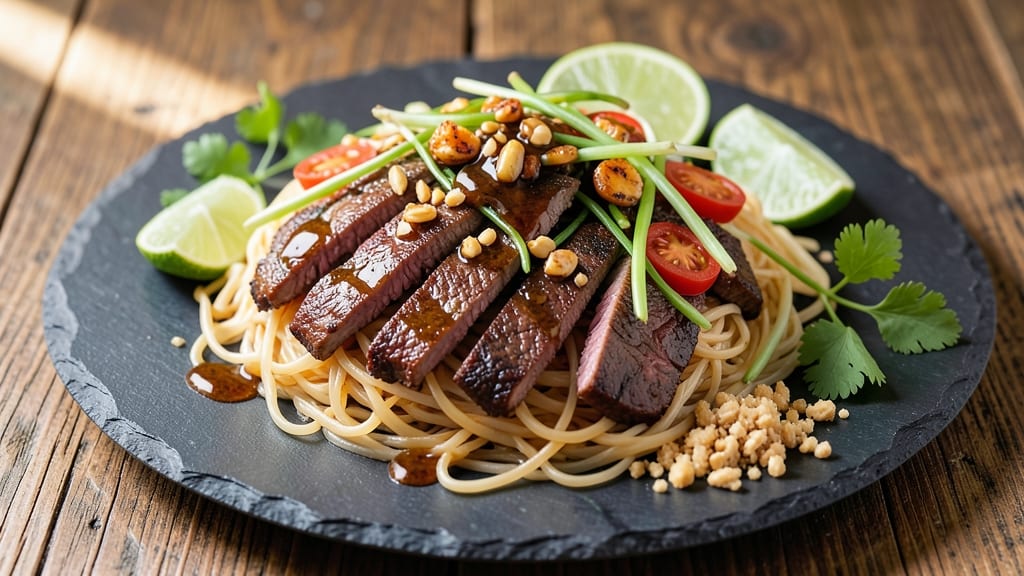
This authentic beef Pad Thai recipe delivers the perfect harmony of chewy rice noodles, tender beef, and a tangy tamarind sauce that balances sweet, sour, and savory flavors. ✨ The secret lies in traditional techniques—marinating the beef in fish sauce and lime, stir-frying at high heat to achieve wok hei (smoky aroma), and assembling with fresh herbs and crushed peanuts for that signature crunch.
I’ve perfected this dish over years of testing, ensuring every bite captures the essence of street-side Thai cuisine without shortcuts.
What sets this recipe apart is the tamarind-based sauce, which requires just a few simple ingredients but delivers complex depth. Fresh egg noodles are stir-fried until they develop a slight char, while the beef is sliced thin and seared to maintain tenderness.
The sauce—made from tamarind paste, fish sauce, and palm sugar—is the heart of the dish, tying everything together with its signature tang. This isn’t just Pad Thai; it’s a taste of Thailand’s bustling streets, brought to your kitchen.
The result is a dish that’s restaurant-quality but achievable at home: vibrant, aromatic, and packed with texture. The noodles stay chewy yet tender, the beef is perfectly seared, and the sauce is bright and balanced.
Garnish with lime wedges, bean sprouts, and crushed peanuts for that final crunch and freshness. It’s the kind of meal that makes you want to toss it in the wok again the very next day.
Whether you’re serving it as a weeknight dinner or a weekend feast, this Pad Thai is versatile enough to adapt—add chili for heat, swap beef for tofu for a vegetarian version, or double the sauce for leftovers. The key is confidence in the process. Let’s get cooking.
Ingredients for authentic beef pad thai
Here’s what you need to make this restaurant-quality Pad Thai at home—just 15 ingredients for bold, tangy flavor.
| Ingredient | Amount | Notes |
|---|---|---|
| Thin Rice Noodles (Pad Thai Noodles) 🍜 | 8 oz | Fresh or dried, soaked in warm water |
| Thinly Sliced Beef (Flank Steak or Sirloin) 🥩 | 12 oz | Pounded thin, marinated |
| Tamarind Paste 🍈 | ½ cup | Thick, unsweetened |
| Fish Sauce 🐟 | 2 tbsp | Red Boat preferred |
| Palm Sugar 🍯 | ¼ cup | Or brown sugar substitute |
| Lime Juice 🍋 | ¼ cup | Freshly squeezed |
| Vegetable Oil 🫒 | ½ cup | High smoke point |
| Bean Sprouts 🌱 | 2 cups | Fresh, rinsed |
| Crushed Peanuts 🥜 | ½ cup | Roasted, unsalted |
| Garlic Cloves 🧄 | 4 cloves | Minced, fresh |
| Shallots 🧅 | 3 whole | Thinly sliced |
| Fresh Thai Chilies 🌶️ | 2 whole | Sliced, optional |
| Fresh Basil Leaves 🌿 | ½ cup | Thai basil preferred |
| Lime Wedges 🍋 | 2 whole | For garnish |
| Salt 🧂 | 1 tsp | Adjust to taste |
The beef makes or breaks this dish, so pick flank steak or sirloin—they’re lean and slice thin. Grab a pound of meat and pound it with a meat mallet until it’s paper-thin. Marinate it in fish sauce and lime for at least 30 minutes (or overnight for deeper flavor). For the noodles, fresh rice noodles are ideal, but dried works in a pinch—just soak them in warm water until pliable. Tamarind paste can be tricky to find, but Asian markets usually carry it, or check the international aisle at Whole Foods. If you can’t find palm sugar, brown sugar works, though it’s not quite the same.
No tamarind paste? Mix lime juice with a little brown sugar to mimic the tang. Swapping beef for tofu? Use firm tofu, pressed and sliced thin. The bean sprouts can be subbed with shredded cabbage or lettuce, but they add that signature crunch. For extra heat, add sliced Thai chilies or a pinch of chili flakes. Fresh basil is a must—Thai basil has a distinct anise flavor, but regular basil works too. The crushed peanuts should be lightly toasted for maximum crunch, but store-bought works fine. If you’re short on time, pre-chop your veggies and store them in the fridge for up to 3 days.
This dish tastes even better the next day, so make extra sauce if you’re planning leftovers. Store the sauce separately in the fridge for up to 5 days, and the noodles can be kept in an airtight container for 2 days. For best texture, reheat the noodles gently in a dry wok or skillet—no soggy results here. The peanuts and herbs are best added fresh when serving, so keep them separate until the last minute. Freeze the sauce in ice cube trays for easy single-use portions—just thaw and toss!
Why You'll Love This Recipe
- No-Fuss Prep: I swear by the 10-minute prep rule here—just soak those rice noodles in warm water while you slice the beef paper-thin (a sharp knife makes this so much faster). No chopping mountains of veggies, no waiting for dough to rise—just tamarind, fish sauce, and sugar mixing in a bowl while the wok heats up.
- Tamarind Magic: That first tangy-sweet hit of tamarind paste is what turns this into something special. It’s the secret weapon—balancing the salty fish sauce and the beef’s richness without overpowering. Honestly, I’ll take this over any bottled sauce in a heartbeat.
- Crowd-Pleaser Flex: Between us, this is my go-to for date nights, lazy Sundays, or when my college-aged kids bring home friends. Double the batch, toss in extra peanuts or lime, and it’s suddenly a full spread. The noodles hold up great cold too—perfect for meal prep when I’m not feeling fancy.
- Budget Win: A pound of flank steak and a bag of noodles stretch for four solid meals. The tamarind and fish sauce are the priciest bits, but they make the whole dish sing—no wasted ingredients here. Plus, leftovers reheat like a dream, crispy in all the right spots.
Step-by-step instructions for authentic beef Pad Thai
Here's how to nail that perfect wok-tossed balance—crispy noodles, tender beef, and tangy tamarind sauce.
🍳 Step 1: Soak and Prep the Noodles
Fill a large bowl with warm water (not boiling) and add the 8 oz thin rice noodles. Let them soak for 20-30 minutes until pliable but still slightly firm to the touch. Drain and rinse briefly with cold water to stop the cooking process—this prevents mushy noodles later.
While the noodles soak, prepare the beef by pounding the 12 oz thinly sliced beef to an even ⅛-inch thickness using a meat mallet or rolling pin. This ensures quick cooking and perfect tenderness. Season lightly with ½ teaspoon of the 1 tsp salt and set aside.
🔥 Step 2: Build the Tangy Tamarind Sauce
In a small bowl, whisk together the 0.5 cup tamarind paste, 2 tbsp fish sauce, 0.25 cup palm sugar, and 0.25 cup lime juice until smooth. Taste and adjust—you want a balance of sweet, sour, and salty. If it's too thick, add 1-2 tablespoons water to loosen. Set aside while you prep the aromatics.
Heat 0.25 cup vegetable oil in a wok or large skillet over medium-high heat until shimmering. Add the 4 minced garlic cloves and 3 thinly sliced shallots, stirring constantly for 30 seconds until fragrant. Add the 2 sliced fresh Thai chilies (if using) and cook for another 10 seconds—just enough to wake up their flavors without burning.
🍳 Step 3: Cook the Beef and Aromatics
Push the aromatics to one side of the wok and add the 12 oz thinly sliced beef in a single layer. Let it sear undisturbed for 1-2 minutes until the edges turn light brown. Stir gently to break up any large pieces, then cook for another 1 minute until the beef is just cooked through—it should still have a slight pink center.
Pour the tamarind sauce over the beef and stir to combine. Let it simmer for 2 minutes until the sauce thickens slightly and coats the beef. Remove from heat and set aside—this sauce will continue to develop as you toss everything together.
🥘 Step 4: Wok-Toss the Noodles and Finish
Add the remaining 0.25 cup vegetable oil to the wok and heat over medium-high heat until shimmering. Add the drained noodles and toss vigorously for 1-2 minutes until they're heated through and slightly crispy at the edges. This is where the magic happens—keep moving them constantly so they don't stick.
Return the beef and sauce to the wok. Add the 2 cups bean sprouts and toss everything together for 1-2 minutes until the sprouts are just wilted but still bright green. The noodles should be coated in the tangy sauce with crispy edges. Taste and adjust seasoning with more fish sauce or lime juice if needed.
🍽️ Step 5: Serve with Crunch and Garnish
Transfer the pad thai to serving plates and top each portion with 0.5 cup crushed peanuts and 0.5 cup fresh basil leaves. Serve immediately with the 2 lime wedges on the side—this lets everyone squeeze extra lime for that bright, authentic finish.
For the best experience, serve with a cold beer or iced tea. The contrast of the crispy peanuts, chewy noodles, tender beef, and tangy sauce makes every bite a perfect balance. Don't skip the garnishes—they add freshness and crunch that take this dish to the next level!
Pro Tips For Making Authentic Beef Pad Thai
- Prep Noodles Right: Soak your rice noodles in warm (not boiling) water for 10-15 minutes until pliable but still slightly firm—over-soaking turns them mushy. I learned this the hard way after serving a plate of sad, limp noodles that stuck together like glue.
- Sear Beef Fast: Use a screaming-hot pan with just a thin film of oil—flank steak should cook in 30 seconds max. Crowding the pan steams the meat instead of searing, and you’ll end up with rubbery slices. High heat, quick toss, done.
- Balance Tamarind Early: Mix tamarind paste with a splash of water first to dissolve it completely—then taste before adding fish sauce. I used to dump everything in at once and wonder why my sauce tasted off; the tamarind needs to mellow first.
- Save Time with Prep: While the beef cooks, chop all veggies (bean sprouts, garlic, chili) and measure fish sauce/palm sugar into a small bowl—no scrambling mid-cook. Five minutes of prep now means no stressed multitasking later.
Creative variations of this recipe
Spicy Thai Chili Crunch
For a fiery kick, add 1 tbsp of Thai bird’s eye chili paste directly to the tamarind sauce before tossing with the noodles. I like to toast 1 tsp of crushed dried chilies in the wok for 10 seconds before adding aromatics—this deepens the smoky heat.
For a balanced spice, serve with extra lime wedges to cool the palate. 🌶️
Vegetarian Tofu Twist
Swap the beef for 12 oz of extra-firm tofu, pressed for 30 minutes and sliced into thin strips. Marinate in 2 tbsp soy sauce, 1 tbsp lime juice, and 1 tsp brown sugar for 20 minutes.
Pan-fry until golden and crispy—this adds texture that mimics beef perfectly. Garnish with extra basil and peanuts to keep it hearty.
Seafood Fusion
Replace beef with 12 oz of shrimp or 1 lb of white fish like cod, sliced into thin strips. Toss with the noodles for just 1-2 minutes—seafood cooks faster than beef.
Add 1 tbsp of oyster sauce to the tamarind mixture for extra umami depth. Serve with a sprinkle of toasted sesame seeds for a nutty finish. 🍤
Sweet and Sticky
Boost the sauce’s sweetness by adding 1 tbsp of honey or 1 extra tbsp of palm sugar to the tamarind mixture. For extra stickiness, reduce the sauce on medium heat for 3-4 minutes until it coats the back of a spoon.
This works especially well with the tofu version—it mimics the glossy sauce of Thai street food. 🍯
Herb-Forward Garnish
Swap basil for cilantro and Thai mint for a brighter, more aromatic finish. I like to mix ¼ cup cilantro with ¼ cup Thai basil and 2 tbsp chopped mint for a fragrant herb blend.
Add a pinch of flaky sea salt to enhance the flavors. This variation feels fresher and more vibrant, perfect for summer meals.
Make-Ahead Sauce
Double the tamarind sauce and store it in an airtight container in the fridge for up to 5 days. Reheat gently before using—it thickens as it cools. This is a game-changer for busy nights: just toss the sauce with pre-cooked noodles and fresh toppings.
For leftovers, store the entire dish (without peanuts or herbs) in the fridge for 2 days—reheat gently and garnish fresh before serving. ⏰
Nutrition facts
Frequently asked questions
Why does authentic Pad Thai need tamarind?
Tamarind gives Pad Thai its signature tangy-sweet balance that separates it from other stir-fries. The fruit's natural acidity cuts through the richness of the beef and peanuts while adding depth that palm sugar alone can't match. Without it, you'll miss that classic Thai flavor profile that makes the dish instantly recognizable.
Can I use dried rice noodles instead of fresh?
Yes, but you'll need to soak them for 20-30 minutes in warm water until pliable. Drain well and rinse with cold water to stop cooking. Fresh noodles are ideal because they hold their texture better during stir-frying, but dried noodles work in a pinch. Just avoid over-soaking or they'll turn mushy.
How do I get that perfect wok hei (smoky aroma) at home?
Use a carbon steel or cast iron wok heated to high heat with oil until it shimmers. Work quickly and keep the ingredients moving—this creates steam that carries flavor. Add a splash of water or white wine at the end to create a quick burst of smoke. Even a regular skillet can achieve this if you keep the heat high and toss constantly.
What's the best way to store leftovers?
Store the cooked noodles and sauce (without peanuts or herbs) in an airtight container for up to 2 days. Keep the peanuts and fresh basil separate. Reheat gently in a dry pan over medium heat—never microwave, as it makes noodles soggy. Add fresh garnishes when reheating for maximum flavor.
Can I make this gluten-free?
Use tamari or coconut aminos instead of fish sauce, and check your noodles for gluten-free certification. For extra umami, add 1 tsp of gluten-free soy sauce to the beef marinade. The tamarind sauce remains naturally gluten-free as long as you avoid cross-contamination with wheat-based ingredients.