
Main Courses
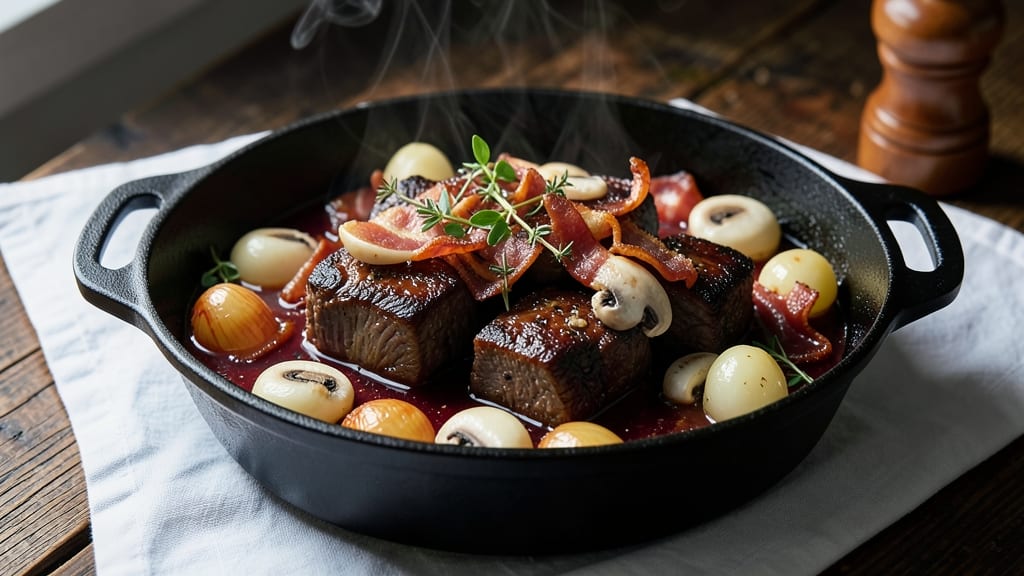
This classic Beef Bourguignon recipe channels the legendary technique of Auguste Escoffier, founder of modern French cuisine, transforming tough beef into melt-in-your-mouth tenderness through slow braising in rich red wine. The key lies in patience—three hours at 300°F transforms simple ingredients into a dish that tastes like a Parisian bistro.
Every bite delivers caramelized mushrooms, crispy bacon, and onions softened just enough to melt into the velvety sauce.
Escoffier’s principles shine in this recipe: proper browning of meat, deglazing with wine to capture fond, and layering flavors through slow cooking. While traditional versions require hours, modern adaptations—like using a Dutch oven and prepped ingredients—keep the essence without sacrificing authenticity.
The result is a dish that’s both comforting and refined, perfect for impressing guests or treating yourself to a restaurant-quality meal at home.
What makes this recipe truly special is the balance of textures—tender beef, crispy bacon, and mushrooms that caramelize at the edges while staying tender inside. The sauce, reduced to perfection, coats every bite with a depth of flavor that only comes from slow simmering.
Serve it with crusty bread to soak up every last drop, or pair it with buttery mashed potatoes for a heartier meal.
This isn’t just a recipe; it’s a lesson in French culinary tradition, simplified for home cooks. The techniques are approachable, the flavors unforgettable, and the results worth every minute of waiting.
Once you master this dish, you’ll understand why Escoffier’s methods have stood the test of time—and why this remains a timeless classic.
Ingredients for auguste escoffier beef bourguignon
Sixteen ingredients transform into Escoffier's legendary French wine braise, where patience and technique elevate simple components into restaurant-quality perfection.
| Ingredient | Amount | Notes |
|---|---|---|
| Beef Chuck Roast 🥩 | 3 lb | Center-cut preferred for tenderness |
| Dry Red Wine 🍷 | 2 cups | Bold, full-bodied like Cabernet Sauvignon |
| Beef Broth 💧 | 2 cups | Homemade or high-quality store-bought |
| Pearl Onions 🧅 | 1 ½ lb | Whole, peeled if preferred |
| White Mushrooms 🍄 | 1 ½ lb | Button or cremini, sliced |
| Thick-Cut Bacon 🥓 | 8 oz | Smoked or unsmoked, cut into 1/2-inch pieces |
| Garlic Cloves 🧄 | 6 cloves | Fresh, peeled and lightly crushed |
| All-Purpose Flour 🌾 | 2 tbsp | For dusting beef |
| Tomato Paste 🍅 | 2 tbsp | High-quality, smooth texture |
| Fresh Thyme 🌿 | 2 tbsp | Leaves only, chopped |
| Fresh Parsley 🌿 | ¼ cup | Chopped, for garnish |
| Olive Oil 🫒 | ½ cup | Extra-virgin for richness |
| Salt 🧂 | 1 ½ tsp | Kosher or sea salt |
| Black Pepper 🌶️ | 1 tsp | Freshly ground |
| Bay Leaves 🍃 | 2 whole | Fresh preferred, dried acceptable |
The beef selection is non-negotiable—center-cut chuck roast from a trusted butcher ensures optimal tenderness. Whole Foods or D'Artagnan carry premium cuts, but any reputable grocery store's pre-trimmed chuck works if you verify the marbling. For the wine, Caymus Cabernet Sauvignon or Louis M. Martini deliver consistent quality without breaking the bank. Pearl onions should be vibrant, not shriveled, and mushrooms should be firm with tightly packed gills. Bacon quality matters too—Oscars or Applewood smoked add depth that pre-packaged brands can't match. Fresh herbs are essential here; Penzeys bulk bins offer superior thyme and parsley compared to grocery store containers.
No chuck roast? Flank steak or sirloin can substitute, though texture will differ—slice thinly against the grain. Running short on wine? Beef broth with 1 tbsp balsamic vinegar mimics the acidity profile. Fresh thyme unavailable? Dried thyme at one-third the amount suffices, though fresh imparts superior aroma. Pearl onions can be swapped for shallots, and mushrooms can be omitted entirely if you prefer a more classic preparation. For the tomato paste, San Marzano is ideal, but any quality brand works. The key is balancing acidity—if your wine is particularly tannic, add a splash of water to the reduction stage.
This dish rewards advance preparation—browning the beef and bacon can be done a day ahead, then refrigerated with the wine deglaze. The complete braise keeps 3-4 days in the fridge, with flavors deepening over time. For longer storage, freeze for up to 3 months in airtight containers. When reheating, add a splash of broth to prevent drying. The sauce thickens as it cools, so adjust with a cornstarch slurry if needed. Serve with crusty baguette slices or buttery mashed potatoes to complement the rich textures.
Why You'll Love This Recipe
- Wine Simmer Magic: The red wine and beef broth meld into this rich, velvety sauce—no fancy technique needed. Just let it bubble while you chop onions, and by the end, you’ve got layers of depth that taste like a restaurant, not a weeknight shortcut.
- One-Pot Wonder: Honestly, this is my lazy-day hero. Brown the beef, toss everything in one pot, and walk away. The onions caramelize, the mushrooms melt, and the chuck roast turns fork-tender—all while you’re still deciding what to watch on TV.
- Leftovers That Shine: Between us, this dish improves overnight. The flavors marry even better the next day, and it reheats like a dream. Pack it for lunches or freeze portions—your future self will thank you when you’re microwaving something that still tastes like a celebration.
- Budget-Friendly Luxury: You’re getting restaurant-quality richness for a fraction of the cost. A chuck roast stretches far, the wine adds drama without breaking the bank, and the onions and mushrooms bulk it up beautifully. Fancy dinner for half the price? Yes, please.
Step-by-step instructions for Auguste Escoffier's beef bourguignon
A true French classic, this beef bourguignon delivers deep wine flavor and tender beef through precise technique.
Prepare the Beef and Build the Flavor Base
Pat the 3 lb beef chuck roast dry with paper towels to ensure maximum browning. Cut into 1½-inch cubes, discarding any large fat deposits. In a large Dutch oven, heat 0.25 cup of the olive oil over medium-high heat until shimmering. Working in batches, sear the beef until deeply browned on all sides—about 3-4 minutes per side. This step develops the rich, caramelized foundation for your dish.
Remove the beef and set aside. In the same pot, add the 8 oz thick-cut bacon and cook until crisp, about 6-8 minutes. Remove with a slotted spoon and set aside, leaving the rendered fat in the pot. Add the 1.5 lb sliced white mushrooms and cook for 5-6 minutes until they release their moisture and begin to brown. Stir in the 6 lightly crushed garlic cloves and cook for 30 seconds until fragrant.
Develop the Wine Reduction and Deglaze
Add the 2 tbsp tomato paste to the pot and stir for 1 minute to toast slightly. Pour in the 2 cups dry red wine and scrape up all the browned bits from the bottom of the pot with a wooden spoon. This deglazing captures all the flavor you've built so far. Bring to a simmer and reduce by half, about 8-10 minutes, until the wine reduces to a rich, syrupy consistency.
Sprinkle the 2 tbsp all-purpose flour over the reduction and whisk vigorously to combine. Cook for 1-2 minutes until the flour is fully incorporated and the mixture thickens slightly. This creates a smooth, velvety base for your sauce that will later incorporate the beef broth.
Braise the Beef Until Tender
Return the browned beef to the pot along with the crispy bacon. Add the 2 cups beef broth, 2 whole bay leaves, 1.5 tsp salt, and 1 tsp black pepper. Bring to a gentle simmer, then cover and transfer to a preheated 325°F oven. Braise for 2½ to 3 hours, turning the beef occasionally, until fork-tender.
The beef should be so tender it falls apart easily when pierced with a fork. If the liquid reduces too much before the beef is tender, add small amounts of water or broth as needed. This long, slow cooking process is essential for achieving the signature melt-in-your-mouth texture of classic beef bourguignon.
Finish with Pearl Onions and Fresh Herbs
Peel the 1.5 lb pearl onions and add them to the braising liquid. Return to the oven for an additional 30-45 minutes until the onions are tender and infused with the rich flavors. Stir in the 2 tbsp chopped fresh thyme and simmer uncovered for 5 minutes to allow the flavors to meld.
Remove the bay leaves and adjust seasoning if needed. Stir in the 0.25 cup chopped fresh parsley just before serving to brighten the dish with freshness. The final sauce should coat the back of a spoon with a velvety texture, perfectly balanced between the wine's acidity and the beef's richness.
Rest and Serve with Perfect Technique
Transfer the beef and onions to a serving platter, reserving the sauce. Let the dish rest for 10 minutes before serving to allow the juices to redistribute. Spoon the sauce over the top and garnish with additional parsley if desired. Serve with crusty bread or mashed potatoes to soak up every last drop of this luxurious sauce.
This dish improves with time, so it's perfect for preparing ahead. The flavors deepen as the sauce sits, making it an ideal candidate for meal prep. Each bite should deliver tender beef, caramelized mushrooms, and a complex wine sauce that embodies the essence of classic French cuisine.
Pro Tips For Making Auguste Escoffier Beef Bourguignon
- SEAR THE ROAST HARD: I learned this the hard way—skipping a deep, dark crust means flavorless beef. Use a heavy pan (cast iron if you have it) and let it sit until the edges are almost black before touching it with wine. The goal isn’t just browning; it’s building layers of caramelized flavor that’ll melt into the sauce later.
- PEEL ONIONS LAST MINUTE: Pearl onions take forever to peel if you do it ahead. Keep them whole and frozen until you’re ready to add them—thaw them in cold water for 10 minutes, then parboil for 3 minutes. They’ll soften perfectly without turning to mush, and you’ll save 20 minutes of tedious prep.
- DEGLAZE WITH PATIENCE: After searing the beef, don’t rush the wine. Let it simmer for 5 minutes before adding broth—this lets the alcohol cook off and the fond dissolve properly. If you dump everything in at once, you’ll end up with a thin, boozy sauce instead of a rich, velvety reduction.
- SAVE THE BROTH WATER: The beef broth you buy rarely tastes as good as homemade. Keep the water you parboil the mushrooms in—strain it and add it to the pot with the wine. It’s got umami from the mushrooms, and it’ll deepen the sauce without extra effort. (Yes, even if it looks weird.)
Regional styles of this recipe
Classic Parisian Style
In Parisian bistros, beef bourguignon is all about slow-cooked richness and wine-forward flavors. The key difference is using dry red Burgundy wine (like Domaine de la Romanée-Conti or affordable Louis Jadot) instead of generic Cabernet.
Parisian chefs also add a splash of beef marrow to the sauce for extra depth, and finish with a pinch of sugar to balance acidity. The dish is traditionally served with crusty baguette slices and buttery pommes purée. 🍷
Lyon's Hearty Version
Lyon, the gastronomic capital of France, takes bourguignon to heartier levels by incorporating charcuterie elements like lyonnaise sausage and lardons. Their version often includes a splash of white wine in the reduction to lighten the sauce slightly, and finishes with a sprinkle of nutmeg for warmth.
Lyon's style also features more mushrooms—sometimes up to 2 lbs—and a longer braising time of 3-4 hours to ensure maximum tenderness. 🥓
Provençal Adaptation
The Provençal twist on bourguignon swaps red wine for rosé (like Whispering Angel) and incorporates herbs de Provence into the braising liquid. They also add sun-dried tomatoes and olive tapenade to the sauce, creating a brighter, more herbaceous profile.
The beef is often marinated overnight in olive oil, garlic, and thyme before browning. This version pairs beautifully with roasted ratatouille on the side. 🌿
Modern French Simplification
Today's French home cooks often shorten the braising time to 2 hours while using pressure cookers (like Instant Pot) to achieve similar results in 45 minutes. Modern versions also incorporate umami-rich ingredients like fish sauce or soy sauce for depth without wine.
The sauce is frequently finished with a touch of crème fraîche for a silkier texture. This approach keeps the dish accessible while maintaining authenticity. ⚡
Alsatian Twist
In Alsace, bourguignon gets a German-inspired touch with the addition of smoked sausages (like knacks) and a dash of caraway seeds in the sauce. The wine is often replaced with Riesling for a sweeter, fruitier profile.
The dish is served with potato dumplings instead of bread, creating a heartier, more substantial meal. This version is especially popular during winter months. 🥔
Escoffier's Original Technique
Auguste Escoffier's version from the Guide Culinaire emphasizes precise temperature control at 300°F (150°C) and layered reductions—first reducing the wine to a syrup, then adding broth in stages. He also insisted on pearl onions for their delicate sweetness and bacon lardons for fat content.
Escoffier's method creates a sauce that's glossy yet thick, with a perfect balance of acidity and richness. This remains the gold standard for authenticity. 💎
Nutrition facts
Frequently asked questions
Can I use a different cut of beef instead of chuck roast?
Yes, but choose wisely! Flank steak or sirloin work in a pinch, but slice thinly against the grain for tenderness. For best results, stick with chuck roast or short ribs—they're designed for slow cooking and develop the rich, beefy flavor Escoffier intended.
What if I don't have Burgundy wine? Can I substitute?
Any bold, dry red wine with moderate tannins works—think Cabernet Sauvignon or Merlot. For non-alcoholic versions, use 2 cups beef broth + 1 tbsp balsamic vinegar to mimic the acidity. Avoid sweet wines like Zinfandel—they'll make the sauce cloying.
How do I fix a sauce that's too thin or too thick?
For a thin sauce, simmer uncovered for 5-10 minutes to reduce. If it's too thick, whisk in 1-2 tbsp warm beef broth at a time until you reach a velvety consistency. Never rush this—let the sauce work with the beef's natural juices.
Can I make this in a slow cooker or Instant Pot?
Yes! For a slow cooker, brown the beef and bacon first, then transfer everything to the pot and cook on low for 6-8 hours. For an Instant Pot, follow the same browning steps, then cook on high pressure for 45 minutes (natural release). The Instant Pot version cuts cooking time by 2 hours while keeping the dish tender.
Why does my beef turn out tough instead of tender?
This usually happens from overcooking or not enough liquid. Keep the oven at 300°F and add water or broth if the liquid reduces too quickly. Also, ensure you're using a chuck roast (not lean cuts) and don't skip the 3+ hour braising time. Patience is key—tough beef means you rushed it!