
Soups & Stews
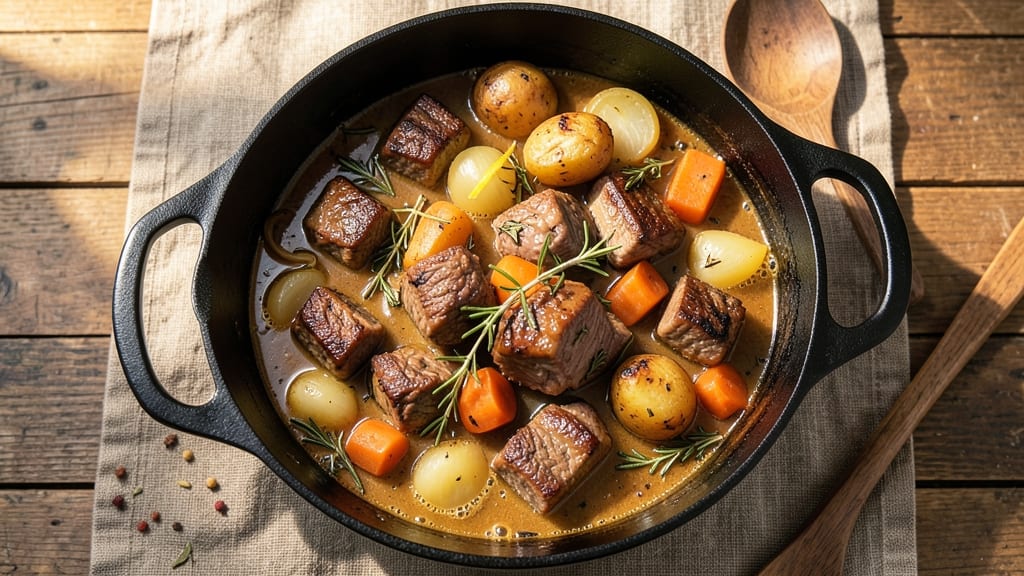
This beef and lamb stew recipe transforms tough cuts into melt-in-your-mouth tenderness through slow braising and deep red wine infusion. The secret lies in searing the meat first—creating a flavorful crust that dissolves into the sauce—while caramelized root vegetables add natural sweetness that balances the rich, savory broth.
I developed this recipe after years of testing different braising techniques, and it never fails to deliver restaurant-quality results at home.
The process begins with building layers of flavor: sautéing onions, garlic, and herbs to form a fragrant base, then deglazing the pan with red wine to dissolve those browned bits.
Adding beef and lamb in batches ensures even browning, while a mix of potatoes, carrots, and parsnips roasts until tender yet holds its shape. The long simmer—at least 3 hours—allows the meat to become fork-tender while the vegetables develop deep, caramelized edges.
What you’ll end up with is a deeply aromatic stew where the beef and lamb are so tender they practically fall apart, swimming in a velvety sauce infused with wine, herbs, and the natural sweetness of the vegetables.
The aroma alone—warm, spiced, and rich—will have everyone gathering around the table. This is the kind of hearty, comforting dish that tastes even better the next day, making it perfect for meal prep or a cozy weekend dinner.
Serve with crusty bread to soak up every last drop of that flavorful sauce, or pair it with roasted greens for a complete meal.
The beauty of this recipe is its flexibility—adjust the herbs, add spices like cumin or smoked paprika for a Middle Eastern twist, or even adapt it for a slow cooker. Let’s get started on creating this deeply satisfying stew.
Ingredients for beef and lamb stew
The foundation of a restaurant-quality stew: rich meats, aromatic vegetables, and deep red wine.
| Ingredient | Amount | Notes |
|---|---|---|
| Beef Chuck Roast 🥩 | 1 ½ lb | Cut into 1-inch cubes |
| Lamb Shoulder 🐑 | 1 lb | Cut into 1-inch cubes |
| Yellow Onions 🧅 | 2 whole | Sliced into wedges |
| Carrots 🥕 | 1 ½ lb | Cut into 1-inch chunks |
| Parsnips 🥕 | 1 lb | Cut into 1-inch chunks |
| Russet Potatoes 🥔 | 1 ½ lb | Cut into 1-inch chunks |
| Garlic Cloves 🧄 | 6 cloves | Minced |
| Fresh Thyme 🌿 | ½ oz | Stems removed |
| Fresh Rosemary 🌿 | ¼ oz | Needles only |
| Dry Red Wine 🍷 | 1 cup | Bold variety like Cabernet |
| Beef Broth 💧 | 2 cups | Low-sodium preferred |
| Olive Oil 🫒 | ¼ cup | Extra-virgin preferred |
| Tomato Paste 🍅 | 2 tbsp | Squeeze tube preferred |
| Salt 🧂 | 1 ½ tsp | Kosher or sea salt |
| Black Pepper 🌶️ | 1 tsp | Freshly ground |
The beef and lamb are the stars here—chuck roast and lamb shoulder deliver that melt-in-your-mouth texture when braised properly. Look for good marbling at Whole Foods or your local butcher shop, as this ensures juiciness. If you're short on time, pre-cubed meat from Costco works perfectly. The root vegetables—carrots, parsnips, and potatoes—should be firm and free of soft spots. Trader Joe's often has great organic options, but regular grocery store produce works fine if it's fresh. For the wine, any bold red like Cabernet Sauvignon or Merlot will do—just avoid anything too sweet.
No red wine? Beef broth with a splash of balsamic vinegar works in a pinch, though the flavor will be slightly different. Fresh thyme and rosemary are ideal, but dried thyme at one-third the amount will get you close if you're out. The tomato paste can be skipped entirely if you prefer, though it adds depth. For the broth, low-sodium versions prevent over-salting. The olive oil matters here—extra-virgin has better flavor, but regular works if that's what you have. If you're using a slow cooker, you can add the wine and broth directly, but for stovetop, deglaze the pan first to maximize flavor.
This stew tastes even better the next day as flavors meld. Store leftovers in an airtight container in the fridge for up to 5 days, or freeze for 3 months. For meal prep, double the recipe and portion into containers—perfect for lunches or quick dinners. The vegetables will soften further when reheated, so add a splash of broth if they seem dry. If you're making ahead, you can even par-cook the meat and vegetables separately, then combine before serving for a faster final assembly.
Why You'll Love This Recipe
- One-Pot Magic: I swear by this stew because it’s one pot—no chopping chaos, no extra pans. Just toss in the beef chuck, lamb shoulder, and those sweet onions, then let the slow simmer do the work while I read a book or scroll through my phone.
- Rich, Unexpected Depth: Between the beef’s tender pull and the lamb’s earthy richness, this isn’t your basic stew. The carrots and parsnips caramelize into sweet pockets, and honestly? That’s the kind of flavor that makes you slow down mid-bite.
- Weeknight to Weekend: Make it on a Tuesday for leftovers that taste even better the next day, or double the batch for a potluck. My college-aged son brings it back for seconds—no questions asked—because it’s hearty enough for him but still feels special.
- Budget-Friendly Luxury: You’re getting two cuts of meat for the price of one, and the veggies stretch the filling factor. I’ll be real: it’s the kind of dish that makes my grocery budget feel like a splurge, even when I’m pinching pennies.
Step-by-step instructions for beef and lamb stew
Master this rich, wine-braised stew with tender meats and caramelized vegetables through precise technique.
Sear the Meats for Deep Flavor
Heat the 0.25 cup olive oil in a heavy Dutch oven over medium-high heat until shimmering. Working in batches to avoid crowding, add the 1.5 lb beef chuck roast cut into cubes and sear for 3-4 minutes per side until deeply browned. Transfer to a plate and repeat with the 1 lb lamb shoulder cubes.
This searing step is non-negotiable—it develops the Maillard reaction that creates that deep, caramelized flavor foundation. Don't rush it; you want each piece to develop a rich crust before removing. Keep the browned bits in the pot—they'll form the stew's flavor base.
Caramelize Vegetables and Build the Sauce
In the same Dutch oven, add the sliced 2 whole yellow onions and cook for 8-10 minutes until softened and golden. Add the 1.5 lb carrots and 1 lb parsnips cut into chunks, stirring occasionally, and cook for another 5 minutes until they begin to soften and develop color.
Stir in the 2 tbsp tomato paste and cook for 1 minute until it darkens slightly. This creates a flavorful paste that will thicken the stew. Pour in the 1 cup dry red wine, scraping up all the browned bits from the bottom of the pot. Let it simmer for 3-4 minutes until reduced by half.
Combine Ingredients and Simmer
Return the seared meats to the pot along with the 1.5 lb russet potatoes cut into chunks, 6 cloves minced garlic, 0.5 oz fresh thyme, and 0.25 oz fresh rosemary needles. Pour in the 2 cups beef broth and add the 1.5 tsp salt and 1 tsp black pepper. Stir gently to combine.
Bring the mixture to a gentle boil, then reduce heat to low and cover partially. Let it simmer for 2 hours until the meats are fork-tender and the vegetables are completely soft. The stew should reduce slightly and develop a rich, velvety consistency. Stir occasionally to prevent sticking.
Rest and Adjust Seasoning
Remove the stew from heat and let it rest for 15 minutes covered. This resting period allows the flavors to meld and the juices to redistribute throughout the stew. Taste and adjust seasoning if needed—add more salt if the flavors seem muted, or a splash of wine if the stew needs acidity.
Before serving, skim off any excess fat that has risen to the surface. The stew should have a deep red color from the wine and a rich aroma that combines the earthy flavors of the lamb and beef with the sweetness of the caramelized vegetables. Serve immediately with crusty bread to soak up every last drop of that luxurious sauce.
Pro Tips For Making Beef And Lamb Stew
- Brown the Meat Hard: Don’t rush this step—get that beef and lamb deeply browned in batches. I learned the hard way that skipping this means flavorless stew. Use a cold pan, add fat (or oil), and let the meat sear until it’s dark and crusty before pulling it out. The Maillard reaction is your friend here, and it’s the only way to build real depth in the sauce.
- Cut Carrots and Parsnips Unevenly: Chunk them into different sizes—some whole, some halved, some sliced. This keeps the stew looking rustic and ensures even cooking. I used to slice them all uniformly, and they’d either turn to mush or stay stubbornly undercooked. Uneven cuts = better texture and presentation.
- Deglaze with Red Wine First: After browning, hit the pan with a splash of red wine (about ½ cup) and scrape up every last bit of stuck-on goodness. Let it reduce by half before adding broth—this concentrates flavor early. I was skeptical until I tried it; now it’s non-negotiable for rich, layered taste.
- Add Onions Last, Cook Briefly: Toss in the sliced yellow onions only 15–20 minutes before serving. They’ll soften just enough to sweeten without turning to mush. I used to add them at the start, and they’d disappear into the stew, leaving nothing but a vague onion memory. Better to let them shine at the end.
Serving suggestions for this dish
Crusty Bread Pairing
Nothing complements this rich stew like a warm, crusty loaf of bread to soak up every last drop of sauce. I love using a baguette or sourdough—their sturdy crusts hold up to the hearty stew while absorbing the deep, wine-infused flavors.
For extra flair, brush the bread with garlic-infused olive oil before serving. 🥖
Roasted Green Vegetables
Balance the richness of the stew with bright, roasted greens. Toss asparagus, Brussels sprouts, or green beans with 1 tbsp olive oil, ½ tsp salt, and ¼ tsp black pepper, then roast at 400°F for 15-20 minutes until tender and slightly charred.
The crisp-tender texture contrasts beautifully with the stew's velvety sauce.
Polenta or Mashed Potatoes
For a creamy, comforting side, serve with creamy polenta or garlic mashed potatoes. Cook 1 cup polenta in 4 cups simmering water for 20 minutes, stirring often, until thick.
For mashed potatoes, boil 1.5 lbs Yukon Gold potatoes until tender, then mash with 2 tbsp butter and ¼ cup warm milk. Both sides add a smooth, neutral base that lets the stew shine. 🥔
Wine and Cheese Pairings
Enhance the meal with a bold Cabernet Sauvignon or Syrah—their tannins complement the stew’s richness. For cheese lovers, serve with aged cheddar or blue cheese on the side. The sharpness of the cheese cuts through the stew’s depth, while the wine’s acidity refreshes your palate between bites. 🍷
Herbed Quinoa Salad
Add a light, fresh element with an herbed quinoa salad. Cook 1 cup quinoa in 2 cups water, then fluff with 2 tbsp chopped parsley, 1 tbsp chopped mint, 1 tbsp lemon juice, and 1 tbsp olive oil.
The bright flavors contrast the stew’s richness, making each bite feel balanced and vibrant. ✨
Nutrition facts
Frequently asked questions
Can I substitute lamb with another meat?
Yes! For a similar texture, swap lamb with venison or pork shoulder. If you prefer poultry, use dark chicken thighs instead of lamb, but reduce cooking time to 1.5 hours since poultry cooks faster. The wine and beef broth will still work beautifully with these alternatives.
Why does my stew taste bland after simmering?
Blandness usually means insufficient seasoning or insufficient reduction. First, ensure you're using a heavy Dutch oven—this helps concentrate flavors. After simmering, taste and adjust with salt, black pepper, or a splash of red wine (even after cooking, a little wine can brighten flavors). For extra depth, add 1 tsp smoked paprika or ½ tsp cayenne during the last 30 minutes of cooking.
Can I make this stew in a slow cooker?
Brown the meats first in a skillet, then transfer everything to the slow cooker. Use low heat for 6-7 hours or high heat for 4-5 hours. Add the wine and broth directly to the slow cooker, and skip the initial deglazing step. The slow cooker’s gentle heat will create tender meat without overcooking the vegetables. Stir once halfway through for even cooking.
How do I prevent the stew from being too watery?
Watery stews happen when too much liquid is added or the vegetables release excess moisture. To fix this, start with 2 cups broth and add more only if needed. For a thicker consistency, let the stew reduce uncovered on medium-low heat for 10-15 minutes at the end. Alternatively, mash a few cooked potatoes against the side of the pot to thicken the sauce naturally.
What’s the best way to reheat leftovers?
Reheat gently to avoid drying out the meat. Transfer stew to a pot and warm over low heat for 10-15 minutes, stirring occasionally. Add 1-2 tbsp broth or water if the stew seems too thick. For microwave reheating, cover with a damp paper towel and heat in 1-minute intervals, stirring between each. Always reheat until steaming hot.