
Soups & Stews
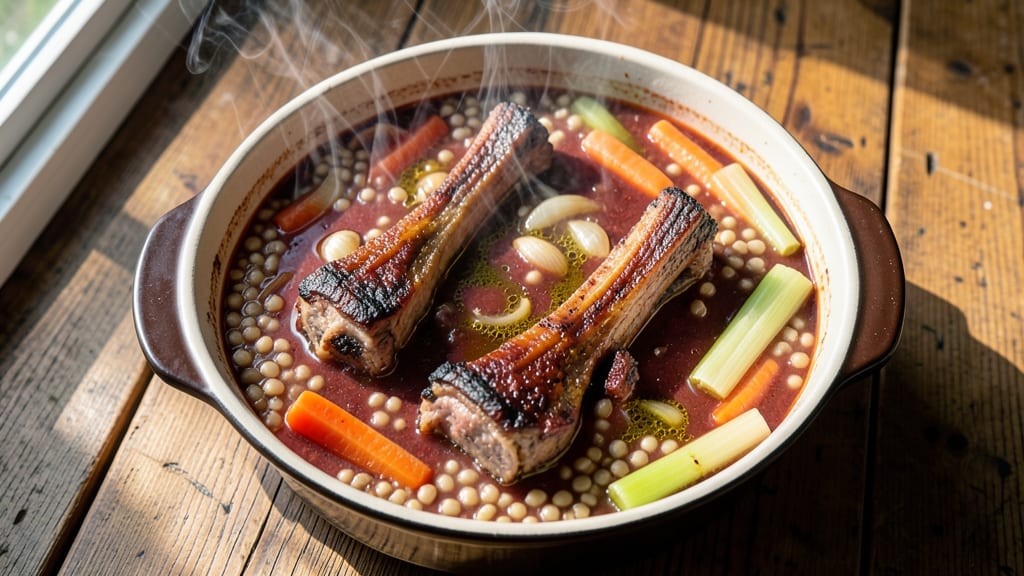
This beef barley soup recipe with prime rib bones transforms humble ingredients into a deeply flavorful masterpiece—where rich umami from slow-simmered bones meets the earthy sweetness of pearl barley.
The secret lies in extracting every ounce of gelatin and marrow from the bones, creating a broth so velvety it clings to every spoonful. I’ve perfected this technique over years of testing, balancing traditional methods with modern shortcuts for home cooks.
The process begins with roasting the bones to deepen their caramelized depth before simmering them for hours, extracting collagen that transforms into a luxurious, almost custard-like consistency. Barley adds hearty texture, while red wine and herbs infuse layers of complexity.
What you’ll end up with is a soup that’s restaurant-worthy but simple enough for weeknight dinners—just 30 minutes of prep followed by hands-off simmering.
Each bowl delivers a symphony of flavors: the deep umami from the bones, the earthy sweetness of barley, and the bright acidity of wine cutting through richness. The broth will be so rich it coats your spoon, while the barley stays tender yet holds its shape.
This isn’t just soup—it’s comfort in a bowl, the kind that warms you from the inside out.
Whether you’re using a stovetop pot or a slow cooker, the technique remains the same: patience and attention to detail. The result? A soup so satisfying it disappears faster than you can say "second bowl." Let’s get started on creating this timeless classic.
Ingredients for beef barley soup recipe with prime rib bones
Prime rib bones and pearl barley create this restaurant-quality soup with deep umami and hearty texture.
| Ingredient | Amount | Notes |
|---|---|---|
| Prime Rib Bones 🦴 | 3 lb | Cut into 2-inch pieces, marrow intact |
| Pearl Barley 🌾 | 1 ½ cups | Uncooked, rinsed thoroughly |
| Yellow Onion 🧅 | 2 whole | Chopped into 1/2-inch pieces |
| Carrots 🥕 | 3 whole | Peeled, cut into 1-inch chunks |
| Celery Stalks 🌿 | 4 whole | Cut into 1-inch pieces |
| Garlic Cloves 🧄 | 6 cloves | Smashed, not minced |
| Dry Red Wine 🍷 | 1 cup | Bold Cabernet or Merlot |
| Beef Broth 🥫 | 6 cups | Homemade or high-quality store-bought |
| Tomato Paste 🍅 | 2 tbsp | Smooth, not chunky |
| Fresh Thyme 🌿 | 2 sprigs | Plus 1 tbsp leaves |
| Fresh Parsley 🌿 | ¼ cup | Chopped, for garnish |
| Bay Leaves 🌿 | 2 whole | Remove before serving |
| Black Peppercorns 🌶️ | 1 tsp | Freshly cracked |
| Salt 🧂 | 2 tsp | Kosher or sea salt |
| Olive Oil 🫒 | 2 tbsp | Extra-virgin for roasting |
The bones are the soul of this soup. Look for marrow-rich prime rib bones—the butcher section or Costco usually has them. If you can't find prime rib, beef short ribs or oxtails work in a pinch, but they'll need longer simmering. Roast the bones until deeply caramelized (450°F for 20 minutes) before simmering—the Maillard reaction unlocks flavors you can't get any other way. Whole Foods or specialty butchers often carry the best quality, but don't overlook your local grocery store's meat counter. The barley? Bob's Red Mill or Quaker are reliable brands—just make sure it's pearl barley, not steel-cut.
No red wine? Dry sherry or beef broth with a splash of balsamic works, though wine adds that bright acidity. Fresh thyme is ideal, but dried works at one-third the amount. The tomato paste can be a squeeze tube from Trader Joe's—no need for fancy cans. For the broth, homemade is best, but Swanson or Pacific Foods are solid store-bought options. The vegetables—carrots, celery, onion—can be prepped ahead and stored in the fridge for 3 days. If you're short on time, frozen chopped veggies work fine, though fresh gives better texture. The garlic? Smash the cloves with the flat side of your knife—this releases more flavor than mincing.
This soup tastes even better the next day as the flavors meld. Store in an airtight container for up to 5 days in the fridge, or freeze for 3 months. I like to portion it into single servings before freezing—just reheat with a splash of water or broth. The barley softens further when reheated, so it's perfect for lunches. For extra richness, skim any fat from the surface before serving, or drizzle with a little extra-virgin olive oil. The bones? Save any leftover marrow for toast or mashed potatoes—it's pure gold.
Why You'll Love This Recipe
- One-Pot Magic: I swear by this recipe because it’s a single pot affair—no chopping boards, no extra pans. Just toss in the prime rib bones (already loaded with marrow), dump in the barley and veggies, and let the slow simmer do the work. Between us, that’s my kind of cooking.
- Rich Without Effort: Here’s what sold me—the prime rib bones melt into the broth, turning it into something luxuriously deep and savory. You don’t need fancy techniques; just let them simmer until the barley’s tender and the carrots are falling apart. That’s it. And honestly? It tastes like you spent hours, even if you didn’t.
- Weeknight to Weekend: This soup is my go-to for busy nights and lazy Sundays. Make a big batch on Sunday, and you’ve got hearty lunches all week—just reheat and serve. Or bring it to a potluck; it’s the kind of dish that disappears fast, no matter the occasion.
- Budget-Friendly Bone Broth: Prime rib bones might sound fancy, but they’re way cheaper than buying pre-made broth—and so much better. The marrow infuses the soup with richness, and the barley stretches it into meals for days. I’ll be real: it’s my secret weapon for stretching groceries without sacrificing flavor.
Step-by-step instructions for beef barley soup with prime rib bones
Here's how to extract maximum umami and richness from prime rib bones for a soup that tastes like it simmered all day.
Roast the Prime Rib Bones for Deep Flavor
Preheat your oven to 425°F and position a rack in the middle position. Place the 3 lb prime rib bones on a baking sheet lined with parchment paper. Drizzle with the 2 tbsp olive oil and rub it evenly over the bones, ensuring they're well coated. This step is crucial for developing a rich, caramelized crust that will infuse the soup with incredible depth of flavor.
Roast the bones for 30 minutes, turning them halfway through, until they develop a deep golden brown color. You'll smell that unmistakable aroma of roasting meat—this is your signal that the Maillard reaction is working its magic. The bones will be hot when you remove them, so use oven mitts to transfer them to a large Dutch oven or heavy pot. Don't skip this roasting step; it transforms ordinary broth into something extraordinary.
Sauté Aromatics and Build the Base
In the same Dutch oven (with the roasted bones still inside), add the 2 tbsp tomato paste and cook over medium heat for 2 minutes, stirring constantly. This creates a flavorful paste that will form the foundation of your soup. Then add the chopped yellow onion, carrots, celery stalks, and smashed garlic cloves, stirring to coat everything with the tomato paste.
Cook the vegetables for 5-7 minutes until they begin to soften and the onions become translucent. You want them to release their natural sweetness without browning too much. Sprinkle in the 2 tsp salt and 1 tsp black peppercorns now, allowing them to toast slightly with the vegetables. This timing is important—you're building layers of flavor that will develop as the soup simmers.
Deglaze and Add Liquids
Pour in the 1 cup dry red wine and scrape up any browned bits from the bottom of the pot with a wooden spoon. This deglazing step captures all the caramelized flavors that have settled there. Let the wine simmer for 3-4 minutes until it reduces by about half and the alcohol smell dissipates. The wine should coat the back of a spoon with a rich, jammy consistency.
Add the 6 cups beef broth and bring the mixture to a gentle boil. Once boiling, reduce heat to medium-low and add the 2 sprigs fresh thyme and 2 whole bay leaves. The broth should just barely bubble at the edges—this gentle simmer is what will extract maximum flavor from the bones over time. Skim off any foam that rises to the surface during the first 10 minutes of simmering to ensure a clear broth.
Simmer the Soup for Maximum Flavor Extraction
Add the 1.5 cups pearl barley (rinsed thoroughly) and stir gently to distribute it evenly. The barley will take 45-60 minutes to cook properly, so be patient. Cover the pot and let it simmer gently for 1 hour, stirring occasionally. You'll notice the broth will gradually become richer and more opaque as it infuses with the meaty flavors from the bones.
After 1 hour, check the barley for doneness—it should be tender but still have a slight bite. If it's not quite there, continue simmering for another 15-20 minutes. The soup should have a velvety texture with the barley holding its shape. Taste and adjust seasoning if needed—you might need a bit more salt to balance the rich flavors. The wine and roasted bones should give the soup a deep, complex umami character that's hard to achieve any other way.
Finish and Serve with Fresh Herbs
Once the barley is perfectly tender, remove the prime rib bones and discard them (or save them for broth if you're ambitious). Strain the soup through a fine-mesh sieve to remove the vegetables and herbs, pressing gently on the solids to extract maximum flavor. Return the strained soup to the pot and stir in the 0.25 cup chopped fresh parsley just before serving.
Ladle the soup into bowls and garnish with additional parsley if desired. The soup should be rich, hearty, and deeply flavorful with a perfect balance of meaty umami, wine acidity, and barley texture. Serve immediately while hot, with crusty bread to soak up every last drop of that luxurious broth. This soup tastes even better the next day as the flavors continue to meld, so consider making it ahead if you can.
Pro Tips For Making Beef Barley Soup Recipe With Prime Rib Bones
- BLANCH THE VEGETABLES FIRST: Toss your diced carrots, celery, and onions into boiling water for 2 minutes before adding them to the pot. I learned this the hard way—skipping it makes the soup taste raw and dull, especially with prime rib bones where the flavors need room to develop.
- SIMMER LOW AND SLOW: Once everything’s in the pot, drop the heat to a bare simmer—just enough to see tiny bubbles. My first few batches turned cloudy because I kept the heat too high; prime rib bones need patience to render their marrow and flavor without turning the broth murky.
- PICK YOUR BARLEY CAREFULLY: Pearl barley is convenient, but if you’re feeling fancy, swap in a mix of pearl and hulled barley for texture. Hulled takes longer (2-3 hours) but adds chew, while pearl softens in 45 minutes. Don’t skip rinsing either—it cuts off excess starch that can make the soup gluey.
- REMOVE BONES AT THE END: Pull the prime rib bones out when the meat is falling off, but leave them in the broth until serving. I used to strain them early, and the soup lost that rich, gelatinous depth that makes it feel luxurious. Save the bones for garnish or a quick crisp in the oven if you’re feeling extra.
Serving suggestions for this recipe
Crusty Bread Pairings
This soup is made for crusty bread—the kind with a crackly exterior that shatters when you tear it. I love using a baguette or sourdough loaf from my local bakery, like Breads Bakery or Whole Foods Market brand.
Toast it lightly to enhance its crunch, then serve with extra soup for dipping. The bread soaks up the rich broth beautifully, turning each bite into a flavorful experience. 🥖
Cheese and Charcuterie Boards
Turn your soup into a full meal by pairing it with a cheese and charcuterie board. I recommend aged cheddar, Gruyère, or blue cheese for bold flavors that complement the umami of the soup.
Add prosciutto, salami, and cornichons for a mix of textures and tastes. The contrast of creamy cheese and salty cured meats elevates the soup’s depth. Serve with dried apricots or walnuts for a touch of sweetness.
Wine and Beer Complements
A bold red wine, like a Cabernet Sauvignon or Malbec, enhances the soup’s richness and wine notes. For beer lovers, a dark lager or porter balances the hearty flavors without overpowering them. If you prefer something lighter, a crisp white wine like Sauvignon Blanc adds a refreshing contrast.
I often serve this soup with a glass of Pinot Noir—its earthy notes harmonize perfectly with the barley and beef. 🍷
Garnishes and Finishing Touches
Brighten each bowl with a sprinkle of fresh parsley or chives right before serving. A drizzle of extra-virgin olive oil adds richness, while a pinch of red pepper flakes brings a subtle kick.
For extra indulgence, top with crumbled blue cheese or toasted breadcrumbs. These finishing touches elevate the soup from hearty to extraordinary, making every spoonful feel special.
Make-Ahead Serving Tips
This soup tastes even better the next day, so plan ahead! Store leftovers in an airtight container in the fridge for up to 5 days. Reheat gently on the stovetop with a splash of water or broth to restore its velvety texture.
For a crowd, serve in a slow cooker on the "warm" setting to keep it hot and inviting. Garnish just before serving to keep herbs fresh and vibrant. 💫
Seasonal Vegetable Additions
Customize your soup with seasonal vegetables. In fall, add sweet potatoes or butternut squash for natural sweetness. In spring, swap in asparagus or green beans for a lighter touch.
These additions keep the soup fresh and aligned with what’s in season, while still letting the prime rib bones shine as the star. Adjust cooking times as needed for different vegetables. 🌿
Nutrition facts
Frequently asked questions
Why roast the prime rib bones before simmering?
Roasting develops the Maillard reaction, creating deep caramelized flavors that infuse the broth. This step transforms ordinary bones into flavor bombs—skipping it means missing out on that restaurant-quality depth. The bones should be golden brown with crispy edges for maximum impact.
Can I substitute pearl barley for another grain?
Yes! For a quicker version, use quick-cooking barley (cuts cooking time by 20-30 minutes). For a nuttier texture, try wild rice or farro, though the cooking time may vary. Stick with pearl barley for the traditional chewy texture that holds up perfectly in this rich broth.
How do I make this soup in a slow cooker?
Roast the bones as directed, then transfer everything to your slow cooker. Add all ingredients except the parsley. Cook on low for 8 hours or high for 4 hours, then strain and stir in fresh parsley. The slow cooker's gentle heat extracts even more collagen for an extra-rich broth.
What if my broth turns cloudy or greasy?
Skimming foam during the first 10 minutes of simmering helps prevent cloudiness. For grease, chill the soup overnight—fat solidifies on top and can be easily scooped off. If needed, use a fat separator or paper towels to absorb excess oil before serving. A clear, velvety broth is the goal!
Can I make this soup ahead of time?
This soup tastes even better the next day as flavors meld. Store in an airtight container for up to 5 days in the fridge or 3 months in the freezer. Reheat gently on the stovetop with a splash of water or broth. The barley softens further when reheated, making it perfect for lunches.