
Soups & Stews
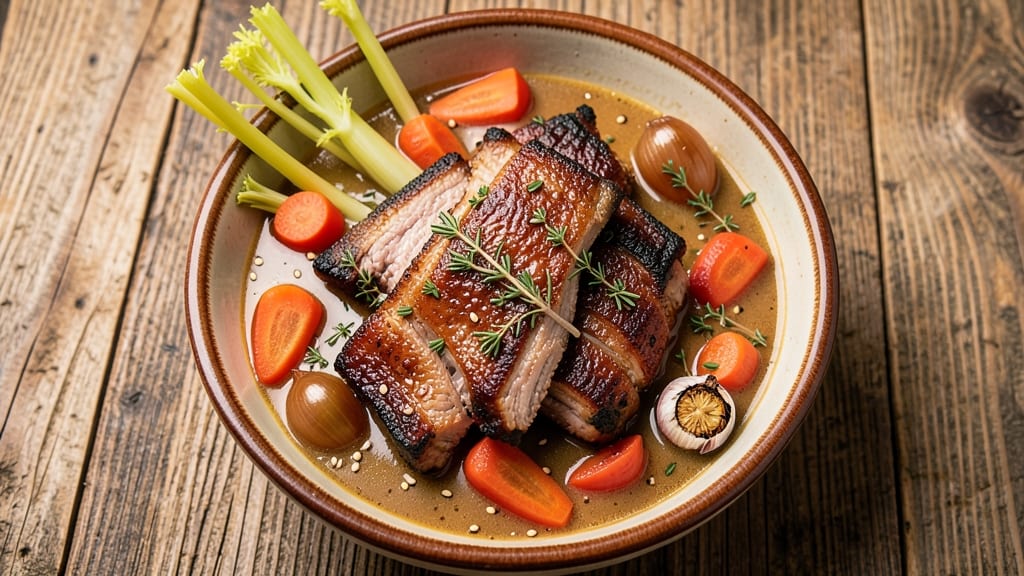
This beef back ribs soup recipe transforms tough bones and meat into a rich, velvety broth that carries deep smoky flavors from slow-cooked ribs. The process begins with searing the ribs to develop a caramelized crust, then simmering them for hours until the meat falls off the bone and infuses the broth with unmatched depth. Every spoonful delivers layers of savory, umami richness that turns a simple meal into a comforting centerpiece.
The key to success lies in proper preparation: degreasing the broth regularly to maintain clarity while preserving that irresistible rib flavor. Aromatics like garlic, thyme, and bay leaves build complexity, while carrots and celery add natural sweetness and texture.
The result is a soup that feels luxurious yet remains approachable for home cooks—no fancy techniques required, just patience and attention to detail.
By the time you serve this soup, you'll have tender rib meat that practically melts in your mouth, paired with a broth so flavorful it deserves a spoon of its own.
The aroma alone will have everyone gathering at the table, and the first bite delivers that perfect balance of smoky, savory, and slightly sweet notes that define great comfort food.
Perfect for chilly evenings or when you want to impress guests with minimal effort, this soup reheats beautifully and tastes even better the next day. Pair it with crusty bread to soak up every last drop of that rich, rib-infused broth. Let's get started on creating this hearty masterpiece.
Ingredients for beef back ribs soup
Six pounds of ribs, aromatic veggies, and patient simmering create this soul-warming masterpiece.
| Ingredient | Amount | Notes |
|---|---|---|
| Beef Back Ribs 🥩 | 4 lb | Bone-in, meaty cuts preferred |
| Yellow Onion 🧅 | 2 whole | Chopped into 1-inch pieces |
| Carrots 🥕 | 4 medium | Peeled and cut into 1-inch chunks |
| Celery Stalks 🧆 | 4 whole | Chopped into 1-inch pieces |
| Garlic Cloves 🧄 | 6 cloves | Peeled and smashed |
| Fresh Thyme 🌿 | 2 tbsp | Leaves only, stems removed |
| Bay Leaves 🌿 | 2 whole | Dried or fresh |
| Tomato Paste 🍅 | ½ cup | For depth of flavor |
| Beef Broth 💧 | 8 cups | Homemade or high-quality store-bought |
| Apple Cider Vinegar 🍎 | 2 tbsp | Brightens flavors |
| Black Peppercorns 🌶️ | 1 tsp | Freshly cracked |
| Salt 🧂 | 2 tsp | Kosher or sea salt |
| Olive Oil 🫒 | ¼ cup | For searing ribs |
| Fresh Parsley 🌿 | ¼ cup | Chopped for garnish |
The ribs are the star—look for meaty back ribs with good marbling. Costco or local butchers often have the best cuts, but the grocery store ribs work too. Fresh thyme and bay leaves elevate the broth, so don't skip them. If you're using dried thyme, double the amount. For the tomato paste, San Marzano is ideal—it's sweeter and richer than regular brands. Carrots and celery should be firm with no soft spots, and the onions should have a crisp texture when sliced.
No fresh thyme? Dried thyme at double the amount works in a pinch. Short on beef broth? Water plus 2 beef bouillon cubes gets you close. The apple cider vinegar can be swapped for red wine vinegar or lemon juice, but it adds that perfect tang. If you're prepping ahead, freeze the raw ribs for up to 3 months—they'll thaw perfectly for cooking. The tomato paste can be pre-mixed with a splash of broth to make it easier to stir in later. For extra depth, add 1 tsp smoked paprika with the tomato paste.
This soup tastes even better the next day as flavors meld. Store in the fridge for 4-5 days or freeze for up to 3 months. To reheat, simmer gently on the stove—never microwave it. The broth will thicken slightly when chilled, so add a splash of broth when reheating. Garnish with fresh parsley just before serving. Make a double batch—it disappears fast, and leftovers make great lunches.
Why You'll Love This Recipe
- One-Pot Wonder: I swear by this soup because it’s actually one-pot—no extra bowls or pans to wash. Toss the ribs, veggies, and broth in the same pot, let it simmer, and boom. Done. The onions and celery soften into the broth while the ribs fall apart, so you’re left with a rich, cohesive flavor without the hassle.
- Deep Umami Magic: Between the beef back ribs and garlic, this soup has layers of flavor. The ribs add a meaty richness that lingers, while the garlic—especially when it caramelizes slightly—gives it that warm, cozy depth. Honestly, it’s the kind of taste that makes you forget it’s just a soup.
- Leftovers That Shine: I make a big batch on Sundays because the second day is even better. The ribs get more tender, the broth thickens into a silky consistency, and the carrots absorb all that flavor. Reheat it, add a splash of water, and it’s like you’re eating a fresh pot—no one will guess it’s yesterday’s meal.
- Budget-Friendly Feast: This recipe stretches a dollar without sacrificing quality. Beef back ribs are cheaper than you’d think, and the veggies—onion, carrots, celery—bulk it up so it feeds four for under $15. Plus, the leftovers stretch for lunches, so it’s basically a two-meal deal in one. My wallet thanks me every time.
Step-by-step instructions for beef back ribs soup
Here's how to extract rich, smoky flavor from those ribs while building a hearty, comforting soup.
Sear the Ribs for Maximum Flavor
Pat the 4 lb beef back ribs completely dry with paper towels—this ensures a proper sear. Heat a large Dutch oven over medium-high heat and add ¼ cup olive oil. Once shimmering, carefully arrange the ribs in a single layer, meat-side down. Let them sear undisturbed for 8-10 minutes until deep golden brown forms on the bottom.
Flip the ribs and sear the other side for another 8-10 minutes. This step develops the Maillard reaction, locking in deep, caramelized flavors that will infuse your soup. If the ribs start smoking too aggressively, reduce heat slightly—you want color, not char. Once both sides are well-browned, remove ribs and set aside on a plate.
Build the Aromatic Base
In the same Dutch oven, add 2 whole chopped yellow onion, 4 medium peeled carrots cut into 1-inch chunks, and 4 whole celery stalks chopped into 1-inch pieces. Cook over medium heat for 8-10 minutes, stirring occasionally, until the vegetables soften slightly and begin to release their natural juices.
Add 6 peeled and smashed garlic cloves, 2 tbsp fresh thyme leaves, and 2 whole bay leaves. Stir for 1 minute until fragrant—this is where the magic happens. The garlic should sizzle gently without burning. Add ½ cup tomato paste and cook for another 2 minutes, stirring constantly to prevent sticking. This creates a rich, umami-packed base for your soup.
Simmer the Ribs and Vegetables
Pour in 8 cups beef broth and 2 tbsp apple cider vinegar, scraping up any browned bits from the bottom of the pot. Return the ribs to the pot, meat-side up. Bring to a gentle boil, then reduce heat to low, cover partially, and let simmer for 2 hours. This slow cooking breaks down the collagen in the bones and meat, creating a velvety texture.
After 2 hours, check the ribs—if they're falling off the bone, they're ready. If not, continue simmering for another 30-60 minutes until tender. The soup should be rich and slightly thickened from the rendered meat and vegetables. Taste and adjust seasoning with 2 tsp salt and 1 tsp freshly cracked black peppercorns—this is where you balance all the flavors.
Finish and Garnish
Using tongs, carefully remove the ribs from the soup and transfer them to a cutting board. Discard any large bones, then shred the meat into bite-sized pieces using two forks or a sharp knife. Return the shredded meat to the pot and stir to combine.
Simmer the soup uncovered for another 10 minutes to allow excess liquid to reduce slightly, intensifying the flavors. Just before serving, stir in ¼ cup chopped fresh parsley for a bright finish. Ladle the soup into bowls, garnishing each serving with a few rib pieces on top. The result is a deeply flavorful, comforting soup with tender meat and rich, smoky broth.
Pro Tips For Making Beef Back Ribs Soup
- BLANCH THE RIB BONES: First, drop those beef back ribs into boiling water for 3-4 minutes—yes, even if you’re skipping a separate braise. This loosens the collagen and pulls out bitterness, so your soup won’t taste like a butcher shop’s back room. Drain and rinse under cold water to stop the cooking, then add them to your pot. I learned this the hard way after a batch turned out muddy and gamey.
- CHOP VEGETABLES UNIFORM: Cut the onion, carrots, and celery into ½-inch chunks—no smaller, no larger. Big pieces mean uneven cooking and a soup where some veggies are mushy while others are still crunchy. Use the same knife and motion for all three (the "mirepoix" trio) to save time, and resist the urge to overcrowd the pot later. Your future self will thank you when every spoonful has balanced texture.
- SKIP THE BOIL: After adding ribs and veggies to the pot, bring it to a gentle simmer—not a rolling boil. Boiling toughens the meat and makes the broth cloudy. Instead, aim for tiny bubbles at the edges and adjust the heat so it’s barely moving. I was skeptical until I tried it—I now make this soup twice as often because the ribs stay tender and the broth stays clear.
- SAUTÉ GARLIC LAST: Toss the minced garlic into the pot only in the final 5 minutes of cooking. Raw garlic burns faster than you think, turning bitter and acrid. If you’re worried about flavor, add half the garlic with the ribs and save the rest for the end. This isn’t the prettiest method, but it’s the tastiest—no one wants garlic-flavored regret in their soup.
Dietary considerations for this dish
Gluten-Free Adaptations
This soup is naturally gluten-free as long as you use a gluten-free beef broth. I recommend Annie's Organic Gluten-Free Beef Broth or Pacific Foods Gluten-Free Beef Broth—both are rich and flavorful.
Always check labels since some broths contain hidden gluten from additives or processing. The ribs, vegetables, and spices are all gluten-free by default, so no substitutions are needed beyond the broth. 🌾
Dairy-Free Considerations
No dairy ingredients are used in this recipe, making it inherently dairy-free. The richness comes entirely from the beef, broth, and tomato paste. If you're avoiding dairy for other reasons, you can also skip any optional garnishes like sour cream or cheese.
The natural umami from the ribs and vegetables carries the dish beautifully without dairy. 🥛
Low-Carb Options
To reduce carbs, skip the carrots and celery and use zucchini or cauliflower instead—both add texture while cutting carbs. For extra flavor, add mushrooms to deepen the umami. The ribs and broth remain the same, so the soup stays hearty and satisfying.
If you're tracking macros, note that the tomato paste adds a small amount of carbs, but it's negligible in this context. 🥦
Vegetarian Substitutions
For a vegetarian version, replace the beef ribs with mushrooms (like cremini or portobello) or hearty root vegetables (like parsnips or turnips). Use vegetable broth and add smoked paprika or liquid smoke for depth.
The tomato paste and vinegar will still provide acidity and richness, but the texture will differ. Expect a lighter, more vegetable-forward broth. 🌱
Protein Adjustments
If you're watching protein intake, reduce the rib portion to 3 lbs instead of 4. The soup will still be flavorful, but with less meat. For extra protein without ribs, add white beans (like cannellini) or lentils—both absorb flavors well and thicken the soup slightly.
Just add them in the last 30 minutes of cooking to prevent mushiness. 💪
Nutrition facts
Frequently asked questions
Can I use regular beef broth instead of homemade?
Yes, high-quality store-bought beef broth works perfectly! Look for brands with minimal additives and real beef as the first ingredient. For extra depth, add 1 tsp beef bouillon powder directly to the pot while simmering. The ribs will still infuse rich flavor into the broth regardless of the base.
How do I keep the broth from getting cloudy?
Degrease regularly using a fat separator spoon or ladle. Skim off any fat that rises to the surface during simmering, especially in the first 30 minutes. For crystal-clear broth, strain the soup through a fine-mesh sieve before serving. The ribs' collagen will still create a velvety texture without cloudiness.
What if my ribs aren't tender after 2 hours?
Check for doneness by probing with tongs—the meat should separate easily. If still tough, continue simmering 30 minutes longer or add ½ cup hot water to maintain temperature. For stubborn ribs, try adding ½ tsp baking soda (neutralizes acids that toughen meat) and simmer another 20 minutes.
Can I make this soup in a slow cooker?
Sear the ribs as directed, then transfer everything to a 6-quart slow cooker. Cook on low for 8 hours or high for 5 hours, skimming fat occasionally. The slow cooker's gentle heat enhances tenderness. Finish by shredding meat and reducing the broth on the stovetop for 10 minutes before serving.
How should I store leftovers?
Let the soup cool completely, then store in airtight containers in the fridge for 4-5 days or freeze for 3 months. For reheating, simmer gently on the stove—never microwave it. The broth may thicken when chilled, so add a splash of broth when reheating. Flavor actually improves after 24 hours!