
Soups & Stews
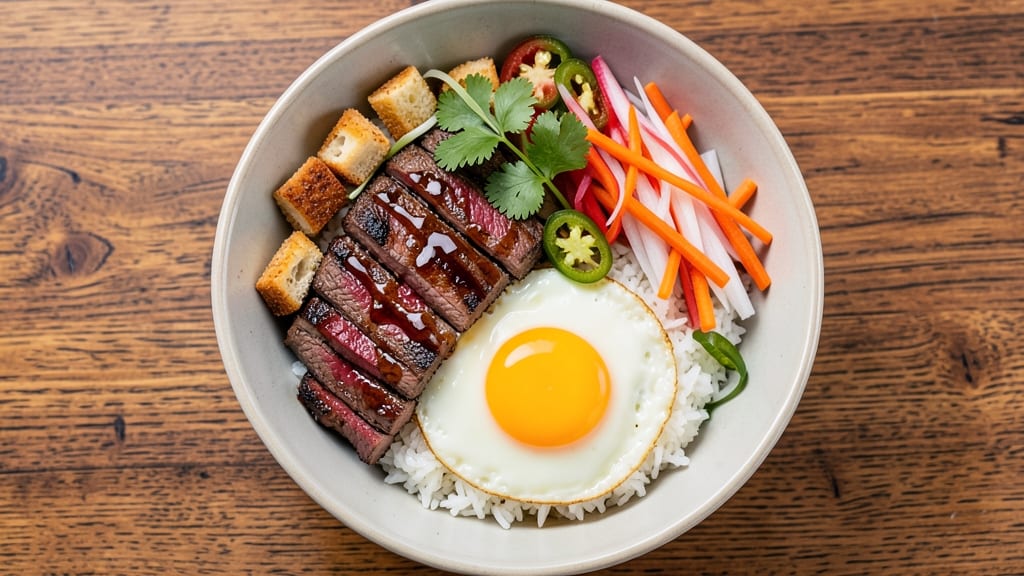
This beef banh mi bowl recipe transforms classic Vietnamese flavors into a satisfying, crispy-edged meal that balances sweet, tangy, and umami perfectly. The secret lies in thinly sliced, marinated beef that develops a caramelized crust when seared, paired with bright pickled vegetables and fragrant herbs.
I developed this version after years of perfecting the balance between restaurant-quality texture and home-cooking simplicity—no special equipment required.
The foundation starts with tender beef marinated in fish sauce, garlic, and sugar, then quickly seared to achieve that signature crispy exterior. Pickled carrots and daikon add a bright, tangy crunch that cuts through the richness, while fresh cilantro and mint bring vibrant freshness to every bite.
The sauce—either traditional nuoc cham or a creamy mayo-chili blend—ties everything together with a perfect balance of heat and tang.
What you’ll end up with is a visually stunning bowl where each component plays its part: crispy beef slices, vibrant pickled vegetables, fluffy jasmine rice, and a sauce that enhances rather than overpowers.
The aromas alone—garlicky, herby, with a hint of sweetness—will have everyone asking for seconds before the first bite. This is comfort food with a global twist, ready in under an hour.
Perfect for meal prep or a quick weeknight dinner, this recipe scales easily for crowds while maintaining its restaurant-worthy quality. The key is in the timing—marinate the beef while you prep the pickles, and let the flavors meld as you cook. Let’s build this bowl step by step.
Ingredients for beef banh mi bowl
Crispy beef, tangy pickles, and fragrant herbs come together for a restaurant-worthy bowl.
| Ingredient | Amount | Notes |
|---|---|---|
| Flank Steak 🥩 | 1 lb | Thinly sliced against grain |
| Fish Sauce 🍶 | 3 tbsp | Red Boat preferred |
| Garlic Cloves 🧄 | 6 cloves | Minced, aromatic |
| Granulated Sugar 🍚 | 2 tbsp | White or brown |
| Lime Juice 🍋 | 2 tbsp | Freshly squeezed |
| Neutral Oil 🫒 | 2 tbsp | Avocado or vegetable oil |
| Carrots 🥕 | 1 lb | Thinly sliced for pickling |
| Daikon Radish 🥬 | 1 lb | Julienned for crunch |
| Rice Vinegar 🍶 | ½ cup | White or seasoned |
| Jasmine Rice 🍚 | 1 ½ cups | Uncooked, long-grain |
| Fresh Cilantro 🌿 | ½ cup | Chopped, stems removed |
| Fresh Mint Leaves 🌿 | ¼ cup | Chopped, bright green |
| Mayonnaise 🥫 | ¼ cup | For creamy sauce |
| Sriracha 🌶️ | 1 tbsp | Adjust for heat |
| Salt 🧂 | 1 tsp | Kosher or sea salt |
The flank steak is non-negotiable—it's lean enough to slice thinly but tough enough to develop that signature crispy edge when seared. Look for well-marbled cuts at Whole Foods or your local butcher. If you can't find flank, flap meat or sirloin works in a pinch, but slice it against the grain for tenderness. The fish sauce? Red Boat is the gold standard—it's clean, salty, and has no fishy aftertaste. For the garlic, toast the cloves for 30 seconds in a dry pan before mincing to deepen the flavor. Carrots and daikon should be vibrant—no soft spots. If you can't find daikon, substitute extra carrots or jicama for crunch.
No rice vinegar? Substitute apple cider vinegar at the same amount, though it'll be slightly less delicate. Fresh herbs are ideal, but dried cilantro or mint at one-third the amount works if you're in a bind. For the creamy sauce, Hellmann's or Duke's mayo gives the best texture, but vegan mayo works too if needed. The Sriracha can be swapped for gochujang or sambal oelek—just adjust the heat to your preference. If you're meal prepping, pickle the veggies a day ahead—the flavors get even better as they sit.
Marinated beef keeps 2 days in the fridge, but freezes beautifully for 3 months—just thaw overnight before cooking. Pickled veggies last 5 days in the fridge, though the texture softens after 3 days. Cook the rice just before serving—it's best fresh and fluffy. The sauce can be made a day ahead and stored in the fridge. For leftovers, reheat the beef and veggies separately—they hold up better that way. The herbs? Add them fresh right before eating to keep their vibrant color and aroma.
Why You'll Love This Recipe
- One-Pan Magic: I swear by this—just sear the flank steak, toss it in a marinade of fish sauce, garlic, and sugar, then roast everything together. No chopping, no fuss, and the garlic cloves caramelize right into the meat. That’s flavor without the cleanup.
- Umami Bomb: The fish sauce and lime juice combo? It’s the secret weapon. The steak gets this sticky, savory crust that’s addictive—like a charred, herby hug in every bite. Honestly, I’ve made it for guests who swear they hate fish sauce, and they’re begging for seconds.
- Lunchbox Hero: Between us, this is my go-to for meal prep. The steak stays tender for days, and I just assemble bowls with rice, pickled veggies, and cilantro when I’m ready. Pack it cold or reheat it—it’s just as good either way. (Yes, even on a Tuesday night.)
- Budget Power Move: Flank steak stretches further than you’d think, and fish sauce makes a little go a long way. I’ve fed four people for under $15 with this, and the leftovers? Just as good the next day. Not the prettiest, but the taste makes up for it every time.
Step-by-step instructions for beef banh mi bowl
Here's how to build this vibrant bowl with perfectly marinated beef, crisp-tender pickled vegetables, and fragrant herbed rice.
👨🍳 Step 1: Prepare the Marinated Flank Steak
Slice the 1 lb flank steak thinly against the grain into ¼-inch strips. In a bowl, combine the 3 tbsp fish sauce, 2 tbsp lime juice, 2 tbsp granulated sugar, and 6 minced garlic cloves. Add the steak strips and toss gently to coat evenly. Let marinate for at least 30 minutes (or up to 2 hours) in the refrigerator. The acidity will tenderize the meat while infusing it with bold flavors.
Here's the thing—don't skip the marinating time. The fish sauce and lime juice work together to break down the tough muscle fibers, resulting in fork-tender beef. If you're short on time, even 15 minutes will help, but 30 minutes guarantees maximum tenderness.
🍳 Step 2: Cook the Jasmine Rice
Rinse the 1.5 cups jasmine rice thoroughly under cold water until the water runs clear. This removes excess starch that can make the rice gummy. Cook the rice in a rice cooker or pot according to package instructions, using 2 cups water for perfect fluffy grains. While it cooks, prepare the remaining components so everything finishes at the same time.
The rice should be tender but still slightly firm to the bite—this is crucial for the bowl structure. If using a pot, bring the water to a boil, add the rice, reduce heat to low, cover, and simmer for 15 minutes. Then turn off the heat and let it steam for another 10 minutes. Fluff with a fork before serving.
🥘 Step 3: Create the Pickled Vegetables
Slice the 1 lb carrots into thin rounds and julienne the 1 lb daikon radish into matchsticks. In a bowl, combine the vegetables with 0.5 cup rice vinegar, 1 tsp salt, and 1 tbsp sriracha. Toss gently to coat, then let sit for at least 20 minutes to develop the tangy crunch. The longer they pickle, the more vibrant the flavors become—up to 1 hour is ideal.
Here's the secret to perfect pickled veggies: they need to be completely submerged in the vinegar mixture. If using a large container, you might need to add a splash more vinegar to ensure full coverage. The radish will soften slightly but maintain its crisp texture, while the carrots stay firm and bright.
🔥 Step 4: Cook the Marinated Beef
Heat 2 tbsp neutral oil in a large skillet over medium-high heat until shimmering. Add the marinated beef strips in a single layer, being careful not to overcrowd the pan. Cook for 2-3 minutes until the edges are deep golden brown and the beef is cooked through. Transfer to a plate and let rest for 5 minutes before slicing against the grain for maximum tenderness.
Don't walk away during this step—the beef cooks quickly. You'll know it's ready when the edges crisp up and the meat releases easily from the pan. If the pan gets too crowded, cook in batches to ensure proper browning. The beef should be juicy but firm, not rubbery.
🍽️ Step 5: Assemble the Banh Mi Bowls
Divide the cooked jasmine rice evenly among four bowls. Top each with a portion of the pickled vegetables, ensuring you get both the carrots and daikon radish. Add the sliced beef strips, then drizzle with a mixture of 0.25 cup mayonnaise and 1 tbsp sriracha (adjust to taste). Garnish with 0.5 cup chopped cilantro and 0.25 cup chopped mint leaves for freshness.
This is where the magic happens—the contrast of textures and flavors. The crisp-tender pickled veggies cut through the rich, herbed beef, while the cool mayo-sriracha sauce ties everything together. Serve immediately while the beef is still warm and the rice is fluffy. Each bite delivers a perfect balance of sweet, tangy, spicy, and umami flavors.
Pro Tips For Making Beef Banh Mi Bowl
- Slice Against the Grain: Flank steak’s muscle fibers run long—cutting perpendicular to them turns chewy meat into tender strips. I used to ignore this and ended up with a bowl of tough, rubbery beef. Grab a sharp knife and angle those slices like you’re opening a book.
- Marinate for 2 Hours: The fish sauce-sugar-lime mix needs time to break down the meat’s surface. Thirty minutes? Forget it. Two hours minimum—yes, even if you’re impatient like me. Cover and refrigerate; the acid will work its magic without turning the steak to mush.
- Use Cold Garlic: Minced garlic burns faster than a bad date. Toss those cloves in ice water for 10 minutes first, then drain. The cold slows down the cooking, and your marinade won’t taste like charred regret. Trust me, your nose will thank you.
- Rest Before Slicing: That steak’s still cooking after it hits the cutting board. Give it a solid 5-10 minutes under foil before slicing, or you’ll end up with uneven, stringy strips. Patience here means the difference between a bowl that shines and one that disappoints.
Regional styles of beef banh mi bowl
Vietnamese Original
The classic banh mi sandwich from Vietnam uses a baguette stuffed with marinated pork or beef, pickled veggies, cilantro, and chili sauce.
In bowl form, we keep the core flavors—fish sauce-marinated beef, rice vinegar pickles, and fresh herbs—but remove the bread to create a lighter, more customizable dish. The Vietnamese version often includes maggi seasoning in the marinade, which you can add for extra umami depth. 🌶️
Southern California Twist
In SoCal, banh mi bowls often incorporate local ingredients like avocado slices and sriracha mayo. I like adding crispy fried shallots on top for extra crunch, inspired by the region's fusion cuisine.
The heat level is typically cranked up with extra spicy gochujang or Thai chili sauce. This version feels bolder and more contemporary while keeping the Vietnamese soul intact.
Thai-Inspired Fusion
For a Thai-inspired take, swap the rice vinegar for coconut rice vinegar and add thinly sliced cucumber to the pickled veggies. Use red curry paste in the beef marinade instead of sugar, and garnish with Thai basil and lime wedges.
The result is a sweeter, slightly spicier bowl that still feels familiar. This version works especially well with grilled lemongrass chicken on the side for a full meal.
Korean BBQ Adaptation
Inspired by Korean banh mi sandwiches, this version uses gochujang-marinated beef instead of fish sauce. Add quick-pickled cucumbers with sesame oil and gochugaru for a tangy kick. Top with sesame seeds and kimchi for extra depth.
The sauce becomes a gochujang mayo blend, creating a rich, spicy contrast to the crisp pickles and herbed beef. This adaptation is perfect for fans of Korean BBQ flavors.
Modern Vegan Version
For a plant-based twist, replace the beef with marinated tofu or seitan using the same fish sauce-lime marinade. Use vegan mayo and sriracha for the sauce, and add extra pickled jicama or bell peppers for crunch.
Garnish with vegan fish sauce drizzle (made from mushrooms) to mimic the umami depth. This version keeps all the bright, tangy flavors while being completely plant-powered. 🌱
Nutrition facts
Frequently asked questions
Can I use ground beef instead of flank steak?
Ground beef works, but the texture will be different—it won't have that signature crispy edge from searing thin slices. For the best results, stick with flank steak or sirloin, sliced ¼-inch thick against the grain. If you must use ground beef, shape it into small patties and cook until 160°F internally for juiciness.
How do I make this gluten-free?
Skip the fish sauce (which contains gluten) and use a gluten-free tamari or coconut aminos instead. Also, check your sriracha and mayonnaise labels—some brands contain hidden gluten. For the pickled veggies, ensure your rice vinegar is certified gluten-free. The rest of the recipe is naturally gluten-free!
Can I prep this ahead of time?
Marinate the beef up to 2 days ahead and store it in the fridge. Pickle the veggies 1 day ahead (they get better over time). Cook the rice fresh, but you can reheat pre-cooked rice in a steamer to keep it fluffy. Assemble the bowls just before serving to maintain crispness in the pickled veggies and herbs.
What if I don't have daikon radish?
No problem! Substitute with extra carrots or jicama for crunch. If using jicama, slice it thinly and soak in cold water for 10 minutes to remove any bitterness before pickling. The texture will be slightly sweeter but still crisp. For a milder flavor, add ½ tsp grated ginger to the pickle mixture.
How spicy should the sauce be?
The recipe calls for 1 tbsp sriracha in the mayo blend, which gives a mild-medium heat. Adjust to taste—start with ½ tbsp for less spice or add up to 2 tbsp for extra kick. For a smoky depth, mix in ½ tsp smoked paprika or a dash of gochujang. Always taste before serving!