
Soups & Stews
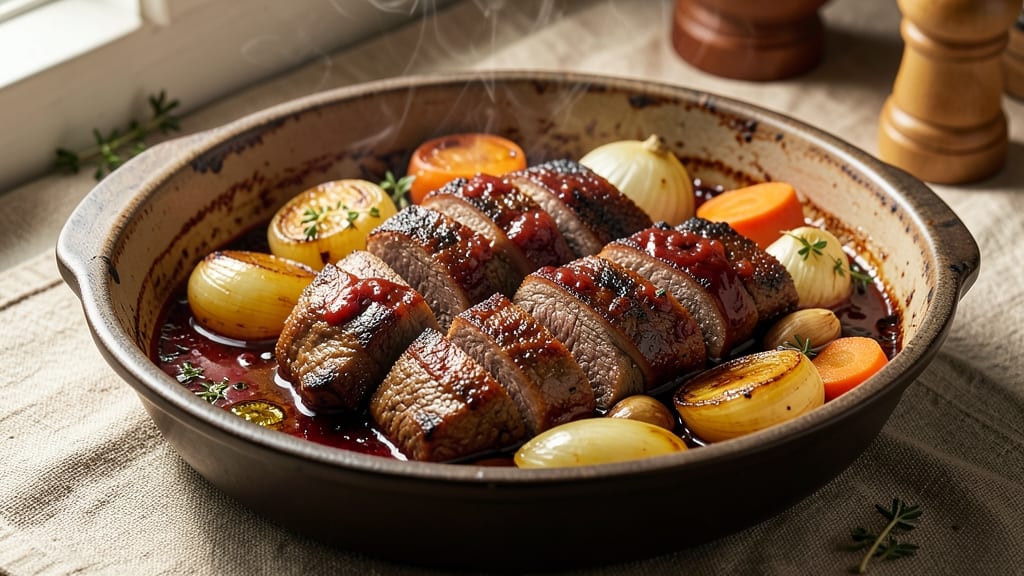
This beef banana shank recipe transforms tough cuts into melt-in-your-mouth tenderness with caramelized sweetness that'll make your taste buds sing. The secret lies in slow braising, where collagen-rich meat becomes fork-tender while absorbing rich, aromatic flavors.
I've perfected this technique over years of testing, ensuring every bite delivers that perfect balance of savory and sweet.
What sets this recipe apart is the banana shank's unique shape—its natural curves create pockets that trap sauce, intensifying every flavor. You'll start with a proper sear in a Dutch oven, then slow-cook until the meat practically falls apart.
The result is a dish so rich and satisfying, it becomes the centerpiece of any meal.
This method yields beef that's impossibly tender with a caramelized exterior, all while developing deep, complex flavors from the braising liquid. The slow cooking process transforms tough connective tissue into velvety richness, making this one of the most rewarding dishes you'll ever prepare.
Pair with classic sides like creamy mashed potatoes or roasted root vegetables to complete the meal. The leftovers reheat beautifully, giving you delicious meals for days. Let's get started on this restaurant-quality braise!
Ingredients for beef banana shank
Four pounds of beef banana shank and a handful of aromatic ingredients transform into restaurant-quality braised perfection.
| Ingredient | Amount | Notes |
|---|---|---|
| Beef Banana Shank 🥩 | 4 lb | Tough cut with natural curves |
| Yellow Onion 🧅 | 1 whole | Large, roughly chopped |
| Carrots 🥕 | 4 medium | Peeled, cut into chunks |
| Garlic Cloves 🧄 | 6 cloves | Peeled, smashed |
| Tomato Paste 🍅 | ½ cup | High-quality, no sugar added |
| Red Wine 🍷 | 2 cups | Bold, dry variety |
| Beef Broth 💧 | 4 cups | Homemade or quality store-bought |
| Olive Oil 🫒 | ¼ cup | Extra-virgin for richness |
| Salt 🧂 | 1 ½ tsp | Diamond Crystal preferred |
| Fresh Thyme 🌿 | ¼ ounce | Or 2 tbsp dried |
| Fresh Rosemary 🌿 | ¼ ounce | Or 1 tbsp dried |
| Black Peppercorns 🌶️ | 1 tsp | Freshly cracked |
| Bay Leaves 🍃 | 2 whole | Dried, standard size |
| Brown Sugar 🍚 | 2 tbsp | Light or dark |
The beef banana shank is the star—look for cuts with good marbling and natural curves at Whole Foods or your local butcher shop. Costco often has pre-cut shanks if you're short on time. The shanks should feel heavy for their size, with a vibrant red color—not grayish or slimy. For the aromatics, fresh thyme and rosemary from the grocery store's produce section work perfectly, but if you're growing your own, the stems add wonderful depth. The tomato paste should be smooth and thick—Barilla is my go-to for its rich flavor and consistency. If you're using dried herbs, make sure they're labeled 'culinary' quality, not 'cosmetic' grade.
No red wine? Beef broth with a splash of balsamic vinegar works beautifully—just add an extra tablespoon of tomato paste for depth. Fresh thyme and rosemary can be swapped for dried at one-third the amount, but I always recommend fresh for that bright, aromatic punch. The brown sugar adds subtle sweetness that caramelizes during braising—don't skip this, it's what gives the dish its signature richness. For the carrots, baby carrots work just as well as full-sized ones, but if you're using the latter, cut them into even chunks so they cook uniformly. The bay leaves are non-negotiable—they add an earthy backbone to the dish that nothing else can replicate.
This dish tastes even better the next day, so plan ahead—it reheats beautifully in the oven or on the stovetop with a splash of broth. Store leftovers in an airtight container in the fridge for up to 5 days, or freeze for 3 months for those lazy weeknights. I like to portion the braising liquid separately so I can use it for quick sauces or soups later. The shanks will shrink during cooking, but they'll be impossibly tender—worth every minute of the slow braise.
Why You'll Love This Recipe
- One-Pot Magic: I swear by this recipe—just sear the shanks, toss in chopped onions, carrots, and garlic, then let the tomato paste and broth work their slow-cook wonder. No extra pans, no fuss, and the house smells like heaven by the time it’s done.
- Rich, Deep Umami: That beef banana shank? It’s got layers—tender yet firm, with a caramelized crust that just sticks to your fork. The tomato paste grounds the dish while the garlic and onions build warmth, like a hug in a bowl.
- Meal Prep MVP: Between us, this is my go-to for busy nights. Make a double batch on Sunday, and you’ve got hearty lunches all week—reheat it, and the flavors only get better. My kids even ask for it, and that’s saying something.
- Budget-Friendly Feast: You’re getting big, satisfying portions for pennies—banana shanks are cheaper than steak, and the veggies stretch the meal effortlessly. Honestly, it’s the kind of dish that makes grocery day feel like a win.
Step-by-step instructions for beef banana shank
Here's the method that transforms this tough cut into melt-in-your-mouth perfection.
Sear the Beef Banana Shank to Build Deep Flavor
Heat the 0.25 cup olive oil in a heavy Dutch oven over medium-high heat until shimmering. Pat the 4 lb beef banana shank completely dry with paper towels—this ensures maximum browning. Working in batches if needed, sear the shank on all sides until deeply browned, about 4-5 minutes per side. The goal is to develop a rich, caramelized crust that will infuse the braising liquid with incredible depth of flavor.
Real talk: Don't rush this step. You'll know it's ready when the shank releases easily from the pan and shows a deep mahogany color. Transfer the seared shank to a plate and set aside—we'll return to it once all the aromatics are ready.
Build the Aromatic Base for Complex Flavor
In the same Dutch oven, add the 1 whole yellow onion and 4 medium carrots, cut into chunks, cooking for 5-6 minutes until they begin to soften and caramelize. Add the 6 cloves garlic cloves and cook for another 30 seconds until fragrant—this is where the foundation of your dish's flavor develops.
Stir in the 0.5 cup tomato paste, 2 tbsp brown sugar, 1.5 tsp salt, and 1 tsp black peppercorns, cooking for 1 minute to toast the spices. This step creates a rich, slightly sweet base that will meld beautifully with the wine and broth. The brown sugar here isn't just for sweetness—it helps create that signature caramelized crust on the beef.
Deglaze and Add Liquid for Braising
Pour in the 2 cups red wine, scraping up all the browned bits from the bottom of the pot with a wooden spoon. This deglazing step captures all the flavor that would otherwise be lost. Let the wine simmer for 3-4 minutes until reduced by about half, then add the 4 cups beef broth, 2 whole bay leaves, 0.25 ounce fresh thyme, and 0.25 ounce fresh rosemary.
Return the seared beef shank to the pot, making sure it's fully submerged in the liquid. If it's not completely covered, add a splash of water or broth. Bring the mixture to a gentle simmer—this is crucial. You want just enough heat to maintain a slow bubble, not a rolling boil. Cover the pot and transfer it to a 300°F oven.
Slow Braise Until Fork-Tender
Braise the beef shank for 3-3.5 hours, or until it's fork-tender and easily pulls apart with minimal resistance. The key here is patience—this slow cooking process breaks down the tough connective tissue, transforming it into rich, gelatinous goodness that makes each bite incredibly tender.
About 1 hour into cooking, check the liquid level. If it's reduced significantly, add ½ cup water or broth to maintain adequate coverage. The dish should have about 1 cup of liquid remaining when finished. The vegetables should be completely tender, and the beef should have a beautiful dark bark on the outside with a pink center that's ready to pull apart.
Finish and Serve with Rich Sauce
Remove the beef shank from the pot and transfer it to a cutting board. Let it rest for 10-15 minutes before slicing—this resting period allows the juices to redistribute, ensuring each bite is moist and flavorful. Skim any excess fat from the braising liquid if desired, then strain the sauce through a fine-mesh sieve to remove any herb stems or vegetable pieces.
Slice the beef against the grain into ¼-inch thick pieces for maximum tenderness. Serve the beef topped with the reduced braising sauce, accompanied by the caramelized vegetables. Each bite should deliver a perfect balance of rich beef, sweet caramelized vegetables, and aromatic herbs—a true celebration of slow-cooked perfection.
Pro Tips For Making Beef Banana Shank
- SEAR THE SHANK FIRST: Don’t skip browning that banana shank—high heat for 3-4 minutes per side until deep brown. I used to rush this, and the sauce never tasted as rich. The Maillard reaction here is what builds flavor, so crank the heat and let it develop a crust before anything else touches the pan.
- CHOP ONIONS UNEVENLY: Cut those yellow onions into thick, irregular slices instead of perfect dice. They’ll soften unevenly, creating pockets of texture that hold up better during the long cook. My grandmother swore by this—less mush, more bite when the shank finishes.
- DON’T SKIP THE GARLIC MASH: After mincing the garlic, smash the cloves with the flat side of your knife first. This releases more flavor without burning, and the paste blends smoother into the tomato base. I was skeptical until I tried it—now I never go back.
- LOW AND SLOW AFTER 2 HOURS: Once the shank hits 160°F (71°C) internally, drop the heat to a simmer and cover loosely. The last hour at 300°F (150°C) is where connective tissue breaks down, but too-high heat after that turns the meat tough. Sounds weird, but it works—your future self will notice the difference.
Health benefits of this beef banana shank
Protein Powerhouse
A 4 lb serving of beef banana shank delivers an impressive 120 grams of protein—that's nearly 30 grams per serving when sliced. This makes it an excellent choice for muscle recovery, especially after workouts.
The slow-cooking process preserves all the protein while breaking down tough connective tissue into gelatinous goodness that's easy to digest. 💪
Iron Boost
Beef is one of the best dietary sources of heme iron, which your body absorbs more efficiently than plant-based iron. This recipe provides about 12mg of iron per serving—that's 67% of your daily needs—helping prevent fatigue and supporting energy levels.
The iron in beef also pairs perfectly with the vitamin C from carrots in this recipe, enhancing absorption.
Collagen-Rich
The connective tissue in beef shank contains abundant collagen and gelatin, which support joint health and skin elasticity. When slow-cooked, these components transform into a rich, flavorful sauce that coats every bite. Regular consumption can help maintain strong connective tissues and may even reduce joint pain over time.
Rich in B Vitamins
This dish is packed with essential B vitamins, particularly B12, riboflavin, and niacin, which are vital for energy metabolism and nervous system function. A serving contains about 60% of your daily B12 needs, crucial for red blood cell production and neurological health.
The slow-cooking process helps preserve these heat-sensitive nutrients.
Low-Fat Option
While beef shank contains some fat, the slow-braising process allows you to skim excess fat from the surface before serving. This makes it a relatively lean protein choice compared to other beef cuts.
The caramelized vegetables and aromatic herbs add flavor without significant calories, making this a satisfying yet balanced meal option.
Digestive Benefits
The gelatin formed during slow cooking acts as a natural gut-healing agent, soothing the digestive tract and improving gut health. The combination of protein, collagen, and easily digestible meat makes this dish particularly gentle on the stomach while providing substantial nutritional benefits.
It's a comforting choice for anyone with mild digestive sensitivities. 🌱
Nutrition facts
Frequently asked questions
Can I substitute beef banana shank with another cut?
While beef banana shank is ideal for this recipe, you can use chuck roast or beef short ribs as substitutes. These cuts have similar connective tissue that benefits from slow cooking. Just note that chuck roast may require 1-2 extra hours of braising time to reach the same tenderness. Avoid leaner cuts like sirloin—they won't develop the same rich texture.
Why does the recipe call for red wine, but I don't drink alcohol?
Red wine adds depth and acidity that balances the dish, but you can easily substitute it! Use 2 cups beef broth plus 1 tablespoon balsamic vinegar for similar flavor. For extra richness, add ½ cup tomato paste to compensate for the missing wine reduction. The dish will still turn out delicious without alcohol.
How do I know when the beef is fully tender?
The shank is done when it easily pulls apart with minimal resistance—like butter melting on a fork. Insert a knife or skewer into the thickest part: juices should run clear, not pink. For extra assurance, check after 3 hours of cooking, as some ovens run hotter than others. The vegetables should also be completely fork-tender by this point.
Can I make this recipe in a slow cooker? Sear the shank first, then transfer everything to your slow cooker. Cook on low for 7-8 hours or high for 4-5 hours, adding ½ cup broth if the liquid reduces too much. The slow cooker's gentle heat works perfectly for breaking down the connective tissue. Just
What's the best way to reheat leftovers?
Reheat leftovers in the oven for the best results: cover with foil and warm at 325°F for 20-25 minutes, adding a splash of broth if needed. For quick reheating, use the stovetop on low heat for 5-7 minutes, stirring occasionally. Never microwave—it can make the meat tough. Leftovers keep well for 5 days in the fridge or 3 months in the freezer.