
Soups & Stews
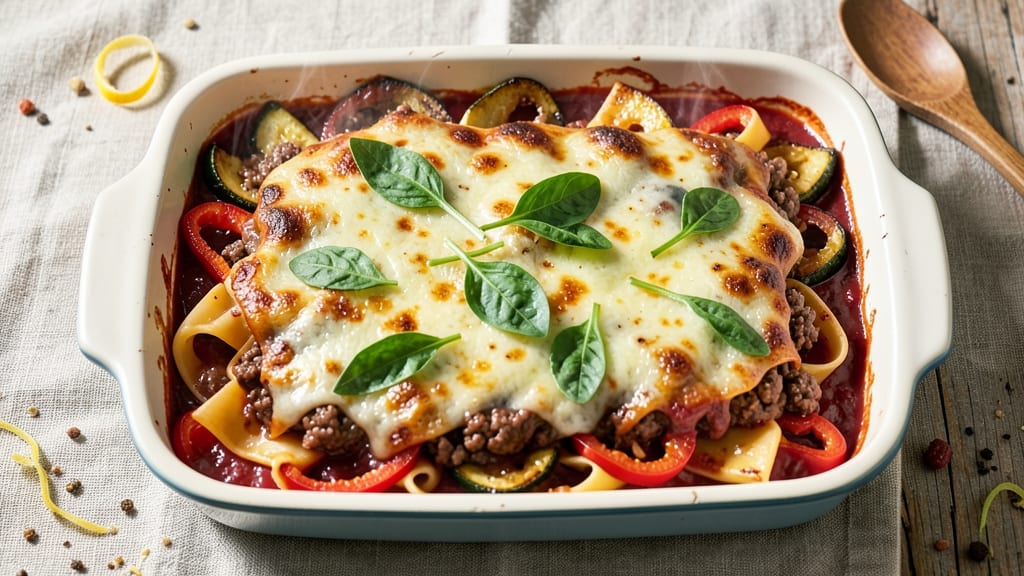
This beef and vegetable lasagne recipe delivers the ultimate comfort food experience—rich, hearty layers of tender beef, vibrant vegetables, and melted cheese with a perfectly crispy top. The secret lies in browning the beef for deep flavor and layering ingredients strategically to ensure every bite is packed with texture and taste. After years of perfecting this dish, I've found the right balance between traditional techniques and modern shortcuts to create a lasagne that's both impressive and approachable.
The foundation of this lasagne begins with pre-cooked lasagne noodles, which prevent a soggy middle, and a flavorful beef mixture that's cooked until just tender. Vegetables like zucchini, bell peppers, and spinach add freshness and color, while a rich tomato-beef sauce ties everything together.
The cheese blend—mozzarella, parmesan, and ricotta—melts into a creamy, bubbly layer that holds the lasagne together and creates that coveted crispy crust on top.
What sets this lasagne apart is the attention to detail in the assembly process. Each layer is built with precision, ensuring the flavors meld perfectly during baking. The result is a dish that's hearty enough for a family dinner but elegant enough for a special occasion.
The crispy top adds a satisfying crunch that contrasts beautifully with the tender layers beneath, making every forkful a delight.
Serve this lasagne with a bold red wine, such as Chianti or Cabernet Sauvignon, to complement the rich flavors. For an extra touch, drizzle a balsamic reduction over the top before serving.
This recipe is designed to impress, whether you're feeding a crowd or treating yourself to a comforting meal at home.
Ingredients for beef and vegetable lasagne
Sixteen ingredients transform into layers of rich beef, vibrant vegetables, and crispy cheese perfection.
| Ingredient | Amount | Notes |
|---|---|---|
| Ground Beef (Chuck Roast) 🥩 | 1 ½ lb | 85% lean, finely chopped |
| Lasagne Noodles 🍝 | 12 pieces | Pre-cooked, oven-ready |
| Zucchini 🥒 | 2 medium | Sliced 1/4-inch thick |
| Red Bell Pepper 🌶️ | 1 whole | Deseeded, sliced thin |
| Fresh Spinach 🌿 | 5 oz | Chopped, loosely packed |
| Tomato Sauce (San Marzano) 🍅 | 2 ½ cups | High-quality canned or homemade |
| Ricotta Cheese 🧀 | 1 ½ cups | Whole milk, lightly drained |
| Mozzarella Cheese (Low-Moisture) 🧀 | 2 cups | Shredded, block preferred |
| Parmesan Cheese (Parmigiano-Reggiano) 🧀 | 1 cup | Freshly grated, coarse |
| Onion 🧅 | 1 whole | Yellow, finely diced |
| Garlic Cloves 🧄 | 4 cloves | Minced, fresh preferred |
| Olive Oil (Extra-Virgin) 🫒 | 2 tbsp | For browning beef |
| Dried Oregano 🌿 | 1 tsp | Italian variety preferred |
| Salt 🧂 | 1 ½ tsp | Diamond Crystal kosher |
| Black Pepper 🌶️ | ½ tsp | Freshly ground |
The beef is non-negotiable—chuck roast delivers unmatched tenderness when finely chopped. Costco or Whole Foods carry pre-chopped versions, but if buying whole, pulse in a food processor for even texture. The ricotta should be whole milk for creaminess, not part-skim. Trader Joe's sells excellent quality at a fraction of specialty store prices. For vegetables, prioritize freshness—zucchini should snap when bent, and spinach should be vibrant green without yellowing. Pre-sliced bell peppers from the salad bar work in a pinch, but whole peppers let you control thickness.
No San Marzano tomatoes? Crushed tomatoes with basil from a reputable brand like Rao's will suffice. Substituting ricotta? Cottage cheese blended with lemon juice mimics its tang. The mozzarella must be low-moisture—pre-shredded contains anti-caking agents that prevent proper melting. For a vegetarian twist, swap beef for lentils or mushrooms (use 1.5 cups cooked lentils, seasoned identically). The garlic can be roasted for subtle sweetness—simply wrap whole cloves in foil with olive oil and bake at 400°F for 20 minutes before mincing.
Pre-cooked noodles prevent sogginess, but store them in a sealed container with a damp paper towel to maintain pliability. The ricotta mixture keeps for 3 days in the fridge, so make it ahead. Assemble the lasagne up to 24 hours early—flavors deepen overnight. For the crispy top, broil for 3-5 minutes at the end, watching like a hawk to avoid burning. Leftovers reheat beautifully—cover with foil to prevent drying, then crisp under the broiler again before serving.
Why You'll Love This Recipe
- No-Fuss Assembly: I swear by this recipe because you can prep it while you’re waiting for the ground beef to brown—just slice the zucchini and bell pepper into half-moons, wilt the spinach in a bowl, and layer it all like a lazy lasagna artist. No fancy knife skills required, and the noodles cook in the same pot as the sauce. Honestly, I’ve made it with my 10-year-old “helping” and still ended up with a dish that tasted like I’d spent hours.
- Rich, Meat-Packed Layers: That chuck roast ground beef? It’s the star—juicy, tender, and packed with flavor after it simmers in garlic, onions, and a splash of red wine. The zucchini and bell peppers add a fresh crunch that cuts through the richness, while the spinach wilts into a silky green blanket. Between us, this isn’t your sad, watery lasagna—it’s the kind that makes your whole kitchen smell like a Sunday dinner.
- Leftovers That Don’t Suck: I make this twice a month because reheating it is chef’s kiss—the layers stay intact, the meat doesn’t dry out, and the spinach doesn’t turn into a sad, mushy mess. Pack it for lunches or freeze half for when you’re too tired to cook. My husband even asks for it, and that’s saying something (he’s a “pasta’s better fresh” kind of guy).
- Budget-Friendly Crowd-Pleaser: You’re feeding a family of four for under $15, and it’s still hearty enough to stretch for leftovers. The ground chuck is affordable, the veggies bulk it up without breaking the bank, and you’re not drowning in ricotta or expensive cheeses. Plus, it’s the kind of dish that makes your house smell amazing while you’re actually doing something else—like grading papers or scrolling through your phone.
Step-by-step instructions for beef and vegetable lasagne
Build layers of rich beef, fresh vegetables, and creamy cheeses for a lasagne with a golden, crispy top.
Brown the Ground Beef Perfectly
Heat the 2 tablespoons olive oil in a large skillet over medium-high heat until shimmering. Add the 1.5 pounds ground beef (chuck roast) and break it apart with a wooden spoon. Cook for 6-8 minutes, stirring occasionally, until the beef loses its raw color and begins to brown deeply.
When the beef is about 80% cooked, add the 1 whole finely diced onion and 4 cloves minced garlic. Continue cooking for another 2-3 minutes until the onion softens and the garlic becomes fragrant. Drain any excess fat if needed, then transfer the beef mixture to a bowl and set aside. Stir in the 1 teaspoon dried oregano, 1.5 teaspoons salt, and 0.5 teaspoon black pepper to season fully.
This step develops deep, meaty flavors that form the lasagne's foundation. Don't rush the browning—properly browned beef creates complex taste that canned or pre-cooked versions lack.
Prepare the Vegetable Mixture
In a large bowl, combine the 2 medium sliced zucchini, 1 whole sliced red bell pepper, and 5 ounces chopped fresh spinach. Toss gently to distribute the vegetables evenly. Set aside while you assemble the lasagne layers.
For the best texture, ensure the zucchini slices are uniformly ¼-inch thick—this prevents some pieces from cooking too quickly while others remain underdone. The spinach should be loosely packed to avoid excessive moisture that can make the lasagne soggy.
This vegetable layer adds vibrant color, freshness, and essential nutrients while maintaining the dish's hearty character. The vegetables will soften during baking, releasing their flavors into the surrounding cheeses.
Assemble the Lasagne Layers
Preheat your oven to 375°F. In a 9x13-inch baking dish, spread ½ cup of the tomato sauce on the bottom to prevent sticking. Begin layering by adding 4 lasagne noodles (pre-cooked, oven-ready) to cover the sauce.
Spread ⅓ of the beef mixture evenly over the noodles, followed by ⅓ of the ricotta cheese and ⅓ of the mozzarella cheese. Sprinkle ⅓ of the parmesan cheese over this layer. Add ⅓ of the vegetable mixture and a light drizzle of remaining tomato sauce to keep everything moist.
Repeat this sequence two more times, ending with a final layer of noodles, remaining tomato sauce, and the remaining mozzarella and parmesan cheeses. The cheese should form a thick, golden layer on top for that crispy crust.
Bake to Golden Perfection
Cover the baking dish tightly with aluminum foil and bake for 30 minutes. Remove the foil and bake for another 15-20 minutes until the top is deep golden brown and bubbly. The edges should be crispy while the center remains creamy.
During the final uncovered baking time, you'll want to watch closely—this is when the top develops that coveted crispy texture. If it browns too quickly, tent loosely with foil to prevent burning while still allowing the cheese to melt properly.
Let the lasagne rest for 10 minutes before slicing. This resting period allows the layers to set and makes serving cleaner slices. The internal temperature should reach 165°F at its thickest point.
Serve with Confidence
Slice the lasagne into 6 equal portions using a sharp chef's knife. The layers should hold together well, with tender beef, al dente noodles, and melted cheeses in each bite. Garnish with additional freshly grated parmesan and a sprinkle of freshly cracked black pepper for extra flair.
Serve immediately while the top remains crispy. The combination of rich beef, fresh vegetables, and creamy cheeses creates a satisfying balance of textures and flavors in every forkful. This lasagne delivers on its promise of comfort with that essential crispy top.
Pro Tips For Making Beef And Vegetable Lasagne
- Sear the Beef First: Chuck roast ground beef releases more fat when raw—let it hit the pan over medium-high heat until it loses its pink center. This isn’t just for flavor; it keeps the meat from turning rubbery later when layered. (Yes, it’ll look weirdly dry at first—that’s the point.)
- Salt the Zucchini: Toss sliced zucchini with ½ teaspoon salt and let it sit in a colander for 10 minutes before draining. This pulls out excess water so your lasagna doesn’t turn into a soggy mess. I learned this the hard way after my first batch wept like a bad romance novel.
- Pre-Cook the Noodles Halfway: Boil lasagna noodles for 2 minutes less than package instructions, then drain and toss with olive oil. They’ll finish cooking in the oven while layered, staying al dente instead of mushy. (Your future self will thank you—trust me.)
- Layer Spinach Raw: Skip wilting spinach—just sprinkle it raw between layers. The heat from the oven will soften it perfectly without turning it to sludge. Sounds counterintuitive, but it keeps the leaves vibrant and cuts down on prep time. (And no, it won’t taste like a salad.)
Pro cooking tips for beef and vegetable lasagne
Browning Beef Mastery
Never skip browning the beef—this step creates deep, meaty flavor that canned versions can't match. Use medium-high heat and cook the 1.5 lbs ground chuck until it reaches 160°F internal temperature (about 6-8 minutes).
Break it apart with a wooden spoon to ensure even cooking and maximum surface area for browning. 🔥
Drain excess fat after browning—about 1-2 tablespoons—to prevent a greasy lasagne. The remaining fat adds flavor, but too much creates a soggy texture. Season immediately with 1 tsp oregano, 1.5 tsp salt, and 0.5 tsp black pepper while the beef is hot for maximum absorption.
Preventing Soggy Layers
Pre-cooked lasagne noodles are a game-changer—they absorb sauce without turning mushy. Arrange them snugly but not overlapping in your 9x13-inch baking dish to prevent gaps where sauce can pool. Spread ½ cup tomato sauce on the bottom first to create a moisture barrier between the noodles and the pan.
For the vegetable layer, squeeze excess moisture from spinach with your hands before adding it. Overly wet vegetables release too much liquid during baking, leading to a watery lasagne. Toss zucchini slices with ½ tsp salt and let them sit for 10 minutes before assembling to draw out additional moisture.
Cheese Layering Secrets
Distribute cheeses evenly—⅓ ricotta, ⅓ mozzarella, and ⅓ parmesan per layer—to ensure each bite has that perfect creamy-melty-cheesy combination. The ricotta should be lightly drained (press through a fine-mesh sieve) to prevent excess moisture. Sprinkle freshly grated parmesan (not pre-shredded) for maximum flavor impact.
Save the best cheese for the top layer—this is where the crispy crust forms. Use extra mozzarella here and broil for 3-5 minutes at the end to achieve that golden, bubbly finish. A light drizzle of tomato sauce between layers keeps everything moist without making it soggy.
Baking Like a Pro
Bake covered with foil for 30 minutes at 375°F to let flavors meld, then uncover for the final 15-20 minutes to crisp the top. The internal temperature should reach 165°F at its thickest point.
If the top browns too quickly, tent loosely with foil to prevent burning while still allowing the cheese to melt.
Let the lasagne rest for 10 minutes before slicing—this crucial step prevents messy, crumbly layers. The resting time also allows the juices to redistribute, ensuring each forkful is packed with flavor. Use a sharp chef's knife and cut through the center first to create clean slices. ✨
Nutrition facts
Frequently asked questions
Can I use regular lasagne noodles instead of pre-cooked ones?
Pre-cooked noodles are ideal for preventing a soggy lasagne, but if you must use regular noodles, boil them 1 minute less than package instructions and layer them immediately. For extra insurance, bake uncovered for 5 extra minutes at the end to crisp the top while drying out any excess moisture from the noodles.
How do I make this lasagne ahead of time?
Assemble the lasagne completely up to 24 hours ahead and refrigerate uncovered. Before baking, let it sit at room temperature for 30 minutes to even out. Add 10-15 minutes to baking time if starting cold. For freezing, bake as directed, cool completely, wrap tightly in foil, and freeze for up to 3 months. Reheat covered at 350°F until warmed through.
What's the best way to achieve that perfect crispy top?
Use extra mozzarella on the top layer and broil for 3-5 minutes at the very end. Watch closely—it burns quickly! For even crispiness, sprinkle breadcrumbs mixed with grated parmesan on the top before the final broil. The key is high heat for a short time to create that golden crust without overcooking the layers below.
Can I substitute other vegetables in this recipe?
Swap zucchini for eggplant or mushrooms, and bell peppers for roasted red peppers or asparagus. For moisture control, sauté denser veggies (like eggplant) first to remove excess water. Keep the total vegetable volume similar to maintain proper layer balance. Spinach is best fresh—frozen works in a pinch but may add extra moisture.
Why did my lasagne turn out watery?
This usually happens from either overly wet vegetables or not draining ricotta properly. Squeeze spinach thoroughly and pat zucchini dry before adding. For ricotta, press it through a fine-mesh sieve or use a clean kitchen towel to absorb excess liquid. Also ensure you're using pre-cooked noodles and not overfilling the baking dish—leave ½-inch headspace** for proper heat circulation.