
Soups & Stews
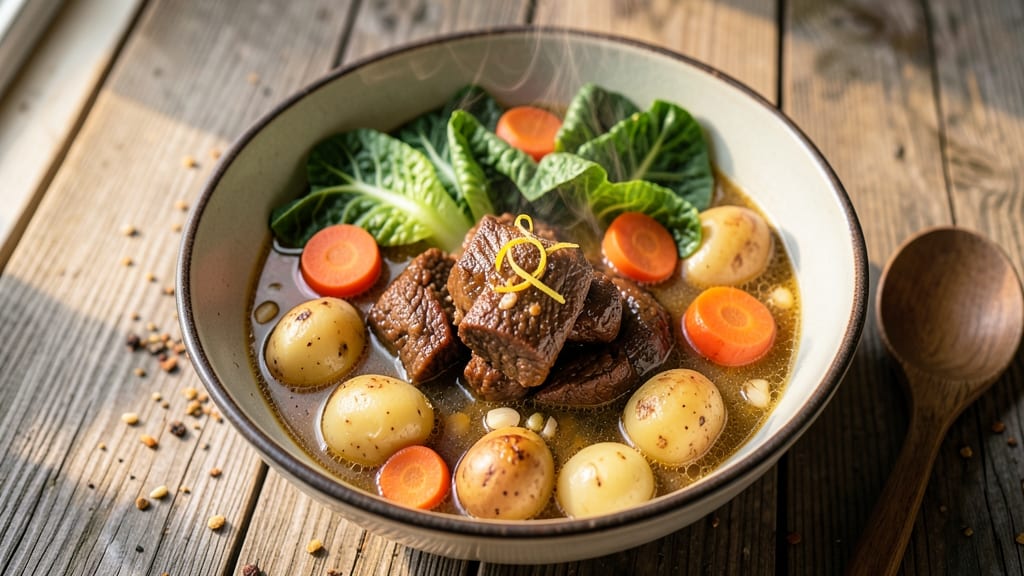
This beef and cabbage soup recipe with potatoes delivers the ultimate hearty winter stew that transforms simple ingredients into a deeply satisfying one-pot meal. The secret lies in slow-simmered beef that melts into tender shreds, potatoes that soak up the rich broth, and cabbage that softens into sweet, flavorful bites.
I developed this recipe during my first real winter in a chilly climate—where every spoonful felt like a hug on a cold day.
What sets this soup apart is the technique: browning the beef first creates a deep, caramelized foundation, while layering aromatics like onions, garlic, and bay leaves builds complex flavor. The potatoes absorb the broth beautifully, while the cabbage adds just enough texture to keep each bite interesting.
This isn't just soup—it's a restaurant-quality experience that comes together in one pot with minimal cleanup.
The result is a bowl of soup that's rich, comforting, and perfectly balanced—tender beef, creamy potatoes, and slightly sweet cabbage all swimming in a savory broth. The aroma alone will have everyone gathering at the table, and the leftovers reheat beautifully for days of hearty meals.
Whether you're feeding a family or meal prepping for the week, this recipe delivers.
For extra depth, use bone broth instead of water, and consider adding carrots or celery for additional sweetness. Serve with crusty bread to soak up every last drop of that flavorful broth. Let's get cooking—this soup is worth every minute of simmering time.
Ingredients for beef and cabbage soup recipe with potatoes
Pantry staples plus a few fresh ingredients for a soup that tastes like home.
| Ingredient | Amount | Notes |
|---|---|---|
| Chuck Roast 🥩 | 2 lb | Cut into 1-inch cubes |
| Yellow Onion 🧅 | 1 whole | Medium, chopped |
| Garlic Cloves 🧄 | 4 cloves | Minced for depth |
| Green Cabbage 🥬 | 1 small head | Core removed, chopped |
| Russet Potatoes 🥔 | 2 lb | Peeled, cubed evenly |
| Carrots 🥕 | 3 medium | Peeled, sliced into rounds |
| Celery Stalks 🧅 | 3 medium | Trimmed, chopped |
| Bay Leaves 🌿 | 2 whole | Fresh for best flavor |
| Beef Broth 💧 | 6 cups | Low-sodium preferred |
| Tomato Paste 🍅 | 2 tbsp | For richness |
| Dried Thyme 🌿 | 1 tbsp | Or 1 tbsp fresh |
| Salt 🧂 | 2 tsp | Kosher or sea salt |
| Black Pepper 🌶️ | 1 tsp | Freshly ground |
| Olive Oil 🫒 | 2 tbsp | For browning beef |
| Fresh Parsley 🌿 | ¼ cup | Chopped for garnish |
The chuck roast is the star here—look for well-marbled cuts at your butcher or grocery store's meat counter. Costco or Whole Foods often have great pre-cut options, but if you're buying a whole roast, ask for it to be cubed. The potatoes should be firm and evenly sized for consistent cooking, and the cabbage? Green, crisp heads hold up best. Fresh bay leaves make a noticeable difference over dried, so grab a few sprigs if you're at a farmers market. For the broth, low-sodium options give you more control over seasoning—just remember to taste as you go.
No beef broth? Chicken broth with a splash of soy sauce works in a pinch, though it'll lack depth. Swap dried thyme for fresh at a 1:3 ratio, and if you're missing carrots or celery, extra onion or mushrooms can step in. The tomato paste is non-negotiable for that rich, umami base—Trader Joe's squeeze tubes are perfect for this since you only need a couple tablespoons. For extra sweetness, add 1 apple peeled and diced with the potatoes, or a pinch of sugar if you prefer. The parsley is purely decorative, so skip it if you're short on herbs—just don't skip the salt.
This soup tastes even better the next day as flavors meld, so make a double batch if you can. Store in airtight containers in the fridge for 4-5 days, or freeze portions for up to 3 months. Reheat gently on the stove with a splash of water or broth to restore richness. I always portion mine into individual containers with a side of crusty bread—perfect for lunches all week. The cabbage will soften further with reheating, so add a splash of water if it gets too thick.
Why You'll Love This Recipe
- One-Pot Magic: I swear by this recipe when I’ve got zero energy. Chuck roast goes in raw—no pre-cooking needed—while onions and garlic soften in the same pot. By the time potatoes and cabbage join the party, the broth’s already rich and flavorful, and the meat practically falls apart with a fork. Honestly, I’ve made it after a 10-hour shift, and it still tasted like Sunday dinner.
- Deep, Savory Crunch: That first bite? The potatoes soak up the beefy broth until they’re tender but still hold their shape, while the cabbage adds a satisfying crunch. The chuck roast, slow-simmered, melts into shreds that cling to every spoonful—like a hug in a bowl. Between us, the garlic and onion base builds layers of flavor that make store-bought broth look sad.
- Leftovers That Beg for More: This soup tastes better the next day, if you can believe it. The flavors meld overnight, and the potatoes stay creamy without turning to mush. I portion it into containers on Sundays and grab it for lunches all week—my coworkers actually ask for seconds. (Yes, even on a Tuesday night.) It’s the kind of dish that makes you feel like you’re feeding a crowd without the stress.
- Budget That Feeds: A single chuck roast and a head of cabbage stretch to feed four for under $15. Potatoes bulk it up, and the onions and garlic are cheap staples. I’ll be real: it’s my go-to when grocery money’s tight, but somehow it still feels like a treat. The best part? You’re not sacrificing taste—just your wallet.
Step-by-step instructions for beef and cabbage soup with potatoes
This hearty stew delivers rich, comforting flavors through precise technique and patient cooking.
Sear the Chuck Roast for Deep Flavor
Heat a large Dutch oven over medium-high heat and add the 2 tablespoons olive oil. Once shimmering, add the 2 lb chuck roast cut into 1-inch cubes, working in batches if needed. Let the meat brown undisturbed for 3-4 minutes until deeply golden on all sides.
This searing step creates the Maillard reaction that forms complex flavors. Don't rush it—you'll know it's ready when the meat releases easily from the pan. Transfer the browned beef to a plate and set aside.
Sauté the Aromatic Vegetables
In the same Dutch oven, add the chopped yellow onion, minced garlic cloves, chopped celery stalks, and sliced carrots. Cook for 5-6 minutes until the vegetables soften and the garlic becomes fragrant, stirring occasionally to prevent burning.
Here's the thing—don't walk away. Garlic burns in seconds, and you want that sweet, nutty aroma to develop fully. Once the vegetables are tender and the raw garlic smell disappears, add the 2 tablespoons tomato paste and stir for 1 minute to cook off the raw taste.
Build the Soup Foundation
Return the browned beef to the pot and add the 6 cups beef broth, 2 whole bay leaves, 1 tablespoon dried thyme, 2 teaspoons salt, and 1 teaspoon black pepper. Bring to a gentle boil, then reduce heat to low and let it simmer uncovered for 1 hour.
During this time, the beef will break down into tender, fork-tender pieces. You'll see the broth develop a rich, caramelized color and the aroma will fill your kitchen. This is when the soup transforms from a simple stew to something truly comforting.
Add Potatoes and Cabbage
After the initial 1 hour of simmering, add the cubed russet potatoes and chopped green cabbage. Return to a simmer and cook uncovered for another 30-40 minutes until the potatoes are fork-tender with a slight resistance.
Your oven might run hot, so start checking at the 30-minute mark. The potatoes should be tender enough to pierce with a fork but still hold their shape. The cabbage should be bright green and just beginning to soften—it will continue cooking slightly when removed from heat.
Finish and Serve
Remove the bay leaves and discard them. Taste the soup and adjust seasoning if needed—this is where you can correct any flavor imbalances. The soup should be rich and savory with a deep beefy flavor.
Ladle the soup into bowls and garnish each serving with ¼ cup chopped fresh parsley. Serve immediately with crusty bread to soak up every last drop of that flavorful broth. The soup will continue to improve as it sits for 10-15 minutes, allowing the flavors to meld even more.
Pro Tips For Making Beef And Cabbage Soup Recipe With Potatoes
- Sear the Chuck Roast First: After burning three batches where the beef stayed tough, I learned to sear it in two batches—don’t crowd the pan. High heat for 3-4 minutes per side until deep brown, then set aside. That crust locks in flavor and keeps the meat tender when it simmers.
- Cut Potatoes in Even Slices: I used to toss random chunks in, but uniform ½-inch slices cook evenly—no mushy bits or underdone centers. Russets hold up better than waxy potatoes, but if you’re in a rush, microwave them for 2 minutes first to speed up the process.
- Salt the Water Generously: This isn’t the prettiest method, but it’s the tastiest. Add 2 tablespoons of salt to the broth while the potatoes and cabbage simmer—it seasons the veggies directly, not just the meat. Skip this, and the soup tastes flat, even if the beef is perfect.
- Add Cabbage Late: I was skeptical until I tried it: toss the cabbage in only 10 minutes before serving. It stays crisp and vibrant instead of turning to mush. If you’re worried about texture, blanch the wedges for 2 minutes first, but I’ve never missed it.
Storing and reheating this beef and cabbage soup recipe with potatoes
Refrigerator Storage
Let your beef and cabbage soup cool completely before transferring to airtight glass containers—I prefer Pyrex with snap-on lids for easy stacking. Store in the fridge at 40°F or below for up to 4-5 days, though I find it tastes even better the next day as flavors meld.
The potatoes will absorb more broth overnight, creating a richer texture. Always leave ½-inch headspace to prevent spills when reheating. ❄️
Freezer Prep Tips
For long-term storage, portion soup into freezer-safe bags or glass containers with 1-inch headspace to account for expansion. Label with the date—this soup keeps 3 months at 0°F without losing quality.
I like using quart-sized bags for individual servings, which thaw perfectly for lunches. Remove bay leaves before freezing to avoid bitterness. 💡
Stovetop Reheating
My preferred method is gentle stovetop reheating to preserve texture. Transfer soup to a pot and heat over medium-low for 10-15 minutes, stirring occasionally. Add ¼ cup water or broth if it thickens too much.
For extra richness, stir in 1 tablespoon butter or 1 teaspoon olive oil during the last minute. Always bring to a simmer (165°F) to kill any bacteria. 🔥
Microwave Shortcut
For quick meals, microwave individual portions in microwave-safe bowls covered with a damp paper towel. Heat on 50% power in 2-minute intervals, stirring between each, until reaching 165°F.
The cabbage will soften further—add a splash of water if needed. This method works best for 1-2 servings at a time. ✨
Reviving Leftovers
If your soup tastes flat after reheating, boost flavors by adding 1 teaspoon soy sauce or ½ teaspoon smoked paprika while warming. For extra depth, stir in 1 tablespoon tomato paste or a pinch of sugar to balance acidity.
The cabbage will often release more sweetness when reheated, so adjust seasoning accordingly. Always taste before serving! 💫
Nutrition facts
Frequently asked questions
Can I substitute ground beef for chuck roast?
You can, but the texture will be different. Ground beef will make the soup thicker and more like a stew. Use 1 lb ground beef instead of cubed roast and brown it thoroughly. For best results, add 1 tablespoon Worcestershire sauce to enhance flavor since ground beef lacks the deep richness of slow-cooked roast. The soup will still be delicious but with a different mouthfeel.
How do I make this soup vegetarian?
Swap the beef for 1 lb mushrooms (like portobello or cremini) or 1 lb extra-firm tofu pressed and cubed. Use vegetable broth instead of beef broth and add 1 teaspoon soy sauce or 1 tablespoon tomato paste for umami depth. The potatoes and cabbage will still shine, but the broth will have a more earthy flavor. Consider adding 1 cup lentils for extra protein.
Why does my cabbage taste bitter?
Overcooking or using old cabbage are the most common causes. Fresh cabbage should be bright green and crisp. Add it to the soup only in the last 20-30 minutes of cooking to prevent bitterness. If your cabbage is already bitter, balance it with ½ teaspoon sugar or 1 teaspoon apple cider vinegar while reheating. Also, avoid using red cabbage—it has a stronger, more bitter flavor than green.
Can I make this soup in an Instant Pot?
Sauté the beef and vegetables as directed, then add all ingredients except potatoes and cabbage. Pressure cook on high for 45 minutes, then quick-release. Add potatoes and cabbage, cook on high pressure for 10 minutes, and let pressure release naturally. The Instant Pot will cut cooking time by about half while keeping flavors concentrated. Just watch the liquid level—you may need to add ½ cup water if it reduces too much.
What can I do with leftover beef from this soup?
Shred the cooked beef and use it in tacos, sandwiches, or stuffed peppers. For tacos, mix with 1 tablespoon taco seasoning and serve with tortillas and avocado. For sandwiches, layer on toasted bread with cheddar cheese and a drizzle of sour cream. The beef also works great in fried rice—just stir-fry with rice, peas, and soy sauce. The flavor is even more concentrated after simmering!