
Soups & Stews
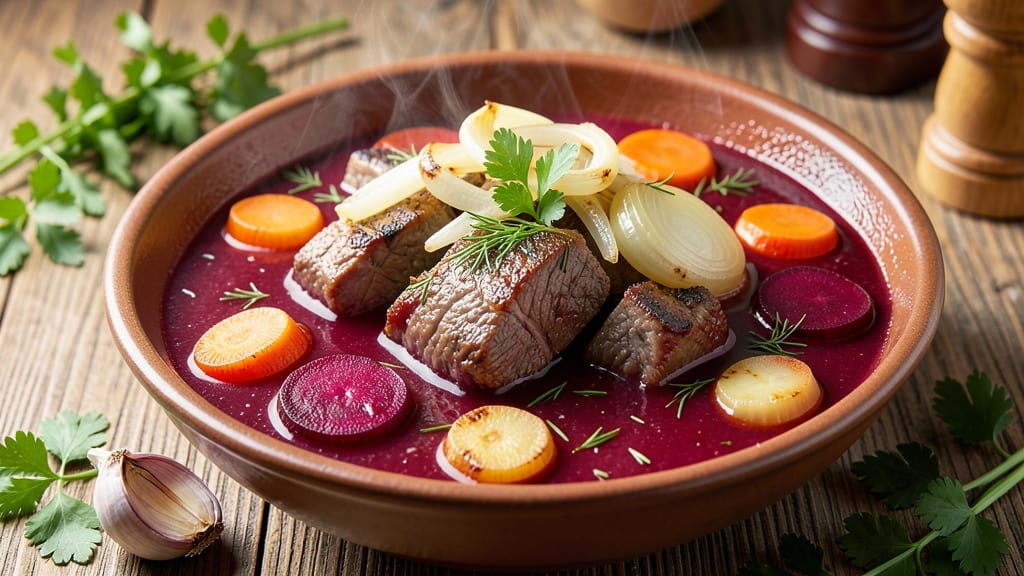
Beef and beet borscht transforms a simple soup into a velvety, ruby-hued masterpiece with layers of earthy sweetness and savory depth. This traditional Eastern European dish relies on slow-simmered beef and tender beets for a rich, balanced broth that's both comforting and sophisticated. The secret lies in browning the beef properly and letting the flavors meld over time—no shortcuts here, just authentic, restaurant-quality results.
What sets this recipe apart is the harmony of flavors: the natural sweetness of beets balanced by tangy vinegar or lemon juice, and the deep umami from slow-cooked beef. I’ve included a foolproof method for tenderizing the meat and achieving that signature deep ruby color without overcooking.
The result? A soup so rich and satisfying, it feels like a hug in a bowl.
This borscht is versatile enough for weeknight dinners but elegant enough for gatherings—serve it with a dollop of sour cream, fresh dill, and crusty bread to soak up every last drop. The slow simmering process develops flavors that store-bought broths can’t match, making this a dish worth the effort.
For those who love regional variations, you can easily add potatoes for heartiness or cabbage for extra texture. The key is patience—let the soup work its magic on the stove, and you’ll be rewarded with a bowl that’s as beautiful as it is delicious.
Ingredients for beef and beet borscht
Sixteen ingredients for a soup that's equal parts comforting and sophisticated.
| Ingredient | Amount | Notes |
|---|---|---|
| Chuck Roast 🥩 | 2 lb | Cut into 1-inch cubes for even cooking |
| Medium Beets 🍠 | 2 whole | Peeled, cut into 1-inch cubes |
| Yellow Onions 🧅 | 2 whole | Chopped, medium dice |
| Fresh Parsnips 🥕 | 2 whole | Peeled, cut into 1-inch pieces |
| Carrots 🥕 | 4 whole | Peeled, cut into 1-inch chunks |
| Garlic Cloves 🧄 | 6 cloves | Minced for aromatic depth |
| Fresh Dill 🌿 | ¼ cup | Chopped, stems removed |
| Tomato Paste 🍅 | ½ cup | High-quality for rich flavor |
| Beef Broth 🥫 | 6 cups | Homemade preferred, low-sodium |
| Apple Cider Vinegar 🍏 | 2 tbsp | For tangy brightness |
| Dark Brown Sugar 🍚 | 1 tbsp | Enhances beet sweetness |
| Bay Leaves 🍃 | 2 whole | For subtle herbal depth |
| Black Peppercorns 🌶️ | 1 tsp | Freshly cracked for heat |
| Salt 🧂 | 1 ½ tsp | Diamond Crystal preferred |
| Russet Potatoes 🥔 | 2 whole | Peeled, cut into 1-inch cubes |
| Sour Cream 🧈 | ½ cup | For serving, full-fat preferred |
| Extra-Virgin Olive Oil 🫒 | 2 tbsp | For searing beef |
The chuck roast is non-negotiable here—it's the backbone of that deep, meaty flavor. Costco sells it pre-cut in chunks, which saves time, but if you're buying a whole roast, ask the butcher to cube it for you. Look for good marbling; that's what gives you tender, flavorful bites. Beets should be firm with no soft spots, and medium-sized ones (about 2 inches) cook evenly without turning mushy. Fresh dill is a must—Trader Joe's sells it in those little plastic containers, but if you can find a farmers market with bunches, grab a whole bunch. It keeps for 5 days wrapped in damp paper towels.
No chuck roast? Brisket or short ribs work in a pinch, but they'll need extra time to tenderize. Swap the vinegar for lemon juice at half the amount if you prefer a brighter tang. The tomato paste can be skipped entirely if you're using a very rich beef broth, but I find it adds that umami depth that makes this soup sing. For the potatoes, Yukon Golds hold their shape better than Russets, but either works. If you're worried about the beets bleeding color, soak them in cold water for 10 minutes before adding to the pot.
This soup tastes even better the next day—flavors meld beautifully after resting. Store in an airtight container in the fridge for up to 5 days, or freeze portions for 3 months. The sour cream should be added just before serving, or it'll curdle. For a make-ahead tip, prep everything except the sour cream and store it separately. When ready to serve, just reheat the soup and stir in the sour cream. The dill can be added fresh at the end for that bright, herbal finish—don't skip this step.
Why You'll Love This Recipe
- One-Pot Magic: I swear, this is the kind of recipe where you can set it and forget it—chuck roast slow-cooks while you chop veggies, and suddenly you’ve got a pot full of rich, smoky goodness. No extra pans, no fuss, just deep flavor with minimal effort.
- Weeknight to Potluck: Make a double batch on Sunday, and you’ve got lunch for Tuesday, dinner for Thursday, and a freezer stash for when you’re swamped. Or bring it to a gathering—it’s the kind of dish that disappears fast, but no one will guess how easy it was.
- Budget-Friendly Powerhouse: Chuck roast stretches for miles, and seasonal veggies keep costs low. I’ll be real: this is the kind of meal that feeds four for under $15, and the leftovers? Even better the next day. Win-win.
Step-by-step instructions for beef and beet borscht
This rich, hearty borscht delivers deep ruby hues and layers of earthy sweetness through precise technique.
Sear the Chuck Roast for Deep Flavor
Heat a large Dutch oven over medium-high heat until hot. Add the 2 tablespoons extra-virgin olive oil and swirl to coat. Working in batches if needed, add the 2 lb chuck roast cut into 1-inch cubes, letting them sear undisturbed for 3-4 minutes until deeply browned on all sides. This step builds the foundation for rich flavor.
As the meat browns, you'll see those beautiful caramelized crusts forming—this is where the Maillard reaction creates complex flavors. Once all pieces are browned, transfer them to a plate and set aside. Don't drain the rendered fat; it's essential for building the borscht's depth.
Build the Vegetable Base with Aromatics
In the same Dutch oven, reduce heat to medium and add the 2 whole yellow onions chopped into medium dice. Cook for 5-6 minutes until softened and translucent, stirring occasionally. Add the 4 whole carrots and 2 whole fresh parsnips, both cut into 1-inch chunks, along with the 2 whole medium beets cut into 1-inch cubes.
Cook the vegetables for 8-10 minutes, stirring occasionally, until they begin to soften and release their natural sweetness. This is where the flavors meld together—you'll notice the beets starting to soften and the carrots developing a slight caramelization at the edges. Add the 6 cloves garlic cloves that have been minced and cook for another 1 minute until fragrant.
Develop the Rich Broth Foundation
Stir in the 0.5 cup tomato paste, spreading it evenly over the vegetables to create a thin layer. Cook for 2 minutes to toast the tomato paste slightly, deepening its flavor. Pour in the 6 cups beef broth, scraping up any browned bits from the bottom of the pot with a wooden spoon. Add the 2 whole bay leaves, 1 tsp black peppercorns, and 1.5 tsp salt.
Bring the mixture to a gentle boil, then reduce heat to low and simmer for 30 minutes, partially covered. This slow simmer allows the vegetables to cook evenly and the flavors to meld together. Stir occasionally to prevent sticking. You'll notice the broth becoming more concentrated and the vegetables softening further.
Finish with Potatoes and Acid Balance
Add the 2 whole russet potatoes cut into 1-inch cubes to the simmering broth. Increase heat to medium and cook for 15-20 minutes, or until the potatoes are fork-tender. Stir in the 2 tablespoons apple cider vinegar and 1 tablespoon dark brown sugar, which will brighten the flavors and enhance the natural sweetness of the beets.
Taste the broth and adjust seasoning if needed. The acidity from the vinegar should balance the richness of the beef and sweetness of the beets. Remove the bay leaves and peppercorns before proceeding. The borscht should have a deep ruby color with tender vegetables and rich, flavorful broth.
Serve with Sour Cream and Fresh Dill
Return the seared chuck roast to the pot and simmer for an additional 10-15 minutes, or until the meat is fork-tender and easily pulls apart. Ladle the borscht into bowls and let each person add a dollop of 0.5 cup sour cream and a sprinkle of 0.25 cup fresh dill chopped to taste.
This final touch adds a creamy contrast to the rich broth and a fresh herbal note that brightens the dish. Serve immediately while hot, as the flavors continue to develop and meld together. Each spoonful should deliver a perfect balance of hearty beef, sweet beets, and tangy brightness.
Pro Tips For Making Beef And Beet Borscht
- SEAR THE ROAST FIRST: Chuck roast releases more flavor when browned deeply—don’t skip this step, even if you’re in a hurry. Slice it thin, pat it dry with paper towels, and sear in batches over medium-high heat until the edges turn dark brown. I used to rush this and wondered why my borscht tasted like "beef water."
- PEEL BEETS AFTER COOKING: Raw beets stain like crazy and lose texture when peeled ahead. Roast or boil them whole with skins on, then cool before peeling—skins slip off effortlessly. (Yes, even if you’re impatient like me.) This keeps the flesh tender and your hands clean.
- DON’T OVERCROWD THE POT: Toss all your chopped veggies (onions, parsnips, carrots) into the pot at once, and you’ll end up with mushy, watery borscht. Sauté onions until soft, then add other veggies in layers—start with carrots, then parsnips—so they cook evenly without turning to paste.
- USE COLD BEET JUICE: After roasting or boiling beets, let them cool completely, then blend with water to extract juice. Cold juice is richer and won’t turn your broth muddy like hot liquid does. (I learned this after making a pink disaster the first time.) Strain it through a fine-mesh sieve for smoothness.
Creative variations of this beef and beet borscht
Ukrainian Classic
This traditional version swaps the potatoes for cabbage—about 4 cups of finely shredded green or savoy cabbage—and adds ½ cup frozen peas in the final 5 minutes of cooking. The cabbage softens beautifully in the broth while adding a satisfying crunch.
I like to use sauerkraut instead of fresh cabbage for a tangier twist—just add 1 cup with the potatoes and simmer for 10 minutes to mellow its sharpness. 🌿
Smoked Sausage Twist
For a heartier, smokier borscht, replace half the beef with ½ lb smoked kielbasa, sliced into ¼-inch rounds. Add it with the potatoes and simmer until the sausage is heated through.
The smoky paprika in the sausage complements the beets beautifully. I also boost the depth by adding 1 tsp smoked paprika directly to the broth while simmering. 🔥
Vegetarian Adaptation
Skip the beef entirely and use 1 lb mushrooms (cremini or portobello) seared in the same way as the beef. For umami depth, add 1 tbsp soy sauce when developing the broth. The mushrooms absorb the flavors beautifully, creating a satisfying texture.
I also add ½ cup lentils with the potatoes for extra protein. The result is just as rich and comforting—just without the meat. 🌱
Winter Root Variation
Swap the parsnips for celery root (about 1 lb) and add ½ cup diced apples (like Honeycrisp) with the potatoes. The apples add a subtle sweetness that pairs perfectly with the beets.
For extra coziness, stir in ½ cup cooked barley with the potatoes—it thickens the soup slightly and adds a satisfying chew. This version feels especially festive during colder months. ❄️
Creamy Dill Sauce
For an elevated serving experience, blend ½ cup sour cream, ¼ cup fresh dill, 1 tbsp lemon juice, and 1 clove roasted garlic into a smooth sauce. Drizzle it over individual bowls of borscht just before serving.
The sauce adds a luxurious creaminess that balances the soup's richness while keeping it light. This is my go-to presentation for dinner parties. 💫
Spiced Citrus Finish
Brighten the borscht with a zesty finish by adding 1 tbsp grated orange zest and 1 tsp orange liqueur (like Cointreau) during the final 5 minutes of cooking. The citrus cuts through the richness while adding a refreshing note.
I also sprinkle ½ tsp ground coriander into the broth for warmth. This variation feels especially vibrant for spring or summer meals. 🍊
Nutrition facts
Frequently asked questions
Why does my borscht taste too sweet?
The beets naturally sweeten as they cook, but the 2 tablespoons apple cider vinegar should balance this. If it's still too sweet, add 1 extra tablespoon vinegar or a splash of lemon juice at the end. For future batches, reduce the brown sugar to ½ tablespoon or omit it entirely.
Can I make this borscht in an Instant Pot?
Yes! Sear the beef first, then add all ingredients except potatoes and sour cream. Cook on high pressure for 25 minutes, then add potatoes and cook 5 more minutes. Release pressure naturally and finish with vinegar and dill. The texture will be slightly different but still delicious!
How do I prevent the beets from bleeding color into the broth?
Soak peeled beet cubes in cold water for 10 minutes before cooking to remove excess pigments. Use the same water to start the broth instead of plain broth. This method keeps the beautiful ruby color concentrated in the beets while maintaining a clear broth.
What's the best way to reheat leftovers?
Gently reheat on the stovetop over low heat until just warm—never boil. Add a splash of water or broth if it thickens too much. For extra flavor, stir in a pinch of salt or a dash of vinegar. Avoid microwaving as it can make the potatoes gummy.
Can I use canned beets instead of fresh?
While fresh beets give the best texture, you can use canned in a pinch. Drain and rinse them well, then cut into ½-inch cubes. Add them with the other vegetables and simmer 5 minutes less than fresh. The flavor will be slightly milder but still delicious!