
Main Courses
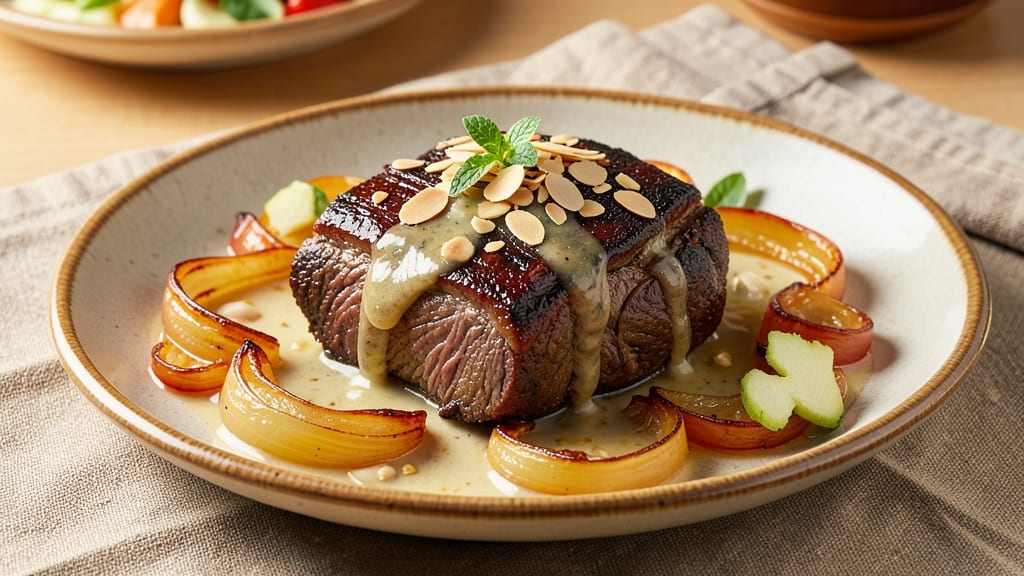
This Beef Almond Ding recipe delivers the ultimate Filipino comfort dish—tender beef simmered in a rich, savory-sweet sauce topped with crispy almonds for texture and crunch. 🌟 The secret lies in balancing caramelized onions, ginger, and garlic with just the right amount of coconut milk for depth, while the almonds add a satisfying contrast that makes each bite unforgettable.
What sets this recipe apart is its authentic approach without sacrificing simplicity. You'll start with a flavorful browned beef base, then build layers of aromatic spices and coconut milk that create a silky, velvety sauce.
The crispy almond topping isn't just for show—it adds a nutty crunch that cuts through the richness, making every spoonful a perfect balance of textures and flavors.
The result is a dish that feels like a warm hug on a chilly evening—silky beef in a fragrant sauce, crowned with golden almonds that crackle with every bite. This recipe is designed to bring the hearty, comforting essence of Filipino home cooking to your table, where it belongs.
Perfect for family dinners or special occasions, this beef almond ding serves as both a satisfying main course and a centerpiece that will have everyone asking for seconds. Let's create this restaurant-quality dish at home.
Ingredients for beef almond ding
Here's everything you need to create this restaurant-quality Filipino comfort dish with rich beef and crispy almonds.
| Ingredient | Amount | Notes |
|---|---|---|
| Beef Chuck Roast 🥩 | 1 ½ lb | Cut into 1-inch cubes |
| Yellow Onions 🧅 | 2 whole | Sliced thin for caramelizing |
| Fresh Ginger 🌿 | ½ inch | Peeled and grated finely |
| Garlic Cloves 🧄 | 6 cloves | Minced for aromatic base |
| Coconut Milk 🥥 | 1 can | Full-fat, 13.5 oz can |
| Tomato Paste 🍅 | 2 tbsp | Smooth, not chunky |
| Soy Sauce 🥄 | ¼ cup | Light or regular |
| Brown Sugar 🍚 | 2 tbsp | Packed lightly |
| Ground Black Pepper 🌶️ | 1 tsp | Freshly cracked |
| Salt 🧂 | 1 tsp | Kosher or sea salt |
| Slivered Almonds 🥜 | ½ cup | Unsalted, toasted |
| Vegetable Oil 🫒 | 2 tbsp | For searing beef |
| Fresh Bay Leaves 🍃 | 2 whole | For subtle aroma |
| White Vinegar 🍶 | 1 tbsp | For balancing flavors |
The beef is everything here—chuck roast gives that melt-in-your-mouth texture, but sirloin works too if you're in a hurry. Look for good marbling at Costco or your local butcher shop, and ask for it cubed to save time. Fresh ginger and garlic are non-negotiable for that authentic depth, so grab them from the produce section—none of that jarred stuff. The coconut milk? Full-fat only—it makes the sauce silky, and Thai Kitchen or Aroy-D brands are my go-tos for consistency. If you can't find fresh bay leaves, dried works at one-third the amount, but fresh is worth hunting down at Trader Joe's or Asian markets for that true Filipino flavor.
No soy sauce? Coconut aminos or even extra Worcestershire in a pinch will work, though the flavor won't be identical. Running low on brown sugar? Honey or maple syrup can substitute, but reduce the amount by half since they're sweeter. The almonds are the star of the show—unsalted slivered almonds toast up perfectly, but whole almonds chopped yourself add even more crunch. Pro tip: Toast them in a dry pan until golden brown before adding to the dish. The tomato paste can be the squeeze tube kind from Trader Joe's—it's perfect for small amounts and keeps forever. And if you're feeling fancy, smoked paprika in the sauce adds a depth that'll blow your taste buds away.
This dish tastes even better the next day—make extra and store it in the fridge for up to 5 days. The sauce thickens as it cools, so add a splash of water or coconut milk when reheating. For the almonds, toast a fresh batch and sprinkle on top right before serving so they stay crispy. Freezes beautifully for 3 months, and the sauce actually gets more flavorful over time. Portion into glass containers for easy reheating—just pop in the microwave for 2-3 minutes with a splash of water to loosen the sauce. Leftovers make amazing lunches the next day, and the almonds keep their crunch if stored separately.
Why You'll Love This Recipe
- One-Pot Magic: I swear by this recipe when I’m too tired to dirty multiple pans—just brown the beef, toss in the onions and ginger, add coconut milk, and let it simmer. The almonds caramelize right in the sauce, so you’re left with one pot, one spatula, and zero stress.
- Ginger-Garlic Bomb: That fresh ginger and garlic combo? It’s the kind of punch that makes you pause mid-bite. The chuck roast stays tender while the sauce gets this deep, almost sweet-spicy balance from the caramelized onions and toasted almonds—like a hug in a bowl.
- Leftovers That Beg: Between us, this dish tastes better the next day. The beef gets even more fall-apart tender, and the coconut milk thickens into a luscious sauce. I make a double batch on Sundays so I can grab a jar for lazy nights—no reheating required, just microwave and eat.
- Budget Feast: Chuck roast is my secret weapon for stretching meals without sacrificing flavor. A single roast feeds four, and the almonds add crunch without breaking the bank. Honestly, it’s the kind of recipe that makes me feel like I’m feeding a crowd without the grocery bill screaming at me.
Step-by-step instructions for beef almond ding
This rich, comforting dish delivers tender beef with a golden almond crust—here's how to nail it every time.
🔥 Step 1: Sear the Beef for Maximum Flavor
Heat 2 tablespoons vegetable oil in a large Dutch oven over medium-high heat until shimmering. Add the 1.5 lb beef chuck roast cut into 1-inch cubes in batches, working in 3-4 minutes per batch to avoid crowding. You want the beef to develop a deep golden brown crust—this builds the foundation for all that rich flavor.
Once all the beef is browned, remove it from the pot and set aside. Don't drain the oil—those browned bits (fond) are pure flavor gold. Here's the thing—if you see the oil smoking, lower the heat slightly. Smoking means you're burning the oil instead of searing the beef, and that bitter taste will ruin your sauce.
🍳 Step 2: Build the Aromatic Base
In the same Dutch oven, add 2 whole yellow onions sliced thin and cook for 5-6 minutes until softened and starting to caramelize—this adds natural sweetness to the dish. Add 0.5 inch fresh ginger peeled and grated and 6 cloves garlic minced, cooking for 1 minute until fragrant.
Stir in 2 tablespoons tomato paste and cook for 1 minute to deepen its flavor. Here's where it gets good—add 0.25 cup soy sauce, 2 tablespoons brown sugar, 1 teaspoon salt, and 1 teaspoon ground black pepper. Give it a good stir to combine all these flavors into a cohesive base. The sugar will start caramelizing slightly, adding another layer of depth.
🥘 Step 3: Simmer the Beef in Coconut Milk
Return the browned beef to the pot. Pour in 1 can coconut milk and add 2 whole fresh bay leaves. Bring to a gentle simmer, then reduce heat to low. Cover and let it cook for 1 hour to 1 hour 15 minutes, stirring occasionally, until the beef is fork-tender. You'll know it's ready when you can easily pierce it with a fork with minimal resistance.
I know it's tempting to check constantly, but resist the urge to peek. Every time you lift that lid, you lose heat and moisture. Instead, trust the process and let that coconut milk work its magic, creating a silky sauce that coats every bite of beef.
🔥 Step 4: Create the Crispy Almond Topping
While the beef simmers, toast 0.5 cup slivered almonds in a dry skillet over medium heat for 3-4 minutes, stirring constantly, until they're a beautiful golden brown and smell heavenly. Remove from heat immediately—they'll continue cooking from residual heat.
Once the beef is tender, stir in 1 tablespoon white vinegar to brighten the flavors. Spoon the beef mixture into a serving dish, then sprinkle the toasted almonds evenly over the top. Here's the secret—press down gently on the almonds so they adhere to the surface. This creates that signature crispy crust that makes this dish so special.
🍽️ Step 5: Broil for the Perfect Crispy Top
Transfer the dish to the broiler and broil for 3-5 minutes until the almonds are a deep golden brown and the top is crispy. Watch it closely—broilers can be fickle, and you don't want to burn the almonds. You'll see them darken and smell even more amazing as they crisp up.
Remove from the broiler and let it rest for 5 minutes before serving. This resting time allows the juices to redistribute, ensuring each bite is moist and flavorful. Serve with steamed rice or crusty bread to soak up that delicious sauce. The contrast of the crispy almond topping with the silky beef and creamy coconut sauce is what makes this dish so irresistible!
Pro Tips For Making Beef Almond Ding
- Sear the Chuck Roast Hard: This isn’t the time for gentle pats—crank your pan to medium-high and let that roast develop a deep brown crust before you even think about adding liquid. I used to rush this, and the sauce never stuck right; now I wait until the meat smells like a campfire before deglazing.
- Slice Ginger Paper-Thin: Skip the grater and use a sharp knife instead—you want translucent, almost invisible shreds that dissolve into the sauce without gumming it up. Thick slices? They’ll turn to mush and make your whole dish taste like you’re chewing on a root.
- Low and Slow for Tender Beef: After searing, drop the heat to a bare simmer and let that chuck roast cook for at least 3 hours—yes, even if the recipe says less. The collagen needs time to turn to butter, or you’ll end up with chewy meat that fights your almond sauce instead of melting into it.
- Toast the Almonds First: Dry-toast your almonds in the same pan you seared the beef—just a minute until golden—before adding them to the sauce. This adds a nutty depth that store-bought almond extract can’t match, and it keeps the dish from tasting like a generic stir-fry. (Pro move: crush half of them for texture.)
Common mistakes when making this recipe
Over-Searing Beef
I’ve seen this happen more times than I can count—beef that’s dark and leathery instead of golden brown. The key is patience and proper heat control. Use medium-high heat and work in batches, giving each piece 3-4 minutes to develop a deep brown crust without burning.
If you crowd the pan, the beef will steam instead of sear, and you’ll lose that crucial Maillard reaction that builds flavor. Trust me, a few extra minutes of searing per batch makes all the difference. 🔥
Skipping the Fond
Don’t drain that oil after searing! Those browned bits at the bottom of the pan—called fond—are pure flavor gold. They dissolve into your sauce, adding depth that you can’t replicate any other way.
If you’re worried about excess oil, just wipe up most of it with a paper towel after removing the beef, but leave those flavorful bits behind. It’s one of those little tricks that separates home cooks from restaurant-quality dishes. 💡
Rushing the Simmer
The beef needs time to become tender, and rushing the simmer is a common mistake. Low and slow is the way to go—1 hour to 1 hour 15 minutes at a gentle simmer ensures the beef is fork-tender.
I know it’s tempting to check constantly, but every time you lift the lid, you lose heat and moisture. Instead, trust the process and let the coconut milk work its magic. Patience here is key to that silky, velvety sauce. ⏰
Under-Toasted Almonds
If your almonds aren’t crispy enough, it’s likely because they weren’t toasted long enough or at the right temperature. Use a dry skillet over medium heat and stir constantly for 3-4 minutes until they’re a beautiful golden brown.
Remove them immediately—they’ll continue to cook from residual heat. Pressing them gently onto the sauce before broiling ensures they stay in place and crisp up perfectly. Don’t skip this step—it’s what makes this dish special! 🥜
Broiling Too Long
Broiling is where many people go wrong—the almonds can burn in seconds if you’re not careful. Keep a close eye on the dish and broil for only 3-5 minutes until the almonds are golden brown.
If they start to darken too quickly, move the dish back or turn off the broiler. The goal is a crispy top, not charred almonds. A quick glance every minute ensures perfect results. 🌡️
Ignoring the Vinegar
The 1 tablespoon white vinegar at the end is non-negotiable. It brightens the flavors and balances the richness of the coconut milk and beef. Skipping it leaves the dish flat and one-dimensional.
Stir it in just before serving, and you’ll notice the difference immediately. It’s a small step that makes a big impact on the final flavor profile. Trust the recipe—this isn’t optional! 🍶
Nutrition facts
Frequently asked questions
Can I substitute regular almonds for slivered almonds in this recipe?
Yes, but you'll need to adjust the preparation. Use 0.75 cup whole almonds instead of 0.5 cup slivered, and chop them yourself for a similar texture. Toast them the same way, but you may need an extra 1 minute to achieve the same level of crispiness. The flavor will be identical, just with slightly larger pieces.
How can I make this dish spicier?
Add 1-2 teaspoons of chili flakes or 1 sliced fresh chili pepper (like jalapeño or siling labuyo) when you build the aromatic base. For heat lovers, stir in 1 teaspoon of cayenne pepper with the soy sauce. Remember, you can always adjust the spice level at the end—start with less and add more to taste.
What's the best way to reheat leftovers?
Transfer the beef and sauce to a microwave-safe dish, cover with a damp paper towel, and heat on medium power for 2-3 minutes. Add 1-2 tablespoons of water or coconut milk to loosen the sauce. For the almonds, toast fresh ones and sprinkle on top right before serving to maintain that perfect crunch. The dish actually tastes better the next day as flavors meld!
Can I make this recipe without coconut milk?
You can try, but the dish will lose its signature creamy texture. Replace the coconut milk with 1 cup beef broth plus 2 tablespoons cornstarch to thicken, but reduce the soy sauce to 2 tablespoons to balance the saltiness. The flavor won't be identical, but it'll still be delicious. For authenticity, coconut milk is highly recommended!
How do I know when the beef is fully tender?
The beef should be fork-tender, meaning it should easily pierce with minimal resistance. You'll also see the meat fibers start to separate slightly. Another test is to taste a small piece—it should be meltingly soft with no chewy texture. If you're unsure, let it simmer 10-15 minutes longer. Overcooking won't ruin it, but it might make the sauce slightly thicker.