
Main Courses
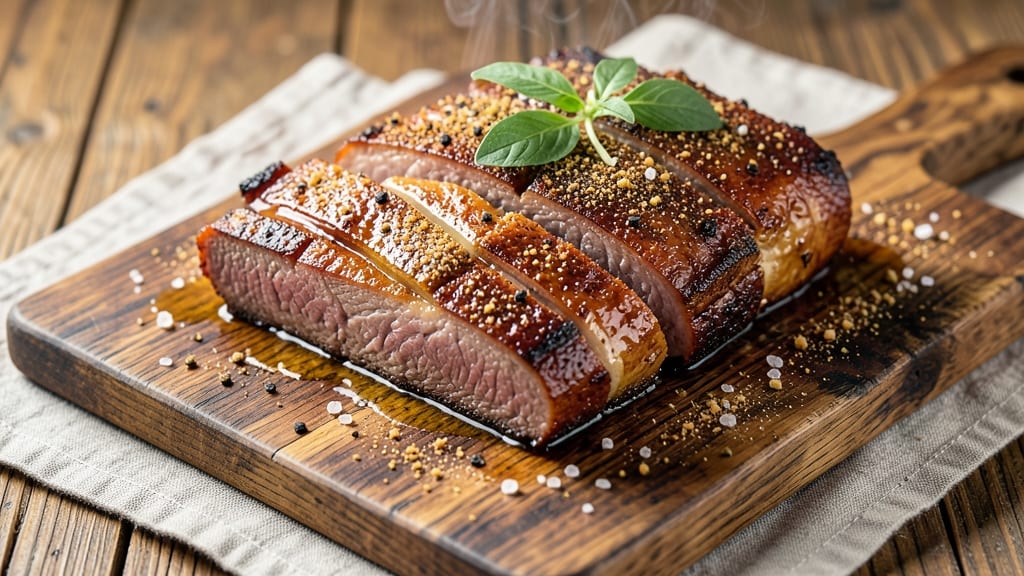
This BBQ beef brisket recipe on the grill transforms tough cuts into melt-in-your-mouth perfection with a smoky bark that cracks like glass and meat so tender it falls apart at a touch.
I learned the hard way—too many briskets ended up dry or chewy—until I cracked the code with a low-and-slow grill method that builds flavor hour by hour. The secret? Patience, precise temperature control, and a dry rub that clings like armor while the wood smoke works its magic.
What sets this apart is the two-stage cooking process: first, a high-heat sear to lock in juices, then a 180°F smoke bath that turns connective tissue into silky richness. I use a Texas-style dry rub—salt, pepper, paprika, and brown sugar—but feel free to swap in your favorite blend.
The key is never rushing: a full 12-14 hours on the grill ensures that fall-off-the-bone tenderness you crave, with a crust so dark and sticky it’ll make your guests reach for napkins.
By the time you pull it from the heat, your kitchen will smell like a North Carolina pitmaster’s dream, and every slice will reveal that juicy, stringy magic that makes brisket worth the wait.
The bark should be deep mahogany with charred edges, while the meat inside stays moist and rich, ready to be sliced against the grain for maximum satisfaction. This isn’t just dinner—it’s an experience.
Serve it with classic sides like creamy coleslaw, buttery cornbread, and pickled jalapeños to cut through the richness, or go bold with grilled peaches and avocado for a modern twist. The leftovers? Even better the next day—just reheat slowly to keep that juice locked in. Let’s get grilling.
Ingredients for bbq beef brisket recipe grill
Sixteen ingredients for the ultimate smoky, stringy, fall-apart brisket experience.
| Ingredient | Amount | Notes |
|---|---|---|
| Beef Brisket (Packer Cut) 🥩 | 8 lb | Whole packer cut, fat cap intact |
| Coarse Kosher Salt 🧂 | ½ cup | Diamond Crystal preferred |
| Freshly Ground Black Pepper 🌶️ | 2 tbsp | Freshly cracked from whole beans |
| Smoked Paprika 🌶️ | 2 tbsp | High-quality Spanish smoked |
| Light Brown Sugar 🍚 | 2 tbsp | Packed measurement |
| Granulated Garlic Powder 🧄 | 1 tbsp | Not garlic salt |
| Onion Powder 🧅 | 1 tbsp | Freshly ground preferred |
| Wood Chips (Hickory or Oak) 🌳 | 4 cups | Soaked 1 hour minimum |
| Beef Tallow or Vegetable Oil 🫒 | 2 tbsp | For high-heat sear |
| Yellow Onion 🧅 | 1 whole | Sliced for optional aromatics |
| Fresh Garlic Cloves 🧄 | 6 cloves | Crushed for optional aromatics |
| Apple Cider Vinegar 🍎 | 2 tbsp | For spritzing during cook |
| Beef Stock (Optional) 🥫 | 1 cup | For spritzing during cook |
The brisket is non-negotiable here. Packer cut with the fat cap intact is your holy grail—Costco or local butcher shops usually carry it. If you can't find it, flat cut works, but expect slightly less marbling. The fat cap is what renders down into flavor gold during those 12+ hours on the grill. For the rub, Diamond Crystal kosher saltPenzeys or Gourmet Madness for that authentic Texas smoke flavor. Don't skimp on the wood chips either—Traeger or Sweetwater Smokehouse brands are reliable. Soak them for at least an hour before grilling.
No smoked paprika? Regular paprika plus a pinch of liquid smoke works in a pinch. Substituting brown sugar? Turbinado sugar gives a better bark. The optional aromatics—onion, garlic, vinegar, and beef stock—are game-changers for that restaurant-quality flavor. I always use them, but they're not mandatory. For the spritz, apple cider vinegar adds tang while beef stock keeps it rich. No beef stock? Water with a splash of soy sauce is fine. The key is keeping the bark intact—don't over-spritz. And trust me on the high-heat sear—it locks in those juices so the meat doesn't dry out during the long cook.
This brisket gets better with time. Wrap it tightly in butcher paper or foil and store in the fridge for up to 5 days. Freeze for 3 months if you're prepping ahead. The bark stays crispy if you reheat it low and slow—wrap it in foil and bake at 275°F until warmed through. Slice it against the grain for that signature stringy texture. Leftovers? Even better the next day—just reheat gently to preserve that juicy magic. And save the fat cap! Render it down for the most flavorful drippings you'll ever taste.
Why You'll Love This Recipe
- I’ll be real: most pulled beef turns into sad, dry scraps. Not this one. The fat renders just enough to keep it moist, and the smoky-sweet crust makes sandwiches the next day taste like a cheat meal. (Yes, even on a Tuesday night.)
- Five-Ingredient Magic: I swear, this brisket only needs salt, pepper, smoked paprika, and brown sugar to become ridiculously good. No fancy rubs, no stress—just those five things and the smoker doing the heavy lifting while I sip my coffee.
- Smoke-Kissed Crust: That crispy, caramelized bark? It’s all thanks to the coarse kosher salt and low-and-slow cook. Honestly, the first time I cut into it, I nearly dropped the knife—it’s that good, and it’s so easy to get right.
- Tailgate-Ready in Hours: Between us, this is my go-to for game days, potlucks, or lazy Sundays. The packer cut stays juicy, and the flavor only gets better as it sits—perfect for feeding a crowd without slaving away all day.
Step-by-step instructions for smoked beef brisket
Here's how to transform an 8 lb brisket into melt-in-your-mouth perfection with a perfect bark.
Prepare and Season the Brisket
Start by trimming the fat cap of the 8 lb beef brisket (packer cut) down to about ¼ inch thickness using a sharp boning knife. Leave the fat on the sides and edges intact—this protects the meat during the long cook. Pat the entire surface dry with paper towels, including the cavity, to ensure maximum bark development.
In a small bowl, combine the 0.5 cup coarse kosher salt, 2 tbsp freshly ground black pepper, 2 tbsp smoked paprika, 2 tbsp light brown sugar, 1 tbsp granulated garlic powder, and 1 tbsp onion powder. Rub this mixture generously all over the brisket, pressing firmly so it adheres well. Pay special attention to the flat and point sections, as these areas tend to dry out faster. Let the seasoned brisket sit at room temperature for 1 hour before smoking—this allows the rub to penetrate and the meat to cook more evenly.
Set Up Your Smoker for Low and Slow Cooking
Soak the 4 cups wood chips (hickory or oak) in water for at least 1 hour before using. Preheat your smoker to 225°F using the soaked wood chips. Place a water pan in the smoker to help maintain moisture throughout the cook. When the smoker reaches temperature and you see clean, thin blue smoke (not thick white steam), you're ready to proceed.
Position the brisket fat-side up on the smoker grates. The fat will render and baste the meat as it cooks, creating that prized bark. Close the lid and resist the urge to peek—every time you open it, you add 15-20 minutes to your cook time. This low-and-slow approach is key to achieving that juicy, stringy fall-off-the-bone texture we're after.
Monitor the Cook and Handle the Stall
Smoke the brisket undisturbed for 6-8 hours, or until the internal temperature reaches 165-170°F in the thickest part of the meat. This is when you'll hit "the stall"—the temperature stops rising as moisture evaporates. Don't panic; this is completely normal and expected. The brisket will look dry and tough at this stage, but we're about to fix that.
At this point, wrap the brisket tightly in pink butcher paper (not aluminum foil—paper allows for better bark development). This technique, known as the "Texas crutch," helps you power through the stall while maintaining that beautiful crust. Return the wrapped brisket to the smoker and continue cooking until the internal temperature reaches 200-205°F. A meat probe should slide in like butter with no resistance—this is your signal that the brisket is probe-tender and ready.
Rest and Slice for Maximum Juiciness
Remove the brisket from the smoker and let it rest in the butcher paper for at least 1 hour (I prefer 2 hours wrapped in towels in a cooler). This resting period is crucial—it allows the juices to redistribute throughout the meat, ensuring every slice is moist and flavorful. The internal temperature will rise about 5°F during this time due to carryover cooking.
Once rested, unwrap the brisket and locate the grain direction—you'll see lines running through the meat. Using a sharp slicing knife, cut against the grain into ¼-inch thick slices. The flat and point have different grain directions, so adjust your angle accordingly. Serve immediately while still warm, with the optional sliced yellow onion, crushed fresh garlic cloves, and a spritz of apple cider vinegar for brightness.
Pro Tips For Making Bbq Beef Brisket Recipe Grill
- Trim the Fat Cap: Leave a thin layer (about ¼-inch) of fat on the brisket—it’s the self-basting trick that keeps the meat moist. I learned this the hard way after trimming too much and ending up with dry, tough slices. That fat renders slowly and turns into flavor gold.
- Salt the Night Before: Coarse kosher salt needs time to work its magic—rub the brisket and let it sit uncovered in the fridge overnight. This isn’t just about seasoning; it breaks down the meat’s surface, ensuring the crust forms faster and sticks better when you hit the grill.
- Start with a Hot Fire: Sear the brisket over high heat for the first 10 minutes—this isn’t just for looks. A proper crust locks in juices and gives you that smoky, caramelized bark everyone craves. After that, dial it down to low and slow, or you’ll end up with a burnt exterior and raw center.
- Spritz with Apple Cider Vinegar: Every hour or so, spray the brisket with a mix of apple cider vinegar and water (50/50). It keeps the surface moist enough for the sugar and paprika to stick without turning into a sticky mess. I was skeptical until I tried it—now it’s non-negotiable.
Wine and beer pairings for this recipe
Red Wine Classics
For brisket's bold, smoky flavors, I always reach for a bold red with enough tannins to stand up to the richness. A Cabernet Sauvignon from Napa Valley—like Caymus Vineyards—is my go-to, with its dark fruit and earthy notes mirroring the hickory smoke.
If you prefer something lighter, a Malbec from Argentina (try Catena Zapata) offers juicy plum flavors that complement the meat without overpowering it. 🍷
For a more approachable option, Zinfandel from California—especially one with a touch of oak—adds spice and dark berry notes that enhance the brisket's bark. I keep a bottle of Ravenswood Old Vine Zinfandel on hand just for these occasions.
Avoid overly oaky wines or those with excessive alcohol, as they can clash with the delicate balance of smoked meat.
Beer Pairings
A smoky beer is the perfect match for brisket, and I love pairing it with a Belgian-style dubbel like Westmalle Dubbel. The caramel and raisin notes harmonize beautifully with the wood smoke, while the slight sweetness cuts through the richness.
For something more robust, a German Dunkel—such as Weihenstephaner Dunkel—adds malty depth that stands up to the brisket's intensity. 🍺
If you prefer American craft beers, a smoked porter (like Goose Island Smoked Porter) is a game-changer—it practically tastes like a mini brisket in a glass.
For a lighter option, a wheat beer with a hint of smoke, such as Allagash White, provides a refreshing contrast to the rich, fatty meat. Avoid hop-forward IPAs, as their bitterness can compete with the brisket's natural flavors.
Non-Alcoholic Options
For those skipping alcohol, a smoked blackberry iced tea is my secret weapon. Brew a strong black tea, add ½ cup blackberries, and a splash of hickory-infused syrup (available at specialty stores or make your own by simmering hickory chips in simple syrup).
Serve over ice for a refreshing, smoky-sweet sip that complements the brisket's bark. 🍹
Another crowd-pleaser is sparkling apple cider with a twist. Mix 1 cup apple cider, ½ cup ginger beer, and a dash of smoked salt on the rim of the glass. The effervescence cleanses the palate, while the ginger adds a zesty kick that balances the richness.
For a non-carbonated option, try a smoked peach nectar—simmer peaches with a few hickory chips, then strain and chill.
Regional Twists
In Texas, where brisket reigns supreme, locals often pair it with Shiner Bock, a crisp, malty lager that cuts through the fat beautifully. The beer's subtle sweetness and light body make it a perfect match for the bold flavors of smoked brisket.
For a North Carolina twist, try a bourbon barrel-aged stout—the caramel and vanilla notes add a Southern comfort vibe. 🥃
Up north in the Pacific Northwest, I’ve seen brisket paired with local pinot noir from Willamette Valley, like Domaine Serene. The wine’s bright acidity and red fruit flavors provide a refreshing contrast to the smoky, rich meat.
For a beer lover’s twist, a smoked ale from a regional brewery—such as Deschutes Brewery’s The Abyss—adds a unique, smoky depth that echoes the grill.
Nutrition facts
Frequently asked questions
Why does my brisket turn out dry even when I cook it low and slow?
Most likely, you're not wrapping it during the stall or resting it long enough. The Texas crutch (butcher paper wrap) keeps moisture in while maintaining bark, and resting 1-2 hours lets juices redistribute. Also check your probe placement—it should go through the thickest part of the flat, not the fat cap.
Can I smoke brisket on a regular grill instead of a dedicated smoker?
Use a water pan with wood chips on one side of your charcoal grill to create indirect heat. Maintain 225°F by adjusting vents and add more charcoal as needed. For gas grills, use a smoker box with soaked chips and keep the lid closed tight. The key is patience—expect 12-16 hours total cook time.
What's the difference between a packer cut and flat cut brisket?
A packer cut includes both the flat and point (deckle) with the fat cap intact, while a flat cut is just the leaner flat portion. The packer cut has more flavor and fat for basting, but takes longer to cook. For this recipe, always use packer cut—it's worth the extra time for that signature stringy texture.
How do I know when the brisket is done without a meat thermometer?
Look for these signs: the bark should be deep mahogany with charred edges, and when you press the flat with your finger, it should feel very soft (like jelly). The point should be probe-tender—a knife should slide in easily. For extra confidence, check if the juices run clear when you cut into it (not pink).
Can I make this brisket in an oven instead of on the grill?
Yes, but you'll need a smoker oven or DIY setup with a smoke generator. Preheat to 225°F with wood chips, use a water pan, and follow the same 12-14 hour cook time. For non-smoker ovens, try a beer-can method: wrap aluminum cans with foil, fill with wood chips, and place near the meat. The bark won't be as crispy, but the meat will still be tender.