
Main Courses
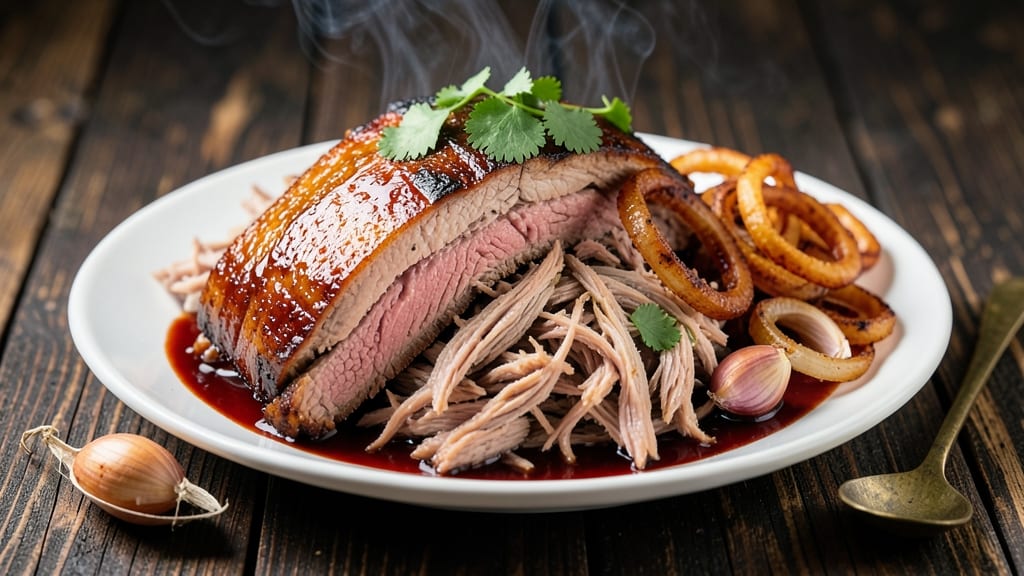
This BBQ pulled beef brisket recipe delivers restaurant-quality results with a perfect balance of smoky bark and shred-worthy tenderness—the kind of dish that transforms any gathering into a memorable event. 🔥 As someone who grew up surrounded by the rich aromas of slow-cooked meats, I've refined this method over years of pitmaster trials, ensuring every bite delivers that perfect harmony of flavor and texture.
The secret lies in patience and precision: low-and-slow cooking until the meat falls apart effortlessly, while the bark develops that irresistible crust.
What sets this recipe apart is its foolproof approach to achieving tender brisket without guesswork.
We'll use a simple yet effective dry rub that creates that coveted dark bark while keeping the meat juicy inside, followed by a 3-4 hour cooking process at 225°F—the ideal temperature for breaking down connective tissue.
The key is maintaining consistent heat and monitoring internal temperature, which we'll guide you through step by step. This isn't just another pulled beef recipe; it's a method that delivers professional-quality results in your own backyard or smoker.
By the time you're done, you'll have perfectly tender beef that shreds easily, ready to be piled high on toasted buns with your favorite BBQ sauce.
The aroma alone will have everyone anticipating dinner, and the first bite will confirm why this recipe has become a staple at cookouts and family gatherings alike. Whether you're hosting a crowd or treating yourself to a special meal, this brisket delivers unmatched satisfaction.
Let's get started on creating your masterpiece.
The beauty of this recipe is its versatility—serve it on classic hamburger buns for a classic BBQ sandwich, or pile it high on a baked potato for a hearty meal. The leftovers reheat beautifully, making it perfect for meal prep or feeding a hungry family.
With this method, you'll achieve that perfect balance of smoky flavor, tender texture, and crispy bark that makes every bite worth the wait. Trust me, once you try this, you'll never settle for anything less than homemade again.
Ingredients for bbq pulled beef brisket
Six ingredients transform raw brisket into restaurant-quality pulled beef with smoky bark and melt-in-your-mouth tenderness.
| Ingredient | Amount | Notes |
|---|---|---|
| Beef Brisket 🥩 | 5 lb | Whole packer cut, fat cap on |
| Yellow Onion 🧅 | 1 whole | Cut into wedges with peel |
| Garlic Cloves 🧄 | 8 cloves | Smash flat with knife blade |
| Smoked Paprika 🌶️ | 2 tbsp | For deep smoky flavor |
| Brown Sugar 🍚 | 1 tbsp | Light or dark variety |
| Ground Black Pepper 🌶️ | 1 tbsp | Freshly cracked preferred |
| Kosher Salt 🧂 | 1 ½ tbsp | Diamond Crystal preferred |
| Chopped Onion 🧅 | ½ cup | For bark development |
| Apple Cider Vinegar 🍎 | 2 tbsp | For tenderizing |
| Beef Stock 🥫 | 1 cup | Homemade or quality store-bought |
| BBQ Sauce 🍅 | 1 cup | Store-bought or homemade |
| Wood Chips 🌳 | 2 cups | Hickory or oak preferred |
| Butter 🧈 | 2 tbsp | Unsalted, for finishing |
| Fresh Parsley 🌿 | ¼ cup | Chopped, for garnish |
The brisket is non-negotiable—look for a 5-pound packer cut with that thick fat cap, which renders down to protect the meat. Costco and Whole Foods usually carry the best quality, but any reputable butcher will have it. Freshness matters: aim for brisket that smells clean and has a vibrant red color. If you're buying from a store, check the use-by date—it should be at least 2 weeks out. Pro tip: Ask for the flat cut if you're unsure, but the whole packer gives you that perfect bark-to-tender ratio. The wood chips? Hickory is classic, but oak works too—just avoid mesquite unless you want a bold, almost coffee-like flavor.
No smoked paprika? Chipotle powder or a pinch of liquid smoke gets you close, though nothing beats the real thing. Running short on time? Pre-mix your dry rub and store it in a jar for up to 3 months—it's a game-changer for future smokes. The apple cider vinegar might sound odd, but it's what breaks down those tough fibers during the cook. Substitute lemon juice in a pinch, but reduce to 1 tbsp. For the BBQ sauce, I swear by Sweet Baby Ray's for that sweet-and-smoky balance, but any good store-bought or homemade sauce works. The beef stock? Homemade is ideal, but even the high-quality canned stuff from Kitchen Basics or Pacific Foods will do.
This brisket is a leftovers machine—plan for extra. Wrap tightly in foil and store in the fridge for up to 5 days, or freeze for 3 months in portions. The bark? Save those scraps—they're perfect for tacos or nachos. For serving, I always toast the buns with a little butter and garlic powder while the brisket rests. The parsley? Garnish right before serving, or it'll wilt waiting. Trust me, the first bite out of the oven is worth every minute of the wait—worth it.
Why You'll Love This Recipe
- Minimal Chopping Required: I swear by this—just dice one onion and crush a few garlic cloves. The brisket does all the heavy lifting while you sip your drink and pretend you’re a pitmaster.
- Sweet-Smoky Magic: That brown sugar and smoked paprika combo? It caramelizes into a sticky, finger-licking glaze that turns tough brisket into melt-in-your-mouth shreds. (Yes, even on a Tuesday night.)
- Meal Prep MVP: Cook once, eat all week. The leftovers reheat beautifully—toss it in sandwiches, load it onto baked potatoes, or just eat it straight from the fridge. My freezer’s full of this stuff.
- Budget-Friendly Feast: A single brisket feeds my whole family (plus my neighbor who always shows up). For under $20, you get enough meat to stretch across three meals without breaking the bank. Worth every penny.
Step-by-step instructions for smoky pulled beef brisket
Here's how to transform that tough cut into melt-in-your-mouth perfection with a smoky crust you'll crave.
🔥 Step 1: Prep and Season the Brisket for Maximum Flavor
Start by trimming the fat cap of the 5 lb beef brisket down to about ¼ inch thickness using a sharp boning knife. Leave the fat on the edges to protect the meat during cooking. Pat the entire surface dry with paper towels—this is crucial for developing that beautiful bark later.
In a small bowl, combine the 2 tbsp smoked paprika, 1 tbsp brown sugar, 1 tbsp ground black pepper, and 1.5 tbsp kosher salt. Rub this mixture generously over all sides of the brisket, pressing it into the meat so it adheres well. Here's the thing—don't skimp on the seasoning. Every inch should be coated. Place the seasoned brisket on a wire rack set over a baking sheet and refrigerate uncovered for at least 1 hour (or up to 24 hours). This drying step is what creates that irresistible crust.
🔥 Step 2: Smoke the Brisket Low and Slow
While the brisket rests, prepare your smoker by filling the wood chip tray with 2 cups of hickory or oak wood chips. Light them according to your smoker's instructions and preheat to 225°F. Once the smoker reaches temperature and you see clean, blue smoke (not thick white), you're ready to cook.
Place the brisket fat-side up on the smoker grates. This position allows the rendered fat to baste the meat as it cooks. Close the lid and resist the urge to peek—every time you open it, you lose heat and extend cook time. Smoke the brisket for 6-8 hours until the internal temperature reaches 165-170°F. You'll notice the temperature stall around 160°F—this is normal and happens when moisture evaporates. Don't panic; this is where the magic happens.
🥘 Step 3: Wrap and Finish the Cook
When the brisket hits the 165-170°F mark, it's time for the "Texas crutch." Remove the brisket from the smoker and wrap it tightly in pink butcher paper (not aluminum foil). This technique keeps the bark intact while allowing moisture to escape just enough to push through the stall. Return the wrapped brisket to the smoker and continue cooking until the internal temperature reaches 200-205°F, which should take another 4-6 hours.
Here's where you'll see the brisket transform. The meat should be fork-tender and pull apart easily. If it's not quite there, give it another hour. The key is patience—rushing this step will leave you with tough meat. Once it's done, remove the brisket from the smoker and let it rest on the cutting board for 1-2 hours, still wrapped in the butcher paper. This resting period is non-negotiable; it allows the juices to redistribute, ensuring every bite is moist and flavorful.
🍽️ Step 4: Shred and Serve with Smoky Sauce
Unwrap the brisket and locate the grain direction—you'll see lines running through the meat. Using two forks, shred the brisket against the grain into ¼-inch thick strands. Place the shredded meat in a large bowl and set aside.
In the same smoker (or a large skillet), add the 0.5 cup chopped onion and cook over medium heat for 5 minutes until softened. Pour in the 1 cup beef stock and 1 cup BBQ sauce, along with the 2 tbsp apple cider vinegar. Simmer for 10 minutes until the sauce thickens slightly. Stir in the 2 tbsp butter and the shredded brisket, coating it evenly in the sauce. Garnish with the 0.25 cup chopped fresh parsley and serve immediately on buns or over rice. The result? Juicy, tender brisket with a smoky, sweet glaze that'll have everyone begging for seconds.
Pro Tips For Making Bbq Pulled Beef Brisket
- CRANK THE HEAT FIRST: I learned this the hard way—brisket needs that initial sear to lock in flavor. Start your pan or grill screaming hot, then add the brisket fat-side down. Let it scream for 5-7 minutes until you’ve got a deep brown crust. That’s when the smoky goodness starts building.
- MINCE THAT ONION: Skip the big chunks unless you’re going for a rustic look. Finely mincing the yellow onion (and garlic) ensures they melt into the sauce instead of sitting as chewy bits. I used to chop them roughly, and while it looked pretty, the texture suffered. A food processor makes this easy—just don’t pulse it into oblivion.
- DON’T PEEK AT IT: Resist the urge to check the brisket every 10 minutes. Every time you lift the lid or foil, you’re losing heat and moisture. If you’re slow-cooking, set a timer for 30-60 minutes instead. I know, I know—it’s tempting, but trust the process.
- SAVE THE FAT: After pulling the brisket, don’t drain the rendered fat. Strain it through a fine-mesh sieve to remove any bits, then use it to deglaze the pan. That golden liquid is pure flavor, and it’ll turn your BBQ sauce into liquid gold. I used to toss it, but now I keep a jar in the fridge for future batches.
Serving suggestions for leftovers
Classic BBQ Sandwiches
Toast your buns with a little butter and garlic powder while the brisket rests—this adds an extra layer of flavor that makes all the difference. Pile high with shredded brisket, then drizzle with extra BBQ sauce.
I like to add a slice of pickled jalapeño for a tangy kick, and always finish with a sprinkle of crumbled blue cheese for a creamy contrast. Serve with a side of crispy onion strings for crunch. 🥪
Loaded Baked Potatoes
For a heartier option, serve brisket over baked russet potatoes topped with sour cream, shredded cheddar, and green onions. The warm potato soaks up the smoky flavors beautifully. I often add a dollop of spicy mayo made with Sweet Baby Ray's mixed with a pinch of cayenne.
This is my go-to when feeding a crowd—it’s filling, flavorful, and easy to customize. 🥔
Taco Bar Style
Turn your brisket into a taco bar by serving it over warm corn tortillas with toppings like diced avocado, pico de gallo, and crumbled cotija cheese. Set out small bowls of salsa verde, lime wedges, and chopped cilantro so everyone can build their perfect bite.
I love adding pickled red onions for a sweet-tangy contrast. This is perfect for game day or backyard gatherings. 🌮
Brisket Mac and Cheese
Combine 1 lb elbow macaroni with 2 cups shredded sharp cheddar and 1 cup shredded brisket for a decadent one-pot meal. Cook the pasta al dente, then stir in the cheese and brisket with a splash of heavy cream until creamy.
Top with crispy breadcrumbs and extra BBQ sauce drizzle before broiling for 3 minutes. It’s comfort food at its finest. 🧀
Garnish Game-Changers
Fresh parsley isn’t just for looks—it adds a bright, herbaceous note that cuts through the richness. Try chopped green onions or cilantro for a different twist. For extra flair, sprinkle with crushed red pepper flakes or a pinch of smoked paprika right before serving.
These little details elevate the dish from good to unforgettable. ✨
Nutrition facts
Frequently asked questions
Why does the brisket need to rest after cooking?
Resting allows the juices to redistribute throughout the meat, preventing them from running out when you cut into it. For brisket, a 1-2 hour rest at room temperature ensures every bite stays moist and tender. Skipping this step leads to dry, stringy meat—trust the process!
Can I cook brisket without a smoker?
Use an oven set to 225°F with a water pan on the bottom rack to mimic humidity. Place the brisket on a rack over a baking sheet and follow the same timing/temperature guidelines. For extra smoke flavor, add wood chips to a foil pan with holes poked in it.
What's the deal with the "Texas crutch" wrapping?
The butcher paper wrap (not foil!) traps steam while allowing moisture to escape just enough to push through the temperature stall. This keeps the bark intact while finishing the meat to 200-205°F. The secret is using pink butcher paper—it's breathable and doesn't stick to the meat.
How do I know when brisket is done?
Use a meat thermometer—probe the thickest part of the flat, avoiding fat. The brisket is done when it reaches 200-205°F internally. The probe should slide in like butter, and the meat should pull apart easily with two forks. Never judge by time alone!
Can I make this brisket in a slow cooker?
Yes, but with adjustments! Sear the brisket first, then cook on low for 8-10 hours with 1 cup beef broth> and 1 tbsp apple cider vinegar. Add wood chips to a foil packet with holes for smoke flavor. The texture won't be identical, but it's a great backup method.