
Main Courses
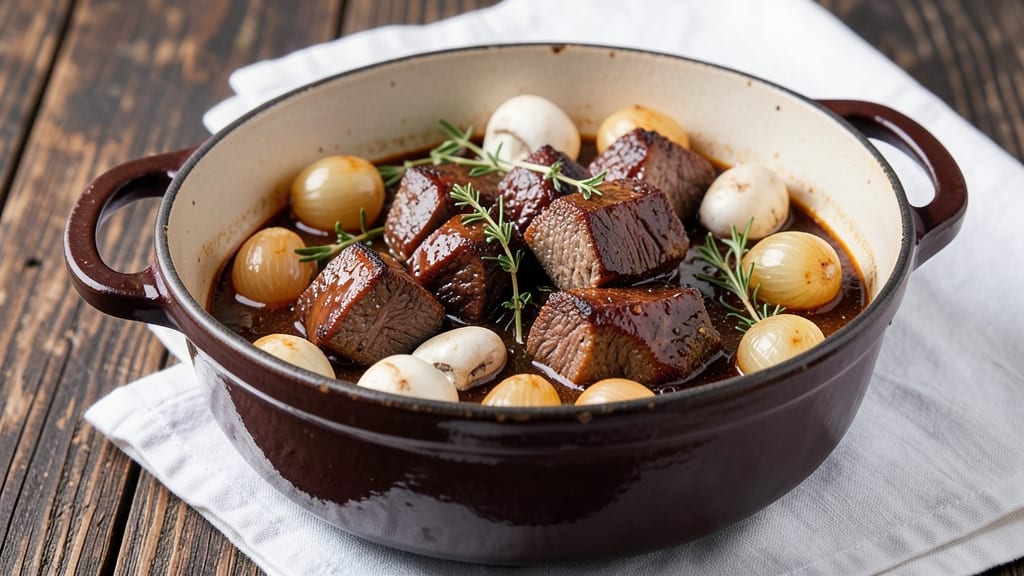
This Barefoot in Paris Beef Bourguignon recipe transforms tough beef into melt-in-your-mouth tenderness through slow wine braising. The secret lies in proper searing and layering flavors—rich red wine, earthy mushrooms, and aromatic herbs like thyme—all simmered until the meat falls apart effortlessly.
It’s the kind of dish that feels luxurious yet comes together with traditional techniques anyone can master.
What sets this version apart is the balance of deep, caramelized flavors without bitterness, achieved by deglazing the pan thoroughly and reducing the wine gradually. Pearl onions add sweetness and texture, while garlic and bay leaf infuse the sauce with complexity.
The result? A restaurant-worthy braise with a sauce so rich it coats every bite.
Serve this hearty classic with crusty bread to soak up every drop of that velvety sauce, or pair it with buttery mashed potatoes for a comforting meal. The aroma alone—warm spices mingling with red wine—will have your kitchen feeling like a Parisian bistro.
This is comfort food at its finest, made even better with a few key techniques.
Ready in about 3 hours (including prep), this dish rewards patience with unmatched flavor. The slow cook transforms tough cuts into tender perfection, while the sauce thickens into a glossy, aromatic blanket. Once you taste this version, you’ll understand why it’s a timeless classic worth recreating at home.
Ingredients for barefoot in paris beef bourguignon
Rich red wine, tender beef, and aromatic herbs—this is your Parisian bistro in a pot.
| Ingredient | Amount | Notes |
|---|---|---|
| Chuck Roast 🥩 | 2 ½ lb | Well-marbled, cut into 1.5-inch cubes |
| Pearl Onions 🧅 | 1 lb | Whole, peeled if preferred |
| White Button Mushrooms 🍄 | 8 oz | Sliced into quarters |
| Garlic Cloves 🧄 | 6 cloves | Smashed, not minced |
| Fresh Thyme 🌿 | 2 tbsp | Leaves only, stems removed |
| Fresh Rosemary 🌿 | 1 tbsp | Needles only, chopped |
| Bay Leaves 🍃 | 2 whole | Dried, standard size |
| Dry Red Wine 🍷 | 2 cups | Bold Cabernet Sauvignon or Merlot |
| Beef Broth 💧 | 1 ½ cups | Low-sodium preferred |
| All-Purpose Flour 🌾 | 1 tbsp | For thickening sauce |
| Unsalted Butter 🧈 | 2 tbsp | Cold, cubed for browning |
| Olive Oil 🫒 | 2 tbsp | Extra-virgin for searing |
| Kosher Salt 🧂 | 1 ½ tsp | Diamond Crystal preferred |
| Ground Black Pepper 🌶️ | 1 tsp | Freshly cracked |
| Fresh Parsley 🌿 | ¼ cup | Chopped, for garnish |
The beef is the star, so chuck roast is non-negotiable—it's got the fat and connective tissue that melts into tenderness. Look for a cut with good marbling, and ask your butcher to cube it for you if they'll do it. Costco or Whole Foods usually have pre-cubed chuck roast in the meat section, which saves time. If you're buying a whole roast, trim off any large fat caps and cut it into 1.5-inch cubes—this ensures even cooking. Pearl onions add that delicate sweetness that makes this dish feel special, and they're easier to peel than regular onions. Trader Joe's sells them pre-peeled, which is a lifesaver if you're short on time.
No bold red wine? Dry sherry or port works in a pinch, though the flavor will be different. Fresh thyme and rosemary are ideal, but dried at half the amount gets you close if you're in a hurry. The mushrooms should be firm but not rubbery—cremini or baby bella are great substitutes for white buttons. For the flour, all-purpose is fine, but if you want to elevate it, swap in a tablespoon of cornstarch for a glossier sauce. The butter should be cold when you add it at the end—this creates those beautiful, glossy sauce beads that make the dish look restaurant-worthy.
This dish tastes even better the next day, so make extra if you can. The sauce thickens as it cools, so if it seems too thin after chilling, just reheat it gently and add a splash of beef broth. Store leftovers in an airtight container in the fridge for up to 5 days, or freeze for 3 months. I like to portion it into individual containers so I can grab a meal for lunch without reheating the whole pot. The parsley garnish is optional, but it adds a fresh pop of color and brightness that makes the dish feel complete.
Why You'll Love This Recipe
- No Chopping Nightmare: The pearl onions and mushrooms are pre-peeled—just toss them in. Honestly, I’ve made this on nights when I forgot to prep anything, and it still comes out rich and tender. The chuck roast practically falls apart when braised, so even if you’re not a knife enthusiast, this dish has your back.
- Deep Umami Magic: That slow-cooked chuck roast? It’s like a hug in a bowl—tender, beefy, and layered with garlic and thyme that sing. The mushrooms soak up all the red wine and beefy juices, turning into these little flavor bombs. Between us, it’s the kind of dish that makes you want to lick the plate.
- Weeknight to Dinner Party: Same recipe, totally different vibes. Throw it together for a lazy Sunday supper, or dress it up with crusty bread and a bottle of wine for guests. I’ve served it at both my kitchen table and my in-laws’ dining room—no one ever questions the menu.
- Leftovers That Don’t Suck: This stuff actually gets better the next day. The flavors meld into this deep, savory sauce that’s perfect for sandwiches or reheating with mashed potatoes. And because chuck roast is budget-friendly, you’re not breaking the bank when you make twice the batch. (Yes, even on a Tuesday night.)
Step-by-step instructions for wine-braised beef bourguignon
This classic French technique transforms tough chuck roast into melt-in-your-mouth perfection.
Sear the Chuck Roast for Maximum Flavor
Pat the 2.5 lb chuck roast dry with paper towels—this is non-negotiable for crispy searing. Heat 1 tablespoon of the olive oil in a heavy Dutch oven over medium-high heat until shimmering. Working in batches if needed, sear the beef cubes on all sides until deep golden brown, about 3-4 minutes per side. The key here is patience—don't crowd the pan or the temperature will drop.
As the beef browns, you'll smell the Maillard reaction happening—that's the foundation of your dish's rich flavor. Transfer the seared beef to a plate and set aside. In the same pot, add the remaining 1 tablespoon olive oil and the 2 tablespoons cold cubed butter. Let it foam and bubble until the butter turns nutty brown, about 1 minute. This butter will add incredible depth to your sauce.
Build Layers of Flavor with Aromatics
Add the 1 lb whole pearl onions to the Dutch oven and cook over medium heat for 5-6 minutes, turning occasionally, until lightly browned. The onions should develop a caramelized crust while remaining intact. Remove them with a slotted spoon and set aside with the beef.
In the same pot, add the 8 oz sliced white button mushrooms and cook for 4-5 minutes until they release their moisture and begin to brown. Add the 6 smashed garlic cloves, 2 tablespoons fresh thyme leaves, 1 tablespoon chopped fresh rosemary, and 2 whole bay leaves. Stir for 30 seconds until fragrant—this is where the magic happens. The herbs should perfume the pot with their essential oils, creating the aromatic base for your sauce.
Deglaze and Develop the Wine Reduction
Pour in the 2 cups dry red wine, scraping up all the browned bits from the bottom of the pot with a wooden spoon. This deglazing step captures all the flavor you've built. Bring to a simmer and let it reduce by half, about 5-7 minutes. You'll notice the wine darkens and intensifies—this is the transformation from simple wine to complex sauce base.
While the wine reduces, sprinkle the 1 tablespoon all-purpose flour over the beef and onions in the plate, tossing gently to coat. Return everything to the pot along with the 1.5 cups beef broth. The flour will help thicken the sauce later, but don't worry if it doesn't dissolve completely yet—it will blend smoothly as the dish simmers.
Braise Until Fork-Tender
Bring the mixture to a gentle simmer, then reduce heat to low. Cover the Dutch oven and let it cook for 2.5-3 hours. The key is maintaining a very gentle simmer—the liquid should bubble softly at the edges but remain mostly still in the center. Check occasionally and add a splash of water if needed to keep the beef submerged.
After about 2 hours, the beef should be tender enough to pierce with a fork, but it will continue cooking while you finish. Remove the bay leaves and adjust seasoning with the 1.5 teaspoons kosher salt and 1 teaspoon freshly cracked black pepper. The dish should be rich but balanced—taste and adjust as needed. The onions should be tender but still hold their shape, and the mushrooms should be cooked through.
Finish and Garnish for Restaurant-Worthy Presentation
Remove the lid and increase heat to medium. Let the sauce reduce slightly until it coats the back of a spoon, about 5-7 minutes. The beef should be fork-tender with a deep mahogany sauce clinging to it. Stir in the 2 tablespoons unsalted butter, cut into small cubes, until melted and silky.
Transfer the beef bourguignon to a serving platter, spooning the sauce over the top. Garnish with the 0.25 cup chopped fresh parsley and serve immediately with crusty bread or mashed potatoes. The aroma alone will have everyone at your table anticipating that first bite of perfectly braised beef in rich, wine-infused sauce.
Pro Tips For Making Barefoot In Paris Beef Bourguignon
- SEAR THE ROAST HOT: I learned this the hard way—skipping a screaming-hot cast iron for the chuck roast means you’ll end up with gray, bland meat instead of deep, caramelized crust. Get your pan so hot that a drop of water sizzles violently, then pat the meat very dry and let it sit for 3-4 minutes per side. Yes, it’ll look raw inside, but that crust is non-negotiable for flavor.
- PEEL ONIONS LAZY: Pearl onions are a pain to peel individually, but here’s the shortcut: Blanch them in boiling water for 30 seconds, then shock in ice water. The skins will slide right off. Skip the peeling entirely if you’re in a rush—they’ll soften and caramelize just fine, just give them an extra 10 minutes in the braise to break down.
- DEGLAZE WITH WINE FIRST: That initial splash of red wine is your best friend—don’t let it go to waste by adding it too late. As soon as the meat comes off the pan, immediately pour in the wine and scrape every last bit of browned fond from the bottom. Let it reduce by half before adding the stock, or you’ll dilute the sauce too much.
- STRAIN THE THYME STEMS: Fresh thyme is amazing, but the woody stems turn your sauce into a bitter mess if left in. Strip the leaves off the stems over a bowl while you’re prepping, then toss the stems. It takes 2 minutes and guarantees your sauce stays bright and aromatic—no one wants to taste twigs in their bourguignon.
Serving suggestions for this dish
Crusty Bread Perfection
No bourguignon is complete without a basket of warm, crusty bread to soak up every last drop of that velvety sauce. I love using a baguette-style loaf from Duane Reade or Whole Foods, sliced into thick pieces and lightly toasted with garlic butter.
The crispy crust contrasts beautifully with the tender beef, while the soft interior absorbs the sauce like a sponge. For extra flair, brush the bread with olive oil and sprinkle with flaky sea salt before serving. 🥖
Creamy Mashed Potatoes
If you prefer a heartier side, creamy mashed potatoes are an ideal match. Use Yukon Gold potatoes for their buttery texture, and don’t skip the butter and cream—this is where the richness shines.
I like to fold in 2 tablespoons of sour cream for tang and finish with white pepper—it’s subtle but elevates the dish. Serve the potatoes alongside the bourguignon for a comforting, restaurant-worthy plate.
Roasted Root Vegetables
For a lighter but equally satisfying option, roasted root vegetables add color and texture. Toss carrots, parsnips, and celery root—cut into even chunks—with olive oil, thyme, and a pinch of salt.
Roast at 400°F for 30-35 minutes until caramelized. The natural sweetness of the vegetables balances the richness of the bourguignon, making each bite more dynamic.
Simple Green Salad
A bright green salad cuts through the richness of the beef and sauce. I recommend a mix of arugula, baby spinach, and shaved fennel—tossed with a light vinaigrette of lemon juice, Dijon mustard, and olive oil.
Add toasted walnuts or pecans—for crunch and a touch of sweetness. The acidity of the dressing cleanses the palate, making every bite of bourguignon taste even more luxurious.
Plating Like a Pro
Presentation matters! Start by spooning the beef and sauce onto a warm plate, then arrange the sides artistically. For a rustic look, scatter the pearl onions and mushrooms—around the beef. Garnish with fresh parsley—and a drizzle of the reduced wine sauce.
Serve the crusty bread on the side or tear it into pieces to place directly on the plate. The key is balance—richness from the beef, texture from the sides, and freshness from the garnishes. 💫
Nutrition facts
Frequently asked questions
Can I use a different cut of beef instead of chuck roast?
While chuck roast is ideal for its marbling and tenderness, you can substitute with stew beef or chuck steak cut into cubes. Avoid leaner cuts like sirloin—they won't become tender enough during braising. For best results, choose a cut with some fat to keep the meat juicy.
What if I don't have red wine? Can I make this without it?
You can substitute with dry sherry, port, or even beef broth (though the flavor will differ). For a wine-free version, use 2 cups beef broth + 1 tablespoon balsamic vinegar to mimic some acidity. The dish will still be delicious, but the sauce won't have the same depth.
How do I know when the beef is fully tender?
The beef should easily pierce with a fork after 2 hours of braising. For extra assurance, check a piece—it should feel soft like butter. If it's still slightly firm, return it to the pot for another 30 minutes. Overcooking can make it mushy, so aim for fork-tender, not falling-apart.
Can I make this in a slow cooker? What's the time difference?
Yes! Sear the beef first, then transfer everything to a slow cooker. Cook on low for 6-8 hours or high for 3-4 hours. The sauce may be thinner—reduce it on the stovetop at the end. Slow cookers work great but lack the caramelization of stovetop braising.
Why is my sauce too thin? How can I fix it?
A thin sauce usually means the liquid wasn't reduced enough. Simmer uncovered for 10-15 minutes to thicken it naturally. For a quick fix, mix 1 tablespoon cornstarch with 1 tablespoon cold water, stir into the sauce, and cook until thickened. Avoid adding flour directly—it can make the sauce cloudy.