
Soups & Stews
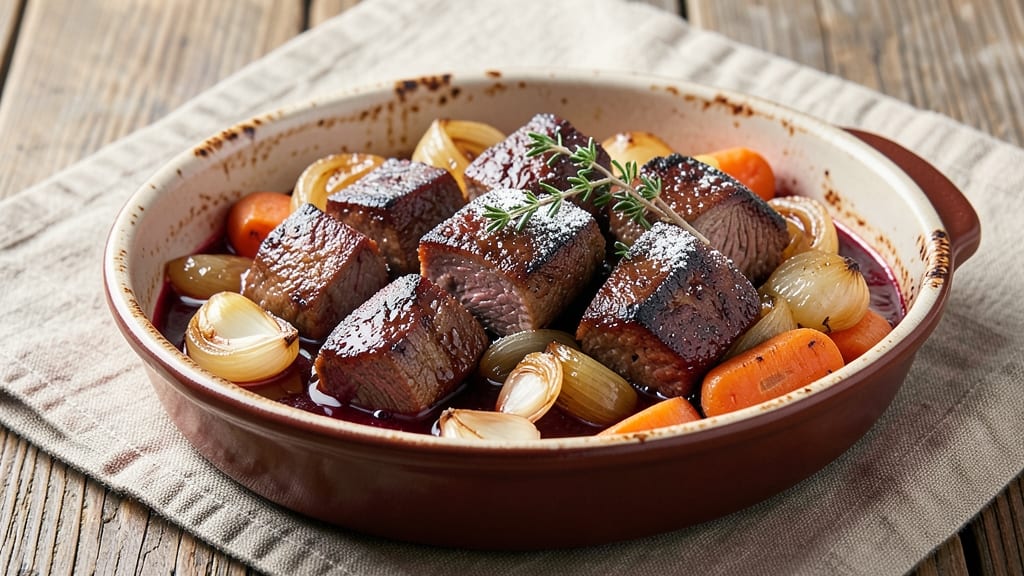
This Beef Beaujolais recipe transforms humble beef into a restaurant-worthy dish with just one pot and a bottle of red wine. The secret lies in slow-braising beef until tender while letting the wine reduce into a velvety sauce—rich, aromatic, and deeply savory.
I developed this recipe after years of perfecting braised beef, and it never fails to impress, even with minimal effort.
The beauty of this dish is its simplicity: no fancy techniques, just a one-pot method that delivers deep flavor through time and patience. The beef becomes fork-tender, while the wine sauce develops layers of complexity—sweet, tangy, and slightly earthy.
It’s the kind of meal that feels luxurious but stays within reach for weeknight dinners.
By the end, you’ll have a dish that’s perfect for feeding a crowd or savoring solo—juicy beef bathed in a glossy, wine-infused sauce. The aroma alone will have everyone gathering at the table, and the first bite delivers on that promise of restaurant-quality comfort food.
Serve with crusty bread to soak up every last drop.
This recipe is especially versatile: use it for a cozy family dinner, a special occasion, or even a meal prep staple. The leftovers taste even better the next day, making it a practical choice for busy schedules. Let’s get cooking—your taste buds will thank you.
Ingredients for beef beaujolais
A symphony of beef, wine, and aromatic herbs transforms simple ingredients into restaurant-quality richness.
| Ingredient | Amount | Notes |
|---|---|---|
| Chuck Roast Beef 🥩 | 2 lb | Cut into 1.5-inch cubes |
| Dry Red Wine 🍷 | 2 cups | Bold variety like Cabernet Sauvignon |
| Beef Broth 💧 | 2 cups | Low-sodium preferred |
| Yellow Onion 🧅 | 1 whole | Diced, about 1.5 cups |
| Garlic Cloves 🧄 | 4 cloves | Minced, about 1 tbsp |
| Carrots 🥕 | 3 medium | Peeled, cut into chunks |
| Tomato Paste 🍅 | 2 tbsp | Smooth, not chunky |
| Fresh Thyme 🌿 | 2 sprigs | Or 1 tsp dried thyme |
| Fresh Rosemary 🌿 | 1 sprig | Woody stems removed |
| Olive Oil 🫒 | 2 tbsp | Extra-virgin preferred |
| All-Purpose Flour 🌾 | 2 tbsp | For thickening sauce |
| Kosher Salt 🧂 | 1 ½ tsp | Diamond Crystal preferred |
| Ground Black Pepper 🌶️ | 1 tsp | Freshly ground |
| Bay Leaves 🍃 | 2 whole | Removed before serving |
The chuck roast is the foundation—its marbling ensures tender results. Look for well-marbled cuts at specialty butchers or the meat department's premium section. If using a whole roast, trim excess fat and cube it yourself for even cooking. Costco often carries high-quality chuck roasts in bulk, saving money while ensuring quality. For wine, any bold, dry red works—Cabernet Sauvignon, Merlot, or even a Pinot Noir if you prefer something lighter. Avoid sweet wines like Zinfandel, as they'll dominate the flavor profile.
No red wine? Substitute with beef broth and 1 tbsp balsamic vinegar for depth. Fresh thyme and rosemary are ideal, but dried works at one-third the amount. The tomato paste can be skipped entirely if you dislike its intensity, though it adds a subtle sweetness. For the carrots, baby carrots work perfectly if you're short on time—just trim the ends. The flour is for thickening at the end, but if you prefer a glossier sauce, reduce the wine longer without adding flour. The bay leaves add subtle earthiness but can be omitted if you dislike their flavor.
This dish improves with time—plan for at least 3 hours of braising for maximum tenderness. Store leftovers in an airtight container for up to 5 days, or freeze for 3 months. The sauce thickens as it cools, so reheat with a splash of water or broth. For meal prep, portion into individual containers with a side of crusty bread. The flavors deepen overnight, making it perfect for lunches. If you have extra wine, save it for another braise—it's worth the investment.
Why You'll Love This Recipe
- One-Pot Magic: I swear by this—just dump everything in a Dutch oven, walk away, and come back to perfect tender beef. No flipping, no fussing, no stressing over timing.
- Wine-Lover’s Dream: That Beaujolais wine isn’t just for sipping—it transforms tough chuck roast into melt-in-your-mouth goodness with its bright acidity and deep fruit notes. Honestly, the first time I tasted this, I almost spilled my glass.
- Budget Beef Boost: Chuck roast is cheap, but it feels like a fancy cut when braised with wine and broth. Between us, this is how I feed my family hearty, satisfying meals without breaking the bank—or my willpower.
Step-by-step instructions for beef Beaujolais
Transform humble chuck roast into a restaurant-worthy wine-braised masterpiece using this precise technique.
Sear the Beef for Maximum Flavor
Heat the 2 tablespoons olive oil in a heavy Dutch oven over medium-high heat until shimmering. Working in batches to avoid crowding, add the 2 lb chuck roast beef cut into 1.5-inch cubes, letting them sear undisturbed for 3-4 minutes per side until deeply browned. This initial sear creates the Maillard reaction that forms the rich foundation of your sauce.
As each batch browns, remove the beef and set aside in a plate. The goal is to develop a deep, caramelized crust while maintaining even cooking. If your pan gets too crowded, reduce the heat slightly to prevent steaming instead of searing. The beef should release easily from the pan when ready to flip.
Build the Aromatic Base
Once all beef is browned, reduce heat to medium and add the 1 whole yellow onion (diced) and 3 medium carrots (cut into chunks). Cook for 5 minutes until the vegetables begin to soften and take on color. Add the 4 cloves garlic (minced) and cook for an additional 30 seconds until fragrant.
Stir in the 2 tablespoons tomato paste and cook for 1 minute, allowing it to deepen in color. This step develops the complex flavor base that will carry through your finished dish. The tomato paste adds umami depth while helping to thicken the sauce later in the process.
Deglaze with Wine and Broth
Pour in the 2 cups dry red wine, scraping up all the browned bits from the bottom of the pot with a wooden spoon. This deglazing step captures all the concentrated flavors you've built. Bring to a simmer and cook for 5 minutes until the wine reduces by about half and the alcohol smell dissipates.
Add the 2 cups beef broth, the 2 sprigs fresh thyme, 1 sprig fresh rosemary, 2 whole bay leaves, 1.5 teaspoons kosher salt, and 1 teaspoon ground black pepper. Return the beef to the pot, making sure it's submerged in the liquid. The liquid should cover at least 75% of the beef to ensure proper braising.
Braise Until Tender
Cover the pot and transfer to a preheated 325°F oven. Braise for 2.5 to 3 hours, until the beef is fork-tender and easily pulls apart. The exact time depends on your oven's consistency, so check periodically after 2 hours. The beef should reach an internal temperature of 203°F for maximum tenderness.
During the last 30 minutes, sprinkle the 2 tablespoons all-purpose flour over the top of the beef. This helps thicken the sauce naturally without making it gluey. Stir gently to distribute the flour evenly throughout the liquid.
Finish and Serve
Remove the pot from the oven and let it sit uncovered for 10 minutes to allow the sauce to thicken slightly. Discard the bay leaves and herb sprigs before serving. The beef should be so tender it practically falls apart with a gentle touch, while the sauce should coat the back of a spoon with a velvety consistency.
Serve immediately over mashed potatoes, egg noodles, or crusty bread to soak up every last bit of that rich, wine-infused sauce. The perfect balance of tender beef, aromatic vegetables, and deep wine flavors makes this dish a true comfort food masterpiece.
Pro Tips For Making Beef Beaujolais
- Sear the Roast First: I learned this the hard way—skipping the sear means a bland sauce. Get that chuck roast screaming hot in a dry pan for 3-4 minutes per side until deep brown crust forms. The Maillard reaction is what turns this from "meat in wine" to "restaurant-worthy beef."
- Deglaze Aggressively: That browned crust? Don’t let it go to waste. Immediately add the Beaujolais and scrape the pan like you’re trying to win a bet—use a wooden spoon, not metal, to avoid scraping up bits. Let it bubble hard for 2 minutes before adding broth. This builds flavor faster than simmering alone ever could.
- Salt the Wine: Sounds weird, but it works: Add a pinch of salt (about ¼ teaspoon) to the wine before deglazing. The acidity in Beaujolais needs balance, and this stops the sauce from tasting flat later. Trust me, your taste buds will notice the difference.
- Use Two Broths: Start with beef broth, but swap in a splash of water halfway through cooking. The wine reduces fast, and adding water at the 1.5-hour mark keeps the sauce from turning into glue. Just enough to loosen it up—no need to drown it.
Essential equipment for beef beaujolais
Dutch Oven Essentials
A heavy-duty Dutch oven is the cornerstone of this recipe—it distributes heat evenly and retains moisture during braising. I recommend a Le Creuset 5.5-quart or Lodge Cast Iron Dutch Oven for their durability and heat retention.
Lodge’s enamel-free version is my go-to for high-heat searing, while Le Creuset’s smooth glaze makes cleanup easier. If you’re on a budget, a Calphalon 5.5-quart offers a great middle ground with stainless steel construction. 🔥
Precision Thermometer
An instant-read meat thermometer is non-negotiable for perfect results. I swear by the ThermoWorks Smoke for its fast response and durability—it’s my top pick for both braising and searing.
A basic Oakton digital thermometer works too, but avoid cheap probes that lose accuracy over time. The goal is to hit 203°F internal temperature for fork-tender beef without overcooking.
Wooden Spoon & Tongs
Use a long-handled wooden spoon (like OXO Good Grips) for stirring without scratching your Dutch oven’s surface. For searing beef, tongs (I prefer Mercer Culinary’s stainless steel) give you better control than a fork.
Avoid metal spoons during the braising phase—they can react with acidic ingredients like wine and tomato paste, altering the flavor.
Chef’s Knife & Cutting Board
A sharp 8-inch chef’s knife (I use Wüsthof) is essential for evenly cubing the beef and dicing vegetables. Pair it with a non-slip cutting board like John Boos End Grain to prevent movement while chopping.
For safety, keep your fingers curled under and use the claw grip technique. Prep all ingredients before starting to cook—this is called mise en place, and it keeps your process smooth.
Fine-Mesh Strainer
A fine-mesh strainer (like OXO Good Grips) helps you skim excess fat from the sauce if desired. After braising, let the beef rest in the pot while you strain the sauce through the strainer into a separate bowl.
This step isn’t mandatory, but it creates a cleaner, more elegant presentation. For extra richness, reserve some of the fat to finish the sauce with a drizzle of truffle oil or butter.
Optional: Sous Vide Setup
For even more tender beef, consider a sous vide setup (like Anova Precision Cooker). After searing, vacuum-seal the beef cubes with aromatics, then cook at 160°F for 24 hours before finishing in the Dutch oven.
This method guarantees melt-in-your-mouth texture but requires more planning. If you skip this step, the 3-hour braise still delivers exceptional results with proper technique. ⏱️
Nutrition facts
Frequently asked questions
Can I use a different cut of beef for this recipe?
While chuck roast is ideal for its marbling and tenderness, you can substitute with short ribs or brisket—both work beautifully in braised dishes. For leaner cuts like sirloin, increase braising time by 30-45 minutes to prevent dryness. Avoid tender cuts like filet mignon, as they won't hold up to the long cooking process.
What makes this dish different from traditional beef bourguignon?
This recipe uses Beaujolais-style wine (lighter and fruitier than Burgundy) for a brighter, more approachable flavor profile. Traditional bourguignon relies on red Burgundy wine and often includes mushrooms and pearl onions. Our version keeps it simple with carrots and herbs, making it quicker and more versatile for weeknight cooking.
How do I prevent the sauce from becoming too thin?
If your sauce is too thin after braising, simmer uncovered for an additional 10-15 minutes to reduce it. For extra thickness, mix 1 tablespoon cornstarch with 2 tablespoons cold water, stir into the sauce, and cook until it reaches your desired consistency. Avoid adding flour directly to the pot—it can create lumps.
Can I make this recipe in a slow cooker?
Yes! Sear the beef and vegetables first, then transfer everything to a 6-quart slow cooker. Add the wine and broth, then cook on low for 8 hours or high for 5 hours. The low-and-slow method works perfectly, though you may need to thicken the sauce afterward with a cornstarch slurry or reduce it on the stovetop.
What's the best way to reheat leftovers?
Reheat gently in a skillet with a splash of beef broth or water to maintain moisture. Avoid microwaving directly from the fridge—it can make the beef tough. For best results, warm on low heat for 10-15 minutes, stirring occasionally. The sauce will thicken as it cools, so add a little liquid if needed to restore its original consistency.