
Main Courses
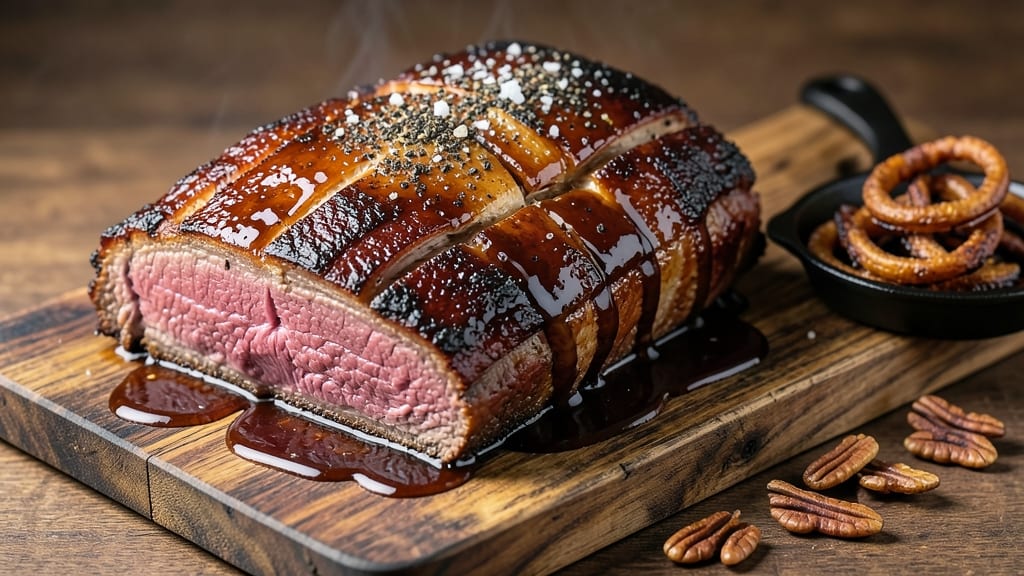
This Texas-style beef brisket recipe delivers the legendary smoky bark and fall-off-the-bone tenderness that makes Central Texas barbecue legendary. 🔥 The secret lies in a low-and-slow smoke that transforms tough beef into melt-in-your-mouth perfection, all while developing that prized dark crust.
I've perfected this method over countless weekends at my family's pit, where the post-oak wood smoke becomes the star of the dish.
The key to authentic Texas brisket starts with a simple but powerful bark rub—just salt, pepper, garlic powder, and smoked paprika—that creates the iconic crust while keeping the meat tender inside.
We're talking 12-16 hours of patient smoking at 225°F, where the beef breaks down into rich, juicy layers that practically dissolve on your tongue. This isn't just a recipe; it's an experience that transforms your backyard into a Texas BBQ joint.
When it's done, you'll know by the internal temperature—203°F—and that telltale jiggle when you shake the brisket. The resting period is just as important as the cooking, allowing those juices to redistribute for maximum tenderness.
Slice against the grain for perfect texture, and serve with classic Texas sides like white bread, pickles, and coleslaw to soak up every last drop of that smoky, savory goodness.
What makes this recipe truly special is how it captures the soul of Texas barbecue without requiring a commercial smoker. With just a few key ingredients and some patience, you can achieve restaurant-quality results that'll have your friends asking for seconds—and maybe even thirds.
Let's get started on creating your own Texas-style masterpiece.
Ingredients for barbecue beef brisket recipe texas style
Six pounds of beef plus a few key ingredients transform your backyard into Texas BBQ country.
| Ingredient | Amount | Notes |
|---|---|---|
| Beef Brisket 🥩 | 6 lb | Packer cut with fat cap intact |
| Kosher Salt 🧂 | ½ cup | Diamond Crystal preferred |
| Freshly Ground Black Pepper 🌶️ | 2 tbsp | Coarse grind for texture |
| Garlic Powder 🧄 | 2 tbsp | No added anti-caking agents |
| Smoked Paprika 🌶️ | 1 tbsp | For authentic Texas bark |
| Post Oak Wood Chips 🌳 | 2 lbs | Or oak/pecan blend |
| Yellow Onion 🧅 | 1 whole | Quartered for injection |
| Beef Broth 💧 | 1 cup | Low-sodium for seasoning control |
| Apple Cider Vinegar 🍎 | 2 tbsp | For tenderizing injection |
| White Bread 🍞 | 2 slices | For wrapping during rest |
| Butter 🧈 | ½ cup | Unsalted, softened |
| Fresh Pickles 🥒 | ½ cup | For serving, sliced |
| Coleslaw Mix 🥬 | 1 lb | Pre-shredded for convenience |
The brisket is non-negotiable—packer cut with that thick fat cap is what gives you the bark and moisture. Costco or local butchers usually carry it, but if you're buying online, Snake River Farms ships it frozen with perfect fat distribution. Look for vibrant color and good marbling. The wood chips? Post oak is traditional, but oak/pecan blends work too if you can't find post oak. Soak them for 30 minutes before using—dry chips burn fast and ruin your smoke flavor.
No post oak? White oak or pecan chips will still give you that classic Texas smoke. Running short on beef broth? Water plus 1 tbsp soy sauce works in a pinch. The apple cider vinegar in the injection might seem odd, but it tenderizes the meat while adding a subtle tang that pairs perfectly with the smoke. For the rub, I always double-check the smoked paprika—Penzeys has a great one that's not too bitter. If you're in a hurry, Trader Joe's sells pre-mixed bark rubs that cut time but lack that homemade touch.
The brisket keeps beautifully—3-4 days wrapped in butcher paper in the fridge, or up to 3 months frozen. For serving, I always slice it against the grain—that's the secret to tenderness. The white bread? Texas toast is a must—butter those slices thick and serve them warm. Pickles cut through the richness, and the coleslaw mix? Pre-shredded saves time—just toss it with mayo, vinegar, and a pinch of celery seed. Leftovers? Wrap them in foil and reheat low-and-slow in a 275°F oven until steaming.
Why You'll Love This Recipe
- Four-Hour Hands-Off: I swear by this recipe because once you season that brisket with kosher salt and smoked paprika, it’s done—just let it slow-cook while you handle the rest of your day. No babysitting, no hovering, just that deep, smoky aroma filling your kitchen by the end.
- Smoke & Spice Magic: The combo of garlic powder and cracked black pepper on the crust? It’s where the real flavor happens—tender inside, with that perfect charred bark that makes every bite worth the wait. Honestly, my picky husband stops complaining mid-chew.
- Tailgate or Tuesday: This brisket works for everything: game day spreads, lazy Sunday lunches, or even a fancy dinner when you’re too tired to impress. Slice it thick for sandwiches, shred it for tacos, or serve it whole—it’s the crowd-pleaser that never lets you down.
- Leftovers That Don’t Suck: Between us, most brisket recipes leave you with sad, dry seconds—but not this one. The low-and-slow method keeps it juicy for days, so you’re not stuck eating it all in one sitting. (My freezer’s full of proof.)
Step-by-step instructions for Texas-style smoked brisket
Here's how to nail that perfect Texas brisket with crispy bark and melt-in-your-mouth tenderness.
🔥 Step 1: Prep and Season the Brisket for Maximum Flavor
Start by trimming the fat cap down to about ¼ inch thickness using a sharp boning knife. You want to keep enough fat to protect the meat during the long cook, but not so much that it prevents smoke penetration. Pat the entire surface dry with paper towels—this step is crucial for that perfect bark.
In a small bowl, combine the ½ cup kosher salt, 2 tablespoons freshly ground black pepper, 2 tablespoons garlic powder, and 1 tablespoon smoked paprika. Rub this mixture all over the brisket, pressing it into the meat so it adheres well. I like to use my fingers for this—it helps the seasoning penetrate deeper. Place the seasoned brisket on a wire rack set over a baking sheet and refrigerate uncovered for 12-24 hours. This dry-brining process ensures maximum seasoning and crispy bark.
🔥 Step 2: Build Smoke and Inject for Extra Tenderness
Set up your smoker for 225°F using the 2 pounds post oak wood chips. I prefer post oak because it gives that authentic Texas flavor, but hickory or pecan work well too. Let the smoker preheat for 30 minutes until you see clean, blue smoke with no white steam. This tells you the wood is burning properly and ready for your brisket.
While the smoker preheats, quarter the whole yellow onion and place it in a small bowl. Add the 1 cup beef broth and 2 tablespoons apple cider vinegar to the bowl. Using a meat injector, pierce the brisket in several places and inject the onion mixture. This step adds moisture and tenderness—don't skip it! Once injected, place the brisket fat-side up on the smoker grates.
⏰ Step 3: Smoke Low and Slow Until Probe-Tender
Close the smoker lid and resist the urge to peek—every time you open it, you lose heat and moisture. Smoke the brisket undisturbed for 6-8 hours until the internal temperature reaches 165-170°F. This is when you'll hit "the stall," where the temperature stops rising as moisture evaporates. Don't panic; this is normal and expected.
At this point, wrap the brisket tightly in the 2 slices white bread (no need to toast them). The bread creates a steam environment that helps break down collagen and tenderize the meat. Return it to the smoker and continue cooking until the internal temperature reaches 200-205°F and a probe slides in like butter. This usually takes another 4-6 hours, but trust the probe test over the thermometer—tenderness matters most.
🍽️ Step 4: Rest, Slice, and Serve with Classic Sides
Remove the brisket from the smoker and let it rest in the wrapping for at least 1 hour (I prefer 2 hours wrapped in towels in a cooler). This resting period allows the juices to redistribute throughout the meat, ensuring every slice is moist and flavorful. During this time, prepare your sides—soften the ½ cup butter and mix it with the 1 lb coleslaw mix for a quick butter lettuce salad.
Unwrap the brisket and slice it against the grain into ¼-inch thick slices. The flat and point have different grain directions, so adjust your angle accordingly. Serve the brisket with the sliced ½ cup fresh pickles on the side. Each bite should deliver rich, smoky flavor with a dark mahogany bark on the outside and a beautiful pink smoke ring just beneath. The brisket should be tender enough to pull apart with a gentle tug, not so soft it falls apart, and not tough or chewy.
Pro Tips For Making Barbecue Beef Brisket Recipe Texas Style
- Trim the Fat Cap: That thick layer of fat on the brisket isn’t just for looks—it’s your smoke shield and flavor insurance. Use a sharp knife to trim it down to about ¼-inch thick, but leave a little extra on the edges. I learned this the hard way when I over-trimmed and ended up with dry, flavorless meat halfway through cooking.
- Start with a Hot Fire: Crank your smoker or grill to 250°F after the brisket hits the heat—don’t wait for it to warm up. The initial sear locks in juices and builds that crust faster. After 30 minutes, drop the temp to 225°F. Sounds counterintuitive, but it’s the thing that matters most for tender, not tough, brisket.
- Skip the Crowding: Piling briskets too close together traps steam and turns your smoker into a sad, soggy sauna. Give each piece at least 1 inch of space between them and the sides of the grill. Yes, it means fewer batches, but the bark will be worth it—crispy, not sticky.
- Wet Brine Overnight: Dump your brisket in a mix of water, kosher salt (1 tablespoon per pound), and black pepper for 12–24 hours. No fancy ingredients needed—just a shallow dish and the fridge. This isn’t the prettiest method, but it works: the meat stays juicy, and the seasoning sticks like glue. (I know, I know, but trust the process.)
Storing and reheating your barbecue beef brisket recipe texas style
Fridge Storage Tips
Your Texas-style brisket stays fresh for 3-4 days when stored properly. After resting, wrap it tightly in butcher paper (not foil—it traps too much moisture) and place in an airtight container. I like to store it in the coldest part of my fridge, usually on the bottom shelf.
The bark will stay crispy for the first day, but after that, expect it to soften slightly—just reheat it properly. 🥩
Freezer Prep
For longer storage, freeze your brisket for up to 3 months without losing quality. After resting, slice it against the grain and portion into quart-sized freezer bags, removing as much air as possible. Label each bag with the date and reheating instructions.
I find vacuum-sealed bags work best, but even ziplock bags with a straw to suck out air do the trick. Thaw overnight in the fridge before reheating. ❄️
Reheating Low-and-Slow
Never microwave brisket—it turns rubbery! Instead, preheat your oven to 275°F and place sliced brisket in an oven-safe dish with a splash of beef broth. Cover tightly with foil and reheat for 15-20 minutes, checking periodically.
This method keeps the meat juicy and maintains that smoky flavor. For extra crispiness, broil for 2-3 minutes at the end. 🔥
Leftovers Hack
Transform brisket leftovers into sandwiches by layering slices on toasted Texas toast with butter lettuce, sliced pickles, and a drizzle of BBQ sauce. Or shred it for tacos with corn tortillas, avocado, and lime.
The possibilities are endless—just avoid reheating more than once to prevent drying out. 🌯
Safety Reminder
Always reheat brisket to an internal temperature of 165°F to kill any bacteria. Use a meat thermometer to check the thickest part of the meat. If storing again after reheating, consume within 2 days. I keep a small thermometer specifically for this purpose—it's a game-changer for food safety. 💡
Pro Tip
Save your brisket juices! Strain any liquid from the reheating dish and reduce it on the stove to make a quick pan sauce. Add a splash of beef broth and a pinch of smoked paprika, then drizzle over your sandwiches or tacos.
It's the perfect way to use up every last bit of flavor. 💛
Nutrition facts
Frequently asked questions about Texas-style smoked brisket
What's the difference between Texas brisket and other smoked beef?
Texas brisket stands out for its low-and-slow cooking (12-16 hours at 225°F) that creates a dark mahogany bark while keeping the inside tender. Unlike faster-cooked beef, Texas brisket develops a pink smoke ring and requires wrapping in bread during the cook to break down collagen. The fat cap is left intact for moisture, unlike some regional styles that trim it aggressively.
Can I use a grill instead of a smoker for Texas brisket?
Yes, but with adjustments! Use a charcoal grill with a water pan and indirect heat to maintain 225°F. Add wood chips to the coals for smoke, and monitor temperature closely—grills fluctuate more than smokers. Expect longer cook times (14-18 hours) since grills lose heat when opened. For gas grills, use a smoke tube or wood chip box.
Why does my brisket turn out tough instead of tender?
Most likely, you didn't cook it long enough or didn't reach the proper 203°F internal temp. The stall (when temp plateaus) is normal—don't rush it! Also check your probe test: meat should slide off the bone like butter. Common mistakes include opening the smoker too often (loses moisture) or not wrapping in bread during the second half of cooking.
What's the best wood for authentic Texas flavor?
Post oak is traditional, but white oak or pecan work well too. Avoid hickory—it's too strong and overpowers the beef. Soak chips for 30 minutes before using to prevent burning. For a smoker, use 2 pounds of wood chips (or chunks) and refresh every 2-3 hours to maintain consistent smoke.
How do I know when brisket is done without a thermometer?
Look for these signs: the bark should be dark mahogany with crispy edges, and the smoke ring (pink band) should be 1/4-inch thick. The meat should jiggle like gelatin when shaken gently. The probe test is foolproof: insert a clean skewer—if it slides in with no resistance, it's ready.