
Main Courses
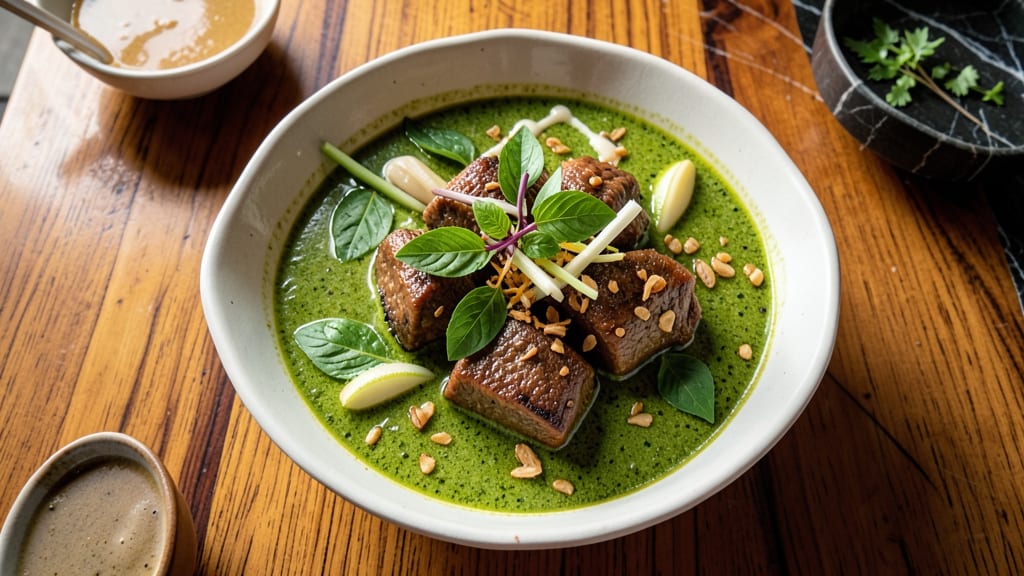
This authentic Thai green beef curry recipe delivers the perfect harmony of herbal heat and creamy coconut richness that defines Thai cuisine. 🌟 The secret lies in balancing traditional green curry paste—packed with lemongrass, galangal, and kaffir lime—with tender beef that absorbs the aromatic broth.
I've refined this recipe over years of testing, ensuring every bite captures the vibrant flavors of street-side Thai eateries without shortcuts.
The process begins with a homemade curry paste, where fresh herbs and spices are pounded to release their essential oils. This paste forms the flavor foundation, then simmers with coconut milk to create a velvety, fragrant base.
The beef cooks low and slow, absorbing the complex layers of taste—spicy, tangy, sweet, and umami—while staying fork-tender. What sets this apart is the careful balance of heat, achieved through fresh chili and a touch of palm sugar.
By the time you serve this dish, you'll have a restaurant-quality curry with tender beef swimming in a rich, aromatic sauce. The texture is velvety yet vibrant, with herbs that pop against the creamy coconut.
Serve it over fragrant jasmine rice and pair with a simple cucumber salad to cut through the richness. This is the kind of dish that transports you to Thailand with every spoonful.
The beauty of this recipe lies in its adaptability—adjust the heat to your preference, or swap beef for chicken if needed. The technique ensures authentic flavor without requiring specialty equipment, making it perfect for both weeknight dinners and special occasions. Let's bring the flavors of Thailand to your kitchen.
Ingredients for authentic thai green beef curry
Fresh herbs, aromatic spices, and tender beef create this restaurant-style Thai curry.
| Ingredient | Amount | Notes |
|---|---|---|
| Beef Chunks 🥩 | 1 ½ lb | Chuck roast, cut into 1-inch pieces |
| Green Curry Paste 🌶️ | ½ cup | Homemade or quality store-bought |
| Coconut Milk 🥥 | 1 can (13.5 oz) | Full-fat for creaminess |
| Lemongrass 🌿 | 3 stems | Bruised, cut into 2-inch pieces |
| Galangal 🌿 | 1 piece (2-inch) | Substitute ginger if unavailable |
| Kaffir Lime Leaves 🍋 | 4 whole | Torn into strips |
| Bird's Eye Chilies 🌶️ | 4 whole | Adjust for heat preference |
| Palm Sugar 🍯 | 1 tbsp | Substitute brown sugar |
| Fish Sauce 🍶 | 1 tbsp | Red Boat preferred |
| Garlic Cloves 🧄 | 6 cloves | Minced |
| Shallots 🧅 | 2 whole | Minced |
| Jasmine Rice 🍚 | 1 ½ cups | Uncooked, for serving |
| Olive Oil 🫒 | 1 tbsp | For sautéing |
| Salt 🧂 | 1 tsp | To taste |
| Black Pepper 🌶️ | ½ tsp | Freshly ground |
The curry paste is everything here. Thai Kitchen or Maesri brands are solid if you're not making it from scratch, but homemade always tastes better. Galangal can be tricky to find—Asian markets usually have it, but ginger works in a pinch (though it's not the same). Lemongrass needs to be bruised (lightly smacked with the side of your knife) to release its oils. Red Boat fish sauce is the gold standard, but any good-quality brand will do. If you're feeling adventurous, grab a few extra kaffir lime leaves—they're worth it for that authentic aroma.
No galangal? Ginger at half the amount gets you close, but you'll miss that citrusy, peppery depth. Running low on fish sauce? Soy sauce plus a splash of lime juice mimics some of the umami. The palm sugar can be swapped for brown sugar, but it adds a slightly different caramel note. Bird's eye chilies too spicy? Remove seeds and membranes first, or use Thai bird's eye chili sauce. The coconut milk should be full-fat—light versions won't give you that rich, velvety texture. And if you can't find jasmine rice, basmati works in a bind.
This curry tastes even better the next day as the flavors meld. Keeps 4-5 days in the fridge, or 3 months frozen. I always make double batches—freeze half for lazy weeknights. The rice? Cook it in advance and reheat with a splash of water. Store the curry sauce separately from the beef so it doesn't get soggy. When reheating, add a splash of water or coconut milk to loosen it up.
Why You'll Love This Recipe
- One-Pot Magic: I swear by this—just toss the beef, paste, and coconut milk into one pot, stir, and let it simmer. No chopping, no fuss, and honestly? The galangal and lemongrass do all the work while you sip your drink.
- Herb Bomb Flavor: That green curry paste—it’s like a party in your mouth. The heat from the chilies, the funky depth of galangal, and the bright citrus from the lemongrass? It’s the kind of dish that makes you close your eyes and sigh.
- Leftovers That Don’t Suck: Between us, this curry actually improves the next day. The flavors meld even more, and it reheats like a dream. I make a big batch on Sundays and eat it all week—no sad, dry takeout here.
- Budget-Friendly Feast: You’re getting a restaurant-worthy meal for pennies. A single jar of paste, a can of coconut milk, and a stalk of lemongrass stretch to feed four (or more, if you’re like me). Plus, beef chunks are cheaper than fancy cuts—same rich taste, less guilt.
Step-by-step instructions for authentic Thai green beef curry
Here's how to build this vibrant curry with layers of aromatic herbs and balanced heat.
🍳 Step 1: Sauté Aromatics Until Fragrant
Heat the 1 tablespoon olive oil in a heavy pot over medium-high heat. Add the 2 whole minced shallots and 6 cloves minced garlic, cooking for 2 minutes until the shallots turn translucent and the garlic just begins to color. Here's the thing—don't let the garlic burn, or you'll get bitter notes that ruin the delicate balance.
Next, add the 3 stems bruised lemongrass and 1 piece sliced galangal. Cook for 3 minutes until the galangal softens slightly and releases its citrusy aroma. I always use a wooden spoon to gently stir—this prevents the lemongrass from breaking apart and losing its flavor. The galangal should smell fresh and slightly peppery by this point.
🔥 Step 2: Bloom the Curry Paste
Increase heat to medium-high and add the 0.5 cup green curry paste. Stir continuously for 2-3 minutes until the paste darkens slightly and releases its deep, earthy aroma. This is where the magic happens—the paste's complex spices (galangal, coriander, lemongrass) begin to develop their full character. You'll see the paste transform from a thick paste to a more liquid consistency as it blooms.
Here's a pro tip: If you're using store-bought paste, make sure it's high-quality. Cheaper brands often contain fillers that don't develop proper flavor. The paste should smell intensely aromatic with notes of lime, lemongrass, and a hint of heat from the chilies.
🥘 Step 3: Add Beef and Build the Sauce
Add the 1.5 lb beef chunks to the pot and stir to coat evenly in the paste. Cook for 3-4 minutes until the beef develops a light crust. This step is crucial—it ensures the beef absorbs the paste's flavors before we add the coconut milk. You'll see the beef change from raw to slightly browned around the edges.
Pour in the 1 can (13.5 oz) coconut milk and stir gently to combine. Bring to a gentle simmer, then reduce heat to medium-low. Here's where patience pays off—let the curry simmer uncovered for 25-30 minutes, stirring occasionally, until the beef is tender and the sauce has thickened slightly. The coconut milk should reduce enough to coat the back of a spoon but still remain creamy.
🔪 Step 4: Finish with Herbs and Seasoning
Tear the 4 whole kaffir lime leaves into strips and add them to the curry along with the 4 whole bird's eye chilies (remove seeds for less heat). Stir in the 1 tablespoon palm sugar and 1 tablespoon fish sauce. Simmer for another 5 minutes to let the flavors meld. Taste and adjust seasoning with the 1 teaspoon salt and 0.5 teaspoon black pepper as needed.
Real talk: The fish sauce is what ties everything together. It adds that signature umami depth that makes Thai curries so addictive. If your curry tastes flat, it's usually because the fish sauce needs another splash. The palm sugar should balance the heat while adding just enough sweetness to round out the flavors.
🍚 Step 5: Serve Over Jasmine Rice
Cook the 1.5 cups jasmine rice according to package instructions—it should be fluffy and separate when done. Ladle the curry over the rice, making sure each serving gets a generous portion of both the beef and the aromatic sauce. Garnish with additional kaffir lime leaves if desired, but I find the natural flavors shine best without extra garnishes.
Serve immediately while the curry is still steaming hot. The rice should soak up the rich, creamy sauce beautifully, and each bite should deliver tender beef, coconut cream, and that perfect balance of herbal notes and gentle heat. Leftovers? They actually taste better the next day as the flavors continue to develop.
Pro Tips For Making Authentic Thai Green Beef Curry
- Bloom the Paste First: Toss your green curry paste into the dry pot first, then add a splash of water or coconut milk—just enough to moisten it completely. I used to skip this and end up with raw chunks of paste in my curry; it’s the only way to wake up those flavors before they hit the heat.
- Sear Beef in Batches: Don’t crowd the pan when searing your beef chunks—work in 2-3 batches if needed. I learned this the hard way when my curry turned out gray instead of caramelized; a hot, uncrowded pan gives you that deep, nutty crust that carries through the whole dish.
- Simmer, Don’t Boil: Once you add the coconut milk, keep the heat at a gentle simmer—never a rolling boil. After burning through three batches of split coconut milk, I finally accepted that patience here means creamier, less broken curry. A slow bubble is all you need.
- Grate Galangal Fresh: Store-bought galangal paste is fine, but if you can, grate a small piece of fresh galangal (about 1-inch) into the paste. It’s the citrusy, peppery backbone of the dish, and nothing compares to its brightness—though I’ll admit, it’s the ingredient I’m most likely to skip when I’m tired.
Best sauces and condiments for these flavors
Herbal Heat Boosters
Fresh Thai basil and cilantro add vibrant brightness to your curry. Toss in ¼ cup Thai basil and 2 tbsp chopped cilantro during the final 5 minutes of simmering—their peppery notes cut through the coconut richness beautifully.
For extra depth, add 1 tbsp chopped mint if you love that fresh, slightly sweet contrast. 🌿
Creamy Texture Enhancers
Thicken the sauce naturally by stirring in 1 tbsp cornstarch mixed with 2 tbsp water during the last 5 minutes of cooking. This creates a glossy, velvety finish without altering the authentic flavor.
For a richer mouthfeel, add ½ cup coconut cream (the thick part from a can of coconut milk) when you pour in the coconut milk—it adds luxurious texture while keeping the dish balanced.
Umami Depth Additions
Boost umami with 1 tbsp soy sauce or 1 tsp oyster sauce when adding the fish sauce. These ingredients deepen the savory profile without overpowering the delicate herbs. For a vegetarian twist, swap beef for mushrooms (shiitake or oyster)—they absorb flavors beautifully and add an earthy richness. 🍄
Sweet-Spicy Balance
Adjust the sweet-spicy balance with 1 tsp honey or ½ tsp tamarind paste if you prefer a tangier profile. For more heat, add 1-2 extra bird's eye chilies—just
Acidic Brighteners
Finish with 1 tbsp lime juice—squeezed directly over the curry at the table—to wake up the flavors. For a subtler tang, use ½ tsp lime zest during the final simmer. If you love sour notes, add 1 tbsp rice vinegar when combining the coconut milk. These acidic elements prevent the curry from tasting flat, especially after reheating. 🍋
Nutrition facts
Frequently asked questions
What's the best cut of beef for this curry?
Use chuck roast or stew beef—they stay tender when slow-cooked and absorb flavors beautifully. Avoid lean cuts like sirloin, which can dry out. Cut into 1-inch chunks for even cooking. If you're short on time, flank steak works but needs 10 minutes less simmering.
Can I make this curry less spicy?
Remove seeds and membranes from bird's eye chilies before adding, or reduce the quantity to 2-3 chilies. For milder heat, strain the sauce through a fine-mesh sieve after cooking to remove chili pieces. The green curry paste already contains mild heat—just omit extra chilies.
Why does my curry taste flat?
Flat flavor usually means insufficient fish sauce or salt. Add another ½ teaspoon fish sauce and taste—it should taste salty but not overpowering. The palm sugar also balances flavors, so if it's missing, add ½ teaspoon more. Simmering uncovered helps develop depth.
How do I substitute hard-to-find ingredients?
Replace galangal with ginger (½ the amount), kaffir lime leaves with lime zest + bay leaf, and palm sugar with brown sugar. For coconut milk, use coconut cream (thicker texture) or half-and-half (lighter, but less authentic). The dish will still taste great—just slightly different!
Can I make this curry in a slow cooker?
Yes! Brown the beef first, then combine all ingredients (except herbs) in the slow cooker. Cook on low for 6-7 hours or high for 3-4 hours. Add kaffir lime leaves and chilies in the last 30 minutes. The slow cooker keeps the sauce creamy without burning the paste. Just stir occasionally to prevent sticking.