
Main Courses
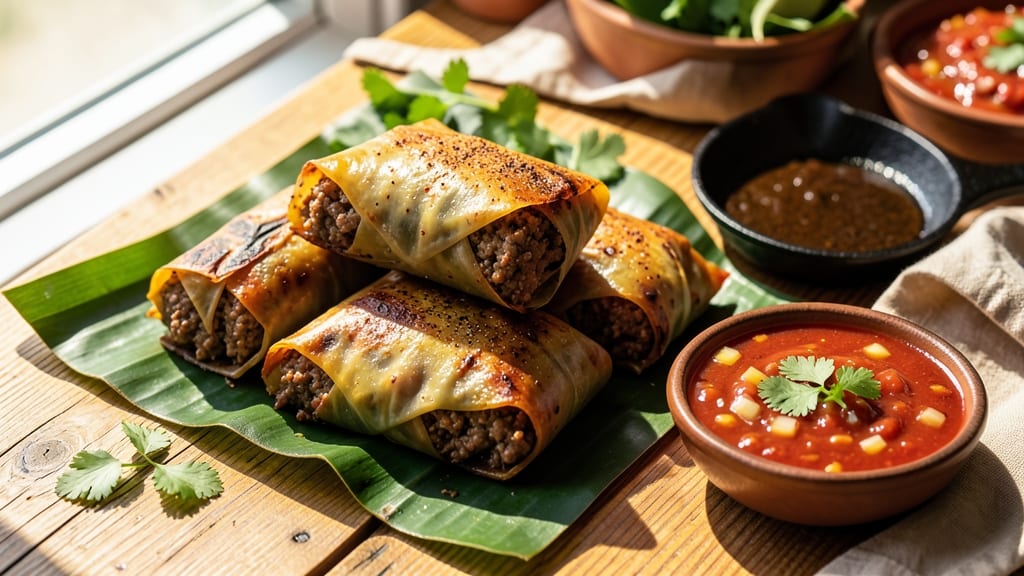
This authentic Mexican ground beef tamales recipe brings the rich flavors of Mexico to your kitchen with every steamed bite. 🌟 The secret lies in fresh masa harina, tender ground beef seasoned with traditional spices, and the delicate wrapping of banana leaves—each element crafted to honor the tradition while delivering restaurant-quality results at home.
What sets these tamales apart is the balance of textures and flavors: a creamy corn dough that stays tender, a savory beef filling infused with garlic, cumin, and bay leaf, and the subtle aroma of banana leaves that infuses the dish with an unmistakable authenticity.
Unlike shortcut versions, this recipe follows the time-honored method of steaming, ensuring each tamale emerges perfectly moist and flavorful.
The process begins with preparing the masa—mixing masa harina with lard and warm broth until it reaches the ideal consistency for wrapping. The filling, slow-cooked with onions, tomatoes, and spices, develops deep, complex flavors that pair beautifully with the corn dough.
Once wrapped and steamed, the result is a dish that’s as satisfying to make as it is to eat.
Perfect for celebrations or cozy family dinners, these tamales are a labor of love that pays off in every bite. Whether you're a first-timer or a seasoned cook, this recipe delivers the authentic taste of Mexico—one steamed tamale at a time.
Ingredients for authentic mexican ground beef tamales
Traditional masa harina, tender ground beef, and banana leaves create authentic Mexican tamales with restaurant-quality flavor.
| Ingredient | Amount | Notes |
|---|---|---|
| Masa Harina 🌽 | 3 cups | Maseca brand preferred for authenticity |
| Lard 🧈 | ½ cup | Leaf lard for best texture |
| Ground Beef 🥩 | 2 lb | 80/20 fat ratio for juiciness |
| Banana Leaves 🍃 | 12 whole | Fresh or canned, softened |
| Medium Tomatoes 🍅 | 4 whole | Roma tomatoes preferred |
| Yellow Onions 🧅 | 2 whole | Medium size, diced |
| Garlic Cloves 🧄 | 8 cloves | Freshly minced |
| Ground Cumin 🌿 | 2 tbsp | Toasted for deeper flavor |
| Bay Leaves 🌿 | 2 whole | Dried, crumbled |
| Salt 🧂 | 2 tsp | Diamond Crystal preferred |
| Black Pepper 🌶️ | 1 tsp | Freshly ground |
| Chicken Broth 💧 | 2 cups | Low-sodium preferred |
| Vegetable Oil 🫒 | 2 tbsp | For cooking onions |
| Lime 🍋 | 1 whole | Juiced for brightness |
The masa harina is the heart of these tamales—Maseca brand delivers the most authentic texture, but any quality masa harina will work. Leaf lard is essential for that signature tenderness; avoid vegetable shortening substitutes. For the beef, 80/20 fat ratio ensures juicy filling without excess grease. Banana leaves can be tricky to find fresh, so canned leaves work perfectly when softened in boiling water. The tomatoes should be ripe but firm—Roma tomatoes concentrate better than beefsteak varieties.
No banana leaves? Plastic wrap works in a pinch, though the flavor won't be identical. Substituting beef with pork or chicken changes the traditional flavor profile, but it's doable for dietary needs. Fresh garlic and cumin are non-negotiable—they carry the authentic Mexican flavor. Toast your cumin seeds in a dry pan for 30 seconds before grinding to deepen the aroma. For the broth, low-sodium options prevent over-salting the filling. The lime juice can be swapped for lemon juice, but lime's brightness is ideal.
Masa harina keeps indefinitely in a cool, dry place—seal the bag tightly after opening. Lard should be refrigerated and used within 3 months of opening. Prepped banana leaves can be stored wrapped in damp paper towels for 2 days. The cooked filling freezes beautifully for 3 months—portion into containers before freezing. For serving, keep tamales wrapped until ready to eat to maintain moisture. The aroma alone will have everyone gathering around your table.
Why You'll Love This Recipe
- Same recipe, different vibes: serve with lime and salsa for a quick weeknight dinner or stack them high for a fiesta spread. Between us, these feed a crowd without the fuss of individual tamales—just slice and serve.
- No Fuss, No Mess: I swear by this method—just mix the masa harina with warm lard until it’s smooth (no lumps, no stress), then fold in the spiced ground beef. The filling comes together faster than takeout, and honestly? That’s all it takes.
- Deep, Smoky Magic: The secret’s in the slow-cooked tomato sauce—roasted until caramelized—wrapped around tender beef with cumin and oregano. One bite and you’ll understand why my abuela insisted on banana leaves: that earthy aroma? Chef’s kiss.
- Weeknight to Party Star: Same recipe, different vibes: serve with lime and salsa for a quick weeknight dinner or stack them high for a fiesta spread. Between us, these feed a crowd without the fuss of individual tamales—just slice and serve.
Step-by-step instructions for authentic Mexican ground beef tamales
Master the traditional technique for tamales that honor Mexican heritage and deliver perfect texture every time.
👨🍳 Step 1: Prepare the Banana Leaves for Wrapping
If using fresh banana leaves, soak them in boiling water for 5 minutes to soften, then pat completely dry with paper towels. For canned leaves, drain and rinse thoroughly. Lay each leaf flat on your work surface with the shiny side facing down. Using a sharp knife, trim off any thick stems or uneven edges to create a clean, rectangular shape about 12x18 inches—large enough to hold ½ cup of filling.
I like to fold the bottom edge up about 2 inches first, then fold in the sides like an envelope. This creates a secure pouch that won't leak during steaming. Keep the prepared leaves covered with a clean kitchen towel until ready to use—banana leaves dry out quickly and become brittle.
🍳 Step 2: Cook the Salsa Base for Flavor Foundation
In a large skillet, heat 2 tablespoons vegetable oil over medium heat. Add the 2 diced yellow onions and cook for 5 minutes until translucent. Add the 8 minced garlic cloves and cook for 30 seconds until fragrant—don't let it brown or it'll turn bitter.
Add the 4 chopped medium tomatoes, 2 crumbled bay leaves, 2 tablespoons ground cumin, 2 teaspoons salt, and 1 teaspoon black pepper. Simmer uncovered for 15 minutes until the mixture thickens and the tomatoes break down completely. Stir in the 2 cups chicken broth and simmer for another 5 minutes. Remove from heat and let cool slightly—this salsa will form the flavorful center of your tamales.
🥘 Step 3: Prepare the Masa Dough for Perfect Texture
In a large mixing bowl, combine the 3 cups masa harina and ½ cup lard. Gradually add 2 cups hot water (just boiled and cooled slightly) while stirring with a fork. The dough should come together in a soft, pliable ball that's slightly sticky but not wet. If it's too dry, add 1 tablespoon water at a time until it reaches the right consistency.
Here's the thing—traditional masa dough should be soft enough to shape easily but firm enough to hold its form when wrapped. I like to work it by hand for 2 minutes until it's smooth and elastic. The lard is crucial here; it creates that signature tender, slightly crumbly texture that separates authentic tamales from store-bought versions.
🍳 Step 4: Cook the Ground Beef Filling
In the same skillet used for the salsa, add the 2 pounds ground beef over medium-high heat. Cook until browned and fully cooked through, breaking it apart with a wooden spoon. Drain excess fat, leaving about 2 tablespoons in the pan for flavor.
Return the salsa to the skillet with the cooked beef. Add the juice of 1 whole lime and simmer for 5 minutes to let the flavors meld. The filling should be moist but not soupy—if it's too dry, add 1-2 tablespoons water. Let cool completely before assembling tamales; warm filling makes the masa dough too soft to handle.
⏰ Step 5: Assemble and Steam the Tamales
Divide the masa dough into 12 equal portions (about ¼ cup each). Roll each portion between your palms into a 12-inch long rope. Place 2 tablespoons of the beef filling near one end of a prepared banana leaf. Fold the bottom edge up, then fold in the sides to create a pouch. Place the masa rope along the top edge and gently press down to seal.
Wrap each tamale tightly with aluminum foil, leaving the top open. Arrange them seam-side up in a steamer basket (don't overcrowd) and cover with a damp towel. Bring 2 inches of water to a boil in the steamer, then place the basket on top. Steam over medium heat for 60-75 minutes until the masa pulls away from the banana leaf easily and the filling is piping hot.
Pro Tips For Making Authentic Mexican Ground Beef Tamales
- Cook Lard Slow: Heat your lard for the masa paste over medium-low—not high—until it just melts and turns translucent. I used to rush this, and the masa would either seize up or taste greasy. Let it simmer gently for 5 minutes first, then add your masa harina gradually while stirring like your life depends on it.
- Blister the Tomatoes: Char your tomatoes directly over an open flame (gas stove or grill) until their skins blacken in spots—this cuts prep time and deepens the flavor. Skip the knife for the first 30 seconds; let the heat do half the work before peeling and blending.
- Don’t Overwork the Masa: Mix the masa paste just until it comes together—no more. Over-kneading makes it tough and dry, and you’ll end up fighting with it later. Test consistency by pressing a spoonful: if it holds shape but still feels slightly sticky, you’re golden.
- Steam Tamales at 200°F: Set your steamer to 200°F (not boiling) and keep the lid slightly ajar for the first 10 minutes. This lets excess steam escape and prevents soggy, gluey tamales. After that, seal it tight—your tamales need gentle heat, not a sauna.
Wine and beer pairings for authentic mexican ground beef tamales
Red Wine Pairings
For these rich, spiced tamales, I reach for a medium-bodied red wine with enough acidity to cut through the lard and cumin. A Tempranillo from Spain’s Rioja region—like Muga Reserva—is my go-to. Its earthy notes and subtle vanilla from oak complement the beef filling beautifully.
If you prefer something fruitier, a Mexican Zinfandel from Jalisco, such as Bodegas de Santo Tomás, mirrors the dish’s smoky, spicy depth. Serve slightly chilled to enhance the wine’s freshness against the tamales’ warmth. 🍷
White Wine Alternatives
If red wine isn’t your thing, a dry Mexican white like Chenin Blanc from Coahuila works surprisingly well. Look for Alvarino or Viura varieties—both have crisp acidity and a touch of minerality that balances the dish’s richness.
A Sauvignon Blanc with herbal notes (think Kim Crawford) also pairs nicely, especially if your tamales lean toward the spicy side. The citrus in the wine echoes the lime in the filling. ✨
Beer Pairings
A Mexican lager is my top recommendation for beer lovers—something crisp and clean like Modelo Especial or Pacífico Clara. The effervescence cleanses the palate between bites, while the malt sweetness harmonizes with the masa’s corn flavor.
For a craft option, try a Mexican-style pale ale with notes of caramel and citrus, like Deschutes Mirror Pond. Avoid heavy IPAs, as their bitterness clashes with the tamales’ delicate spices. 🍺
Non-Alcoholic Options
Don’t underestimate the power of a well-chosen sparkling drink to elevate your tamale feast. A Mexican horchata—made with rice, cinnamon, and almonds—adds a creamy, slightly sweet contrast to the savory filling.
For something more refreshing, try a hibiscus iced tea (known as jamaica), which complements the dish’s earthy spices. Serve both chilled to balance the tamales’ hearty warmth. 💛
Serving Temperature Tips
Let your wine or beer breathe slightly before serving—about 15 minutes for reds and 5 minutes for whites. For beer, serve at 45-50°F to preserve its crispness. If using horchata or hibiscus tea, chill them to 38-40°F—the cold temperature enhances their flavors and refreshes your palate between rich bites.
Pro tip: Serve drinks in small glasses to maintain their ideal temperature longer. 🌡️
Nutrition facts
Frequently asked questions about authentic Mexican ground beef tamales
Can I substitute banana leaves with something else?
Yes! If you can't find banana leaves, use plastic wrap as a last resort—it won't add the same aroma but works for texture. For a closer experience, try corn husks (soaked for 30 minutes first) or even large parchment paper, though the flavor won't be identical. The key is keeping the tamales tightly wrapped to prevent drying during steaming.
How do I know when the tamales are fully cooked?
They're done when the masa pulls away cleanly from the leaf or wrap and the filling reaches 165°F internally. A gentle shake should reveal no liquid movement inside. For banana leaves, the edges should curl slightly—this indicates proper steaming. If unsure, cut one open after 60 minutes to check.
Why did my tamales turn out dry?
Dry tamales usually mean oversteaming or insufficient moisture in the masa. Always keep a damp towel over the steamer basket, and don't exceed 75 minutes of steaming. For the dough, use hot water (not boiling) and ensure your lard is fresh—old lard can make masa crumbly. Store prepped tamales in the fridge for up to 24 hours before steaming for better moisture retention.
Can I make tamales ahead of time?
Assemble tamales, wrap tightly in foil, and refrigerate for up to 2 days before steaming. For longer storage, freeze unsteamed tamales for 3 months. To reheat, steam for 30-45 minutes until piping hot. Pro tip: Keep them wrapped until serving to maintain moisture—unwrapping too soon causes drying.
What's the best way to reheat tamales?
Steaming is ideal—place wrapped tamales in a steamer with 1 inch of water and steam for 20-30 minutes over medium heat. For a quick fix, microwave wrapped tamales for 1-2 minutes, but they may lose some texture. Always reheat gently to avoid drying out the masa. Never reheat in the oven—it bakes rather than steams the tamales.