
Main Courses
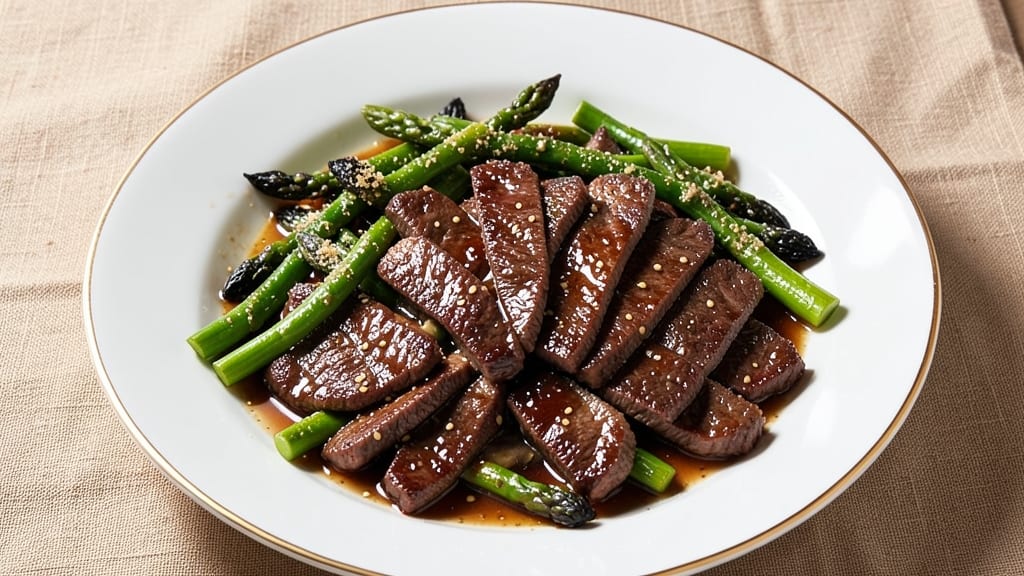
This Chinese asparagus beef recipe delivers the perfect balance of crisp-tender beef and vibrant green asparagus, all coated in a glossy, umami-rich soy sauce. The secret lies in high-heat stir-frying to achieve that signature wok hei—the smoky aroma and charred edges that define Chinese wok cooking.
I developed this recipe after years of perfecting the art of quick, flavorful stir-fries that still pack restaurant-quality depth.
The magic happens in three key steps: marinate the beef in a blend of soy sauce, cornstarch, and aromatics for maximum tenderness and adhesion; blanch the asparagus briefly to soften without losing its vibrant color; then stir-fry everything together over high heat with just enough oil to create that signature caramelized crust.
The sauce reduction at the end ties all the flavors together into a silky, glossy finish that clings to every bite.
What you’ll end up with is a dish that’s both elegant and approachable—golden-brown beef strips with crisp edges, bright green asparagus spears that stay crisp-tender, and a sauce that’s perfectly balanced between sweet, salty, and umami.
The dish is substantial enough to serve as a main course but light enough to feel refreshing, making it ideal for weeknight dinners or weekend gatherings.
Serve this dish over steamed jasmine rice or with a side of egg noodles to soak up every last bit of that flavorful sauce. The combination of textures and flavors is what makes this recipe truly special—crunchy, tender, and deeply satisfying all at once. Let’s get cooking!
Ingredients for asparagus beef chinese
The perfect harmony of tender beef and crisp asparagus in a restaurant-quality wok-fried dish.
| Ingredient | Amount | Notes |
|---|---|---|
| Flank Steak 🥩 | 1 lb | Thinly sliced against grain |
| Fresh Asparagus 🌱 | 1 lb | Trimmed, tough ends removed |
| Light Soy Sauce 🥄 | ½ cup | High-quality, low-sodium preferred |
| Dark Soy Sauce 🥄 | 2 tbsp | For color and depth |
| Cornstarch 🌾 | 2 tbsp | For tenderizing beef |
| Sesame Oil 🫒 | 1 tbsp | Toasted for aroma |
| Garlic Cloves 🧄 | 6 cloves | Minced finely |
| Ginger Root 🌿 | 1 tbsp | Freshly grated |
| Green Onions 🧅 | 3 whole | White and green parts separated |
| Vegetable Oil 🫒 | ¼ cup | High smoke point |
| White Sugar 🍚 | 1 tbsp | Balances umami |
| Shaoxing Wine 🍷 | 2 tbsp | Or dry sherry substitute |
| Sesame Seeds 🌰 | 1 tbsp | Toasted for garnish |
| Salt 🧂 | 1 tsp | Kosher or sea salt |
| Black Pepper 🌶️ | ½ tsp | Freshly ground |
The flank steak is non-negotiable for this dish—its lean yet tender texture becomes silky when sliced thinly against the grain. Look for well-marbled cuts at specialty Asian markets or your butcher's counter, as they'll yield better flavor. If you can't find Shaoxing wine, dry sherry or even mirin work in a pinch, though the depth of flavor will be slightly different. For the asparagus, thick spears hold up better during stir-frying—avoid the thin, skinny variety unless you're willing to blanch them longer. Fresh ginger and garlic should be vibrant and aromatic; if they smell stale, toast them briefly to revive their punch.
No sesame oil? Toasted peanut oil or avocado oil can substitute, though the flavor profile will shift slightly. The dark soy sauce is crucial for that signature wok-fried color—don't skip it. For a vegetarian adaptation, swap the beef for extra-firm tofu pressed and sliced, though the texture will differ. The cornstarch coating is essential for that signature crisp-tender finish; arrowroot powder works too if you're avoiding gluten. If you're short on time, pre-minced garlic and ginger from the freezer section will save you 5 minutes of prep—just don't use the jarred varieties with added salt.
This dish tastes even better the next day, as the flavors meld and the sauce thickens slightly. Store in an airtight container for up to 3 days in the fridge, though the asparagus may soften. For longer storage, freeze the cooked dish (without rice) for up to 2 months. When reheating, add a splash of water or soy sauce to restore the glossy texture. The sauce reduction is delicate—don't overcook it, or it'll turn bitter. Work in batches if needed to maintain high heat throughout the stir-fry, which is critical for achieving that wok hei aroma.
Why You'll Love This Recipe
- One-Pan Magic: I swear by this for nights when I’m too tired to wash dishes. Toss the flank steak and asparagus in the same pan—no chopping, no fuss—just a quick sear and stir-fry. The cornstarch slurry does the heavy lifting while I’m still slicing green onions.
- Umami Bomb: That combo of light and dark soy sauce? It’s like a flavor explosion in your mouth. The dark soy adds depth, while the light keeps it bright—plus, the asparagus stays tender-crisp instead of turning into mush. Honestly, the first time I tasted it, I immediately texted my mom to make more.
- Weeknight & Date Night: Between us, this is my go-to when I’m feeding a crowd or just my partner after a long day. The steak slices thinly? Perfect for sharing. The asparagus feels fancy but takes zero effort. I’ve served it at BBQs, potlucks, and even a last-minute dinner with friends—no one ever questions why it’s missing rice.
- Budget-Friendly Powerhouse: Flank steak is cheaper than ribeye, and asparagus is in season for half the year. A single pound of steak stretches across two meals, and the leftovers? Even better reheated with a splash of soy sauce. I’ll be real: I’ve eaten this cold from the fridge, and it still hits. That’s a win.
Step-by-step instructions for wok-fried asparagus beef
Master this technique for restaurant-quality texture—crispy beef, tender asparagus, and a glossy soy glaze.
Marinate and Prep the Flank Steak
Slice the 1 lb flank steak thinly against the grain into ¼-inch strips. In a bowl, combine the 2 tbsp cornstarch, 1 tsp salt, and 0.5 tsp black pepper. Toss the beef strips in this mixture until evenly coated—this creates a tenderizing crust that prevents toughness during cooking.
Add the 0.5 cup light soy sauce, 2 tbsp dark soy sauce, 1 tbsp white sugar, 2 tbsp shaoxing wine, and 1 tbsp sesame oil to the bowl. Mix thoroughly until the beef absorbs the marinade completely. Cover and refrigerate for at least 30 minutes (up to 2 hours)—this ensures maximum flavor penetration and tenderizes the meat further.
Blanch and Prep the Asparagus
Trim the tough ends from the 1 lb fresh asparagus and cut the stalks into 2-inch pieces. Bring a pot of water to a boil and blanch the asparagus for 1 minute 30 seconds until bright green but still crisp. Immediately drain and plunge into ice water to stop cooking, then drain again thoroughly. This step preserves the vibrant color and prevents mushiness during wok-frying.
Separate the 3 whole green onions into white and green parts. Finely mince the 6 cloves garlic and grate the 1 tbsp ginger root. These aromatics will form the flavor base for your sauce—mincing them finely ensures they dissolve completely during cooking rather than remaining as distinct pieces.
Wok-Fry the Beef to Perfect Doneness
Heat a wok or large skillet over high heat until smoking, then add the 0.25 cup vegetable oil. Once the oil shimmers, add the marinated beef in a single layer—don't overcrowd the pan. Cook undisturbed for 1 minute until the edges turn golden brown, then stir-fry for an additional 1 minute 30 seconds until the beef is cooked through but still retains moisture.
Remove the beef from the wok and set aside. The high heat is crucial here—it creates that signature wok-fried texture while keeping the beef tender. If the beef releases easily from the pan and has a glossy sheen, it's ready. If it sticks, your pan isn't hot enough; increase the heat and try again.
Stir-Fry the Asparagus and Aromatics
In the same wok, add a thin layer of vegetable oil if needed, then add the blanched asparagus. Stir-fry for 2 minutes until the asparagus turns bright green and develops a slight char on the edges. Add the minced garlic and grated ginger, cooking for an additional 30 seconds until fragrant—this releases their essential oils and deepens the flavor profile.
Return the beef to the wok and toss everything together for 1 minute to combine. The residual heat will finish cooking the asparagus while reheating the beef. Here's where the magic happens: the contrast between the crisp-tender beef and the bright, slightly charred asparagus creates the perfect texture combination.
Finish with Sauce and Garnish
Reduce heat to medium and pour the reserved marinade from the beef into the wok. Add the white and green parts of the green onions, tossing everything together for 1 minute until the sauce thickens slightly and coats the beef and asparagus evenly. The sauce should cling to the ingredients rather than pool at the bottom.
Remove from heat and stir in the 1 tbsp toasted sesame seeds. Taste and adjust seasoning if needed—you may want to add a splash more light soy sauce for saltiness or a touch of sugar to balance acidity. Serve immediately over steamed rice, garnished with extra sesame seeds and green onion tops for freshness and visual appeal.
Pro Tips For Making Asparagus Beef Chinese
- Slice Steak Against the Grain: Flank steak’s tough fibers run diagonally—cutting perpendicular to them shortens cooking time and keeps bites tender. Grab a sharp knife and angle those slices like you’re cutting a deck of cards, not chopping through a log.
- Blanch Asparagus First: I used to toss raw asparagus straight into the pan, and it’d either burn or turn mushy. Instead, shock it in boiling water for 30 seconds, then ice bath—this crisps the tips and ensures even cooking when you sear it later.
- Marinate for 20 Minutes (No Longer): Dark soy sauce loves to overpower. Skip the overnight soak—just 20 minutes with light soy, cornstarch slurry, and a splash of Shaoxing wine does the job. Any longer, and you’ll end up with a salty brick instead of silky beef.
- Sear in Batches: Crowding the pan steams the meat instead of searing it. Work in single layers, 2 minutes per side max, until you’ve got a deep crust. If your pan’s too small, just do two rounds—rustic but worth it.
Serving suggestions for this dish
Steamed Jasmine Rice
This dish shines brightest when served over steamed jasmine rice—the fragrant, slightly sticky grains soak up every last drop of that glossy soy glaze. I use a 1:1.25 rice-to-water ratio (e.g., 1 cup rice to 1¼ cups water) and cook it in a rice cooker for perfect texture.
For extra authenticity, add a pinch of salt and a splash of sesame oil to the cooking water. 🍚
Egg Noodles
For a lighter option, serve over wide egg noodles (like lo mein noodles) that have been blanched for 2 minutes and drained. Toss them with a bit of the reserved sauce before plating to create a quick, satisfying meal.
I like to add a drizzle of chili oil on the side for guests who want heat. The noodles provide a fun, casual contrast to the elegant beef and asparagus.
Garnish Game-Changers
Fresh garnishes elevate the dish visually and add texture. I always finish with toasted sesame seeds (heat 1 tbsp in a dry pan for 30 seconds) and sliced green onions. For extra flair, add thinly sliced red chili peppers or a sprinkle of crushed roasted peanuts for crunch.
These toppings aren't just decorative—they add layers of flavor that make each bite more exciting.
Dipping Sauce
Prepare a quick dipping sauce by mixing 2 tbsp hoisin sauce, 1 tbsp rice vinegar, and 1 tsp sesame oil. This sweet-tangy contrast cuts through the richness of the beef while complementing the asparagus.
Serve it in a small bowl on the side for dipping or drizzling over the dish. It’s especially good if you’ve made extra sauce from the recipe—just thin it with a splash of water.
Side Salad
A crisp sesame salad balances the richness of the dish. Toss 4 cups baby spinach with 1 tbsp toasted sesame oil, 1 tbsp rice vinegar, and 1 tsp honey.
Add sliced cucumber and a sprinkle of toasted sesame seeds for crunch. The cool, fresh flavors refresh your palate between bites of the warm stir-fry. 🥗
Beverage Pairings
For drinks, I recommend a light lager like Tsingtao or Asahi—the crisp, clean taste cleanses your palate between bites. If you prefer wine, a dry Riesling offers bright acidity that complements the dish’s umami depth.
For something non-alcoholic, jasmine tea with a splash of lemon enhances the dish’s aromatic qualities. Avoid heavy, oily, or overly sweet drinks that would overpower the flavors. 🍺
Nutrition facts
Frequently asked questions
Can I substitute flank steak with another cut of beef?
Yes, but choose lean cuts that slice thinly against the grain. Sirloin or ribeye work well—just trim excess fat first. Avoid tough cuts like chuck roast, as they won’t tenderize properly in the short cooking time. For extra tenderness, marinate for 2 hours instead of 30 minutes.
Why does my asparagus turn mushy during stir-frying?
Over-blanching or overcrowding the pan causes mushiness. Stick to 1 minute 30 seconds for blanching and use a wok or large skillet to avoid overcrowding. For thicker spears, blanch 2 minutes max. Also, ensure your pan is smoking hot before adding oil—this prevents steaming instead of searing.
How can I make this dish spicier?
Add 1 tsp chili flakes or 1 tbsp minced red chili to the sauce during the final reduction. For heat lovers, stir in 1 tsp chili crisp or ½ tsp Sichuan peppercorns (toasted first) at the end. Garnish with sliced Thai bird’s eye chilies for extra kick.
Can I make this recipe in an oven instead of a wok?
Yes, but texture will differ. Preheat oven to 425°F and toss marinated beef and blanched asparagus with 1 tbsp oil on a baking sheet. Roast for 12-15 minutes, stirring halfway, until beef is browned. Add sauce ingredients to a small saucepan, simmer until thickened, then toss with the roasted veggies. The result will be less crispy but still flavorful.
What’s the best way to reheat leftovers?
Reheat gently in a skillet over medium-low heat with 1 tbsp water or sauce to restore moisture. Avoid microwaving—it makes the asparagus soggy. For extra crispiness, sear the beef and asparagus separately in a hot pan for 1-2 minutes before combining with sauce. Store leftovers in an airtight container for up to 3 days.