
Tips
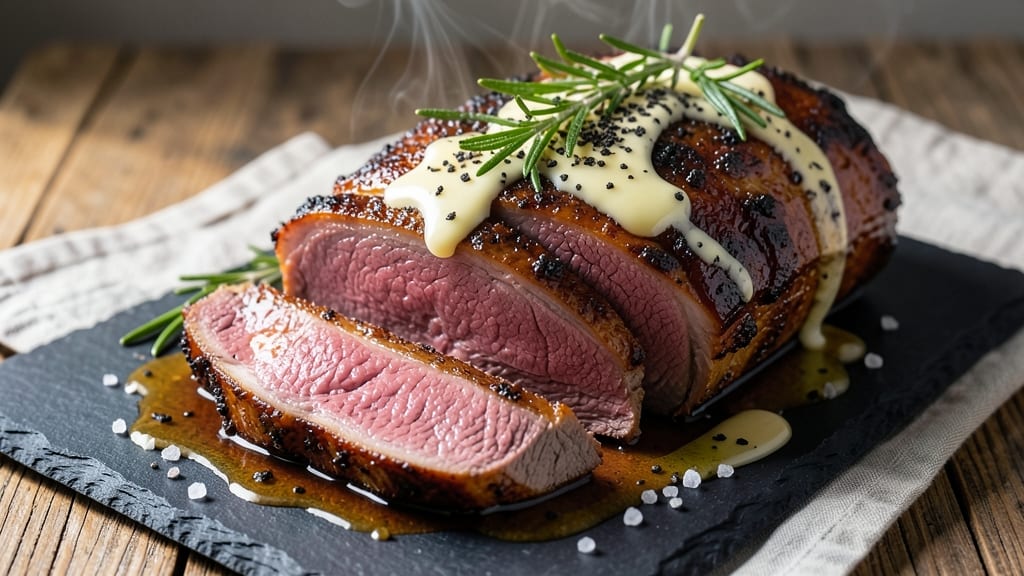
This Angus beef tip roast recipe delivers restaurant-quality results with a perfect balance of slow-cooked juiciness and a deep, caramelized crust. The secret lies in dry-brining overnight and roasting at a precise 325°F—a technique that transforms tough cuts into melt-in-your-mouth perfection.
What sets this apart is the reverse sear finish, ensuring an exterior so rich and flavorful it’ll have everyone asking for seconds.
The recipe begins with a simple yet effective seasoning blend of coarse salt, black pepper, and rosemary, which penetrates the meat during the overnight dry-brine. This step eliminates the need for marinades while enhancing natural beef flavors.
Roasting uncovered allows the fat to render slowly, creating that coveted crust without drying out the interior. For an extra touch of elegance, a final broil under the broiler adds depth to the caramelization.
What you’ll end up with is a beautifully plated roast that’s tender enough to slice with a fork, with a crust so dark and glossy it looks like it came straight from a high-end steakhouse.
The internal temperature of 130°F for medium-rare ensures maximum juiciness, while the resting period keeps everything intact when sliced. This isn’t just a roast—it’s a centerpiece that elevates any dinner party.
Pair with classic sides like garlic mashed potatoes and roasted root vegetables for a complete meal. The recipe scales perfectly for crowds, making it ideal for holidays or special occasions. Here’s how to achieve that showstopping result every time.
Ingredients for angus beef tip roast
Six ingredients transform a simple roast into a showstopping centerpiece with restaurant-quality crust and melt-in-your-mouth tenderness.
| Ingredient | Amount | Notes |
|---|---|---|
| Angus Beef Tip Roast 🥩 | 4 lb | Center-cut, bone-in preferred |
| Diamond Crystal Kosher Salt 🧂 | 2 tbsp | Coarse grain for dry-brine |
| Freshly Ground Black Pepper 🌶️ | 1 ½ tbsp | Cracked peppercorns preferred |
| Fresh Rosemary Sprigs 🌿 | 4 whole | Tight, vibrant stems removed |
| Unsalted Butter 🧈 | ½ cup | Cold, cubed for basting |
| Extra-Virgin Olive Oil 🫒 | 2 tbsp | High smoke point for searing |
| Garlic Cloves 🧄 | 6 cloves | Smashed for aroma infusion |
| Yellow Onion 🧅 | 1 whole | Medium, sliced for aromatics |
| Dry Red Wine 🍷 | ½ cup | Bold Cabernet Sauvignon preferred |
| Beef Bone Broth 🍲 | 1 cup | Homemade or high-quality store-bought |
| Fresh Thyme Sprigs 🍃 | 2 whole | Leaves only, stems removed |
| Balsamic Vinegar 🍶 | 1 tbsp | Aged, for pan deglazing |
| Honey 🍯 | 1 tsp | Wildflower for caramelization |
The Angus beef tip roast is non-negotiable here—look for center-cut, bone-in pieces with visible marbling at specialty butchers like D'Artagnan or your local high-end grocer. Costco often carries excellent pre-trimmed roasts, but if buying whole, trim excess fat for better caramelization. Fresh rosemary and thyme should be vibrant green with no wilting—the Whole Foods bulk section or local farmers' markets are ideal sources. For the dry-brine, Diamond Crystal kosher salt is preferred over table salt due to its larger crystals that penetrate deeper. The red wine should be bold and dry—Cabernet Sauvignon or Malbec work best, but any 12% ABV or higher will suffice.
No beef bone broth? Homemade chicken broth with a splash of soy sauce works in a pinch, though the depth of flavor won't match. Substituting balsamic vinegar for wine? Use aged balsamic—the cheaper stuff lacks complexity. The honey can be swapped for maple syrup if needed, but it won't caramelize as beautifully. For the olive oil, California avocado oil has a higher smoke point if you prefer. The garlic and onion can be pre-minced from the store, but freshly chopped adds significantly more flavor. If you're scaling this for a crowd, double the wine and broth—the ratios remain consistent.
The roast should rest uncovered on a wire rack for at least 30 minutes after cooking to maintain internal temperature. Portion into individual slices and store in an airtight container for up to 5 days in the fridge, or freeze for 3 months. The basting butter can be prepped ahead and stored in the freezer for up to 2 weeks. For leftovers, reheat in a 325°F oven with a splash of broth to prevent drying. The caramelized crust reheats beautifully, so don't skip the final broil—it's what makes this dish restaurant-worthy.
Why You'll Love This Recipe
- I’ll be real: most roast leftovers are sad. Not this. Slice it thin for sandwiches the next day, or shred it into tacos—still rich, still juicy, still worth eating. And since it’s a smaller cut, it won’t leave you with a fridge full of mystery meat.
- Two-Handed Prep: I swear by this—just salt, pepper, and rosemary on the outside, a pat of butter tucked into the seam before it hits the oven. That’s it. No chopping, no fussing, no "I’ve got 20 sides to make" stress.
- Rosemary Butter Magic: Between us, the butter basting with rosemary while it roasts is where it gets real. That crispy crust with the fragrant, herby richness melting into tender beef? It’s the kind of bite that makes people pause mid-chew and go, "Wait, you made this?"
- Weeknight or Sunday Feast: Honestly, this roast works for both. Toss it on a sheet pan for a lazy Tuesday dinner, or let it slow-roast while you prep sides for a holiday table. The same simple method delivers—just adjust the time.
Step-by-step instructions for slow-cooked Angus beef tip roast
Master this technique for melt-in-your-mouth tenderness with a deep caramelized crust.
Prepare the Roast for Perfect Seasoning and Texture
Remove the 4 lb Angus Beef Tip Roast from refrigeration and pat it completely dry with paper towels, including the cavity. This drying step is absolutely critical—it creates that signature caramelized crust we're after. Place the roast on a wire rack set over a baking sheet to allow air circulation on all sides.
In a small bowl, combine the 2 tbsp Diamond Crystal Kosher Salt and 1.5 tbsp Freshly Ground Black Pepper. Rub this mixture generously over the entire surface of the roast, pressing firmly so the seasoning adheres. Insert the 4 whole Fresh Rosemary Sprigs into the cavity and tuck any remaining sprigs under the roast's fat cap. Let it sit at room temperature for 30 minutes before cooking to ensure even cooking throughout.
Sear for Deep Flavor and Color Development
Preheat your oven to 325°F. Heat a large Dutch oven over medium-high heat until it's very hot. Add the 2 tbsp Extra-Virgin Olive Oil and swirl to coat the bottom evenly. Place the roast fat-side down in the Dutch oven and sear for 8-10 minutes until the fat is rendered and the bottom develops a deep golden brown crust. Flip the roast and repeat on the other side for another 8-10 minutes.
Here's the thing—don't be tempted to move the roast around during searing. Let it develop that crust undisturbed. If the fat renders too quickly, reduce heat slightly to prevent burning. Remove the roast from the Dutch oven and set it aside on a cutting board. You'll notice the pan has released some rendered fat and juices—this is flavor we'll use later.
Build the Flavor Base with Aromatics and Wine
In the same Dutch oven (don't wipe it clean), add the 6 cloves Garlic Cloves that have been smashed with the side of a knife, and the 1 whole Yellow Onion that's been sliced into ¼-inch pieces. Cook for 5-6 minutes until the onions are softened and beginning to caramelize. You'll smell that wonderful garlic aroma developing—this is where the magic happens.
Pour in the 0.5 cup Dry Red Wine and scrape up all those delicious browned bits from the bottom of the pan. This deglazing step captures all that concentrated flavor. Let the wine reduce by half, about 3-4 minutes, until it's syrupy and coats the back of a spoon. Remove the pan from heat and stir in the 1 cup Beef Bone Broth and 2 whole Fresh Thyme Sprigs (leaves only).
Slow Cook to Perfection with Basting
Return the roast to the Dutch oven, fat-side up, and place it in the preheated 325°F oven. Cover with a tight-fitting lid and cook for 3 hours. Here's where patience pays off—this slow cooking ensures the connective tissue breaks down for fork-tender meat. Every 45 minutes, remove the roast and spoon the accumulated juices over the top. This basting keeps the meat moist and builds that beautiful crust.
After 3 hours, remove the lid and increase the oven temperature to 400°F. Add the 0.5 cup Unsalted Butter (cubed) to the Dutch oven and let it melt around the roast. This butter basting creates that caramelized crust we're after. Return the roast to the oven, uncovered, and cook for an additional 20-30 minutes until the internal temperature reaches 135°F.
Rest and Create the Glazed Crust
Transfer the roast to a cutting board and tent loosely with foil. Let it rest for 15 minutes while you prepare the finishing glaze. In a small saucepan, combine the 1 tbsp Balsamic Vinegar and 1 tsp Honey. Simmer over medium heat for 2-3 minutes until slightly thickened and reduced by half.
Remove the foil from the roast and brush the glaze evenly over the surface. Return the roast to the oven for 5-7 minutes to set the glaze and create that beautiful caramelized crust. The roast is done when the internal temperature reaches 145°F and the glaze has set to a glossy finish. Slice against the grain into ½-inch thick pieces and serve immediately with the pan juices reduced by half for a rich gravy.
Pro Tips For Making Angus Beef Tip Roast
- USE A MEAT THERMOMETER: I learned this the hard way—Angus tip roast can turn from perfect to dry in seconds if you eyeball it. Aim for 130°F internal temp (medium-rare) and pull it before it hits 135°F, then let it rest. The carryover cooking will push it to ideal doneness without overcooking.
- DRY THE ROAST FIRST: Pat that beef bone-dry with paper towels before searing—wet surfaces steam instead of brown. I used to skip this, and my crust would turn sad and pale. A dry surface + hot pan = the kind of crust that makes people ask for seconds.
- SALT THE ROAST 48 HOURS EARLY: This isn’t about flavor—it’s about texture. Diamond Crystal kosher salt needs time to penetrate the tough tip roast fibers, breaking them down for a tender bite. I was skeptical until I tried it; the difference in juiciness is night and day.
- BASIL THE BUTTER: While the roast rests, mix 2 tablespoons softened unsalted butter with 1 crushed rosemary sprig and a pinch of salt. Spoon it over the sliced meat—it’s lazy but elevates the dish instantly. (Yes, even if you’re impatient like me.)
Common mistakes when making this dish
Skipping the Dry-Brine
One of the biggest mistakes is skipping the overnight dry-brine, which is what creates that perfect crust and ensures juicy meat. I’ve seen people rush this step, but trust me, letting the salt penetrate for at least 12 hours makes all the difference.
The salt breaks down the proteins on the surface, helping to retain moisture and develop that rich crust. If you’re short on time, aim for a minimum of 4 hours—just don’t skip it entirely. 🧂
Overcrowding the Pan
When searing the roast, some cooks make the mistake of using a pan that’s too small, leading to steaming instead of browning. I always recommend using a Dutch oven—it’s large enough to accommodate the roast without overcrowding.
If your pan is too small, the rendered fat won’t pool properly, and you’ll end up with a soggy crust instead of that beautiful caramelized exterior. 🔥
Ignoring Internal Temperature
Many home cooks guess when the roast is done, but that’s a recipe for disaster. Use a meat thermometer to monitor the internal temperature—130°F for medium-rare is ideal. If you pull it out too early, it’ll continue cooking while resting and end up overdone.
Conversely, if you let it go past 145°F, you risk drying out the meat. I can’t stress this enough: temperature control is key.
Not Resting Properly
Resting the roast is where a lot of people drop the ball. Skipping this step or cutting into it too soon causes all the juices to spill out, leaving you with dry meat. Tent the roast loosely with foil and let it rest for at least 15 minutes before slicing.
This allows the juices to redistribute, ensuring every bite is as tender as it should be. 💫
Using Low-Quality Beef
Not all beef is created equal, and using anything less than USDA Prime or Choice grade Angus will affect the final result. The marbling in the meat is what creates flavor and tenderness, so don’t skimp on quality.
I always recommend buying from a trusted butcher or specialty store—D’Artagnan or Costco’s Kirkland Signature are great options. Cheaper cuts just won’t deliver the same melt-in-your-mouth experience.
Rushing the Slow Cook
Patience is everything when it comes to slow-cooking a roast. Some people try to speed up the process by cranking up the heat, but that leads to a tough exterior and dry meat. Stick to the 325°F temperature and let the roast cook slowly for 3 hours.
This breaks down the connective tissue, resulting in that fork-tender texture we all love. Trust the process—rushing it will only ruin the outcome. ⏱️
Nutrition facts
Frequently asked questions
What's the best cut of beef for this recipe?
You want a center-cut, bone-in beef tip roast with visible marbling for maximum flavor and tenderness. Look for USDA Prime or Choice grade Angus from specialty butchers like D'Artagnan or trusted grocery stores. The bone helps retain moisture during cooking, while the marbling ensures juicy results.
Can I make this recipe without a Dutch oven?
Yes, but you'll need a heavy oven-safe skillet with high sides—like a cast iron or stainless steel. The key is to avoid overcrowding during searing. If your pan isn't large enough, sear the roast in batches, then transfer everything to the oven. The flavor will be slightly different but still delicious.
How do I adjust the cooking time for a different roast size?
Use this general guideline: 15-20 minutes per pound for the slow cook at 325°F. For a 3 lb roast, aim for 2.5-3 hours, while a 5 lb roast needs 3.5-4 hours. Always check internal temperature—130°F for medium-rare—rather than relying solely on time.
What sides pair best with this roast?
Classic choices include garlic mashed potatoes, roasted root vegetables (carrots, parsnips, beets), and creamy polenta. For a lighter option, try a fresh arugula salad with lemon vinaigrette. The rich beef flavor pairs beautifully with earthy, starchy, or slightly bitter vegetables that cut through the richness.
Can I make this ahead of time?
Cook the roast completely, then refrigerate uncovered for 24 hours to develop deeper flavors. Reheat in a 325°F oven with a splash of broth until warmed through. For serving, sear the slices in a hot pan for 1 minute per side to restore that beautiful crust.