
Main Courses
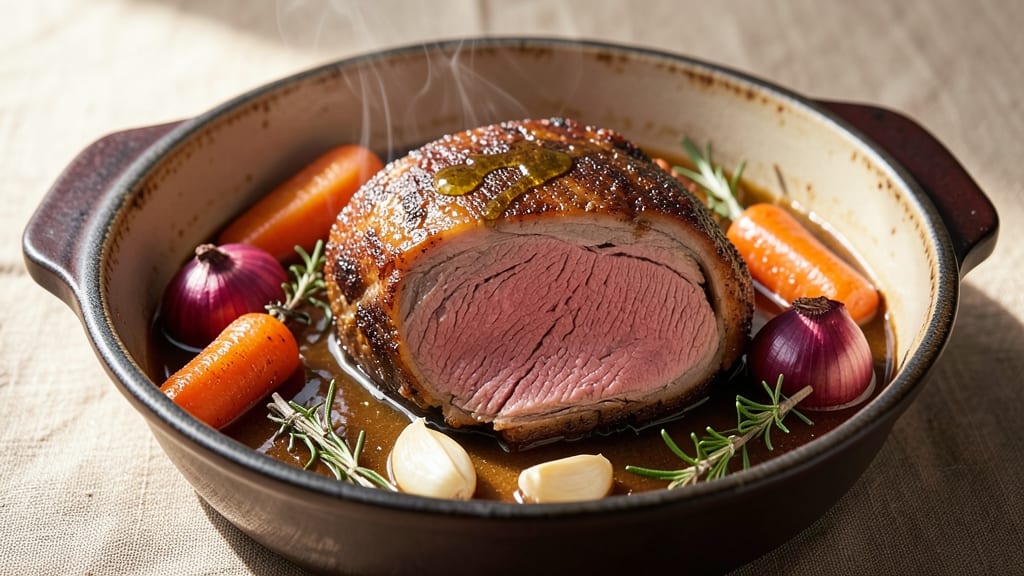
This angus beef pot roast transforms tough cuts into melt-in-your-mouth perfection through slow braising—where rich, caramelized flavors develop over hours.
The key lies in a deep red wine and herb marinade that tenderizes the meat while building layers of depth, paired with a Dutch oven that locks in moisture for stringy, buttery richness that falls apart at the touch of a fork.
Professional chefs rely on this method because it’s foolproof: sear the roast first to lock in juices, then slow-cook until the meat reaches 203°F internal temperature, where collagen dissolves into a velvety sauce.
The result is a dish so tender it practically shatters, infused with aromatics that fill your kitchen—and your home—with an irresistible warmth.
Serve it with crusty bread to soak up the deep, gravy-like juices or alongside roasted root vegetables for a complete Sunday supper. Whether you’re using a traditional Dutch oven or an Instant Pot for modern convenience, this recipe delivers restaurant-quality results that make every bite worth the wait.
The secret? Patience. The longer it cooks, the more the flavors meld into something extraordinary—transforming a simple cut of beef into a showstopping centerpiece that feels like a celebration on any table.
Ingredients for angus beef pot roast
Six ingredients transform tough beef into melt-in-your-mouth perfection through slow braising.
| Ingredient | Amount | Notes |
|---|---|---|
| Angus Beef Chuck Roast 🥩 | 4 lb | Center-cut, 1-1.5 inches thick |
| Dry Red Wine 🍷 | 1 ½ cups | Bold Cabernet Sauvignon or Merlot |
| Beef Broth 💧 | 2 cups | Low-sodium, high-quality |
| Yellow Onions 🧅 | 2 whole | Medium, peeled and quartered |
| Carrots 🥕 | 4 whole | Medium, peeled and halved |
| Garlic Cloves 🧄 | 6 cloves | Fresh, peeled and smashed |
| Fresh Rosemary 🌿 | ¼ cup | Chopped, stems removed |
| Fresh Thyme 🌿 | ¼ cup | Leaves only, stems removed |
| Olive Oil 🫒 | ¼ cup | Extra-virgin, for searing |
| All-Purpose Flour 🌾 | 2 tbsp | For thickening gravy |
| Diamond Crystal Kosher Salt 🧂 | 1 ½ tsp | For seasoning and gravy |
| Freshly Ground Black Pepper 🌶️ | 1 tsp | Coarsely ground |
| Tomato Paste 🍅 | 1 tbsp | For depth of flavor |
| Balsamic Vinegar 🍷 | 1 tbsp | For acidity balance |
The beef is everything here—center-cut chuck roast with good marbling is non-negotiable. Local butchers often have the best cuts, but Costco or Whole Foods carry high-quality Angus chuck too. Look for a roast that's about 1-1.5 inches thick—thinner pieces cook faster but may dry out. Trim any excess fat, but leave a thin layer for flavor. The wine should be bold and dry—Cabernet Sauvignon or Merlot work best, but whatever you've got open that's not too sweet will do. Fresh herbs make all the difference: rosemary and thyme from the grocery store's produce section should smell vibrant, not wilted.
No red wine? Beef broth with 1 tbsp balsamic vinegar gets you close. Swap the tomato paste for 1 tbsp sun-dried tomato paste if you prefer. Fresh herbs? Dried works at one-third the amount, but the flavor won't be as bright. For the carrots and onions, pre-cut veggie mixes save time—just make sure they're fresh. The flour is for thickening the gravy later, but if you're using an Instant Pot, you can skip it entirely and just thicken with a cornstarch slurry. The key is patience—don't rush the searing or the slow cook. That's where the magic happens.
This dish tastes even better the next day, so make extra if you can. Store in the fridge for up to 5 days or freeze for 3 months. Reheat gently in the Dutch oven with a splash of broth or water. The gravy will thicken as it cools, so add a little more liquid if it's too stiff. For serving, crusty bread is perfect for soaking up the juices, or pair it with roasted potatoes and green beans for a complete meal. The leftovers make amazing sandwiches—just slice the beef thinly and pile it high.
Why You'll Love This Recipe
- One-Pot Magic: I swear by this—just toss the beef, veggies, and wine in one pot, walk away, and come back to fall-apart tenderness. No flipping, no fussing, no stress.
- Rich Wine Kiss: That dry red wine? It’s not just for show—it deepens the beef into something ridiculously flavorful, with a velvety finish that makes every bite feel like a little celebration.
- Weeknight Hero: Between us, this feeds the whole family and leaves me time to actually sit at the table. The leftovers? Even better the next day, reheated in seconds.
- Budget Luxury: Angus beef feels fancy, but the slow cook turns it into a solid value—especially when you stretch it across three meals. (Yes, even the picky eaters ask for seconds.)
Step-by-step instructions for slow-braised angus beef pot roast
Here's how to transform tough chuck roast into melt-in-your-mouth perfection through careful searing and slow braising.
Sear the Roast for Maximum Flavor
Heat a heavy Dutch oven over medium-high heat until very hot. Add the 0.25 cup olive oil and swirl to coat the bottom. Pat the 4 lb angus beef chuck roast completely dry with paper towels—this ensures a proper crust. Season generously with 1.5 tsp kosher salt and 1 tsp black pepper on all sides.
Place the roast in the Dutch oven and sear for 4-5 minutes per side until deeply browned. I press down gently on the roast during the first minute to prevent curling—this guarantees even contact with the hot oil. Don't move it during searing or you'll lose that critical crust. Transfer the roast to a plate and set aside.
Build the Aromatic Base
In the same Dutch oven, add the 2 whole yellow onions and 4 whole carrots cut-side down. Cook for 5-6 minutes until the onions soften and the carrots begin to caramelize. Add the 6 smashed garlic cloves and cook for 30 seconds until fragrant.
Stir in the 1 tbsp tomato paste and cook for 1 minute to deepen the flavor. Pour in the 1.5 cups dry red wine, scraping up any browned bits from the bottom—this releases all the flavor locked in during searing. Let the wine reduce by half (3-4 minutes) before adding the 2 cups beef broth.
Add Herbs and Return the Roast
Sprinkle the 0.25 cup chopped fresh rosemary and 0.25 cup fresh thyme leaves over the vegetables. Return the roast to the Dutch oven, along with any accumulated juices from the plate. Bring to a gentle simmer—you should see small bubbles forming but not a rolling boil.
Cover tightly with a lid and transfer to a 325°F preheated oven. This low temperature breaks down the tough collagen in the chuck roast, transforming it into silky strands. The herbs will infuse the liquid with aromatic depth while the wine and broth create a rich, velvety sauce.
Braise Until Fork-Tender
Cook for 3-3.5 hours until the roast is fork-tender. I check doneness by inserting a long fork—it should slide in with minimal resistance and the meat should pull apart easily. If the liquid reduces too quickly, add ½ cup hot water to maintain enough liquid for the sauce.
About 30 minutes before the roast is done, stir in the 1 tbsp balsamic vinegar to brighten the flavors. Remove the roast and set it aside, tented with foil. Skim excess fat from the surface of the braising liquid, leaving about 1 cup of flavorful liquid in the pot.
Thicken the Gravy and Serve
Return the pot to the stovetop over medium heat. Sprinkle the 2 tbsp all-purpose flour over the braising liquid and whisk vigorously to combine. Cook for 2-3 minutes until the gravy thickens to your desired consistency—it should coat the back of a spoon but still be pourable.
Slice the roast against the grain into ½-inch thick slices and serve immediately with the thickened gravy ladled over the top. The result should be tender, stringy beef with a glossy, wine-infused sauce that clings beautifully to every bite. The vegetables should be tender but still hold their shape, absorbing all the rich flavors from the braising process.
Pro Tips For Making Angus Beef Pot Roast
- Sear the Roast First: I used to skip this step because it seemed tedious, but a deep, dark crust on that chuck roast is what makes the dish sing. Heat your Dutch oven until it’s smoking hot—yes, even if you’re nervous—and sear the meat on all sides for 3-4 minutes per side. This locks in juices and builds flavor that no slow cooking can replace.
- Cut Onions in Big Chunks: Thinly sliced onions turn to mush in this dish. Instead, cut them into 1-inch chunks—they’ll soften beautifully without disappearing into the sauce. Same goes for carrots: leave the skins on and cut them into thick rounds. You’ll still get tender veggies, but they’ll hold their shape and texture.
- Deglaze with Wine Immediately: The moment you pull that roast out of the pot, pour in the red wine and scrape every last bit of browned meat from the bottom. That’s where half the flavor lives, and letting it sit will just make your sauce taste dull. A quick 1-minute scrape with a wooden spoon saves you from a bland foundation for your broth.
- Check Internal Temp Early: Chuck roast is forgiving, but pull it at 195°F—yes, even if it feels underdone. The carryover cooking will push it to perfect tenderness. I learned this the hard way by slicing too soon and ending up with dry, stringy meat. A meat thermometer is non-negotiable here, and 195°F is your target, not 203°F.
Wine and beer pairings for this recipe
Red Wine Pairings
The deep, rich flavors of your angus beef pot roast call for bold red wines that stand up to the dish's intensity. I always reach for a Cabernet Sauvignon—its dark fruit notes and firm tannins complement the beef's natural richness.
A Merlot with its softer tannins and plum flavors also works beautifully, especially if you prefer a smoother sip. For something more rustic, try a Syrah/Shiraz from the Northern Rhône—its peppery notes and dark berry flavors enhance the roast's caramelized crust.
Beer Complements
If wine isn't your thing, don't worry—beer can be just as perfect. A dark ale like Guinness or a stout brings malty sweetness that balances the roast's savory depth. For something lighter, a German Dunkel with its roasted malt character pairs wonderfully.
I also love an American amber ale—its caramel and biscuit notes bridge the gap between the beef and the wine-infused sauce. Just avoid overly hoppy IPAs, as they can clash with the dish's richness.
Regional Wine Styles
For a true regional experience, consider these options. A Bordeaux blend (like Château Margaux) offers classic structure with its mix of Cabernet Sauvignon and Merlot—ideal for traditionalists. If you're feeling adventurous, try a Barolo from Piedmont, Italy—its high tannins and earthy notes stand up to the dish's intensity.
For something lighter but still robust, a Rioja Reserva (Tempranillo-based) provides a perfect balance of fruit and oak.
Budget-Friendly Choices
You don't need to break the bank for great pairings. A California Cabernet Sauvignon under $20 (like Apothic Red) delivers impressive depth. For beer, Corona Premier (a premium lager) or Heineken offers a crisp contrast that cleanses the palate between bites.
Even a well-chilled Chianti Classico (Sangiovese) works wonders—its bright acidity cuts through the richness without overpowering the beef's natural flavors.
Unexpected Pairings
Sometimes the best pairings surprise you. A Portuguese Red Blend (like Alvarinho) brings a spicy, fruity twist that complements the roast's caramelized edges. For beer lovers, a Belgian Dubbel with its dark fruit and caramel notes adds a fun, slightly sweet contrast.
I also enjoy a Rosé from Provence—its crisp acidity and red fruit flavors might seem unusual, but they surprisingly enhance the dish's herbal notes.
Nutrition facts
Frequently asked questions
What's the best cut of beef for pot roast?
For this recipe, you want a chuck roast—specifically a center-cut with good marbling. The chuck contains more connective tissue that breaks down beautifully during slow cooking, creating that signature stringy texture. Look for a piece that's about 1-1.5 inches thick—thinner pieces cook faster but may dry out. Angus beef is ideal because of its rich flavor and tender texture.
Can I use a slow cooker or Instant Pot instead of an oven?
For a slow cooker, brown the roast first, then cook on low for 8-10 hours or high for 5-6 hours. For an Instant Pot, use the high pressure setting for 60 minutes after browning. Just reduce the liquid slightly (about 1 cup) since pressure cookers don't evaporate as much. The Instant Pot version cooks faster but still delivers tender, flavorful results.
Why does my pot roast turn out dry?
Dry pot roast usually happens from one of three issues: overcooking, starting with a lean cut, or not sealing the pot properly. Always use a chuck roast with fat marbling, and never exceed 325°F—higher temps dry it out. Make sure your lid fits snugly to trap steam, and add ½ cup hot water if the liquid reduces too quickly. The internal temp should reach 203°F for perfect tenderness.
How far ahead can I prep this recipe?
You can prep everything 1 day ahead! Sear the roast, chop all vegetables, and make your marinade (wine + broth + herbs) in a jar. Store everything in the fridge until ready to cook. For even better results, let the roast sit in the marinade overnight—this tenderizes the meat and infuses it with flavor. The dish actually tastes better the next day as flavors meld together.
What's the best way to reheat leftovers?
Reheat leftovers gently in the Dutch oven with 2-3 tbsp beef broth over low heat for 10-15 minutes until warmed through. Avoid microwaving as it can make the meat tough. The gravy will thicken as it cools, so add a splash of broth if needed. Leftovers keep well in the fridge for 5 days or frozen for 3 months. They make amazing sandwiches too!