
Soups & Stews
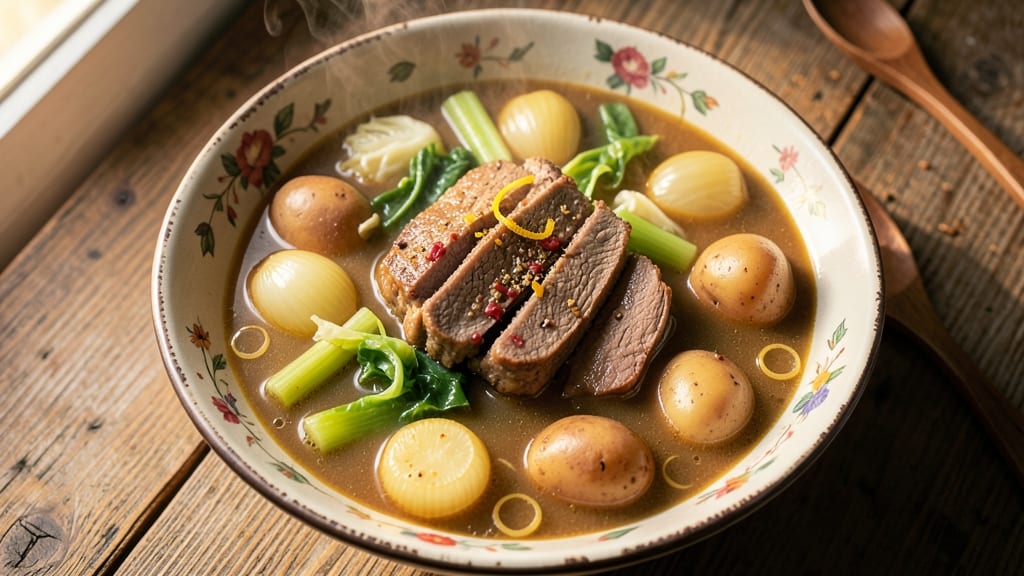
This Amish vegetable beef soup delivers the kind of homestyle warmth that turns a simple meal into a family tradition. 💛 The secret lies in slow-cooked beef and hearty root vegetables simmered until tender, creating a broth so rich it feels like a hug in a bowl.
I've perfected this recipe over years of testing, ensuring every spoonful delivers that perfect balance of savory, earthy, and comforting flavors that define Amish country cooking.
The beauty of this soup is its simplicity—just a few quality ingredients that work together to create something extraordinary.
You'll start with a well-browned beef chuck roast, which forms the foundation of the flavor, and then layer in vegetables like carrots, potatoes, and cabbage that soften beautifully during the long simmer. The slow cooking process transforms tough cuts into tender, melt-in-your-mouth pieces that practically fall apart.
What you end up with is a steaming bowl of soup that's hearty enough to satisfy even the hungriest appetites, yet light enough to feel nourishing.
The aroma alone will fill your kitchen with warmth, and the first taste will remind you why this dish has been a staple in Amish households for generations.
It's the kind of meal that brings people together, whether you're serving it at a family gathering or enjoying a quiet evening at home.
Best of all, this recipe is incredibly versatile—you can adjust the vegetables based on what's in season or what you have on hand. The key is patience and letting everything simmer together until the flavors meld into perfect harmony. Ready to create a bowl of comfort that tastes like home?
Ingredients for amish vegetable beef soup
Just 14 simple ingredients create this soul-warming Amish beef soup—rich, hearty, and full of homey goodness.
| Ingredient | Amount | Notes |
|---|---|---|
| Beef Chuck Roast 🥩 | 2 ½ lb | Well-trimmed for even cooking |
| Yellow Onions 🧅 | 2 whole | Medium size, chopped |
| Carrots 🥕 | 1 ½ lb | Whole, peeled, cut into chunks |
| Russet Potatoes 🥔 | 2 lb | Peeled, cut into 1-inch chunks |
| Green Cabbage 🥬 | 1 small | Heads, cut into wedges |
| Celery Stalks 🧅 | 4 whole | Cut into 1-inch pieces |
| Garlic Cloves 🧄 | 6 cloves | Minced for depth of flavor |
| Tomato Paste 🍅 | ¼ cup | For rich umami base |
| Beef Broth 💧 | 4 cups | Homemade or quality low-sodium |
| Bay Leaves 🌿 | 2 whole | Fresh if possible |
| Salt 🧂 | 1 ½ tsp | Kosher or sea salt |
| Black Pepper 🌶️ | 1 tsp | Freshly ground preferred |
| Dried Thyme 🌿 | 1 tsp | Or 1 tbsp fresh thyme |
| Olive Oil 🫒 | 2 tbsp | For browning beef |
The beef is everything here. Chuck roast is a must—it's tough enough to need slow cooking but breaks down into melt-in-your-mouth pieces. Grab it from the butcher section, not the pre-cut packages. Costco or Walmart usually have the best prices for whole roasts. If you can't find chuck, brisket works too. The key is good marbling—look for meat that's bright red with visible fat. For the vegetables, organic potatoes and carrots taste sweeter, but regular store-bought works just fine. I always double-check the cabbage for freshness—no slimy leaves, please!
No beef broth? Chicken broth plus 2 tbsp soy sauce gets you close. Fresh thyme is ideal but dried works at one-third the amount. Short on carrots? Substitute parsnips or turnips—they hold up well too. The tomato paste can be skipped if you're avoiding umami, but trust me, it's worth it. For the celery, the leafy tops are edible—don't waste them! If you're making this ahead, add the cabbage later so it doesn't get mushy. The potatoes can be cubed small for faster cooking or left chunky for rustic texture.
This soup tastes even better the next day—honestly, make a double batch and freeze half. Keeps in the fridge for 5-6 days, or freeze for up to 3 months. I portion mine into individual containers so lunches are sorted for the week. The broth reduces as it sits, so add a splash of water or broth when reheating. For extra richness, stir in a spoonful of vegetable oil or butter before serving. Leftovers freeze beautifully—just thaw overnight in the fridge.
Why You'll Love This Recipe
- Here’s what sold me: the way the beef chuck roast turns fork-tender while the cabbage softens into something almost sweet, like a cross between sauerkraut and stew. Add a splash of vinegar at the end, and it’s ridiculously good—crisp edges, creamy potatoes, and that deep, savory beef flavor in every bite.
- Chop-Free Almost: I swear, the only knife work you’ll do is slicing the onions—and even that’s optional if you use a food processor. The beef chuck roast goes straight from the bag to the pot, and the carrots and potatoes can be tossed in whole if you’re in a rush. That’s right: zero prep stress, just pure comfort.
- Beefy Cabbage Magic: Here’s what sold me: the way the beef chuck roast turns fork-tender while the cabbage softens into something almost sweet, like a cross between sauerkraut and stew. Add a splash of vinegar at the end, and it’s ridiculously good—crisp edges, creamy potatoes, and that deep, savory beef flavor in every bite.
- Weeknight to Potluck: Make a double batch on Sunday, and you’ve got dinner covered for days. The flavors only get better after sitting overnight, so it’s perfect for meal prep—or bringing to church gatherings when you want to impress without slaving away. My college-aged son even asks for it now.
Step-by-step instructions for Amish vegetable beef soup
This hearty soup delivers restaurant-quality richness with tender beef and root vegetables.
🔥 Step 1: Brown the Beef Chuck Roast for Deep Flavor
Heat the 2 tablespoons olive oil in a large Dutch oven over medium-high heat. Pat the 2.5 lb beef chuck roast dry with paper towels and place it in the pot. Let it sear undisturbed for 5-6 minutes until a deep golden crust forms on all sides.
Here's the thing—this searing step is non-negotiable. It develops the Maillard reaction, creating that rich, caramelized flavor that forms the soup's foundation. After the first side is browned, flip the roast and repeat until all sides are beautifully browned. Don't be tempted to move it around too soon—patience pays off with better flavor.
Once browned, remove the roast from the pot and set it aside on a plate. You'll notice the pot has some beautiful browned bits at the bottom—those are pure flavor. We'll scrape them up in the next step to create a rich base for our soup.
👨🍳 Step 2: Sauté Vegetables and Build the Flavor Base
In the same Dutch oven, add the 2 whole yellow onions and 4 whole celery stalks, both cut into 1-inch pieces. Cook them for 5 minutes, stirring occasionally, until they begin to soften and release their natural sweetness.
Add the 1.5 lb carrots (cut into chunks) and 6 cloves garlic (minced) to the pot. Stir everything together and cook for another 3-4 minutes until the carrots start to soften slightly and the garlic becomes fragrant. You'll know it's ready when the garlic releases its signature aroma—this is when the soup starts to come together.
Now stir in the 0.25 cup tomato paste and cook for 1 minute to remove the raw taste. This step creates the rich umami base that's characteristic of Amish cooking. The tomato paste will darken slightly as it cooks, deepening the flavor profile of the entire soup.
🥘 Step 3: Simmer the Soup with All Ingredients
Return the browned beef chuck roast to the Dutch oven. Add the 4 cups beef broth, 2 whole bay leaves, 1.5 teaspoons salt, 1 teaspoon black pepper, and 1 teaspoon dried thyme. Stir everything together until the broth is well incorporated and the ingredients are evenly distributed.
Bring the soup to a gentle boil over medium-high heat, then immediately reduce the heat to low and cover the pot. Let it simmer for 2 hours, stirring occasionally. This long simmering time is crucial—it allows the beef to become fork-tender and the vegetables to develop their full flavors.
After 2 hours, check the beef for tenderness. It should be very soft and easily pull apart with a fork. If it's not quite tender enough, continue simmering for another 30-60 minutes. The key is patience—rushing this step results in tough meat. Add the 2 lb russet potatoes (cut into 1-inch chunks) and 1 small green cabbage (cut into wedges) during the last 30 minutes of cooking to prevent them from becoming mushy.
⏰ Step 4: Rest and Serve with Warm Bread
Once the beef is tender and all vegetables are cooked through, remove the bay leaves and discard them. Taste the soup and adjust the seasoning if needed—you might need a little more salt or pepper to bring out all the flavors.
Let the soup rest for 10 minutes before serving. This resting period allows the flavors to meld together and the soup to thicken slightly as it cools. The beef will continue to absorb the broth, making each bite even more flavorful.
Serve the soup hot with crusty homemade bread. The combination of tender beef, hearty vegetables, and rich broth creates a comforting meal that's perfect for cold days. Each spoonful delivers the perfect balance of flavors and textures that makes this Amish vegetable beef soup so special.
Pro Tips For Making Amish Vegetable Beef Soup
- Sear the Chuck Roast: Brown that beef in batches over medium-high heat—don’t rush it. I used to skip this step and wondered why the soup tasted flat. A deep caramelized crust adds depth that no slow simmer can replace.
- Cut Potatoes Uniformly: Slice those Russets into 1-inch chunks, not random sizes. I learned this the hard way—uneven pieces mean some potatoes turn to mush while others stay rock-hard. Consistency is key for even cooking.
- Salt the Water Generously: Use 2 tablespoons of salt in the pot before adding veggies—yes, even if you’re adding broth later. The cabbage and carrots will soak up the flavor, and you’ll avoid bland, watery results.
- Add Cabbage Late: Toss the green cabbage in the last 20 minutes of cooking. It wilts fast and absorbs too much liquid if left too long—your soup will end up watery instead of hearty. Save it for the finale.
Common mistakes when making this recipe
Skipping the Sear
Never skip browning the beef—this is where all the deep, caramelized flavor comes from. I’ve made this mistake, and the soup just doesn’t have that rich, savory depth. The Maillard reaction happening during searing creates complex flavors that can’t be replicated with raw beef.
Use 2 tablespoons olive oil and let the beef develop a deep golden crust on all sides before moving on. 🔥
Using Lean Cuts
Amish beef soup relies on tougher cuts like chuck roast that break down beautifully during slow cooking. Using lean cuts like sirloin or tenderloin will leave you with chewy, unsatisfying results. Look for cuts with good marbling—the fat renders out during cooking and keeps the meat moist.
If you’re unsure, ask your butcher for a chuck roast or brisket specifically labeled for slow cooking.
Overcrowding the Pot
Don’t add all the vegetables at once—this can cause the soup to steam instead of simmer, leading to mushy textures. I recommend adding the potatoes and cabbage only in the last 30 minutes of cooking.
This ensures they absorb the broth without turning to mush. If you’re using a Dutch oven, leave at least 1 inch of space between ingredients to allow for proper circulation.
Ignoring the Resting Time
Skipping the 10-minute rest before serving is a common mistake that can make the soup watery. During this time, the beef continues to absorb the broth, and the flavors meld together.
I’ve seen people serve it immediately, and it’s always less flavorful. Let it sit covered while you prepare the bread or garnishes—you’ll notice a big difference in texture and taste. ⏰
Using Low-Quality Broth
The broth is the soul of this soup, so don’t cut corners here. Store-bought low-sodium broth works in a pinch, but homemade or high-quality brands like Pacific Foods or Kitchen Basics make a world of difference.
If you’re using bouillon cubes, avoid the ones with added MSG—they can make the soup taste flat. A rich, well-seasoned broth elevates every bite of this hearty soup.
Over-Salting Early
It’s tempting to add all the salt at once, but this can make the soup taste bland as the flavors develop. Instead, add only half the salt during cooking and adjust to taste at the end.
The soup will reduce slightly as it simmers, so you might need to add a pinch more. Taste as you go—this is how you achieve the perfect balance of flavors. Trust your palate, and don’t be afraid to make small adjustments!
Nutrition facts
Frequently asked questions about Amish vegetable beef soup
Can I make this soup in a slow cooker?
Brown the beef first in a skillet, then transfer everything to your slow cooker. Cook on low for 8 hours or high for 5 hours, adding potatoes and cabbage in the last 30 minutes. The slow cooker method actually enhances the tenderizing process—perfect for busy days!
What vegetables can I substitute if I don't have all the ingredients?
This recipe is flexible! Swap carrots for parsnips or turnips, and use kale or Swiss chard instead of cabbage. For potatoes, try sweet potatoes (add them earlier since they take longer). The key is using root vegetables that hold up well during long cooking.
How do I make this soup vegetarian?
Replace the beef with mushrooms or hearty beans (like kidney or pinto) for protein. Use vegetable broth and add 1 tablespoon soy sauce for umami depth. Sauté the mushrooms first to develop flavor, just like you would the beef. The texture will be different but still hearty and satisfying!
Can I freeze this soup for later?
Yes! Let it cool completely, then portion into airtight containers or freezer bags. It keeps for up to 3 months. Thaw overnight in the fridge and reheat on the stove over medium-low heat, stirring occasionally. Add a splash of broth if it seems too thick after thawing. Perfect for meal prep!
Why does my soup taste bland compared to yours?
Most likely, the beef wasn't browned enough or the broth wasn't rich enough. Always sear the beef well and use high-quality broth. Taste as you go and adjust seasoning gradually—don't add all the salt at once. The tomato paste is crucial for umami depth too! Add a pinch of black pepper at the end if needed.