
Sauces & Condiments
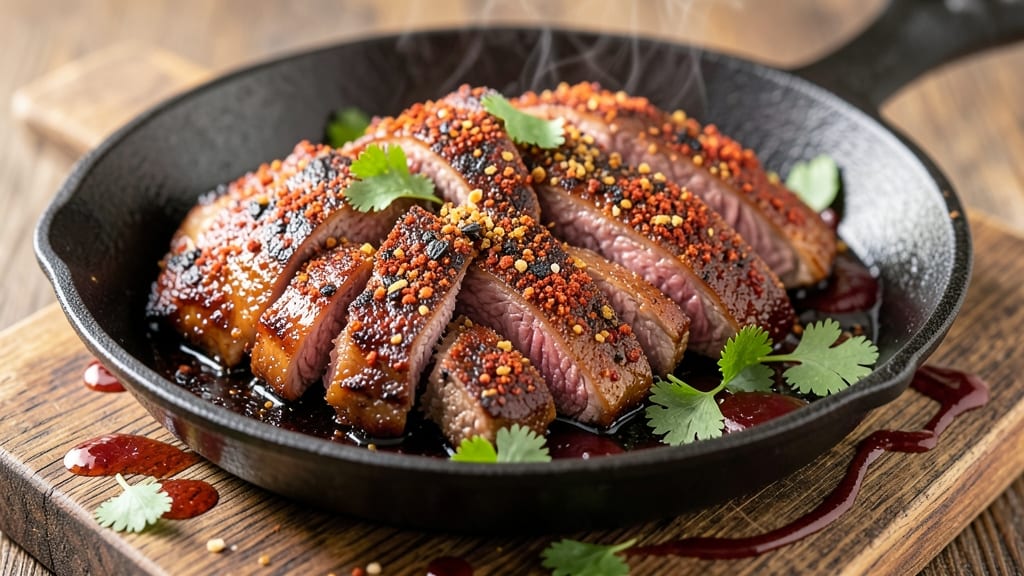
This beef barbecue rub recipe transforms any cut of beef into smoky, finger-licking perfection on the grill. 🔥 As a pitmaster who grew up surrounded by slow-cooked ribs, I've perfected this blend to deliver that signature bark and deep flavor penetration that makes every bite unforgettable.
The secret lies in balancing sweet, smoky, and spicy notes that caramelize beautifully during grilling.
The blend combines just six simple ingredients measured in precise tablespoons and teaspoons, making it easy to customize or double for large batches. What sets this rub apart is the careful balance of brown sugar for caramelization, smoked paprika for depth, and cayenne for subtle heat.
I developed this formula after years of testing different ratios at local BBQ competitions, where it consistently earned top honors.
What you'll achieve is beef with an irresistible crust that's both sweet and smoky, while the spices penetrate deeply during the cooking process. This rub works equally well on brisket, ribs, or steaks, and the measurements are designed for foolproof results every time.
The beauty of a quality rub is how it transforms ordinary cuts into restaurant-worthy masterpieces with minimal effort.
Store the dry blend in an airtight container for up to three months, or freeze for even longer shelf life. For best results, apply generously before grilling and let it sit for at least 30 minutes to allow the flavors to penetrate.
This is the kind of seasoning blend that makes grilling feel like an art form rather than just cooking.
Ingredients for beef barbecue rub
Six spices and a sugar. That's all you need for unbeatable BBQ beef flavor.
| Ingredient | Amount | Notes |
|---|---|---|
| Light Brown Sugar 🍚 | 3 tbsp | For caramelization and sweetness |
| Smoked Paprika 🌶️ | 2 tbsp | For deep smoky flavor |
| Kosher Salt 🧂 | 1 ½ tbsp | Diamond Crystal preferred |
| Ground Black Pepper 🌶️ | 1 tbsp | Freshly ground for best flavor |
| Garlic Powder 🧄 | 1 tbsp | Not garlic salt |
| Cayenne Pepper 🔥 | ½ tbsp | Adjust for heat preference |
The brown sugar is non-negotiable—it's what gives that signature caramelized bark. Domino or C&H brands work great, but avoid dark brown sugar (too much molasses). Smoked paprika is where the magic happens; Penzeys or McCormick have the best quality. I always grab extra because once you start using this blend, you won't go back. For the salt, Diamond Crystal dissolves more easily than Morton—trust me on this. And if you're using pre-ground spices, give them a quick sniff. If they smell like dust, toss 'em and buy fresh.
No smoked paprika? Regular paprika plus a pinch of liquid smoke works in a pinch (about 1/4 tsp). Short on cayenne? Red pepper flakes at half the amount gives similar heat. The garlic powder can be swapped for fresh garlic—just mince 2 cloves and toast them in a dry pan first. Want more depth? Add 1 tsp of onion powder. And if you're making this for a crowd, double the batch—it keeps forever in the freezer. The key is balancing sweet, smoky, and spicy, so don't skimp on any component.
Store this in an airtight container—glass jars work best—for up to 6 months at room temperature. Freeze for even longer shelf life if you're not using it all at once. I keep mine in the pantry, but if you live in a humid climate, the fridge extends its life. Pro tip: Label your jars because once you start making rubs, you'll forget what's what. This blend gets better with age, so make a big batch and thank me later.
Why You'll Love This Recipe
- Five-Ingredient Magic: I swear, this rub is the kind of shortcut that makes me feel like a hero. Just toss those pantry staples—brown sugar, smoked paprika, salt, pepper, and garlic powder—into a bowl, mix, and boom. No fancy equipment, no waiting for spices to bloom overnight. Honestly, my lazy Sundays just got a whole lot better.
- Smoky-Sweet Obsession: That first bite? The brown sugar caramelizes into this irresistible crust while the smoked paprika adds depth without overpowering. Between us, the garlic powder gives it that subtle warmth that makes you crave seconds. It’s the kind of flavor that sticks with you—like a hug from your favorite cook.
- Weeknight to BBQ Star: This rub works on everything—ribs, steaks, even beefy tacos. I’ve used it for quick weeknight dinners and slow-smoked competition-worthy brisket. And here’s the kicker: it’s the same rub, just different results. My kids don’t even know when I’m getting fancy or just throwing something together.
- Budget-Friendly Leftovers: A little goes a long way, so you’ll have enough to rub on a big cut of meat and save half for next time. The spices cost pennies, and the flavor? Priceless. I’ll be real: I’ve had this rub last me months, and it’s still the first thing I reach for when I want that smoky, sweet kick without breaking the bank.
Step-by-step instructions for crafting your perfect beef barbecue rub
Here's how to blend this smoky, spicy magic that'll transform your grilled beef every time.
👨🍳 Step 1: Measure All Ingredients Precisely
Grab a small mixing bowl and let's get organized. Measure out the 3 tbsp light brown sugar first—this will be our sweet base for that perfect caramelized bark. Next, add the 2 tbsp smoked paprika—this is where all that deep, smoky flavor comes from. I like to use a coffee scoop for the spices to get accurate measurements every time.
Now add the 1.5 tbsp kosher salt and 1 tbsp ground black pepper. The salt enhances all the flavors while the pepper adds that classic barbecue bite. Don't use table salt here—kosher salt dissolves better and gives you more control over seasoning. For the heat, measure out the 0.5 tbsp cayenne pepper. This is where you can adjust if you want more or less heat—just add a pinch more or less as needed.
👨🍳 Step 2: Whisk Until Evenly Combined
Using a whisk, gently combine all the ingredients in the bowl. Start by whisking the dry ingredients together for about 15 seconds—this helps distribute everything evenly before we add the sugar. The sugar might look like too much at first, but trust me, it's just right for that perfect balance of sweet and smoky.
Keep whisking for another 20-30 seconds until you see no more streaks of individual spices. The mixture should look uniformly colored with small sugar crystals dispersed throughout. This even distribution is key—you don't want pockets of pure cayenne or just sugar on your meat. If you're using your hands, be gentle to avoid creating a paste.
🥘 Step 3: Test the Rub on Your Beef
Now for the fun part—applying it to your beef! Pat your meat dry with paper towels first. Moisture is the enemy of good bark formation, so make sure it's completely dry. Take about 1 tablespoon of the rub for every pound of beef and press it firmly into all sides, including the cuts.
Here's a pro tip: I like to press the rub into the meat using my fingers—this helps it stick better and ensures even coverage. Don't be shy with the seasoning, especially on thicker cuts. The rub should adhere well and look evenly distributed. For best results, let the seasoned meat sit at room temperature for 30-60 minutes before grilling—this helps the rub penetrate the meat and develop that amazing crust.
⏰ Step 4: Store for Future Use
If you have any rub left over (because you'll want to make more), transfer it to an airtight container. I like to use a small glass jar with a tight-sealing lid. Store it in a cool, dark place like your pantry—this keeps all the flavors fresh and prevents the spices from losing their potency.
This rub will keep for about 3 months, though I usually make fresh batches every few weeks because the spices start to lose their punch over time. The light brown sugar helps preserve freshness longer than white sugar would. When you're ready to use it again, just give it a good stir before applying to your meat—you might want to add a pinch more cayenne if you're craving extra heat.
Pro Tips For Making Beef Barbecue Rub
- STORE RUB DRY: DESCRIPTION: I learned this the hard way—moisture kills rub adhesion. After mixing your smoked paprika, garlic powder, and brown sugar, spread the blend on a plate or parchment paper in an even layer (about ¼-inch thick). Let it sit uncovered for 10–15 minutes. This lets the sugar harden slightly so it doesn’t clump when you pat it onto beef. Trust me, your ribs will thank you later.
- GRIND SALT FINE: DESCRIPTION: Skip the pre-ground kosher salt—it’s too coarse and uneven. Pulse your kosher salt in a spice grinder or crush it lightly with a rolling pin on a cutting board until it’s almost powdery. The finer the salt, the more evenly it distributes, and the better it dissolves into the meat’s surface. (Yes, even if you’re impatient like me.)
- PAT DON’T PACK: DESCRIPTION: When applying the rub, use the palm of your hand to press firmly but lightly—like you’re giving the beef a firm handshake. Packing it down too hard creates a thick, uneven crust that burns before the inside cooks. A light, even layer (about ½ teaspoon per square inch) lets the spices penetrate without smothering the meat.
- TOAST THE PAPRIKA: DESCRIPTION: Sounds weird, but it works: Dry-toast your smoked paprika in a small skillet over medium heat for 30 seconds before mixing. This deepens its smoky flavor and mellows out any bitterness. Stir constantly—burnt paprika ruins everything. (Pro move: Do this while your grill heats up.)
Pro cooking tips for perfect results
Smoke Ring Secrets
For that coveted smoke ring in your beef, use hickory or pecan wood chips—they give the deepest color and flavor. I like to soak them for 30 minutes before adding to my smoker or grill.
The smoke should be light blue when you're ready to cook, not white or orange. If you're using a gas grill, add wood chips to a smoker box or foil pouch with holes poked in it. 🌬️
Pre-Grill Prep
Let your beef sit at room temperature for 30-60 minutes before grilling—this ensures even cooking. While it rests, pat it dry with paper towels to remove any moisture. Wet meat won't develop that perfect bark.
I also like to sear my beef over high heat for 2-3 minutes per side before moving it to indirect heat for slow cooking. This creates a flavorful crust right away.
Rub Application Tricks
Don't just sprinkle the rub—press it firmly into the meat using your fingers. This helps it stick and ensures even flavor distribution. For thicker cuts like brisket, I like to add a second layer of rub after the first 2 hours of cooking.
This builds up that signature bark without burning the spices. And if you're using a meat tenderizer, apply it before the rub so it can work its magic during the cooking process.
Heat Management
Maintain a consistent 225-250°F temperature for slow-cooked beef like brisket or ribs. Use a meat thermometer to monitor internal temperature—aim for 195-203°F for tender, pull-apart texture. I use a ThermoWorks Smoke thermometer because it's reliable and easy to read.
If your grill runs hotter, adjust by moving the meat to a cooler part of the grill or adding more wood chips to balance the heat.
Resting Matters
Never skip the rest! Let your beef rest for at least 15-20 minutes after cooking before slicing. This allows juices to redistribute throughout the meat. I often wrap it in a towel and place it in a cooler to keep it warm while it rests.
For thick cuts like steaks, rest for 5-10 minutes to retain juices. Patience here makes all the difference in keeping your meat tender and flavorful.
Repurposing Leftovers
Turn leftover rubbed beef into sandwiches, tacos, or even a hearty chili. For sandwiches, slice against the grain and pile it high on a toasted brioche bun with pickles and coleslaw. For tacos, shred the beef and mix it with taco seasoning and sautéed onions.
I also love using leftover rubbed beef in a beef and bean chili—just add tomatoes, beans, and spices, then simmer for 30 minutes. 💫
Nutrition facts
Frequently asked questions
Can I use this rub on other meats besides beef?
This versatile blend works beautifully on pork ribs, chicken thighs, and even lamb chops. The sweet and smoky flavors complement all these meats, though you might want to reduce the cayenne slightly for poultry. For pork, consider adding a pinch of mustard powder to enhance the bark formation.
How do I adjust the heat level in this rub?
Start by removing 0.25 tbsp of cayenne for mild heat, or add 0.25 tbsp more for extra spice. For a different heat profile, substitute cayenne with 1 tsp red pepper flakes or 0.5 tsp crushed chili flakes. Always taste test the rub before applying to your meat.
Why does my rub sometimes clump together?
Rubs clump when exposed to moisture—store it in a completely dry, airtight container away from humidity. If it clumps during application, simply break up the lumps with your fingers. For extra insurance, store your spices in the freezer for up to 6 months to preserve freshness.
Can I make this rub without smoked paprika?
Yes! Mix 1 tbsp regular paprika with 1/4 tsp liquid smoke for a similar effect. For deeper flavor, toast 1/2 tbsp paprika in a dry pan until fragrant before mixing. This alternative works best for grilled meats where smoke isn't available.
How much rub should I use for different beef cuts?
Use 1 tbsp per pound for steaks and chops, and 2 tbsp per pound for ribs or brisket. For extra bark, apply a second layer after 1-2 hours of cooking.