
Sauces & Condiments
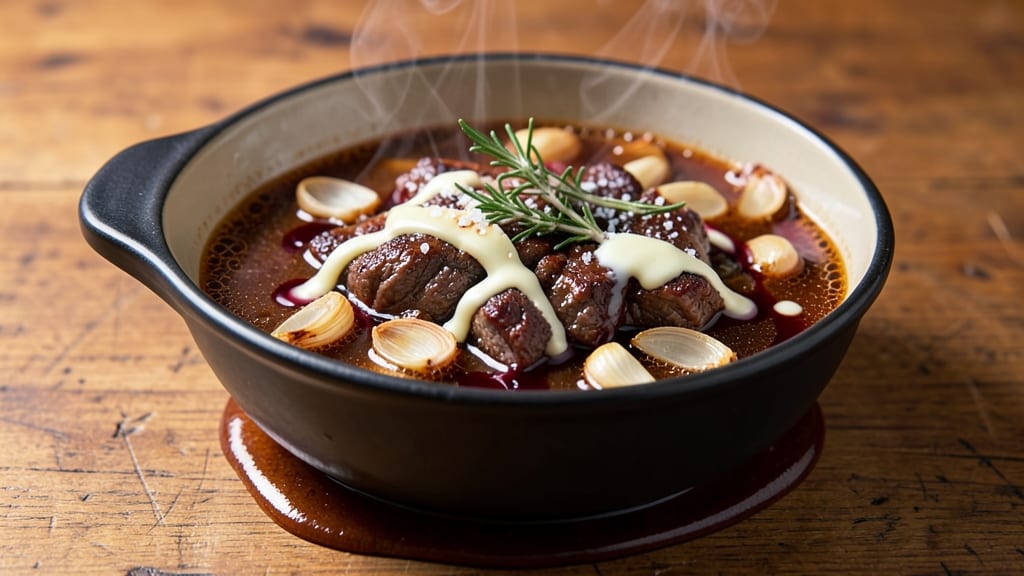
Transforming simple pan drippings into a rich, velvety beef au jus sauce recipe is the secret to restaurant-quality flavor—no fancy ingredients, just technique. This sauce captures every drop of caramelized goodness from seared beef, reducing it into a deep, aromatic liquid that elevates any roast or steak.
The key lies in patience: letting the drippings simmer until thickened while incorporating wine and stock for complexity.
What sets this beef au jus apart is its unmatched depth—achieved through proper deglazing and reduction. A splash of red wine cuts through the richness, while aromatic vegetables like shallots and garlic build layers of flavor.
The sauce should coat the back of a spoon, clinging to every bite of your main dish like a luxurious embrace. It’s the kind of sauce that turns a simple beef roast into a showstopper.
Perfect for dipping crusty bread, drizzling over sliced roast beef, or serving alongside steak, this au jus stays vibrant for up to 5 days in the fridge. The process is straightforward but requires attention to detail—skipping the reduction step means missing out on that intensely flavorful result.
Once mastered, you’ll never settle for store-bought again.
For an extra touch, finish with a pat of butter or a sprinkle of fresh parsley. The sauce’s versatility makes it a staple in any kitchen, whether you’re cooking for a special occasion or a weeknight dinner. Let’s make it—your taste buds will thank you.
Ingredients for beef au jus sauce
Nine simple ingredients transform humble pan drippings into velvety beef au jus magic.
| Ingredient | Amount | Notes |
|---|---|---|
| Pan Drippings from Sear Beef 🥩 | 2 cups | From 2-3 lb beef roast or steak |
| Dry Red Wine 🍷 | ½ cup | Bold Cabernet Sauvignon or Merlot |
| Beef Stock 🥄 | 1 cup | Homemade or high-quality store-bought |
| Shallots 🧅 | 2 whole | Finely minced, not chopped |
| Garlic Cloves 🧄 | 4 cloves | Minced, not powdered |
| Unsalted Butter 🧈 | 2 tbsp | Cold, for finishing |
| All-Purpose Flour 🌾 | 1 tbsp | For thickening, optional |
| Fresh Parsley 🌿 | ¼ cup | Chopped, for garnish |
| Diamond Crystal Kosher Salt 🧂 | 1 tsp | For seasoning |
| Freshly Ground Black Pepper 🌶️ | ½ tsp | For finishing |
The beef drippings are the soul of this sauce—don’t skip scraping every last bit from the pan. Costco or Whole Foods sell pre-cut beef roasts that yield perfect drippings, but any beef will work. For the wine, bold reds like Cabernet Sauvignon or Merlot add depth—whatever’s open in your fridge works too. The shallots and garlic? Freshly minced makes all the difference; pre-minced loses flavor fast. If you’re using store-bought beef stock, Kitchen Basics or Pacific Foods brands are reliable for rich flavor.
No red wine? Dry white wine or even extra beef stock works in a pinch, though the color will be lighter. Fresh herbs? Dried thyme at one-third the amount gets you close. The flour is optional but helps thicken if your drippings are particularly thin—just whisk it into a paste with cold water first. For extra richness, add 1 tbsp of brandy with the wine. The sauce should coat a spoon but still be pourable—if it’s too thick, thin with more stock or water. Garnish with parsley and a pat of butter right before serving for that restaurant touch.
This sauce keeps beautifully in the fridge for 5 days, though it tastes best within 2. Store in an airtight container, letting it cool completely first. For longer storage, freeze portions in ice cube trays—perfect for quick single servings later. The flavor actually improves overnight as everything melds. If you’re prepping ahead, make the sauce a day in advance—it’ll be even more concentrated and flavorful when you reheat it.
Why You'll Love This Recipe
- Uses What You Have: The secret’s in those pan drippings—no extra shopping needed. After searing beef for dinner, just deglaze the pan with wine and stock, and boom, you’ve got sauce. Honestly, it’s the kind of magic that makes me feel like a chef without the fuss.
- Deep Umami Magic: That red wine and beef stock combo? It’s like a flavor explosion in a cup. The shallots and garlic caramelize just enough to add sweetness, while the wine cuts through—rich, savory, and impossible to resist. I’ll be real: I’ve drizzled this over eggs for breakfast and never looked back.
- Leftovers That Shine: This sauce keeps beautifully for days, and it’s way better the second time around. Toss it with roasted potatoes, use it as a dip for crusty bread, or even glaze steak the next night. Between us, I’ve had it last a week in my fridge—still delicious, still crave-worthy.
- Weeknight Hero: Five ingredients, 20 minutes max. You’re searing beef anyway, so while it rests, you’re making sauce. No chopping, no stress—just pour, simmer, and serve. Not the prettiest, but the taste makes up for it every time. My go-to when I’m too tired to overthink dinner.
Step-by-step instructions for beef au jus sauce
Transform those precious pan drippings into a velvety, flavor-packed au jus that elevates any beef dish.
Sauté Shallots and Garlic Until Fragrant
Heat a large saucepan over medium heat and add the 2 whole shallots and 4 cloves garlic cloves that you've already minced. Cook them undisturbed for 3-4 minutes until the shallots begin to soften and turn translucent, and the garlic releases its aromatic oils.
Here's the thing—don't rush this step. You're building flavor foundation, and that means letting the aromatics develop their natural sweetness before they turn bitter. Stir occasionally to prevent burning, but give them space to caramelize slightly at the edges. The pan should smell like a French bistro by now.
Deglaze with Wine and Reduce
Pour in the 0.5 cup dry red wine immediately after removing the shallot-garlic mixture from heat. The alcohol will sizzle dramatically for a moment—this is normal. Return the pan to medium heat and use a wooden spoon to scrape up every last browned bit from the bottom (these are flavor bombs).
Let the wine simmer for 3-4 minutes until reduced by about half. You're looking for a syrupy consistency that coats the back of a spoon. If it reduces too quickly, lower the heat slightly. This reduction concentrates the wine's flavors and forms the sauce's backbone. Don't walk away—wine burns faster than you think.
Build the Sauce with Stock and Drippings
Add the 2 cups pan drippings from sear beef and 1 cup beef stock to the pan. Bring everything to a gentle simmer over medium-low heat. The sauce should bubble softly—if it boils vigorously, you'll end up with a thin, watery sauce instead of the rich, velvety texture you want.
Simmer uncovered for 15-20 minutes until the sauce reduces by about one-third and becomes slightly thickened. You'll notice the color deepen to a beautiful mahogany hue, and the aroma will become impossibly rich. Skim off any foam or fat that rises to the surface with a spoon—this keeps your sauce clean and velvety.
Finish with Flour and Butter
In a small bowl, whisk together the 1 tablespoon all-purpose flour with 1 tablespoon cold water to create a smooth slurry. Slowly pour this into the simmering sauce while whisking constantly. The sauce will thicken immediately—this is what gives au jus its signature body.
Remove the pan from heat and stir in the 2 tablespoons cold unsalted butter, one tablespoon at a time. The butter will melt into the sauce, adding richness and gloss. This finishing step is crucial—it rounds out the flavors and gives the sauce that luxurious mouthfeel. Taste and adjust seasoning with the 1 teaspoon diamond crystal kosher salt and 0.5 teaspoon freshly ground black pepper.
Garnish and Serve Warm
Strain the sauce through a fine-mesh sieve into a clean saucepan if you prefer a completely smooth texture. Return it to low heat just to keep warm—au jus tastes best served piping hot. Just before serving, sprinkle with the 0.25 cup chopped fresh parsley for a pop of color and freshness.
This sauce should coat the back of a spoon and cling beautifully to roasted beef or steak. The perfect au jus balances acidity from the wine, depth from the stock, and richness from the butter. Serve immediately with your beef dish—every drop counts, so don't wait too long or the sauce will thicken too much.
Pro Tips For Making Beef Au Jus Sauce
- DEGLAZE HOT PAN: Use a wooden spoon to scrape every last bit of browned bits from the seared beef—this is where the flavor lives. I used to rush it, but taking 30 seconds to really work the spoon makes the sauce richer, not just darker.
- MINCE SHALLOTS FINELY: Slice those shallots paper-thin, then chop them into almost a paste—think 1/8-inch pieces or smaller. My first few attempts left visible chunks, and while they’re not wrong, the sauce gets silky smooth when they dissolve completely.
- REDUCED WINE FIRST: Deglaze the pan with the red wine before adding stock—let it bubble hard for 2-3 minutes until it’s cut nearly in half. This concentrates the alcohol’s sharpness and prevents the stock from turning thin and watery later.
- STRAIN THE GARLIC: Mash the garlic cloves with the back of a knife before adding them, but strain the mixture through a fine-mesh sieve after simmering. Raw garlic bits can make the sauce gritty, and this step guarantees a velvety texture without extra effort.
Flavor customization for this recipe
Classic Red Wine Depth
Stick with bold reds like Cabernet Sauvignon or Merlot for that signature deep flavor—these wines add tannins that enhance the beef's richness. For a lighter touch, swap in Pinot Noir (it's fruitier) or even a splash of Port wine (just 2 tbsp) for a sweeter, more complex profile.
If you're avoiding alcohol, dry white wine or extra beef stock works, though the color will be paler. 🍷
Umami Boosters
Crank up the umami by adding 1 tbsp soy sauce or 1 tsp Worcestershire sauce with the stock. For a smoky twist, stir in ½ tsp smoked paprika or a crushed bay leaf during simmering.
I love adding 1 tsp fish sauce (trust me, it blends seamlessly) for an extra layer of depth that mimics traditional French techniques. Remove the bay leaf before serving.
Herb Variations
Swap the parsley garnish for chopped tarragon (½ cup) for an anise-like note that pairs beautifully with beef. Or try fresh thyme sprigs (2-3) simmered in the sauce for earthy complexity.
For a brighter finish, add 1 tbsp chopped chives or dill just before serving. Dried herbs work in a pinch—use ½ tsp thyme or rosemary, but fresh is always better.
Spicy Kick Options
Add heat with ½ tsp crushed red pepper flakes or 1 thin slice of jalapeño (removed after simmering). For smoky heat, stir in ½ tsp chipotle powder with the flour slurry.
I also love a dash of hot sauce (like Cholula) at the end—just 1 tsp adds tangy fire without overpowering. Adjust to taste, as some sauces need more heat than others. 🌶️
Creamy Twist
For a velvety texture, stir in 2 tbsp crème fraîche or sour cream at the very end (after removing from heat). This adds a luxurious mouthfeel while balancing the acidity.
If you prefer a richer sauce, replace ½ cup of the beef stock with heavy cream—just simmer it longer to prevent curdling. Finish with a pat of butter for extra shine and richness.
Sweet Contrast
Balance the savory with a hint of sweetness—add 1 tsp honey or 1 tsp balsamic glaze during the final reduction. For a caramelized touch, stir in 1 tbsp beef bone marrow (if available) or 1 tsp brown sugar with the wine.
The sweetness enhances the beef's natural flavors while cutting through the richness. 💛
Nutrition facts
Frequently asked questions
Can I make this beef au jus without wine?
Replace the 0.5 cup dry red wine with 0.5 cup beef stock or apple cider vinegar (for acidity). For depth, add 1 tsp soy sauce or 1 tsp balsamic vinegar to mimic wine's flavor. The sauce will be lighter in color but still rich and flavorful.
How do I prevent the sauce from getting too thick?
If your sauce thickens too much, simply whisk in 1-2 tablespoons of warm beef stock or water until it reaches your desired consistency. Remember, au jus should coat the back of a spoon but still be pourable. For extra insurance, reduce the flour to ½ tablespoon if you prefer a looser texture.
What’s the best way to store leftover au jus?
Store in an airtight container in the fridge for up to 5 days. For longer storage, freeze in ice cube trays—perfect for single servings later. When reheating, warm gently over low heat and stir in 1 teaspoon cold water to restore smoothness. Never reheat to a boil or it may separate.
Can I make this sauce ahead of time?
Yes! This sauce actually tastes better when made a day in advance. The flavors meld and deepen overnight. Store it in the fridge, then reheat gently before serving. If making ahead, skip the parsley garnish until serving to keep it fresh. For holiday meals, prep the sauce 24 hours early—it’ll be even more concentrated.
What if my pan drippings are too thin?
Don’t worry—simmer the drippings uncovered for an extra 5-10 minutes to reduce them further. If they’re still too thin, reduce the beef stock to ½ cup or add 1 tablespoon cornstarch slurry (mixed with cold water) to thicken. The key is patience: let the liquid evaporate naturally for the richest flavor.