
Soups & Stews
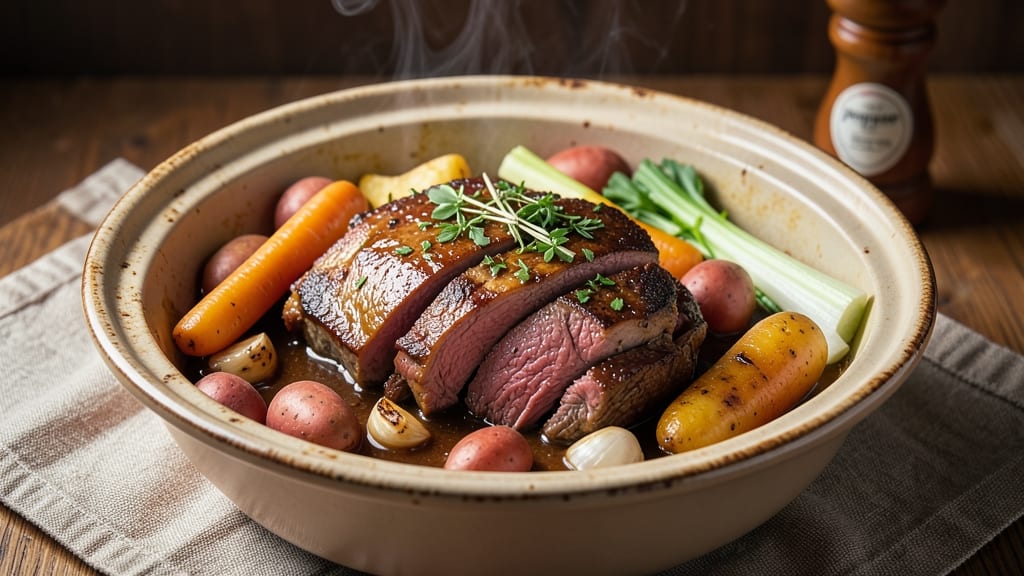
This beef and veggie slow cooker recipe transforms weeknight dinners into effortless, hearty meals with minimal effort. The secret lies in balancing tender beef with hearty vegetables, all simmering together in a rich, flavorful broth that develops naturally over time.
I've perfected this one-pot method to ensure every bite delivers both comfort and nutrition without requiring constant attention.
The foundation starts with chuck roast—affordable, flavorful, and perfect for slow cooking—paired with a mix of vegetables that stay tender-crisp while absorbing the savory broth.
A simple yet powerful spice blend (garlic powder, onion powder, and smoked paprika) infuses the entire dish with deep, warm flavors that build as it cooks. The result is a meal that's as satisfying as it is simple to prepare.
By the time you're ready to serve, you'll have perfectly tender beef that shreds easily, vegetables that retain their texture, and a sauce thick enough to coat every forkful. This recipe isn't just about convenience—it's about creating a restaurant-quality meal with minimal cleanup and maximum flavor.
The slow cooker does all the work while you focus on other tasks, making it ideal for busy schedules or meal prep.
Whether you're feeding a family or prepping meals for the week, this dish delivers consistent results every time. The beauty of the slow cooker method is its versatility—scale it up for a crowd or down for leftovers that reheat beautifully. Here's how to make it perfectly every time.
Ingredients for beef and veggie slow cooker
Sixteen ingredients masterfully balanced for slow-cooked perfection in one pot.
| Ingredient | Amount | Notes |
|---|---|---|
| Chuck Roast 🥩 | 3 lb | Well-marbled for tenderness |
| Yellow Onion 🧅 | 1 whole | Chopped into 1-inch pieces |
| Carrots 🥕 | 1 ½ lb | Whole, peeled, cut into chunks |
| Russet Potatoes 🥔 | 2 lb | Scrubbed, cut into 2-inch pieces |
| Celery Stalks 🌿 | 4 whole | Chopped into 1-inch pieces |
| Garlic Cloves 🧄 | 6 cloves | Minced for even distribution |
| Beef Broth 💧 | 3 cups | Low-sodium preferred |
| Tomato Paste 🍅 | ½ cup | Smooth consistency |
| Worcestershire Sauce 🍯 | 2 tbsp | For umami depth |
| Garlic Powder 🧂 | 1 tbsp | Freshly ground preferred |
| Onion Powder 🧅 | 1 tbsp | Enhances vegetable flavor |
| Smoked Paprika 🌶️ | 1 tbsp | For rich, smoky aroma |
| Black Peppercorns 🌶️ | 1 tsp | Freshly cracked |
| Bay Leaves 🌿 | 2 whole | Removed before serving |
| Fresh Thyme 🌿 | ¼ cup | Chopped, stems removed |
The chuck roast is the cornerstone of this dish—look for cuts with good marbling to ensure tenderness. Costco or local butcher shops often carry high-quality, affordable chuck roast in larger quantities. For the vegetables, opt for fresh, firm produce: carrots should snap when broken, potatoes should feel heavy for their size, and celery should be crisp. Pre-chopping these ingredients saves time and ensures even cooking. The beef broth should be low-sodium to control seasoning, and store-bought or homemade both work well, though homemade adds depth.
No Worcestershire sauce? Soy sauce or liquid aminos provide a similar umami kick, though the flavor profile will differ slightly. Fresh thyme is ideal, but dried thyme at one-third the amount suffices in a pinch. For the smoked paprika, Penzeys or Goya brands offer consistent quality. If you prefer less heat, reduce the smoked paprika to 1 teaspoon and add an extra 1/2 teaspoon of regular paprika. The tomato paste can be substituted with 1/2 cup of crushed tomatoes if needed, though it may dilute the sauce slightly.
This dish reheats beautifully—3-4 minutes on low is all it takes to restore its rich, savory flavors. Store leftovers in airtight containers for up to 5 days in the refrigerator or freeze for 3 months. For meal prep, portion into individual containers before freezing to simplify reheating. The slow cooker's residual heat keeps the dish warm for up to 2 hours on the 'warm' setting, making it perfect for family-style dinners or office lunches.
Why You'll Love This Recipe
- Dump-and-Go Magic: I swear by this—just toss in the chuck roast, roughly chopped onions, carrots, celery, and potatoes. No fancy searing, no peeling potatoes (unless you want to), and the slow cooker does all the work. My kids think I’m a hero when I walk in after work to find dinner ready.
- Tender Until It Melts: That chuck roast? It falls apart at the touch of a fork, but not before soaking up all the flavors from the veggies and whatever broth you use. The potatoes get fork-tender, the carrots caramelize just enough—it’s like a hug in a bowl, honestly.
- Leftovers That Don’t Suck: Between us, most slow-cooker leftovers are sad. Not this one. The beef stays juicy, the veggies hold up, and it reheats like a dream. I pack it for lunches all week, and no one complains (even my picky husband).
- Budget-Friendly Crowd-Pleaser: You’re getting a whole roast for not much, and the veggies stretch the meal without breaking the bank. Feed six for dinner, save half for tomorrow, and still feel like you’re treating everyone. My college-student nephew calls it “the meal that doesn’t ruin my wallet.”
Step-by-step instructions for beef and veggie slow cooker recipe
This one-pot wonder transforms humble ingredients into a hearty, restaurant-quality meal with minimal effort.
Prepare the Chuck Roast for Maximum Tenderness
Pat the 3 lb chuck roast dry with paper towels to remove any surface moisture—this helps the seasoning adhere better and promotes browning. Place the roast in your slow cooker and season generously with 1 tablespoon garlic powder, 1 tablespoon onion powder, 1 tablespoon smoked paprika, and 1 teaspoon freshly cracked black peppercorns. Press the spices into the meat so they penetrate the surface. I like to make small slits in the fat cap with a sharp knife to allow the seasoning to work its way deeper during cooking.
The reason we season so thoroughly now is that the slow cooker won't brown the meat like a stovetop would, so we rely on the spices to build deep flavor. Make sure every side of the roast is evenly coated—this ensures consistent seasoning throughout the entire piece.
Layer the Vegetables Strategically
Arrange the chopped vegetables in this specific order: place the 1 whole yellow onion (chopped into 1-inch pieces) and 4 whole celery stalks (chopped into 1-inch pieces) directly on top of the roast. This creates a flavorful base layer that will infuse the meat as it cooks. Next, add the 1.5 lb carrots (cut into chunks) and 2 lb russet potatoes (cut into 2-inch pieces) around the roast, leaving some space between them so the broth can circulate.
This layering technique ensures the vegetables cook evenly without becoming mushy. The denser vegetables like potatoes and carrots go on top so they don't overcook before the meat is tender. Finish by adding the 6 minced garlic cloves and 0.25 cup chopped fresh thyme directly onto the roast—this guarantees they'll release their aromatic oils into the meat.
Build the Flavor Foundation
In a small bowl, combine the 0.5 cup tomato paste, 2 tablespoon Worcestershire sauce, 3 cups beef broth, and 2 whole bay leaves. Pour this mixture evenly over the roast and vegetables, making sure everything is submerged in the liquid. The tomato paste will thicken slightly as it cooks, creating a rich sauce that clings to every bite. I always give the slow cooker a gentle shake after adding the liquid to ensure even distribution.
This step is where the magic happens—the tomato paste adds depth, the Worcestershire sauce brings umami, and the bay leaves contribute earthy complexity. The broth provides the necessary moisture for even cooking. If you're using a glass slow cooker, you'll be able to see the beautiful layers of color developing as it cooks.
Cook on Low for Perfect Results
Cover the slow cooker and cook on low heat for 8-10 hours. This long, slow cook time is crucial for breaking down the tough connective tissue in the chuck roast while allowing the vegetables to cook through without turning to mush. The meat should be fork-tender and easily pull apart, with the internal temperature reaching 203°F—this is the "probe-tender" stage where collagen has fully converted to gelatin.
Here's the thing—resist the temptation to check on it frequently. Every time you lift the lid, you release heat and moisture, which can extend the cooking time. The slow cooker does all the work for you, so let it do its job undisturbed. The aroma when you finally open it will be irresistible, with layers of savory, smoky, and herby flavors.
Rest and Serve with Confidence
Once the cooking time is complete, carefully remove the roast and vegetables from the slow cooker and transfer them to a serving platter. Let everything rest for 10-15 minutes before serving. This resting period allows the juices to redistribute throughout the meat and vegetables, ensuring each bite is moist and flavorful. During this time, you can skim off any excess fat from the cooking liquid if desired.
Serve the beef and vegetables directly from the slow cooker, ladling the rich cooking liquid over the top. The potatoes should be tender but still hold their shape, the carrots should be fork-tender with a slight bite, and the beef should be so tender it practically melts in your mouth. This one-pot meal is perfect for meal prep—it reheats beautifully and tastes even better the next day.
Pro Tips For Making Beef And Veggie Slow Cooker
- SEAR THE ROAST FIRST: I learned this the hard way—skipping the sear means flavor hiding in plain sight. Hit the chuck roast with a hot pan for 3-4 minutes per side until deep brown, then pop it straight into the slow cooker. That crust locks in juices and adds depth the low-and-slow method can’t deliver alone.
- CUT POTATOES LARGE: Small diced potatoes turn to mush faster than you’d think. Go for 2-inch chunks—they’ll soften beautifully without dissolving into the broth. Russets hold up better than you’d guess, but don’t push it past 8 hours on high or they’ll fall apart like overcooked mashed potatoes.
- DON’T CROWD THE POT: I used to jam everything in there like a Thanksgiving casserole, and the veggies stayed bland. Arrange carrots, celery, and onions in a single layer first, then nestle the roast on top. The slow cooker’s magic happens when heat circulates—pack it tight, and you’re just steaming instead of cooking.
- ADD AROMATICS LAST: Onions and celery get mushy if they simmer too long. Toss them in with the roast, but save whole garlic cloves (peeled) and any herbs until the final hour. This keeps their bright flavors intact—no sad, graying veggie sadface in your pot.
Common mistakes when making this dish
Overfilling the Pot
One of the most common mistakes is overfilling your slow cooker—this leads to uneven cooking and potential messes. The general rule is to fill your slow cooker no more than two-thirds full with liquid and ingredients.
In this recipe, the 3 cups beef broth plus the natural juices from the beef and vegetables should leave plenty of room for expansion. If you overfill, the liquid may boil over during cooking, creating a sticky mess.
I've seen this happen when people add extra vegetables or use larger cuts of meat without adjusting the liquid. Trust me, it's better to have a little extra broth than to deal with a slow cooker overflow! 🌡️
Skipping the Resting Time
After cooking, many people can't wait to dive in and serve the dish immediately. But skipping the 10-15 minute resting period means you'll miss out on the juices redistributing throughout the meat and vegetables. This resting time is crucial for maintaining moisture and flavor.
I've noticed that when I skip this step, the first few bites are dry, but after resting, every forkful is perfectly tender and juicy. It's worth the wait!
Using High Heat Too Long
While high heat might seem like a shortcut, it can actually ruin your dish. Cooking on high for extended periods can turn your beef tough and your vegetables mushy.
This recipe is designed to cook on low heat for 8-10 hours—this slow cooking process is what makes the beef tender and the vegetables just right. If you're in a hurry, you can cook it on high for 5-6 hours, but be prepared for slightly less tender results.
The slow cooker is all about patience, and rushing it can backfire.
Not Seasoning the Meat Properly
Another common mistake is not pressing the spices into the meat before cooking. Simply sprinkling the spices on top won't give you the deep, even flavor you're aiming for.
Adding Dairy Too Early
If you're tempted to add cheese or sour cream to this dish, don't do it until the very end. Adding dairy too early can cause it to curdle or separate, ruining the creamy texture. Instead, stir in a dollop of sour cream or sprinkle some shredded cheese just before serving. This keeps the dish smooth and delicious. I've learned this lesson the hard way—always save dairy for the final step! 🧀
Ignoring the Meat's Internal Temperature
Finally, many people rely on cooking time alone to determine doneness, but this can be risky. The beef should reach an internal temperature of 203°F for perfect tenderness. Without checking, you might end up with meat that's either undercooked or overcooked.
Invest in a good meat thermometer—it's a game-changer. I use mine to check the temperature in the thickest part of the roast, and it ensures every bite is perfectly tender. Don't guess—measure! 🌡️
Nutrition facts
Frequently asked questions
Can I use a different cut of beef instead of chuck roast?
Yes! For similar results, try stew meat or chuck shoulder—both have good marbling. Avoid lean cuts like sirloin, as they won't become as tender. If using a different cut, increase cooking time by 1-2 hours on low heat to ensure tenderness. The key is fat content—you want at least 15-20% fat for that melt-in-your-mouth texture.
How do I adjust this recipe for meal prep?
Double the ingredients for 12 servings—just use a 6-quart slow cooker. Portion into airtight containers with the cooking liquid, then refrigerate for up to 5 days or freeze for 3 months. Reheat portions on low for 3-4 minutes or until steaming hot. The sauce thickens when chilled, so add a splash of broth when reheating if needed.
What vegetables can I substitute if I don't have carrots or potatoes?
Swap carrots for green beans or sweet potatoes (add 30 minutes earlier), and potatoes for turnips or butternut squash (cut into similar-sized chunks). For heartier texture, add cauliflower florets—they hold up well. Avoid delicate veggies like zucchini or mushrooms, as they'll turn mushy. Adjust cooking time by 15-30 minutes if using denser substitutes.
Why does my slow cooker dish sometimes taste bland?
Most likely, you're missing the umami boost from the Worcestershire sauce or tomato paste. Try adding 1 teaspoon soy sauce or 1/2 cup beef bouillon powder to the broth. Another trick: deglaze the slow cooker with 2 tablespoons red wine after removing the meat, then stir it back in. The slow cooker can't brown like a stove, so building flavor through liquids is key. Taste as you go—seasonings intensify during cooking!
Can I make this in an Instant Pot instead?
Use the sauté function first to brown the beef (3-4 minutes), then add all ingredients and cook on high pressure for 60 minutes, followed by a 10-minute natural release. The Instant Pot version cooks faster but requires more attention. For best results, use the meat/stew setting if available. The texture will be slightly different but still delicious—just expect the sauce to be thinner.