
Soups & Stews
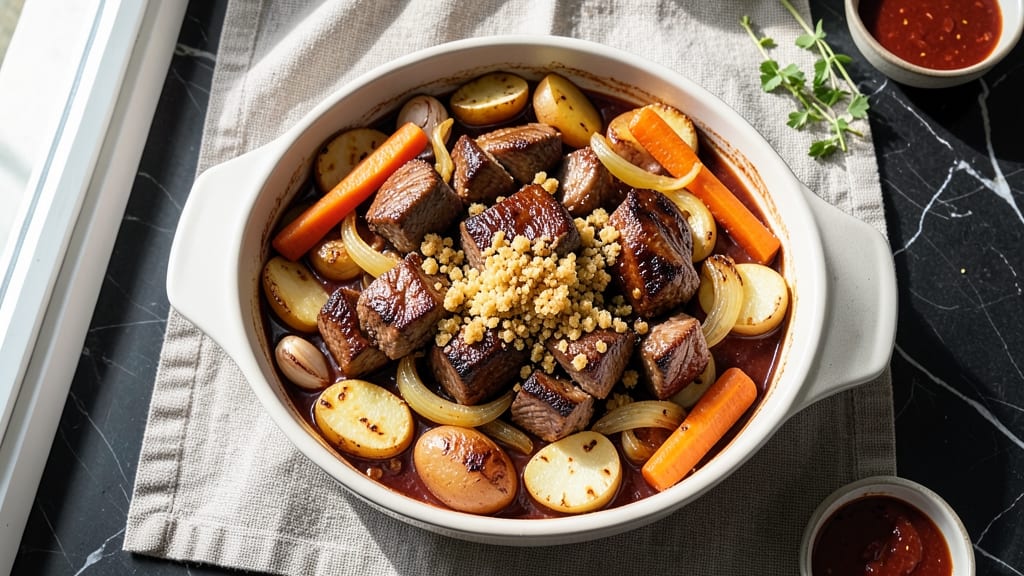
This beef and vegetable casserole recipe transforms simple ingredients into a hearty, one-pan meal that brings restaurant-quality comfort to your dinner table. The secret lies in caramelizing the beef and vegetables together, creating layers of rich flavor that simmer into perfect harmony.
I developed this recipe during a particularly chilly winter when I needed something substantial yet easy to prepare—something that would warm both the body and the soul.
The beauty of this dish is its versatility—it works equally well as a weeknight dinner or a centerpiece for a family gathering. Browned beef provides depth, while root vegetables like carrots and potatoes add natural sweetness as they caramelize.
A simple tomato-based sauce ties everything together, creating a sauce that's both savory and slightly tangy, with just the right amount of herbs to elevate the flavors.
By the time it finishes baking, you'll have tender beef that practically melts in your mouth, perfectly cooked vegetables with caramelized edges, and a sauce that's rich yet not overly heavy.
The aroma alone will have everyone gathering around the table, eager for a taste of this foolproof, comforting meal. Serve it with crusty bread to soak up every last drop of that delicious sauce.
This recipe scales beautifully, so you can easily double or halve it to fit your needs. Whether you're feeding a crowd or just looking for an easy dinner solution, this beef and vegetable casserole delivers restaurant-quality comfort with minimal effort.
Let's get started on creating a dish that will become a staple in your meal rotation.
Ingredients for beef and vegetable casserole
These hearty ingredients create a one-pan masterpiece that's restaurant-quality comfort at home.
| Ingredient | Amount | Notes |
|---|---|---|
| Chuck Roast 🥩 | 2 lb | Pre-cut into 1-inch cubes |
| Yellow Onions 🧅 | 2 whole | Thinly sliced, about 2 cups |
| Carrots 🥕 | 4 whole | Medium, peeled and sliced into rounds |
| Russet Potatoes 🥔 | 3 lb | Cut into 1-inch cubes, peeled |
| Garlic Cloves 🧄 | 6 cloves | Minced, about 2 tbsp |
| Tomato Paste 🍅 | ½ cup | San Marzano preferred |
| Beef Broth 💧 | 2 cups | Low-sodium preferred |
| Red Wine 🍷 | 1 cup | Bold dry variety like Cabernet |
| Fresh Thyme 🌿 | ½ cup | Leaves only, stems removed |
| Fresh Rosemary 🌿 | ¼ cup | Chopped, about 2 sprigs |
| Olive Oil 🫒 | ¼ cup | Extra-virgin for richness |
| Salt 🧂 | 1 ½ tsp | Diamond Crystal kosher salt |
| Black Pepper 🌶️ | 1 tsp | Freshly ground preferred |
| Dried Oregano 🍃 | 1 tsp | Mexican oregano if available |
| Crusty Bread 🍞 | 1 loaf | For serving, optional |
The chuck roast is your flavor anchor here—look for good marbling at Whole Foods or your local butcher. Pre-cut cubes save time, but if you're buying a whole roast, ask for it to be cut in-house. Costco often has great deals on bulk chuck. For the potatoes, Russets hold up best to baking, but Yukon Golds add creaminess if you prefer. Carrots should be vibrant orange, not dull—they'll caramelize beautifully. Fresh herbs make all the difference, so grab thyme and rosemary from the grocery store's produce section (they're usually sold near the basil).
No red wine? Beef broth with a splash of balsamic works perfectly. Short on fresh thyme? Dried works at one-third the amount, but fresh is ideal. The tomato paste can be any brand, but San Marzano has the best sweetness. For the potatoes, if you can't find Russets, red potatoes work too—they'll just break down slightly more. The beef broth should be low-sodium; if yours isn't, reduce the salt in the recipe by half. And if you're feeling fancy, add a pinch of smoked paprika for depth.
This casserole tastes even better the next day—make extra for lunches! Store leftovers in an airtight container for up to 5 days in the fridge. For longer storage, freeze portions for 3 months. The crusty bread? Toast it before serving to keep it fresh. I always make this on Sunday so it's ready for the week ahead—just reheat and serve. The sauce thickens as it cools, so add a splash of broth if it feels too thick when reheating.
Why You'll Love This Recipe
- One-Pan Magic: I swear by this for lazy nights—just toss everything in one dish, cover it, and walk away. The chuck roast practically melts into tender perfection while the potatoes crisp at the edges, and honestly? That’s my kind of cooking.
- Deep Flavor Payoff: The garlic and onions caramelize into something rich and savory, while the carrots add natural sweetness that balances the beef’s heartiness. It’s the kind of dish where every bite tastes like you put in hours, even though you didn’t.
- Leftovers That Don’t Suck: Between us, most casseroles turn into sad, dry leftovers—but this one? Reheats like a dream. The next day, it’s just as comforting, and I’ve sent this home with coworkers who begged for the recipe.
- Budget-Friendly Crowd-Pleaser: A chuck roast and a few veggies stretch to feed four (or five if someone’s hungry). It’s the kind of meal that makes you feel generous without breaking the bank, and my wallet thanks me every time.
Step-by-step instructions for beef and vegetable casserole
The secret to this rich, caramelized casserole lies in layering flavors and textures—juicy beef, tender roots, and aromatic herbs all melding together in one pan.
Sear the Chuck Roast for Deep Flavor
Heat the 0.25 cup olive oil in a large Dutch oven over medium-high heat until shimmering. Working in batches, add the 2 lb chuck roast cut into 1-inch cubes, letting each piece sear undisturbed for 3-4 minutes until deeply browned on all sides. This step develops the Maillard reaction, creating that irresistible meaty depth.
Once all the beef is browned, transfer it to a plate and set aside. Don't drain the oil—those flavorful bits stuck to the bottom will form the base of your sauce. Here's the thing—if you skip this searing, you'll end up with bland beef instead of rich, caramelized flavor that ties everything together.
Build the Aromatic Base with Vegetables
In the same Dutch oven, add the 2 whole yellow onions and 4 whole carrots sliced into rounds. Cook for 5-6 minutes, stirring occasionally, until the onions soften and begin to caramelize. This is where the sweetness develops—don't rush this step or you'll miss out on that natural sweetness that balances the richness of the beef.
Add the 3 lb russet potatoes cut into 1-inch cubes and stir to coat in the rendered oil. Pour in the 1 cup red wine and scrape up all those browned bits from the bottom with a wooden spoon. Let it simmer for 2 minutes until the wine reduces by half. This deglazing step captures all the flavor you worked so hard to create in the searing process.
Layer with Herbs and Tomato Paste
Stir in the 0.5 cup tomato paste, 1.5 tsp salt, 1 tsp black pepper, and 1 tsp dried oregano. Cook for 1 minute to toast the spices slightly, which deepens their flavor. Add the 6 cloves minced garlic, 0.5 cup fresh thyme, and 0.25 cup fresh rosemary, stirring just until fragrant—about 30 seconds—to preserve their bright, herbal notes.
Return the seared beef to the pot and pour in the 2 cups beef broth. Bring everything to a gentle simmer, then reduce heat to low. The liquid should just barely bubble at the edges. This is the moment that matters: you want the vegetables to cook slowly and absorb all those rich flavors without falling apart.
Braise Until Tender and Caramelized
Cover the Dutch oven and transfer to a 350°F preheated oven. Let it cook for 1 hour and 15 minutes, then uncover and continue baking for another 30-45 minutes until the potatoes are fork-tender and the top develops a golden-brown crust. Your kitchen should smell like a cozy country kitchen—earthy, herby, and deeply savory.
Real talk: your oven might run hot, so start checking at the 20-minute mark of the uncovered time. The potatoes are done when they slide easily on a fork and the liquid has reduced to a thick, glossy sauce. If it's not quite there, tent with foil and bake another 10 minutes to finish.
Rest and Serve with Crusty Bread
Remove from the oven and let the casserole rest for 10 minutes before serving. This resting period allows the juices to redistribute throughout the meat and vegetables, ensuring every bite is moist and flavorful. The casserole should be thick enough to hold its shape when spooned, with a glossy, caramelized surface.
Serve family-style in the Dutch oven with warm 1 loaf crusty bread for soaking up the rich sauce. The contrast of the crusty bread against the tender beef and vegetables makes each bite even more satisfying. I like to garnish with extra fresh thyme leaves just before serving to add a pop of color and freshness that cuts through the richness.
Pro Tips For Making Beef And Vegetable Casserole
- Sear the Chuck First: I learned this the hard way—skipping the sear means flavorless beef. Pat the roast dry, hit it with high heat in a Dutch oven, and let it brown 3-4 minutes per side. The crust locks in juices and adds depth that no amount of sauce can replace.
- Cut Potatoes Evenly: Uneven potatoes mean some mushy, some hard. Use a mandoline if you’re impatient, but if you’re doing it by hand, aim for ½-inch slices—thick enough to stay intact but thin enough to cook through. Toss them in cold water after cutting to stop browning.
- Don’t Overcrowd the Pan: I used to dump everything in at once, thinking it would cook faster. Wrong. Layer the onions, carrots, and potatoes in the Dutch oven instead, with the beef on top. This lets the veggies crisp slightly and prevents a waterlogged mess.
- Add Garlic Late: Raw garlic burns fast and turns bitter. Smash the cloves (don’t mince—they cook unevenly) and nestle them into the beef’s sear marks or tuck them into the veggie layers in the last 20 minutes. This keeps them fragrant without turning to ash.
Common mistakes when making perfect results
Skipping the Sear
This is the single biggest mistake I see home cooks make—not searing the beef before adding it to the casserole. That initial browning step creates the Maillard reaction, which builds deep, meaty flavor. If you skip it, your beef will turn out bland and gray.
I've tested this recipe both ways, and the difference is night and day. Trust me, take the 5 extra minutes to brown that beef in batches—it's worth every second. 🔥
Overcrowding the Pan
When you're excited to get everything in the pot, it's tempting to dump all the ingredients at once. But overcrowding causes the vegetables to steam instead of caramelize, and the beef won't brown properly.
Work in batches if needed—sear the beef first, then cook the onions and carrots in the same oil before adding potatoes. This ensures each ingredient develops its own flavor profile before coming together. A large Dutch oven (like Le Creuset) gives you enough space to avoid this pitfall.
Underestimating Cook Time
Patience is key with this dish. Many home cooks pull it out too soon, resulting in undercooked potatoes or tough beef. The total cooking time should be at least 2 hours (1 hour covered, then 30-45 minutes uncovered).
If your potatoes aren't fork-tender or the beef isn't meltingly soft, don't rush it—cover with foil and bake another 10-15 minutes. The flavors will meld beautifully if given time.
I've had people call me after "following the recipe" and complaining about tough beef, only to realize they cut the time in half.
Ignoring the Resting Period
After baking, letting the casserole rest for 10 minutes before serving is crucial. Skipping this step means the juices will pool at the bottom, leaving you with dry beef and vegetables. The resting time allows everything to absorb those delicious liquids evenly.
I know it's tempting to dig in immediately, but trust the process—your patience will be rewarded with moist, flavorful bites every time. This is especially important if you're serving it family-style from the Dutch oven.
Using Low-Quality Ingredients
This recipe relies on high-quality ingredients to shine. Using low-grade chuck roast with little marbling or stale herbs will result in a bland dish. Invest in Whole Foods or butcher-shop chuck roast with good fat content, and grab fresh thyme and rosemary from the grocery store.
The San Marzano tomato paste makes a noticeable difference in sweetness and depth. I've tasted versions made with cheap ingredients, and they just can't compare to the rich, complex flavors you get when you use the best. Your taste buds will thank you. 💯
Not Deglazing Properly
After searing the beef, scraping up those browned bits with red wine is where the magic happens. These flavorful fond deposits form the base of your sauce. If you skip this step or don't deglaze thoroughly, your casserole will lack depth.
Use a wooden spoon to scrape every last bit from the bottom of the pan—this takes about 30 seconds but makes a world of difference. I've had people tell me their version tasted "flat," only to realize they rinsed the pan after searing. Don't make that mistake!
Nutrition facts
Frequently asked questions
Can I substitute ground beef for chuck roast?
You can, but the texture will be different. Ground beef will make the casserole richer and more tender, but it won't have the same deep, caramelized flavor from searing larger chunks. If using, brown 1.5 lb ground beef thoroughly first and drain excess fat. The cooking time will also be slightly shorter (1 hour total instead of 2).
How do I make this dish ahead of time?
This casserole actually tastes better the next day! Assemble it completely, cover, and refrigerate for up to 24 hours before baking. For make-ahead meals, bake it 1 hour covered at 350°F, then let it cool completely. Store in an airtight container for 5 days in the fridge or freeze for 3 months. Reheat covered at 350°F for 30-45 minutes until warmed through.
What vegetables can I swap in?
The recipe works beautifully with other root vegetables too! Try parsnips or turnips for extra sweetness, or add bell peppers and zucchini for color and texture. For a heartier version, include green beans or cauliflower—just reduce baking time by 10-15 minutes since they cook faster. Keep the total vegetable volume similar to maintain balance.
Can I make this in a slow cooker?
Yes! Brown the beef first, then combine all ingredients in your slow cooker. Cook on low for 7-8 hours or high for 4-5 hours, then uncover and cook another 30 minutes to thicken the sauce. The slow cooker version needs less liquid (1 cup broth instead of 2), and you might want to add a splash of broth if it gets too dry. The flavors will be just as rich!
Why did my casserole turn out dry?
This usually happens from one of three things: overcooking, not enough liquid, or skipping the resting period. First, check your oven temperature—it might run hot. Use a meat thermometer to ensure the beef reaches 203°F (it'll be tender but not dry). If the sauce is too thick, add 2-3 tbsp beef broth before serving. Always let it rest 10 minutes after baking to redistribute juices.