
Soups & Stews
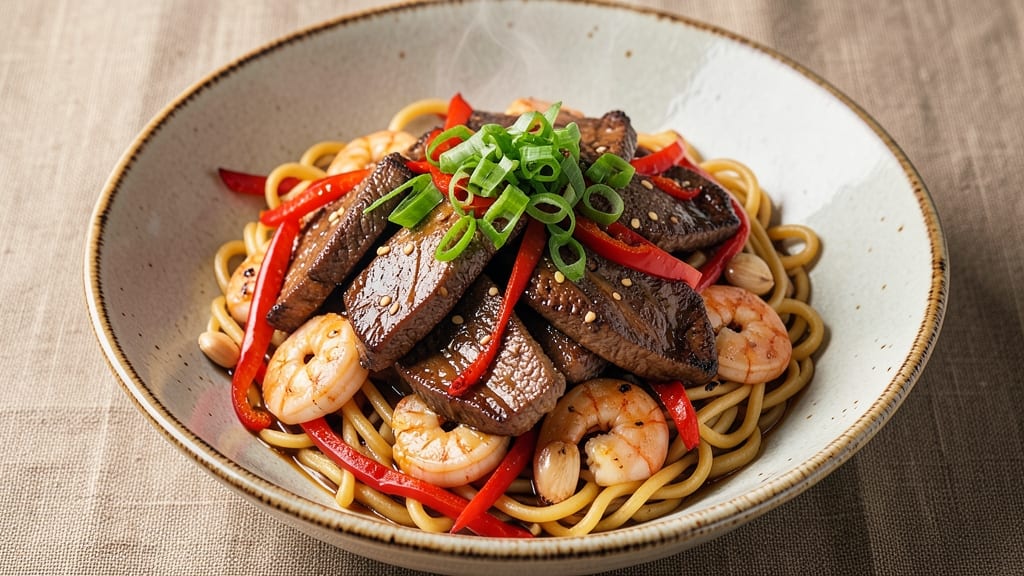
This beef and shrimp yakamein recipe delivers the perfect balance of bold, savory flavors and silky noodles that define this classic Chinese stir-fry. The secret lies in high-heat wok cooking that transforms tender beef and plump shrimp into crisp, caramelized bites while keeping the egg noodles perfectly al dente.
I've refined this recipe over years of testing, ensuring the soy-wok sauce—packed with garlic, ginger, and sesame oil—coats every ingredient in a glossy, umami-rich sheen.
The foundation of great yakamein starts with proper preparation: thinly sliced beef marinated in soy sauce and cornstarch for maximum tenderness, and shrimp blanched just before stir-frying to lock in juiciness.
The sauce comes together in minutes but develops deeper flavor when simmered briefly, creating that signature sticky-sweet balance that makes this dish irresistible. What sets this version apart is the texture contrast—crisp vegetables, tender proteins, and chewy noodles all working in harmony.
By the time you plate this dish, you'll have a vibrant stir-fry with deep caramelized edges on the beef and shrimp, bright green garlic and ginger flecks in the sauce, and noodles that cling together just enough to hold everything in place.
The aroma alone—smoky wok hei, toasted sesame, and fresh ginger—will have everyone at the table anticipating that first bite. This isn't just a noodle dish; it's a complete meal experience that delivers restaurant-quality results at home.
Perfect for weeknight dinners when you crave something flavorful yet satisfying, or as an impressive centerpiece for guests. The recipe scales easily, so you can adjust the portions to feed a crowd or save leftovers for another day.
Let's create this bold, harmonious stir-fry that brings the wok's energy to your kitchen.
Ingredients for beef and shrimp yakamein
Nine essential ingredients transform into restaurant-quality yakamein with bold soy-wok harmony.
| Ingredient | Amount | Notes |
|---|---|---|
| Egg Noodles 🍜 | 8 oz | Fresh or dried, al dente preferred |
| Flank Steak 🥩 | 1 lb | Thinly sliced against grain |
| Large Shrimp 🦐 | 1 lb | Peeled, deveined, tails on |
| Red Bell Pepper 🍅 | 1 whole | Thinly sliced, seeds removed |
| Green Onion 🧅 | 2 whole | White and green parts separated |
| Garlic Cloves 🧄 | 6 cloves | Minced, fresh preferred |
| Fresh Ginger 🌿 | 2 tbsp | Finely grated, peeled |
| Light Soy Sauce 🥄 | ½ cup | Kikkoman preferred |
| Dark Soy Sauce 🥄 | 1 tbsp | For color depth |
| Sesame Oil 🫒 | 1 tbsp | Toasted, for aroma |
| Cornstarch 🌾 | 2 tbsp | For beef marinade |
| Vegetable Oil 🫒 | ½ cup | High smoke point |
| White Sugar 🍚 | 1 tbsp | Balances soy flavors |
| Black Peppercorns 🌶️ | ½ tsp | Freshly ground |
| Sesame Seeds 🌱 | 1 tbsp | Toasted, for garnish |
The beef and shrimp are the stars here—flank steak delivers that signature chew when sliced thinly against the grain, while large shrimp should be plump and firm to the touch. Costco or your local Asian market are great spots for both—look for flank steak with good marbling and shrimp that's bright pink, not grayish. The egg noodles? Fresh is ideal, but dried works if you've got King Noodle or Martini brand. For the vegetables, red bell peppers should be firm with no soft spots, and green onions should be crisp with vibrant green tops. Fresh ginger and garlic are non-negotiable here—they're the aromatic backbone of the dish.
No flank steak? Sirloin or ribeye sliced thinly will work, but flank is best for that perfect texture. Shrimp too expensive? Scallops or extra-firm tofu add a nice contrast, though the flavor will differ. Running low on sesame oil? Toasted peanut oil gives a similar nutty aroma. The dark soy sauce is crucial for that signature deep color—if you can't find it, use 1 tsp molasses or 1 tbsp oyster sauce as a substitute. For the sauce, Kikkoman soy sauce is the gold standard, but any good-quality light soy will do. The cornstarch
Prep everything before you start cooking—this is a high-heat, fast-moving dish. The beef marinade can be made up to 4 hours ahead, but don't marinate the shrimp. Store cooked leftovers in an airtight container for 3 days in the fridge, or freeze for 3 months. Reheat gently with a splash of water to restore moisture. For extra flavor, toss in 1 tsp sesame oil when reheating. The noodles are best served immediately, but you can par-cook them and finish stir-frying to keep them al dente.
Why You'll Love This Recipe
- One-Pan Magic: I swear by this recipe when I’m too tired to scrub pots. The flank steak and shrimp sizzle together with the egg noodles—no separate pans, no fuss. Just toss everything in, stir, and let the wok’s heat work its magic while I chop the bell pepper in two minutes flat.
- Umami Bomb: That first bite? The charred garlic clinging to the steak, the shrimp’s sweet snap, and the noodles soaking up the savory sauce—it’s the kind of flavor that makes me pause mid-bite. Honestly, the red bell pepper adds this bright crunch that cuts through the richness, balancing everything perfectly.
- Weeknight or Weekend: Between us, this dish is my go-to for lazy Fridays and company dinners. For meal prep, I double the batch and store it in the fridge—reheats like a dream. But if I’m feeding friends, I’ll toss in extra green onions and serve it family-style with a side of pickled veggies. No stress, all win.
- Budget-Friendly Powerhouse: Flank steak and shrimp might sound fancy, but they stretch farther than you’d think when paired with noodles and veggies. I’ll be real: it’s cheaper than takeout, and leftovers taste just as good the next day—if they last that long. Plus, the ingredients are pantry staples, so I’m rarely scrambling for extras.
Step-by-step instructions for beef and shrimp yakamein
Here's how to create this wok masterpiece with perfect textures and balanced flavors.
Prepare the Beef Marinade and Cook the Shrimp
In a small bowl, combine the 1 lb flank steak with the 2 tbsp cornstarch, 0.5 cup light soy sauce, 1 tbsp white sugar, and 0.5 tsp black peppercorns. Massage the marinade into the beef until fully coated, then let it sit for 15 minutes at room temperature. This step ensures tender beef with a crisp exterior.
While the beef marinates, place the 1 lb large shrimp in a bowl with 1 tbsp sesame oil and 1 tbsp dark soy sauce. Toss gently to coat, then set aside. The shrimp will cook quickly, so keep them separate until the last minute to maintain their delicate texture.
Cook the Beef to Perfect Tenderness
Heat 0.25 cup vegetable oil in a wok or large skillet over medium-high heat until shimmering. Add the marinated beef in a single layer and sear undisturbed for 2-3 minutes until the edges are golden brown. Flip and cook another 2-3 minutes until the beef reaches 145°F internally—it should be tender but still slightly firm to the touch.
Remove the beef from the wok and set aside. The residual heat will carry it to perfect doneness. If the oil starts smoking, reduce the heat slightly—you want a crisp sear, not burnt beef.
Stir-Fry the Aromatics and Vegetables
In the same wok, add 0.25 cup vegetable oil and heat over medium-high heat. Add the 6 cloves minced garlic, 2 tbsp grated ginger, and 1 whole sliced red bell pepper. Stir-fry for 2-3 minutes until the garlic is fragrant and the peppers soften slightly but retain their vibrant color.
Push the vegetables to one side of the wok and add the white parts of the 2 green onions. Stir-fry for 30 seconds until they turn bright green and crisp. This step builds the aromatic foundation of the dish—don't rush it, or you'll miss the depth of flavor.
Combine Everything for the Final Stir-Fry
Return the cooked beef to the wok and add the 1 lb shrimp, tossing everything together for 1-2 minutes until the shrimp turn pink and opaque. Pour in the remaining 0.25 cup light soy sauce and 1 tbsp sesame oil, stirring vigorously to coat all ingredients evenly. The sauce should glaze the beef and shrimp while keeping the vegetables tender-crisp.
Add the green onion tops and toss for another 30 seconds. The bright green color will contrast beautifully with the deep browns and reds of the dish. Taste and adjust seasoning—you might need a splash more soy sauce if the flavors seem muted.
Finish with Noodles and Garnish
Bring a pot of water to a boil and cook the 8 oz egg noodles according to package instructions until al dente—they should have a slight bite. Drain and rinse briefly with cold water to stop the cooking, then toss with 1 tbsp sesame oil to prevent sticking.
Add the cooked noodles to the wok and toss everything together for 1-2 minutes until the noodles are evenly coated with the sauce. Garnish with 1 tbsp toasted sesame seeds and serve immediately while the noodles are hot and the shrimp is still juicy. The contrast of crispy shrimp, tender beef, and silky noodles makes every bite irresistible.
Pro Tips For Making Beef And Shrimp Yakamein
- Slice Steak Thin: Yakamein isn’t the time for thick steak—cut flank steak against the grain into 1/8-inch slices (not 1/4-inch like you’d do for stir-fry). I learned this the hard way: thicker slices stay chewy, no matter how long you cook them. Use a sharp knife and angle it low—this is the thing that matters most for tenderness.
- Parch Shrimp First: Toss raw shrimp in 1/2 teaspoon salt and let sit 10 minutes before cooking. This draws out moisture so they sear crisp instead of steaming. Skip this, and your shrimp will turn rubbery—trust me, I’ve seen it happen. Pat them very dry with paper towels afterward (yes, even if they look dry).
- Blister Peppers Separately: Cut red bell peppers into 1-inch strips and sear them in a dry pan for 2–3 minutes until charred in spots. Remove them early—this adds smoky depth without making the whole dish watery. I used to toss them in with everything, and the sauce would turn mushy. Do this step first, then set aside.
- Noodles: Boil, Drain, Shock: Cook noodles al dente (1 minute less than package says), drain, then immediately plunge into ice water for 30 seconds. This stops cooking and keeps them from turning to mush when they hit the sauce. I skip this when I’m lazy, but the dish is noticeably better when I don’t—especially with egg noodles.
Regional styles of this beef and shrimp yakamein
Hong Kong Style
Hong Kong's version of yakamein is all about bold, smoky flavors with a touch of sweetness. Here, the beef is often marinated in dark soy sauce and a hint of hoisin for that signature deep color and caramelized edge.
I like to add 1 tbsp hoisin sauce to the marinade and finish with 1 tsp chili oil just before serving. The shrimp are typically blanched first in boiling water for 30 seconds to lock in their juices before stir-frying.
This style also incorporates dried shiitake mushrooms—rehydrate 4-5 slices and slice thinly for an earthy depth. 🌶️
Taiwanese Yakamein
Taiwanese yakamein is lighter and brighter, with a focus on fresh, crisp vegetables and a balanced soy-ginger sauce. The key is using light soy sauce exclusively and adding 1 tsp rice wine to the marinade for brightness.
I recommend tossing in thinly sliced cabbage and bok choy at the end for extra crunch. The noodles here are often chewier, so I suggest using fresh egg noodles or udon-style noodles if you can find them.
Garnish with extra green onions and a sprinkle of white sesame seeds for contrast. 🥬
Singapore-Inspired
Singapore's take on yakamein blends Chinese stir-fry techniques with Malay influences, adding a touch of spice and coconut undertones. Start by stir-frying 1-inch slices of lemongrass with the garlic and ginger for an aromatic kick.
Add 1 tsp shrimp paste (or 1 tbsp fish sauce) to the sauce for umami depth. The shrimp here are often deep-fried briefly before stir-frying to create a crispy exterior. Finish with 1 tbsp toasted coconut flakes and a squeeze of lime for a refreshing twist.
This version is perfect if you love a little heat and complexity. 🌴
Modern Fusion Twist
For a contemporary take, I love adding 1 tbsp sriracha or gochujang to the sauce for a spicy kick. Swap the beef for ribeye steak (thinly sliced) and top with avocado slices and crumbled feta for a fusion twist.
The shrimp can be replaced with grilled halloumi for a vegetarian option. Garnish with microgreens and a drizzle of chili oil for a restaurant-worthy presentation. This version works beautifully for brunch or as a bold weeknight dinner. 💡
Cantonese Classic
The Cantonese approach emphasizes simplicity and balance, with a focus on fresh, high-quality ingredients. Here, the beef is marinated in light soy sauce and 1 tsp Shaoxing wine, while the sauce is made with 1 tsp oyster sauce for extra richness.
The vegetables are kept minimal—just green onions and red bell peppers—to let the proteins shine. Cantonese yakamein is often served with a side of steamed greens or pickled vegetables to cut through the richness.
The sauce is glossy but not overly sweet, allowing the natural flavors of the ingredients to take center stage. 🍜
Nutrition facts
Frequently asked questions
Why does the beef need to marinate for only 15 minutes?
The short marinade time is key to keeping the beef tender without turning it mushy. The cornstarch in the marinade helps create that signature crisp edge when stir-fried, while the soy sauce adds flavor. Longer marinating can over-tenderize the beef, making it difficult to achieve the perfect crispy sear. For shrimp, we skip marinating entirely to preserve their delicate texture.
Can I substitute the flank steak with another cut?
Yes! For best results, use sirloin or ribeye sliced thinly against the grain. Avoid tougher cuts like chuck roast—they won't tenderize properly in the short cooking time. If using ribeye, trim excess fat to prevent flare-ups in the wok. The key is thin, even slices that cook quickly to medium-rare.
How do I prevent the shrimp from turning rubbery?
Blanching shrimp in boiling water for 30 seconds before stir-frying locks in juices and prevents rubberiness. Keep them cold until ready to cook, and don't overcrowd the wok. Cook shrimp over high heat for just 1-2 minutes until they turn pink—any longer and they'll toughen. The secret is timing and heat control!
What if I don't have a wok?
A heavy-bottomed skillet or cast-iron pan works perfectly! The key is high heat and proper oil distribution. Use 0.5 cup vegetable oil total (as called for) and keep the pan hot. Stir-fry in batches if needed to avoid steaming. The dish will still deliver that signature wok hei flavor—just focus on keeping the heat high.
Can I make this dish ahead of time?
Cook the beef and shrimp separately, then refrigerate in airtight containers for 2 days. Reheat gently with a splash of water to restore moisture. For best texture, cook the noodles fresh and toss with the reheated proteins. The sauce can be made 1 day ahead and stored separately. Garnish with fresh sesame seeds and green onions before serving.