
Soups & Stews
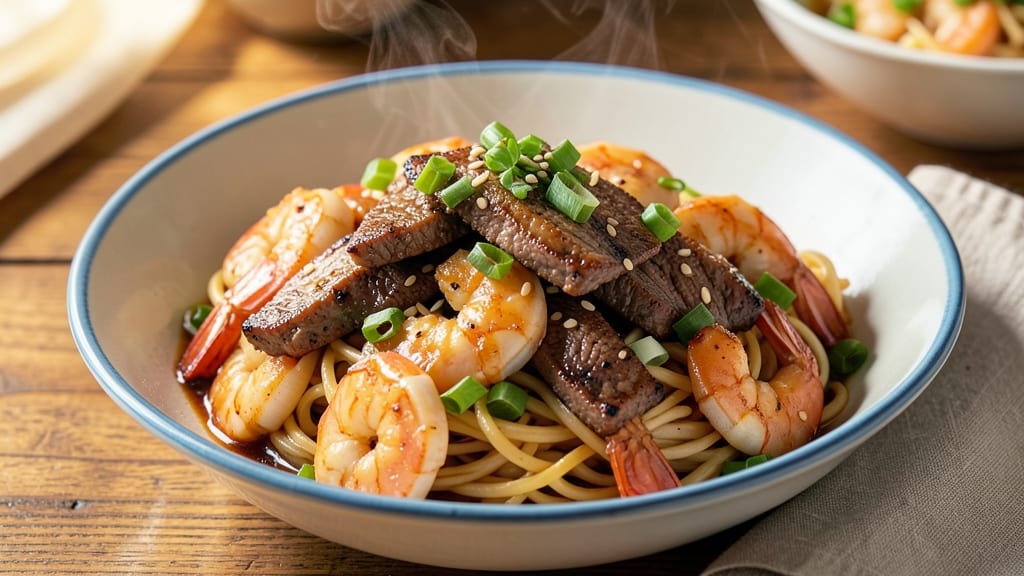
This beef and shrimp lo mein recipe delivers the perfect balance of textures—tender shrimp, chewy beef, and al dente noodles—all coated in a savory-sweet sauce that’s restaurant-quality at home. The secret lies in high-heat stir-frying to lock in juices while keeping the noodles springy, not mushy.
I’ve refined this version over years of testing, ensuring every bite delivers that satisfying mix of umami, spice, and umami that makes lo mein irresistible.
The foundation starts with a homemade sauce—garlicky, slightly sweet, and packed with soy and sesame notes—that clings to the protein and noodles without overpowering. Fresh ginger and a splash of rice vinegar brighten the flavors, while a touch of chili oil adds subtle heat.
The beef is thinly sliced and marinated briefly to tenderize, while the shrimp stays plump and juicy thanks to a quick sear. Fresh wok hei (breath of the wok) aroma is key—achieved by cooking over high heat and tossing everything together at the last minute.
By the time you plate it, you’ll have a dish that’s crisp-tender in all the right ways: the beef stays chewy but fork-tender, the shrimp melts in your mouth, and the noodles hold their bite.
Garnish with scallions and sesame seeds for freshness and texture, then serve with a side of cucumber salad to cut through the richness. This is the kind of meal that feels like a restaurant takeout experience—without the wait.
Perfect for feeding a crowd or meal prepping for the week, this lo mein scales effortlessly. Pair it with jasmine tea for an authentic touch or a lychee martini for a modern twist.
The recipe builds on classic techniques but adapts them for home cooks, so you’ll get pro-level results without needing a wok or years of practice.
Ingredients for beef and shrimp lo mein
Restaurant-quality lo mein starts with these fresh ingredients—juicy shrimp, tender beef, and chewy noodles.
| Ingredient | Amount | Notes |
|---|---|---|
| Flank Steak 🥩 | 1 lb | Thinly sliced against grain |
| Large Shrimp 🦐 | 1 lb | Peeled, deveined, tails on |
| Egg Noodles 🍜 | 12 oz | Fresh or dried, al dente |
| Sesame Oil 🫒 | 1 tbsp | For aroma, not cooking |
| Light Soy Sauce 🥫 | ½ cup | Kikkoman preferred |
| Dark Soy Sauce 🥫 | 1 tbsp | For color depth |
| Rice Vinegar 🍶 | 2 tbsp | Seasoned preferred |
| Sesame Seeds 🌾 | 1 tbsp | Toasted for garnish |
| Green Onions 🧅 | 3 whole | Sliced, white and green parts |
| Garlic Cloves 🧄 | 6 cloves | Minced, fresh preferred |
| Fresh Ginger 🌿 | 2 tbsp | Finely grated |
| Chili Oil 🌶️ | 1 tbsp | For subtle heat |
| Cornstarch 🌾 | 1 tbsp | For shrimp coating |
| Vegetable Oil 🫒 | ½ cup | High smoke point |
| Salt 🧂 | 1 tsp | Kosher or sea salt |
The beef is non-negotiable—flank steak gives you that perfect chewy texture when sliced thin. Ask your butcher to cut it against the grain if pre-sliced isn't available. For shrimp, frozen works fine—just thaw in cold water before peeling. I grab mine from Costco when they have the jumbo size, but any large shrimp will do. The noodles? Fresh egg noodles from the Asian market section hold up best to stir-frying, but dried works in a pinch. Look for ones labeled 'lo mein' or 'stir-fry'—they're pre-cut for perfect cooking time.
No sesame oil? Toasted sesame seeds in a dry pan make a decent swap, though the aroma won't be identical. Running low on dark soy sauce? Miso paste or hoisin sauce can add depth, but adjust sweetness to taste. The ginger and garlic are where flavor happens—don't skip fresh. If you're in a hurry, jarred minced garlic works, but fresh is always better. For the chili oil, Sichuan peppercorn oil from Trader Joe's adds that signature tingle. No cornstarch? Arrowroot powder is a 1:1 substitute for coating the shrimp.
Prep the shrimp first—toss with cornstarch and salt, then set aside. The beef can marinate for up to 30 minutes in soy sauce and rice vinegar, but don't overdo it or it'll get mushy. Store prepped proteins and sauce separately in airtight containers for 2 days max. The noodles? Cook al dente—they'll finish in the wok. Freeze extras in single portions—the sauce clings beautifully to reheated noodles. I always make a double batch because leftovers taste even better the next day.
Why You'll Love This Recipe
- Here’s what sold me: this reheats like a dream. Pack it cold for work, and it’s still chewy and delicious. (Yes, even on a Tuesday night.) My kids grab it for school lunches, and I sneak leftovers for my own sad desk meals.
- One-Pan Magic: I swear by this—just toss the flank steak, shrimp, and noodles in one hot pan, and let the sesame oil work its aroma magic. No dirty dishes, no stress, and that caramelized soy glaze happens almost by itself.
- Umami Bomb: That combo of flank steak and shrimp? It’s like a flavor party in your mouth. The light soy sauce cuts through the richness while the sesame oil adds this nutty depth—every bite is balanced, salty, and just a little addictive.
- Lunchbox Hero: Here’s what sold me: this reheats like a dream. Pack it cold for work, and it’s still chewy and delicious. (Yes, even on a Tuesday night.) My kids grab it for school lunches, and I sneak leftovers for my own sad desk meals.
Step-by-step instructions for beef and shrimp lo mein
Here's how to create a restaurant-quality stir-fry with perfectly tender beef and shrimp.
Prep the Protein for Maximum Tenderness
Start with the flank steak. Place it between two sheets of plastic wrap and pound it to an even ¼-inch thickness using a meat mallet. This ensures even cooking and prevents tough, chewy bites. Slice the steak thinly against the grain into ¼-inch strips—you'll want about ½-inch wide pieces that cook quickly in the hot wok.
For the shrimp, pat them dry with paper towels and toss them with the 1 tablespoon cornstarch and ½ teaspoon salt (half of the total amount). This creates a light coating that helps them brown beautifully and stay tender. Set both proteins aside while you prepare the aromatics.
Build the Flavor Base in the Wok
Heat a large wok or skillet over high heat until it's smoking, then add the ½ cup vegetable oil. Once the oil shimmers, add the 6 cloves minced garlic and 2 tablespoons finely grated ginger, stirring constantly for 30 seconds until fragrant but not browned. This quick cooking preserves their fresh flavor without burning.
Next, add the sliced flank steak in a single layer. Let it sear undisturbed for 1-2 minutes until the edges turn golden brown. This initial sear locks in juices and builds deep flavor. Push the beef to one side of the wok and add the shrimp, cooking them for 1-2 minutes per side until they turn pink and opaque. Remove both proteins to a plate and set aside.
Create the Signature Lo Mein Sauce
With the wok still over high heat, add the ½ cup light soy sauce, 1 tablespoon dark soy sauce, and 2 tablespoons rice vinegar. Stir vigorously for 1 minute to deglaze the wok, scraping up all those delicious browned bits from the bottom. This creates a rich, umami-packed sauce that coats every noodle.
Pour in 1 tablespoon sesame oil and let it sizzle for 10 seconds—this adds nutty aroma without overpowering the sauce. Reduce heat to medium and add 1 tablespoon chili oil, stirring to combine. The sauce should be glossy and slightly thickened but still pourable. Taste and adjust seasoning if needed.
Cook the Perfect Noodles
While the sauce simmers, cook the 12 ounces egg noodles according to package instructions until they're al dente—about 2-3 minutes less than the suggested time. They'll finish cooking in the wok. Drain the noodles and immediately rinse them under cold water for 10 seconds to stop the cooking process and remove excess starch.
Add the drained noodles to the wok with the sauce and toss vigorously for 1 minute until they're evenly coated and heated through. The residual heat from the wok will finish cooking the noodles to perfect tenderness. Return the beef and shrimp to the wok and toss everything together for another 30 seconds to ensure everything is well combined.
Finish and Serve with Garnishes
Remove the wok from heat and stir in the 3 sliced green onions (white and green parts separated). The white parts add subtle sweetness while the greens provide freshness. The dish should be vibrant with deep reds from the dark soy sauce and bright greens from the onions.
To serve, divide the lo mein among plates and garnish each portion with 1 teaspoon toasted sesame seeds. The seeds add a delightful crunch and nutty flavor that contrasts beautifully with the tender proteins and chewy noodles. Serve immediately while hot—this stir-fry is best enjoyed fresh from the wok!
Pro Tips For Making Beef And Shrimp Lo Mein
- Slice Steak Against the Grain: Flank steak’s tough fibers need a knife, not a cleaver. Cut thin strips (¼-inch thick) before marinating—this keeps them tender even when cooked fast. I used to slice after marinating, and the meat turned chewy no matter how quickly I seared it.
- Peel Shrimp Last Minute: Skip pre-peeling those shrimp unless you’re cooking immediately. Store them unpeeled in the fridge—the shells stay crisp and protect the meat from drying out. When ready, peel and devein right before stir-frying; the cold shock keeps them plump.
- Don’t Overcrowd the Pan: High heat is your friend here, but a packed wok turns your beef and shrimp into a sad, steamed mess. Cook proteins in batches—even if it means two trips to the pan. The sizzle should sound like a tiny orchestra, not a damp blanket.
- Toast Noodles First: Toss dry egg noodles in a separate pan with 1 tsp sesame oil for 30 seconds until they turn golden and smell nutty. This adds texture and prevents them from turning mushy when you toss everything together later. (Yes, it’s an extra step—but your noodles will thank you.)
Troubleshooting this recipe
Noodles Too Soft
Overcooked noodles are the most common issue, but it’s easy to fix. Always cook noodles 2-3 minutes less than package instructions and rinse in cold water for 10 seconds before stir-frying. The residual heat in the wok will finish them perfectly.
If they still feel mushy, toss them back in the wok for 30 seconds over high heat to crisp them slightly. 🍜
Shrimp Turning Rubbery
Overcooking shrimp is a quick mistake—once they turn pink, they’re done! Cook them for only 1-2 minutes per side over high heat. For extra insurance, use a meat thermometer and remove them at 145°F internal temperature.
If they’ve gone rubbery, toss them with ½ teaspoon lemon juice and 1 teaspoon sesame oil to restore freshness. 🦐
Sauce Too Thin
A runny sauce usually means you didn’t deglaze properly. After searing the beef, scrape up all the browned bits with a wooden spoon while adding the soy sauce. If it’s still too thin, simmer the sauce uncovered for 2-3 minutes to reduce it.
For a quick fix, mix 1 teaspoon cornstarch with 1 tablespoon water and stir into the sauce until thickened. 🥫
Beef Still Tough
Tough beef means it wasn’t sliced thin enough or cooked long enough. Always slice flank steak against the grain into ¼-inch strips and sear undisturbed for 1-2 minutes until golden.
If it’s still tough, slice it thinner or marinate in 1 tablespoon soy sauce + 1 teaspoon cornstarch for 15 minutes before cooking. 🥩
Lacking Wok Hei Aroma
Wok hei (that smoky, aromatic breath) comes from high heat and quick cooking. Use a carbon steel or cast iron wok and heat it until it’s smoking before adding oil. If your pan isn’t hot enough, clean it thoroughly and reheat it for 2-3 minutes before starting.
A splash of 1 teaspoon Shaoxing wine (or dry sherry) at the end adds depth. ⚡
Sauce Too Salty
If your sauce is overpoweringly salty, balance it with acidity. Stir in 1 tablespoon rice vinegar or ½ teaspoon sugar to mellow the flavor. For a fresh twist, add 1 teaspoon grated ginger or a pinch of white pepper to enhance other flavors. Taste as you go—adjust gradually! 🧂
Nutrition facts
Frequently asked questions
Can I substitute chicken for the shrimp in this recipe?
Yes, but adjust the cooking time! Chicken breast should be cut into ½-inch cubes and cooked for 3-4 minutes until fully done (no pink inside). For extra tenderness, marinate in 1 tablespoon soy sauce + 1 teaspoon cornstarch for 15 minutes before cooking. The texture will be slightly different but still delicious.
How do I make this recipe vegetarian?
Swap the beef for extra-firm tofu (pressed and cubed) and use mushrooms or bell peppers for extra texture. Increase the sauce by 1 tablespoon soy sauce and add 1 teaspoon maple syrup to balance flavors. The noodles will still be the star, but the dish will have a heartier veggie base.
Can I make this ahead of time for meal prep?
Cook the noodles and proteins separately, then store everything in airtight containers for up to 3 days. Reheat in a wok or skillet with 1 teaspoon oil and 1 tablespoon water to revive the wok hei aroma. For best texture, add fresh green onions and sesame seeds right before serving.
What's the best way to reheat leftovers?
Use a wok or large skillet over medium-high heat with 1 teaspoon vegetable oil. Add 1 tablespoon water first to prevent sticking, then toss in the lo mein for 2-3 minutes until heated through. The high heat helps restore that crisp-tender texture. Microwaving works in a pinch, but it loses the wok hei aroma.
How do I adjust the spice level for kids?
Skip the chili oil entirely and reduce the soy sauce by 1 tablespoon. Add ½ teaspoon sugar to balance any lingering saltiness. For extra kid appeal, serve with a side of steamed veggies or a simple cucumber salad. The dish will still be flavorful but much milder.