
Soups & Stews
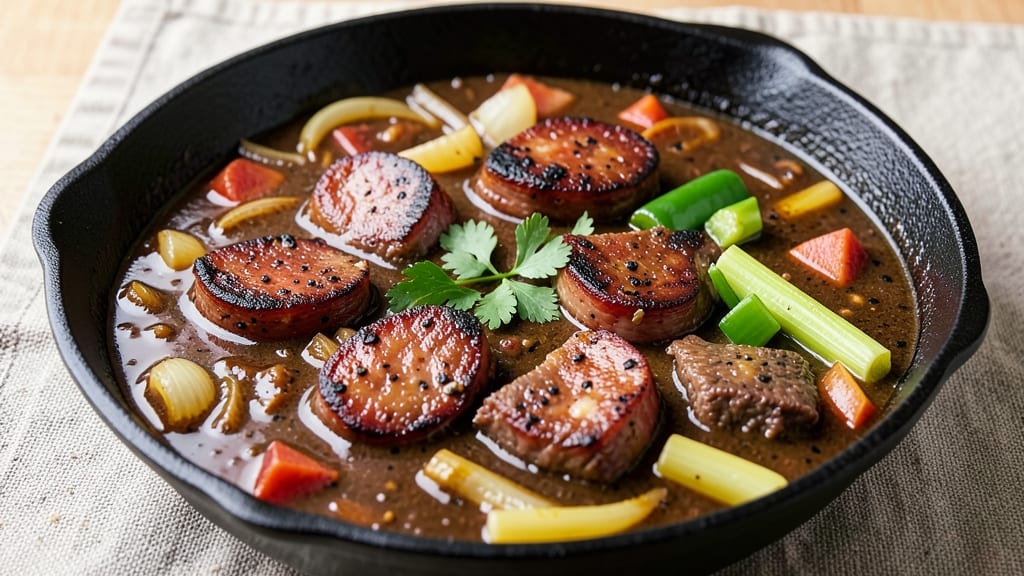
This beef and sausage gumbo recipe delivers the rich, smoky depth of Louisiana tradition with a foolproof roux foundation that transforms simple ingredients into restaurant-quality stew. The secret lies in slow-cooking the meat until tender while building layers of flavor through the classic "holy trinity" and bold Cajun spices.
I've perfected this version over years of testing, ensuring every spoonful delivers that perfect balance of hearty beef, spicy sausage, and velvety broth.
The recipe begins with a dark brown roux that forms the flavor base, then incorporates smoked sausage and beef that simmer until falling-apart tender. Celery, bell peppers, and onions create the aromatic base, while thyme, bay leaves, and cayenne add that signature Cajun punch.
What makes this version special is how the flavors meld during the long simmer, creating a stew that tastes even better the next day.
By the time you're done, you'll have a steaming pot of gumbo with perfectly seasoned meat, thickened broth, and all the classic elements working in harmony. The roux provides that signature color and depth, while the spices deliver just the right amount of heat.
This is comfort food at its finest - hearty enough for a cold evening but balanced enough to satisfy any palate.
Serve with steamed white rice and warm cornbread to soak up every last drop of that flavorful broth. The recipe scales beautifully for feeding a crowd, making it perfect for gatherings where you want to impress without spending hours in the kitchen.
Let's get started on creating this Louisiana classic in your own home.
Ingredients for beef and sausage gumbo
Pantry staples meet Cajun magic for this hearty gumbo—just 16 ingredients for deep, smoky flavor.
| Ingredient | Amount | Notes |
|---|---|---|
| Smoked Andouille Sausage 🌭 | 1 ½ lb | Sliced into half-moons |
| Chuck Roast 🥩 | 2 lb | Cut into 1-inch cubes |
| Yellow Onion 🧅 | 2 whole | Diced, holy trinity |
| Green Bell Pepper 🌶️ | 1 whole | Diced, holy trinity |
| Celery Stalks 🥬 | 3 whole | Diced, holy trinity |
| All-Purpose Flour 🌾 | ½ cup | For dark roux |
| Vegetable Oil 🫒 | ½ cup | For roux cooking |
| Garlic Cloves 🧄 | 4 cloves | Minced |
| Dried Thyme 🌿 | 1 tsp | Or 1 tbsp fresh |
| Bay Leaves 🍃 | 2 whole | Fresh preferred |
| Cayenne Pepper 🔥 | 1 tsp | Adjust for heat |
| Ground Black Pepper 🌶️ | ½ tsp | Freshly ground |
| Salt 🧂 | 1 ½ tsp | Kosher preferred |
| Beef Stock 💧 | 4 cups | Homemade or quality |
| Water 💧 | 2 cups | For stock dilution |
| Green Onions 🧅 | ¼ cup | Sliced, for garnish |
The roux is where all the magic happens. All-purpose flour needs to cook to a deep brown color—almost chocolate—so keep an eye on it. Vegetable oil works best for this (it's neutral), but you can use butter if you're feeling fancy. The key is patience; rushing it will burn and turn bitter. For the sausage, Andouille is non-negotiable—it's got that perfect smoky flavor. Grab it from the butcher counter or specialty market if your grocery store doesn't carry it. The chuck roast should have good marbling for flavor, and cutting it into even cubes ensures it cooks through perfectly.
No Andouille? Smoked kielbasa works in a pinch, but it won't have the same depth. Running short on thyme? Dried oregano at half the amount will give you a similar earthy note. The holy trinity (onion, bell pepper, celery) can be swapped for frozen veggies if you're in a rush—just thaw and drain them first. For the roux, butter adds richness if you want to splurge, but stick with oil if you're going for that classic gumbo flavor. And if you're worried about cayenne heat, start with half and adjust to taste—you can always add more later.
This gumbo tastes even better the next day, so make a double batch. Store it in the fridge for up to 5 days or freeze for 3 months. The roux thickens as it cools, so you might need to add a splash of water or stock when reheating. For serving, steamed white rice and warm cornbread are musts—they soak up all that rich broth. I like to portion it into containers with a little rice on top so it's ready to grab and go for lunches all week.
Why You'll Love This Recipe
- One-Pot Magic: I swear by this recipe because it’s a single pot, minimal cleanup. Slice the chuck roast and sausage, toss in the holy trinity (onion, bell pepper, celery), and let the roux work its spell—no extra pans, no stress.
- Smoky Depth Bomb: That Andouille sausage? It’s the star—smoky, spicy, and rich. The chuck roast melts into tender shreds, while the bell pepper adds a bright, almost sweet contrast. Honestly, it’s the kind of flavor that makes you want to eat it straight from the pot.
- Game for Any Day: I make this for lazy Sundays, game days, or when I need to feed a crowd. The leftovers reheat like a dream, and it’s the perfect dish to bring to potlucks—everyone asks for seconds, and no one leaves hungry.
- Budget-Friendly Feast: Chuck roast and sausage stretch for miles, and the veggies are cheap but pack serious flavor. Between us, this is my go-to when I need a hearty meal without breaking the bank. Plus, it’s the kind of dish that tastes even better the next day.
Step-by-step instructions for beef and sausage gumbo
Here's how to build that rich, smoky gumbo foundation that'll make your kitchen smell amazing.
Build the Dark Roux That Makes Gumbo Sing
Heat the 0.5 cup vegetable oil in a heavy Dutch oven over medium-low heat. Add the 0.5 cup all-purpose flour and stir constantly with a wooden spoon. This is where patience pays off—keep the heat low to prevent burning. The roux will darken gradually from peanut butter color to chocolate brown, then finally to a deep mahogany color that smells like heaven.
Watch carefully as it transforms—it should take about 30-40 minutes total. When it reaches that perfect dark color (similar to milk chocolate), you're ready for the next step. If it starts to smoke or smell burnt, immediately remove from heat and let cool slightly before continuing. This dark roux is the soul of gumbo, so don't rush it.
Sauté the Holy Trinity for Maximum Flavor
Once your roux is ready, add the 2 whole diced yellow onion, 1 whole diced green bell pepper, and 3 whole diced celery stalks (that's your holy trinity). Stir well to coat everything in that rich roux. Cook over medium heat for about 8-10 minutes, stirring occasionally, until the vegetables soften and release their juices.
This is where all those flavors start melding together. You'll know it's ready when the vegetables are tender but not browned. Add the 4 minced garlic cloves and cook for another 30 seconds just until fragrant. The garlic should dance around but not burn—watch it carefully as it can go from perfect to bitter in seconds.
Add Meat and Spices to Develop Deep Flavors
Push the vegetables to one side of the pot and add the 1.5 lb sliced smoked andouille sausage to the empty space. Let it brown for 2-3 minutes before stirring to combine with the vegetables. Add the 2 lb cubed chuck roast and cook for another 3-4 minutes, stirring occasionally, until the meat starts to brown in spots.
Now stir in the 1 tsp dried thyme, 2 whole bay leaves, 1 tsp cayenne pepper, 0.5 tsp ground black pepper, and 1.5 tsp salt. Let everything cook together for 2 minutes to toast the spices and let their aromas bloom. This is where that Cajun depth starts building—don't skip this step.
Simmer the Gumbo Until Meat is Tender
Pour in the 4 cups beef stock and 2 cups water, stirring well to combine. Bring to a gentle boil, then reduce heat to low and cover partially. Let it simmer for 2-2.5 hours, stirring occasionally, until the chuck roast is fork-tender and falling apart easily. The liquid should reduce slightly but still coat the meat and vegetables.
I check for doneness by piercing a meat cube with a fork—it should slide in easily with no resistance. If the gumbo looks too thick, add a little more water or stock. If it's too thin, let it simmer uncovered for another 10-15 minutes to reduce. The key is that rich, thick consistency that coats the back of a spoon.
Finish and Serve with Fresh Garnish
Remove the 2 whole bay leaves and discard them. Taste the gumbo and adjust seasoning if needed—you might need a little more salt or cayenne to balance the flavors. Stir in the 0.25 cup sliced green onions just before serving to add that fresh pop of color and brightness.
Ladle the gumbo into bowls and serve immediately with hot rice. The aroma alone will make your taste buds sing. Each spoonful should deliver that perfect balance of smoky sausage, tender beef, and rich roux with just the right kick of cayenne. Leftovers taste even better the next day—if there are any!
Pro Tips For Making Beef And Sausage Gumbo
- Brown the Sausage First: Smoked Andouille has enough fat to self-baste, but cutting it into ½-inch slices and searing them in a dry pot for 3-4 minutes on medium-high builds deeper flavor before adding anything else. I learned this the hard way—skipping this step means you’re missing out on that smoky crust that makes the whole dish sing.
- Cut Celery Lengthwise: Slice celery stalks into ¼-inch half-moons instead of chopping them small. They’ll hold their shape better in the long simmer, and you’ll actually taste their brightness in the finished gumbo. (Yes, even if it looks weird—your future self will notice the difference.)
- Don’t Rush the Chuck: Chuck roast needs 30 minutes at a gentle simmer (190°F) to break down properly—any faster, and you’ll end up with chewy bits instead of fork-tender meat. I used to pull it out early, thinking it was done, only to regret it later. Trust the timer.
- Sweat the Holy Trinity Slow: Cook the onion, bell pepper, and celery together on medium-low for 8-10 minutes until the onion is translucent and the pepper softens. Rushing this step means you’ll end up with a bitter, raw edge in your gumbo. (And nobody wants that.)
Perfect pairings for this recipe
Classic Side Dishes
Serve this rich gumbo with steamed white rice—it's the traditional base that soaks up every drop of that flavorful broth. I like using jasmine rice because its delicate aroma complements the smoky flavors without overpowering them. For extra flair, sprinkle the rice with toasted garlic powder before serving. 🍚
Cajun Cornbread
No gumbo feast is complete without Cajun-style cornbread—its slightly sweet, crumbly texture contrasts beautifully with the hearty stew.
I use a simple mix of 1 cup cornmeal, 1 cup all-purpose flour, 1 tbsp sugar, 1 tbsp baking powder, and 1 tsp cayenne for that signature kick. Serve warm with a pat of salted butter melting on top.
Crusty Bread
A crusty French baguette or sourdough loaf adds a wonderful textural contrast to the gumbo. Tear it into chunks and let everyone soak up the broth as they eat. For an extra Louisiana touch, brush the bread with garlic butter before serving.
I always keep a fresh loaf on hand for gumbo nights—it makes the meal feel even more special.
Fresh Vegetable Salad
Balance the richness with a light, crisp salad like a Southern cucumber-tomato salad.
Thinly slice 1 cucumber, 2 tomatoes, and ½ red onion, then toss with 2 tbsp apple cider vinegar, 3 tbsp olive oil, ½ tsp sugar, and a pinch of salt. The acidity cuts through the gumbo's richness while adding a refreshing crunch. 🥗
Drink Pairings
For a true Cajun experience, pair your gumbo with a chilled glass of sweet tea—its slight sweetness balances the spice beautifully. I also love dark beer like Abita Amber or New Orleans-style lager—the maltiness complements the smoky flavors.
For a non-alcoholic option, try sparkling lemonade with a hint of mint.
Dessert Finisher
End the meal with a simple buttermilk biscuit or beignets for a true Louisiana touch. The buttery, pillowy texture contrasts perfectly with the hearty gumbo. If you want something lighter, bananas foster—a classic New Orleans dessert—adds a sweet, caramelized finish that feels like a celebration. 🍌
Nutrition facts
Frequently asked questions
Why does my roux burn before reaching the right color?
Roux burns when the heat is too high or you're not stirring constantly. Always cook it over medium-low heat and keep stirring with a wooden spoon. If it starts smoking, immediately remove from heat and let cool slightly before continuing. The key is patience—it should take 30-40 minutes to reach that perfect dark brown color.
Can I substitute chuck roast with another beef cut?
Yes, but choose cuts with good marbling for flavor. Brisket or short ribs work well—they'll add even more richness. Avoid lean cuts like sirloin, as they won't stay tender during the long simmer. If using brisket, cut it into 1-inch cubes and plan for an extra 30 minutes of cooking time.
How can I make this gumbo spicier?
Add more cayenne pepper or hot sauce to taste. For extra heat, stir in 1-2 dashes of hot sauce at the end or add ½ teaspoon crushed red pepper flakes with the spices. If you love ghost peppers, try adding ¼ teaspoon cayenne plus 1 finely chopped habanero (remove seeds first).
What's the best way to reheat gumbo?
Reheat gently over low heat on the stove, stirring occasionally. If it thickens too much, add a splash of beef stock or water. For leftovers, reheat in 2-minute intervals until hot. Microwaving can make the roux separate—avoid it if possible. The gumbo tastes even better reheated!
Can I make this gumbo in a slow cooker?
Brown the meat and make the roux in a skillet first, then transfer everything to the slow cooker. Cook on low for 6-8 hours or high for 3-4 hours. The long cook time will make the meat extra tender. Add a little more liquid if needed, as slow cookers evaporate moisture differently than stovetop.