
Sauces & Condiments
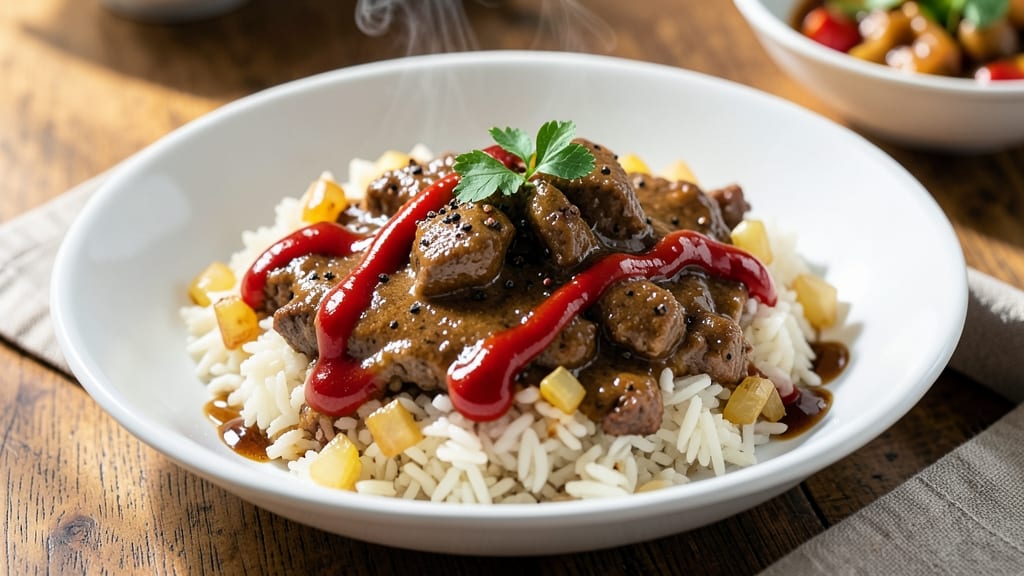
This beef and rice sauce recipe transforms simple ingredients into a deeply umami-rich sauce perfect for elevating stir-fries, bowls, and noodles.
The secret lies in simmering cooked rice with beef broth, aromatics, and a blend of soy, fish, and chili sauces until the starches release, creating a naturally thick, glossy finish.
What sets this sauce apart is its balance—savory, slightly sweet, and just spicy enough to linger on the palate without overpowering.
The process is straightforward: sauté garlic, ginger, and onions until fragrant, then add rice and beef broth to simmer until the sauce thickens into a velvety consistency. A touch of sugar caramelizes the flavors, while fish sauce adds depth that store-bought versions can’t match.
This sauce keeps well in the fridge for up to 5 days, making it a foolproof pantry staple for quick meals.
Ingredients for beef and rice sauce
The umami foundation for any stir-fry or bowl—simple ingredients, bold flavor profile.
| Ingredient | Amount | Notes |
|---|---|---|
| Cooked White Rice 🍚 | 2 cups | Day-old rice preferred for texture |
| Beef Broth 🥫 | 2 cups | Low-sodium preferred for control |
| Soy Sauce 🍶 | ½ cup | Japanese-style for depth |
| Fish Sauce 🐟 | 1 tbsp | Red Boat preferred quality |
| Chili Garlic Sauce 🌶️ | 1 tbsp | Adjust for preferred heat level |
| Granulated Sugar 🍚 | 1 tbsp | For subtle caramelization |
| Garlic Cloves 🧄 | 4 cloves | Minced for aromatic base |
| Fresh Ginger 🌿 | 1 tbsp | Grated, peeled |
| Yellow Onion 🧅 | ½ cup | Finely diced |
| Olive Oil 🫒 | 1 tbsp | Extra-virgin for sautéing |
| Sesame Oil 🌾 | 1 tsp | Toasted for finishing |
| Diamond Crystal Kosher Salt 🧂 | ½ tsp | Adjust to taste |
The rice is the sauce's secret weapon—day-old rice releases more starches for that velvety texture. Day-Rice brand from Asian markets is a game-changer, but any leftover rice works. For beef broth, Kitchen Basics or Pacific Foods brands deliver consistent umami without sodium overload. Fish sauce is non-negotiable for depth—Red Boat is the gold standard, but Three Crabs is a solid budget pick. The garlic and ginger should be fresh; frozen loses its aromatic punch during sautéing. If you're short on time, minced garlic and ginger jars from Trader Joe's work in a pinch.
No soy sauce? Coconut aminos mimic the savory profile, though with a slightly sweeter note. Substitute fish sauce with extra soy sauce plus a dash of Worcestershire>—just remember Worcestershire contains anchovies, so check labels if avoiding seafood. Chili garlic sauce can be swapped for sriracha plus minced garlic> for a similar heat kick. For a vegetarian version, replace beef broth with mushroom broth> and omit fish sauce entirely. The sugar can be swapped for honey or maple syrup>, though granulated keeps the sauce's natural balance. Sesame oil is optional but adds that signature nutty aroma—skip it if you're sensitive to strong flavors.
This sauce thickens as it cools, so don't over-stir while simmering. Store in an airtight container in the fridge for up to 5 days>, or freeze for 3 months> in ice cube trays for portion control. Reheat gently on low heat, adding a splash of water if it thickens too much. The sauce improves overnight as flavors meld—make extra if you're planning to use it over multiple meals. For a restaurant-quality finish, finish with a drizzle of toasted sesame oil> and a sprinkle of toasted sesame seeds>
Why You'll Love This Recipe
- One-Pot Magic: I swear by this when I’m too tired to scrub pots—just toss rice, broth, and those umami bombs (soy + fish sauce) in one container, let it bubble, and boom. The rice soaks up all the flavor without turning mushy.
- Umami Bomb Combo: That fish sauce might sound weird, but trust me—it’s the secret weapon. One spoonful of it with the soy and chili garlic turns this into a savory, slightly funky, ridiculously addictive sauce. My picky husband licks his plate clean.
- Lunchbox Hero: Pack this cold or reheated—it’s the ultimate office or school lunch. The rice stays separate, the sauce clings perfectly, and no one complains when you bring it. (Yes, even my teenager.)
- Budget Stretch: A single batch feeds four for two meals—leftover rice gets repurposed into fried rice, or I freeze portions for lazy nights. Beef broth is cheap, and a splash of fish sauce makes it taste like a restaurant dish. Win.
Step-by-step instructions for beef and rice sauce
This umami-rich sauce transforms simple ingredients into a complex, flavorful base perfect for stir-fries, bowls, or rice dishes.
Sauté Aromatics Until Fragrant
Heat the 1 tablespoon olive oil in a medium saucepan over medium heat. Add the 0.5 cup finely diced yellow onion and cook for 3-4 minutes until softened and translucent. This foundational step develops sweetness from the onion that carries through the entire sauce.
Add the 4 cloves minced garlic and 1 tablespoon grated fresh ginger, stirring constantly for 30 seconds until the garlic becomes golden and fragrant. The moment the garlic changes color signals it's ready—don't let it brown or it'll turn bitter. Keep the heat at medium to prevent burning while ensuring proper flavor extraction.
Build the Sauce Base
Pour in the 2 cups beef broth and bring to a gentle simmer over medium-low heat. Once bubbling, add the 2 cups cooked white rice, stirring to combine. The rice should begin to break down slightly, releasing starches that will thicken the sauce naturally. This process takes about 5 minutes—watch for the mixture to become slightly creamy.
Add the 0.5 cup soy sauce, 1 tablespoon fish sauce, and 1 tablespoon granulated sugar, stirring well to distribute the flavors evenly. The sugar helps balance the savory notes while adding subtle caramelization. Let the mixture simmer uncovered for 8-10 minutes, stirring occasionally, until the rice is fully incorporated and the sauce begins to thicken slightly.
Finish with Heat and Depth
Reduce heat to low and stir in the 1 tablespoon chili garlic sauce. This adds both heat and complexity to the sauce. Taste and adjust seasoning with the 0.5 teaspoon diamond crystal kosher salt if needed—remember, the fish sauce and soy sauce already contribute significant saltiness, so go easy.
Remove from heat and stir in the 1 teaspoon toasted sesame oil. This final step adds nutty aroma and richness that elevates the entire dish. The sauce should have a glossy appearance and coat the back of a spoon. If it's too thick, thin with a splash of water or beef broth; if too thin, simmer uncovered for another 2-3 minutes to reduce.
Rest and Serve
Let the sauce rest for 5 minutes before using. This allows the flavors to meld completely and prevents the rice from continuing to break down excessively when added to hot dishes. The resting period also helps the sauce reach its ideal consistency—neither too thick nor too thin.
Serve immediately over steamed rice, noodles, or as a dipping sauce for dumplings. The sauce keeps well in the refrigerator for up to 5 days, though it tastes best when fresh. For extra depth, garnish with sliced green onions or sesame seeds before serving. The balance of sweet, savory, umami, and heat makes this versatile sauce perfect for any Asian-inspired meal.
Pro Tips For Making Beef And Rice Sauce
- STIR FAST, STOP SLOW: Once you add the chili garlic sauce, keep the heat high and move that wok like you’re angry at it—constant, aggressive stirring for 30 seconds. I learned this the hard way after burning the sauce twice; it needs that quick burst of heat to bloom the flavors without scorching. Let it cool for 10 seconds between stirs if needed, but don’t walk away.
- USE DAY-OLD RICE: Cold, dry rice absorbs sauce like a sponge, which is exactly what you want here. Freshly cooked rice turns mushy and clumps, no matter how much broth you add. Pop your rice in the fridge for 2+ hours first—it’s worth the wait, especially if you’re making this for a crowd.
- TASTE THE BROTH FIRST: Before dumping the beef broth, slurp a spoonful straight from the pot—no shame. You’re checking for saltiness (adjust with soy or fish sauce), richness (add a splash of water if it’s too thick), and depth (a pinch of sugar or msg can elevate it). I skip this step half the time, and the sauce always feels flat afterward.
- SALT THE RICE: Toss your cooked rice with ½ teaspoon salt (or to taste) before mixing with the sauce. It sounds weird, but it balances the umami bomb of soy and fish sauce later. My grandmother swore by this, and she was right: the rice stays separate, and the flavors sing instead of competing.
Make-ahead tips for this beef and rice sauce
Prep Ahead Strategy
Make this sauce a day in advance for deeper flavor development. The rice continues breaking down overnight, creating a naturally thicker, more cohesive texture. I like to prep it the night before so it's ready to toss with stir-fries or drizzle over bowls in the morning.
Store in an airtight container in the fridge—it'll actually improve as it sits. 💫
Freezer-Friendly Tips
Portion the sauce into ice cube trays for easy reheating—just pop out what you need and warm in a pan. For larger batches, use quart-sized freezer bags with 1-inch headspace to prevent expansion cracks.
Label with the date since it keeps best for 3 months at 0°F or below. Thaw overnight in the fridge before reheating.
Double-Batch Hack
This sauce makes twice the recipe without extra effort—just double all ingredients. Use the extra for rice bowls, noodle dishes, or even as a glaze for grilled meats. I often prep two batches on Sunday: one for immediate use and one to freeze.
The second batch becomes my emergency flavor savior when I'm too tired to cook from scratch. ✨
Reheating Perfection
For the best texture, reheat gently over low heat in a saucepan with 1-2 tablespoons of water or broth. Stir constantly to prevent scorching—this sauce thickens as it cools, so add liquid gradually if needed.
Avoid microwaving, as it can make the sauce watery and lose its glossy finish. A quick 30-second zap on high power works in a pinch, but I prefer the stovetop method for restaurant-quality results. 🔥
Flavor Boost Trick
Before using stored sauce, add a dash of toasted sesame oil and 1 teaspoon chili garlic sauce to revive its brightness. The sesame oil adds nutty aroma, while the chili garlic sauce restores the heat profile.
This trick works especially well if you've kept the sauce for 3-4 days—it brings back that fresh-made vibrancy in seconds. 🌶️
Storage Containers
Glass containers are ideal for this sauce—they preserve flavor better than plastic and allow you to see the color. I recommend Pyrex measuring cups with lids for small batches or Le Creuset stoneware bowls for larger quantities. For freezer storage, silicone molds prevent freezer burn and make portioning effortless. Just
Nutrition facts
Frequently asked questions
Why does this sauce need cooked rice instead of raw?
Cooked rice releases starches that naturally thicken the sauce as it simmers, creating that perfect velvety texture. Raw rice would require much longer cooking and might turn mushy. Day-old rice works best because it's firmer and releases starches more evenly, giving you a smoother, glossier finish.
Can I make this sauce without fish sauce?
Yes! Replace the fish sauce with an extra 1 tablespoon soy sauce plus ½ teaspoon Worcestershire sauce> for depth. For a vegetarian version, use ½ cup mushroom broth> instead of beef broth and skip the fish sauce entirely. The umami will be slightly different but still delicious.
How do I adjust the spice level?
Start with the full 1 tablespoon chili garlic sauce> for medium heat. For milder sauce, reduce to ½ tablespoon> or swap for ½ teaspoon sriracha>. If you love spice, add an extra ½ teaspoon chili flakes> or a dash of gochujang> for deeper heat. Always taste before serving!
What if my sauce is too thin or too thick?
If too thin, simmer uncovered for 2-3 more minutes> to reduce. For thicker sauce, stir in ½ teaspoon cornstarch mixed with 1 tablespoon water> and cook for 1 minute>. If it's too thick after chilling, thin with 1 tablespoon beef broth> while reheating. The sauce will naturally thicken as it cools.
Can I use this sauce in non-Asian dishes?
This versatile sauce works beautifully in Italian pasta dishes> (toss with fettuccine), Mexican tacos> (as a marinade or sauce), or even American-style burgers> (as a glaze). The umami depth elevates any protein—just adjust seasonings to complement the dish. Try it with grilled chicken or steak for a restaurant-worthy twist!