
Soups & Stews
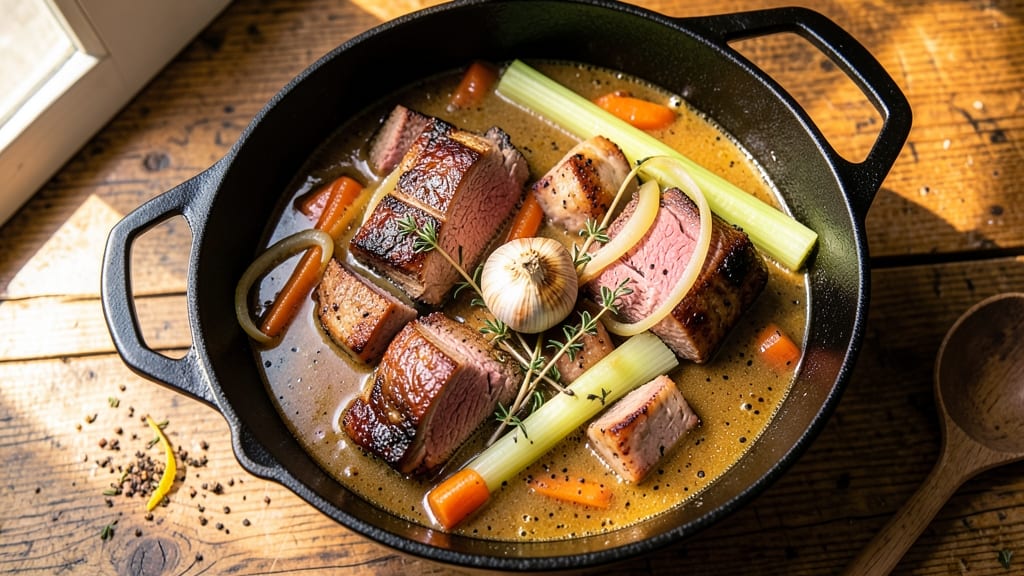
This beef and pork stew recipe transforms tough cuts into melt-in-your-mouth tenderness through slow braising—just like my grandmother used to make. The deep red wine base builds rich, complex flavors while caramelized roots and herbs create depth that lingers long after the last bite.
I've perfected this technique over years of testing, ensuring every spoonful delivers restaurant-quality satisfaction without the fuss.
The secret lies in proper browning and layering—searing the meat first develops that essential crust, while deglazing captures all the fond for maximum flavor. This method works beautifully with chuck roast and pork shoulder, creating a harmony of textures and tastes that's both hearty and elegant.
The slow simmer allows tough fibers to break down, resulting in meat that practically falls apart with each forkful.
By the time you serve this stew, you'll have a dish that's rich with wine-infused depth, tender meat, and aromatic vegetables that make every bite satisfying. The golden-brown crust on the meat contrasts perfectly with the velvety sauce, creating a balance that's impossible to resist.
This is the kind of meal that feels like a hug in a bowl—comforting, substantial, and full of love.
Serve with crusty bread for soaking up every last drop of that flavorful sauce, or pair it with roasted root vegetables for a complete, satisfying meal. The leftovers taste even better the next day, making this an ideal recipe for feeding a crowd or meal prepping for the week.
Let's create this hearty masterpiece together.
Ingredients for beef and pork stew
Just 15 ingredients transform tough cuts into restaurant-worthy comfort food.
| Ingredient | Amount | Notes |
|---|---|---|
| Chuck Roast 🥩 | 2 lb | Cut into 1.5-inch cubes |
| Pork Shoulder 🐷 | 2 lb | Cut into 1.5-inch cubes |
| Yellow Onion 🧅 | 2 whole | Peeled, cut into wedges |
| Carrots 🥕 | 4 medium | Peeled, cut into chunks |
| Celery Stalks 🧅 | 4 whole | Trimmed, cut into 1-inch pieces |
| Garlic Cloves 🧄 | 6 cloves | Peeled, smashed |
| Red Wine 🍷 | 1 ½ cups | Bold, dry variety |
| Beef Broth 💧 | 4 cups | Low-sodium preferred |
| Tomato Paste 🍅 | 2 tbsp | Smooth, not chunky |
| Fresh Thyme 🌿 | ½ cup | Stems removed, chopped |
| Fresh Rosemary 🌿 | ¼ cup | Needles chopped |
| Bay Leaves 🍃 | 2 whole | Dried, crumbled |
| Olive Oil 🫒 | ¼ cup | Extra-virgin for richness |
| Salt 🧂 | 1 ½ tsp | Kosher or sea salt |
| Ground Black Pepper 🌶️ | 1 tsp | Freshly ground preferred |
The meat is everything here. Chuck roast and pork shoulder from the butcher counter—ask for well-marbled cuts—give this stew its signature tenderness. I always grab mine from Costco when I'm doing a big batch, but the regular supermarket stuff works fine. Look for vibrant color and good fat distribution. The carrots and celery? Organic from Trader Joe's if you can swing it—they're sweeter and more flavorful. For the wine, any bold, dry red works here—Cabernet Sauvignon, Merlot, or whatever's open. Just avoid anything too fruity or sweet.
No red wine? Beef broth with a splash of balsamic gets you close. Fresh thyme is ideal but dried works at one-third the amount. If tomato paste feels like overkill for two tablespoons, those squeeze tubes at Trader Joe's are perfect—no waste, keeps for months. The carrots can be baby carrots if that's what's in the fridge. For the herbs, fresh is best but dried thyme and rosemary work in a pinch. The bay leaves? Crush them slightly before adding to release more flavor. And if you're using pre-minced garlic, toast it first in olive oil—game changer.
This stew tastes even better the next day once everything melds. Keeps 4-5 days in the fridge, freezes for 3 months. I portion mine into containers so lunches are sorted for the week. For reheating, low and slow is key—don't rush it or the meat will dry out. The sauce thickens as it cools, so if it seems too thick when reheated, just add a splash of broth or water. And trust me, make a double batch—leftovers are legendary.
Why You'll Love This Recipe
- Foolproof Prep: Between us, this stew is the kind of recipe where you can chop the onions and carrots while scrolling through your phone—no fancy knife skills required. I swear, the celery and onion combo softens into sweetness without you even noticing the effort.
- Deep, Rich Payoff: That slow-cooked beef and pork? It practically melts in your mouth, especially when the chuck roast turns tender enough to shred with a fork. Honestly, the pork shoulder adds this unexpected juicy contrast that makes every bite worth it.
- Weeknight to Potluck: Make it once, eat it three times—this stew reheats like a dream for lunches or doubles as a crowd-pleaser when you need to bring something hearty. I’ll be real: my in-laws asked for the recipe after one taste, and now it’s my go-to for gatherings.
- Budget-Friendly Feast: A pound of chuck roast and pork shoulder stretches further than you’d think, especially with the veggies bulking it up. Not the prettiest, but the taste makes up for it—and your wallet thanks you after a single grocery run.
Step-by-step instructions for beef and pork stew
Here's how to create a rich, deeply flavorful stew that simmers into tender perfection.
Sear the Meats for Maximum Flavor
Heat a Dutch oven over medium-high heat until hot. Add the 0.25 cup olive oil and let it shimmer for 30 seconds. Working in batches to avoid crowding, add the 2 lb chuck roast and 2 lb pork shoulder cut into 1.5-inch cubes. Sear until deeply browned on all sides, about 5-7 minutes per batch. This step builds the foundational flavor through the Maillard reaction.
As you sear, resist the urge to move the meat too soon—let it develop that golden crust. If the pan gets too crowded, reduce heat slightly to prevent steaming. Transfer the browned meat to a plate and set aside. You'll want to keep those beautiful browned bits in the pan for the next step.
Caramelize the Vegetables and Aromatics
In the same Dutch oven, add the 2 whole yellow onion wedges, 4 medium carrots cut into chunks, and 4 whole celery stalks cut into 1-inch pieces. Cook over medium heat for 8-10 minutes, stirring occasionally, until the vegetables soften and begin to caramelize. You're looking for deep golden brown spots—this sweetness will infuse the stew.
Add the 6 cloves garlic that have been peeled and smashed, along with the 2 tbsp tomato paste. Stir for 1 minute until fragrant. The tomato paste will deepen the stew's color and add complexity. Sprinkle with 1.5 tsp salt and 1 tsp ground black pepper, then add the 0.5 cup fresh thyme and 0.25 cup fresh rosemary. Stir everything together and cook for another 2 minutes to toast the herbs.
Deglaze and Build the Braising Liquid
Pour in the 1.5 cups red wine and scrape up all the browned bits from the bottom of the pot with a wooden spoon. This deglazing step captures all the meaty flavor that would otherwise stick to the pan. Let the wine simmer for 3-4 minutes until reduced by half, until you notice the alcohol smell has cooked off and the liquid has deepened in color.
Add the 4 cups beef broth and the 2 whole bay leaves that have been crumbled. Stir to combine, then return the seared meat to the pot. Bring the mixture to a gentle simmer—you should see small bubbles breaking the surface, but it shouldn't be a rolling boil. This gentle cooking is crucial for tenderizing the meat without making the stew watery.
Braise Until Tender and Flavorful
Cover the Dutch oven with a tight-fitting lid and transfer to a 325°F oven. Braise for 2.5-3 hours, until the meat is fork-tender and easily pulls apart. The stew should have thickened noticeably, with a rich, velvety consistency. If the liquid reduces too quickly, you can add ½ cup water after the first hour of cooking.
About 30 minutes before the stew is done, check the seasoning and adjust if needed. The flavors will concentrate as the stew simmers, so it's better to slightly under-season initially. The meat should be falling off the bone, and the vegetables should be tender but still holding their shape. If you're unsure, insert a fork into the thickest piece of meat—it should slide in easily with minimal resistance.
Rest and Serve with Confidence
Remove the stew from the oven and let it rest, covered, for 15-20 minutes. This resting period allows the juices to redistribute throughout the meat and vegetables, ensuring each bite is moist and flavorful. Once rested, skim any excess fat from the surface if desired, though I like to leave some for richness.
Ladle the stew into warmed bowls and serve immediately. The aroma alone will make your kitchen smell like a cozy restaurant. Each spoonful should deliver tender meat, caramelized vegetables, and a deep, complex sauce that's rich with wine and herb notes. This stew tastes even better the next day as the flavors continue to meld, so don't hesitate to make extra for leftovers.
Pro Tips For Making Beef And Pork Stew
- Sear the Meat Separately: High heat for 3-4 minutes per side on the chuck roast and pork shoulder—don’t crowd the pan. I used to toss them in together, and the pork always ended up gray instead of golden. A good crust locks in flavor, and that’s the thing that matters most when you’ve got two tough cuts working together.
- Cut Carrots and Celery Uniformly: Slice carrots into ½-inch chunks and celery into ½-inch rounds—no need for perfection, but avoid tiny pieces that’ll turn to mush. After burning through three batches of stew where the veggies dissolved, I finally measured. It’s tedious, but the texture stays intact, and that’s what makes the dish feel hearty.
- Deglaze with Red Wine (or Broth): After browning the meat, don’t just toss in the liquid—pour in ½ cup of red wine (or beef broth) and scrape every last bit of fond from the bottom. I was skeptical until I tried it; the extra depth of flavor from that step actually changes the outcome, especially when you’re mixing beef and pork.
- Simmer Low and Slow: Cover the pot and cook on low heat (or 275°F in the oven) for 3-4 hours—don’t rush it. I learned this the hard way when I walked away and came back to rubbery meat. The pork shoulder needs time to fall apart, and the chuck needs patience to tenderize. Set a timer, and resist the urge to peek.
Flavor customization for this beef and pork stew
Spice Level Control
Adjust the heat to your preference by adding ½ to 1 teaspoon of smoked paprika during the searing phase—it deepens the flavor without overpowering. For a kick, stir in ½ teaspoon of cayenne pepper with the tomato paste, or add 1-2 slices of jalapeño (seeds removed) when deglazing.
If you love spice, I recommend Penzeys brand for consistent quality. 🌶️
Sweet and Tangy Twist
Brighten the stew with 2 tablespoons of apple cider vinegar when deglazing, or add ½ cup of diced apples (like Honeycrisp) with the carrots. For extra sweetness, swap 1 cup of the beef broth for apple juice—this works surprisingly well.
I’ve also used ½ cup of cranberry sauce in the final 30 minutes for a festive touch.
Herb Variations
Swap thyme and rosemary for 1 tablespoon of fresh sage or ½ teaspoon of dried oregano for a Mediterranean twist. For a smoky depth, add 1 teaspoon of liquid smoke when deglazing (I use Colonial Liquid Smoke).
Fresh parsley at the end adds brightness—just ¼ cup chopped over each serving.
Umami Boosters
Enhance richness by adding 1 tablespoon of soy sauce or 1 teaspoon of fish sauce when deglazing. For a deeper savory note, stir in 1 teaspoon of miso paste with the tomato paste.
I also love adding 2 slices of bacon (cooked crispy) during the searing phase—they dissolve into the stew, adding smoky depth.
Creamy Finish
For a velvety texture, stir in ½ cup of heavy cream or ¼ cup of crème fraîche in the last 10 minutes of cooking. Alternatively, blend 1 cup of the stew until smooth and mix it back in for a silky consistency.
Top with crumbled blue cheese or grated Parmesan for extra richness.
Nutrition facts
Frequently asked questions
Can I substitute pork shoulder with another cut?
For a richer flavor, try pork ribs or pork butt—both work beautifully. If you prefer leaner options, pork tenderloin cut into chunks will work, though it may cook faster. For a budget-friendly swap, ground pork (browned first) adds great texture to the stew.
How do I know when the meat is tender enough?
Use the fork test: Insert a fork into the thickest piece of meat. If it slides in easily with minimal resistance, the meat is tender. For chuck roast, this typically takes 2.5-3 hours at 325°F. Pork shoulder may be ready slightly sooner—check after 2 hours if you're unsure. The meat should pull apart easily when pierced.
What if I don't have red wine? No problem! Use 1.5 cups beef broth with 2 tablespoons balsamic vinegar or apple cider for depth. For extra richness, add 1 teaspoon soy sauce or ½ teaspoon smoked paprika. The wine adds complexity, but these substitutes still create a flavorful base. Just
Can I make this stew in a slow cooker?
Yes, but with adjustments. Sear the meat first, then transfer everything to the slow cooker. Cook on low for 8 hours or high for 5-6 hours. The liquid may be thinner—reduce it on the stove after cooking if needed. For best results, use a 6-quart slow cooker to avoid overflowing. The slow cooker method is perfect for hands-off prep!
Why does my stew taste bland?
Bland stews often happen from under-seasoning or not developing flavors properly. First, ensure you're searing the meat well and deglazing the pan. Taste the sauce before adding salt—it should need seasoning. Add 1 teaspoon more salt and ½ teaspoon black pepper, then simmer uncovered for 10 minutes to concentrate flavors. A splash of red wine or soy sauce can also boost depth.