
Soups & Stews
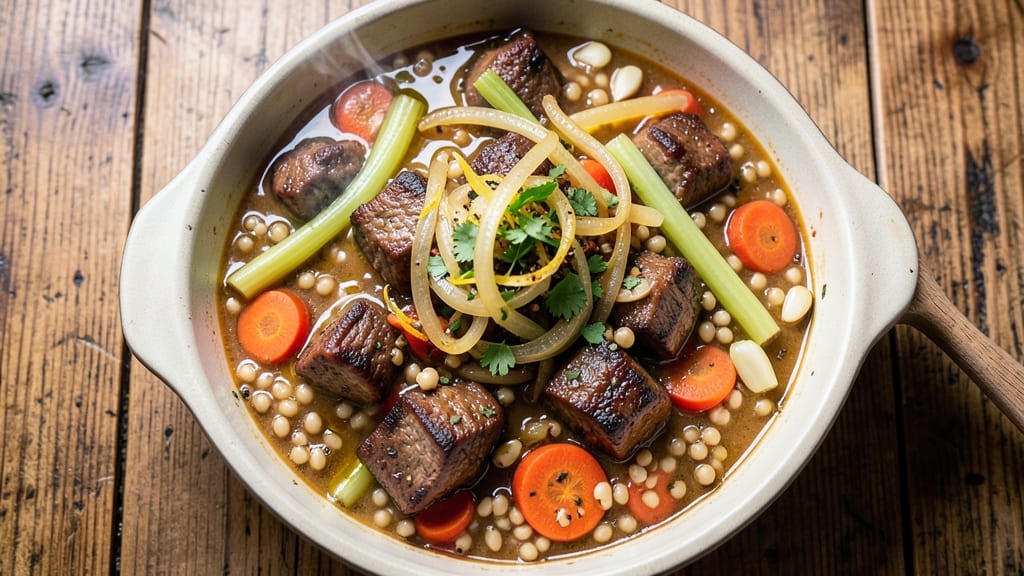
This beef and pearl barley stew transforms tough cuts into melt-in-your-mouth tenderness through slow-simmered magic. The secret lies in searing beef first to build deep, caramelized flavor before letting it break down over hours, while pearl barley absorbs rich broth into chewy, satisfying bites.
I developed this recipe after years of testing—each element must work together for that perfect balance of hearty meat, nutty barley, and tender vegetables.
The beauty of this stew is its foolproof technique that delivers restaurant-quality results at home. Start with a properly browned beef chuck roast (never skip this step!) to create a flavorful crust, then deglaze the pot to capture every bit of fond.
Vegetables like carrots and celery add natural sweetness, while bay leaves and thyme infuse subtle earthy notes that elevate the dish. The pearl barley—pre-cooked for just 20 minutes—soaks up the broth perfectly, creating those satisfying chewy bites.
By the time it finishes simmering, you'll have a stew so rich and comforting it feels like a hug in a bowl.
The beef falls apart at the touch of a fork, the barley is tender but still holds its shape, and the broth has reduced into a velvety sauce that coats every spoonful.
This is the kind of meal that tastes even better the next day, making it perfect for meal prep or feeding a crowd. The aroma alone will have everyone gathering around the table.
Serve with crusty bread for dipping or over buttery mashed potatoes to soak up every last drop of that flavorful broth. The leftovers reheat beautifully, and the flavors deepen over time—proof that slow cooking truly transforms simple ingredients into something extraordinary.
Let's get started on this hearty, satisfying stew that brings warmth to any meal.
Ingredients for beef and pearl barley stew
Sixteen ingredients, one pot, hours of rich flavor development—this stew delivers restaurant-quality heartiness at home.
| Ingredient | Amount | Notes |
|---|---|---|
| Beef Chuck Roast 🥩 | 2 ½ lb | Cut into 1.5-inch cubes for even cooking |
| Pearl Barley 🌾 | 1 cup | Uncooked, rinsed before adding to broth |
| Yellow Onion 🧅 | 1 whole | Diced, medium size preferred |
| Carrots 🥕 | 4 medium | Peeled, cut into 1-inch chunks |
| Celery Stalks 🧄 | 4 whole | Cut into 1-inch pieces |
| Garlic Cloves 🧄 | 4 cloves | Minced for even distribution |
| Beef Broth 💧 | 4 cups | Low-sodium preferred for flavor control |
| Red Wine 🍷 | 1 cup | Bold dry red like Cabernet Sauvignon |
| Tomato Paste 🍅 | 2 tbsp | Smooth, no added salt |
| Fresh Thyme 🌿 | 2 sprigs | Or 1 tsp dried thyme if fresh unavailable |
| Bay Leaves 🌿 | 2 whole | Remove before serving |
| Olive Oil 🫒 | 2 tbsp | Extra-virgin for searing |
| Salt 🧂 | 1 ½ tsp | Kosher salt preferred for seasoning |
| Black Peppercorns 🌶️ | 1 tsp | Freshly cracked for best flavor |
| All-Purpose Flour 🌾 | 1 tbsp | For thickening broth at the end |
The beef chuck roast is non-negotiable here—look for well-marbled cuts at your butcher or the meat department. Costco and Whole Foods typically carry high-quality chuck roasts that work perfectly. If you're buying pre-cut cubes, check for even sizing (about 1.5 inches) to ensure consistent cooking. The pearl barley should be uncooked and rinsed before adding to the pot—this prevents excess starch and ensures proper texture. For the vegetables, organic carrots and celery from the store's produce section work well, but any fresh, firm produce will do.
Short on red wine? Substitute with beef broth plus 1 tbsp balsamic vinegar for depth. No fresh thyme? Dried thyme at one-third the amount works, but fresh is ideal. The tomato paste can be skipped if you dislike its intensity, but it adds a subtle sweetness that balances the dish. For the flour, all-purpose is fine, but if you have Wondra instant flour, it dissolves better without clumping. The bay leaves are essential—remove them before serving as they can be tough. If you're using a slow cooker, reduce the broth by 1 cup to account for less evaporation.
This stew reheats beautifully—tastes even better the next day as flavors meld. Store leftovers in an airtight container for up to 5 days in the fridge or freeze for 3 months. For meal prep, double the recipe and freeze half. The barley stays chewy when reheated, and the beef becomes even more tender. Serve with crusty bread or over buttered egg noodles to soak up every last bit of that rich, velvety broth.
Why You'll Love This Recipe
- Ditch the Chopping: I swear by the "mirepoix shortcut": just buy pre-diced onion, carrots, and celery (or roughly chop them while the stew simmers—no one will notice). The beef chuck roast does all the work anyway, falling apart by the end.
- Rich Without Effort: That beef chuck roast? It melts into tender, juicy shreds while the barley soaks up all the flavor—no fancy technique needed. Honestly, the slow simmer turns basic ingredients into something that tastes like you slaved over it.
- Leftovers That Beg for More: This stew only gets better the next day. I’ve reheated mine three times, and it’s still hearty enough to fill bowls for lunch or dinner. (Yes, even on a Tuesday night.)
- Budget Feeds a House: A single chuck roast stretches across four servings, and pearl barley is cheaper than rice. Between us, this is my go-to when I need to feed a crowd without breaking the bank.
Step-by-step instructions for beef and pearl barley stew
This slow-simmered stew delivers deep flavor and satisfying texture through precise timing and layering.
Sear the Beef for Rich Flavor
Pat the 2.5 lb beef chuck roast dry with paper towels—this ensures maximum browning. Heat 2 tablespoons olive oil in a large Dutch oven over medium-high heat until shimmering. Working in batches if needed, add the beef cubes and sear for 3-4 minutes per side until deeply browned. Don't crowd the pan or the temperature will drop.
The reason we sear is simple: browning creates the Maillard reaction, which builds complex, meaty flavors that dissolve into the broth during simmering. Transfer the browned beef to a plate and set aside. If any browned bits remain in the pot, leave them—they're pure flavor.
Sauté Vegetables and Build the Base
In the same Dutch oven, reduce heat to medium and add the diced yellow onion, carrots, celery stalks, and minced garlic cloves. Cook for 5-6 minutes, stirring occasionally, until the vegetables soften and the garlic becomes fragrant. You want them to release moisture but not brown.
Here's where it gets important: don't let the vegetables burn. If they start to stick, add 1 tablespoon water and scrape up any browned bits from the bottom. These bits, called fond, are packed with flavor that will infuse the stew. Once the vegetables are tender, stir in the 2 tablespoons tomato paste and cook for 1 minute to deepen the color.
Deglaze and Combine Liquids
Pour in the 1 cup red wine and scrape the bottom of the pot vigorously with a wooden spoon. This deglazing step captures all the flavorful browned bits. Let the wine simmer for 2-3 minutes until reduced by half. Add the 4 cups beef broth, 1.5 teaspoons salt, 1 teaspoon black peppercorns, 2 sprigs fresh thyme, and 2 whole bay leaves.
The wine and broth should just cover the vegetables. If it looks too thin, don't worry—the barley will absorb some liquid as it cooks. Bring the mixture to a gentle boil, then return the seared beef to the pot. The liquid should come up to about halfway on the beef cubes, allowing them to cook slowly and evenly.
Simmer Until Tender
Reduce heat to low and cover the pot. Let the stew simmer for 2 hours, stirring occasionally to prevent the barley from sticking to the bottom. The barley should be tender but still hold its shape—it should be al dente, not mushy. You'll know it's ready when the beef is fork-tender and pulls apart easily.
If the stew reduces too much and the barley looks dry, add ½ cup water or broth. The key is maintaining a gentle simmer—not a rolling boil—which keeps the barley from turning to mush. The longer it cooks, the more flavor the beef and vegetables will release into the broth.
Thicken and Finish
Remove the bay leaves and thyme sprigs from the stew. In a small bowl, whisk together the 1 tablespoon all-purpose flour with 2 tablespoons cold water to make a slurry. Slowly stir this into the stew while it simmers over medium-low heat for 5-7 minutes until the stew thickens slightly. You want it to coat the back of a spoon but still be loose enough to spoon.
The flour slurry helps create a velvety texture without making the stew gluey. Taste and adjust seasoning with more salt or pepper if needed. The stew should be rich, savory, and balanced—not overpowering with any single flavor. Let it sit off the heat for 10 minutes before serving to allow the flavors to meld completely.
Pro Tips For Making Beef And Pearl Barley Stew
- Sear the Chuck Roast Hard: I learned this the hard way—skipping the sear means bland beef. Use a heavy pot or Dutch oven, crank the heat to medium-high, and walk away for 5 minutes. Let it brown deeply on all sides before adding liquid; that crust locks in flavor and keeps the meat tender.
- Cut Celery, Onion, Carrots Evenly: Roughly chopped veggies turn to mush. Instead, slice the celery into ½-inch pieces, dice the onion into ¼-inch cubes, and cut the carrots into ½-inch rounds. Even sizes ensure they cook at the same pace and stay intact.
- Don’t Rush the Barley: Pearl barley needs time—skip the urge to check it early. It’s done when it’s tender but still holds shape, usually 45-60 minutes. Overcooking turns it to mush, so taste it at 40 minutes and adjust liquid as needed.
- Deglaze with Red Wine: Sounds fancy, but it’s worth it. After searing the beef, splash in ½ cup red wine (like Cabernet) and scrape the browned bits off the bottom. It adds depth without extra effort—just let it reduce by half before adding broth.
Dietary considerations for this recipe
Gluten-Free Adaptations
This stew is naturally gluten-free, but the flour slurry at the end requires attention. Replace the 1 tablespoon all-purpose flour with 1 tablespoon cornstarch or gluten-free all-purpose flour blend (like Bob's Red Mill 1:1).
Mix it with 2 tablespoons cold water to create a slurry, then stir into the stew as directed. The texture will thicken just as effectively without gluten. Always check labels on broths and tomato paste for hidden gluten—opt for certified gluten-free brands like Pacific Foods or Annie's when needed. 🌾
Low-Carb Options
For a lower-carb version, reduce the pearl barley to ½ cup or swap it for ½ cup cauliflower rice (pre-rinsed). The cauliflower absorbs flavors beautifully and adds a subtle sweetness. Keep all other ingredients the same, but simmer for 15 minutes less since cauliflower cooks faster.
Add 1 tablespoon nutritional yeast at the end for a cheesy, umami depth that complements the beef. This keeps the dish hearty while cutting carbs significantly.
Dairy-Free Considerations
This recipe is already dairy-free, but if you're serving it with sides like mashed potatoes or bread, opt for dairy-free alternatives. Use olive oil or vegan butter for bread and cashew cream or coconut milk for mashed potatoes.
The stew's rich broth stands up well to dairy-free pairings, and the barley's nutty flavor balances any subtle coconut notes. For extra richness, stir 1 tablespoon coconut cream into the stew during the final 5 minutes of simmering.
Allergen-Friendly Swaps
For nut allergies, avoid adding any nut-based thickeners. Stick with cornstarch or arrowroot powder for thickening instead of flour. If you're avoiding wine, substitute the 1 cup red wine with 1 cup beef broth plus 1 tablespoon balsamic vinegar for depth.
For shellfish allergies, ensure your beef broth is shellfish-free (brands like Imagine or Swanson offer safe options). Always double-check labels, especially for broths and tomato paste, which can sometimes contain hidden allergens.
Protein Alternatives
For a vegetarian version, replace the beef with 2.5 lbs mushrooms (cremini or portobello), sliced into thick pieces. Sear them first, then proceed with the recipe. Add 1 tablespoon soy sauce or tamari when deglazing for umami depth.
For a chicken version, use 2.5 lbs boneless, skinless chicken thighs (they stay juicier than breasts) and reduce simmering time to 45 minutes to avoid drying out. The barley and vegetables will still cook through perfectly.
Keto-Friendly Adjustments
To make this keto-friendly, eliminate the barley entirely and increase the mushrooms or chicken to 3 lbs for extra protein. Add 1 cup chopped kale or spinach during the final 10 minutes of simmering for greens without carbs.
Use bone broth (like Kettle & Fire) for added gelatin, which supports gut health. The result is a low-carb, high-protein stew that fits perfectly into a keto diet while keeping the rich, satisfying texture intact. 💪
Nutrition facts
Frequently asked questions
Why does searing the beef matter in this stew?
Searing creates the Maillard reaction, which builds deep, caramelized flavors that dissolve into the broth during simmering. Skipping this step leaves your stew tasting flat and one-dimensional. The browned crust on the beef releases rich, meaty notes that make the difference between good and extraordinary.
Can I use instant barley instead of pearl barley?
No, this recipe requires pearl barley because it needs 20 minutes of pre-cooking before adding to the stew. Instant barley cooks too quickly and will turn mushy. For a shortcut, you could use ½ cup pre-cooked pearl barley (from another pot) and reduce the simmering time by 30 minutes.
How do I know when the beef is fully cooked?
The beef should be fork-tender and pull apart easily with minimal resistance. For perfect doneness, check after 2 hours of simmering. Insert a fork into the largest piece—if it slides in effortlessly, it's ready. If not, simmer another 15-20 minutes covered.
What if my stew is too thin after simmering?
Stir in a slurry of 1 tablespoon flour + 2 tablespoons cold water and simmer for 5-7 minutes until thickened. For a gluten-free option, use cornstarch instead. If it's still too thin, repeat with another ½ teaspoon flour/cornstarch—just don't overdo it or the stew will become gluey.
Can I make this in a slow cooker?
Brown the beef first, then combine everything in your slow cooker and cook on low for 8 hours or high for 5 hours. Reduce the broth by 1 cup since slow cookers don't evaporate as much liquid. The barley will absorb the extra moisture perfectly.