
Sauces & Condiments
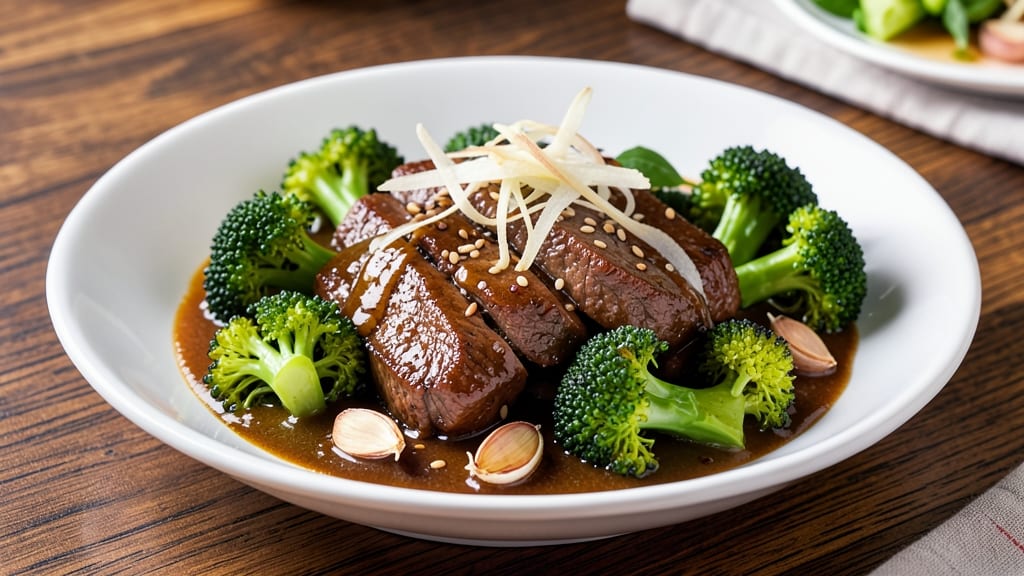
This beef and broccoli brown sauce recipe transforms ordinary stir-fry into a restaurant-worthy dish with its deep umami richness and perfect balance of sweet and savory notes.
The secret lies in slow simmering soy sauce, ginger, garlic, and a touch of brown sugar until it thickens into a glossy glaze that clings beautifully to beef and broccoli. I've perfected this sauce over countless weeknight dinners—it's the kind of flavor that makes even the simplest meal feel special.
The magic happens when you reduce the sauce until it reaches that ideal consistency—thick enough to coat every bite but still fluid enough to create a glossy finish. A splash of rice vinegar brightens the flavors, while a pinch of white pepper adds subtle warmth without overpowering.
This sauce works equally well with tender beef strips or crispy tofu, making it versatile for any stir-fry lover. The best part? It comes together in just 20 minutes with simple pantry staples.
What sets this brown sauce apart is its ability to elevate any beef and broccoli dish—whether you're serving it over steamed rice or tossing it with noodles. The caramelized edges on the sauce create a satisfying contrast against the tender beef and crisp broccoli florets.
Once you taste the difference between this homemade glaze and store-bought versions, you'll never go back to the bottled kind again.
For extra depth, I recommend toasting the garlic and ginger before adding them to the sauce—this step unlocks their natural oils and intensifies their flavor. The sauce keeps well in the refrigerator for up to 5 days, so you can make a big batch and use it all week.
Let's get started on creating this flavor-packed sauce that will become your new stir-fry staple.
Ingredients for beef and broccoli brown sauce
Nine simple ingredients transform ordinary stir-fry into restaurant-worthy beef and broccoli magic.
| Ingredient | Amount | Notes |
|---|---|---|
| Light Soy Sauce 🥢 | ½ cup | High-quality brand like Kikkoman |
| Dark Soy Sauce 🥢 | ¼ cup | For deeper umami flavor |
| Brown Sugar 🍯 | 2 tbsp | Or substitute with honey |
| Garlic Cloves 🧄 | 4 cloves | Toasted for extra flavor |
| Fresh Ginger 🌿 | 1 tbsp | Grated, peeled |
| Rice Vinegar 🍶 | 1 tbsp | White or seasoned |
| Sesame Oil 🫒 | 1 tbsp | Toasted sesame oil preferred |
| White Pepper 🌶️ | ¼ tsp | Freshly ground preferred |
| Cornstarch 🌾 | 1 tbsp | For thickening |
| Water 💧 | ¼ cup | Room temperature |
The soy sauces are the heart of this sauce—Kikkoman light and La Choy dark are my go-tos, but any high-quality brands work. Brown sugar adds that perfect caramelized depth, and you can toast it lightly in the pan before adding other ingredients to intensify the flavor. Fresh ginger is ideal, but if you're using powdered, cut the amount by half. Toasting the garlic cloves in a dry pan for 30 seconds unlocks their natural oils—trust me, it's worth the extra minute. For sesame oil, Kadoya or Hana brand are my favorites, but any toasted sesame oil will do.
No brown sugar? Honey or maple syrup works in a pinch, but the caramelization will be slightly different. Running out of dark soy sauce? Double the light soy sauce and add a dash of molasses for depth. Fresh ginger hard to find? Powdered ginger at half the amount gets you close. The cornstarch is crucial for that perfect glossy finish—don't skip it. For a quicker version, you can use arrowroot powder instead. And if you're making this ahead, the sauce actually tastes better the next day once all the flavors meld together.
This sauce keeps beautifully in the fridge for up to 5 days—perfect for meal prep. Store it in an airtight container, and give it a quick stir before using. Freezes well for 3 months too, though the texture might thicken slightly after thawing. For best results, reheat gently on the stove with a splash of water to loosen it up. I always make extra because it disappears fast—toss it with beef, tofu, or even grilled chicken for a quick weeknight dinner.
Why You'll Love This Recipe
- Pantry Magic: I swear by this recipe—no fancy ingredients, just the soy sauces, a pinch of brown sugar, and a quick minced garlic. Honestly, if I’ve got those basics, I’m making this.
- Sweet-Savory Balance: That dark soy sauce caramelizes into something rich, while the brown sugar keeps it from being too heavy. The ginger? Oh, it’s the secret—just a whisper, but it transforms everything.
- Leftover Hero: This sauce thickens beautifully when reheated, so leftovers taste even better the next day. I’ll be real: I’ve made it for lunch, dinner, and even packed it in bento boxes—it’s that reliable.
- Weeknight Win: Twenty minutes, one pan, and zero stress. The broccoli stays crisp, the beef stays tender, and the sauce? It’s ready while you’re still deciding what to watch on TV. (Yes, even on a Tuesday night.)
Step-by-step instructions for deep umami beef and broccoli brown sauce
This sauce delivers that signature glossy, caramelized glaze—here's how to make it shine every time.
Toast Aromatics for Maximum Flavor
Heat a small skillet over medium heat and add the 4 cloves garlic cloves and 1 tablespoon fresh ginger. Toast for 1-2 minutes until the garlic turns golden and fragrant—you'll smell that nutty aroma. Be careful not to burn them; they should just be lightly colored, not dark brown.
Transfer the toasted aromatics to a blender or small bowl and let them cool slightly. The heat deepens their flavor, but they'll lose potency if overcooked. I like to mash them with a fork at this stage to release their oils, which helps build that rich umami foundation for the sauce.
Combine Wet Ingredients for the Sauce Base
In the same skillet (no need to clean it—the browned bits add flavor), pour in the 0.5 cup light soy sauce and 0.25 cup dark soy sauce. Bring to a gentle simmer over medium heat for 3-4 minutes until the mixture reduces slightly and becomes syrupy. You're looking for a glossy sheen and about ¼ cup of reduced liquid.
Add the 2 tablespoons brown sugar and 1 tablespoon rice vinegar, stirring constantly. The sugar will start to dissolve and caramelize, adding depth to the sauce. If you notice any browned bits sticking to the pan, use a wooden spoon to scrape them up—they're packed with flavor. This is where that umami magic begins to develop.
Build the Glossy Glaze
Return the toasted garlic and ginger to the skillet and stir for 30 seconds to infuse their flavors into the sauce. Then add the 1 tablespoon sesame oil and 0.25 teaspoon white pepper, mixing well. The sesame oil adds that nutty aroma, while the white pepper gives a subtle, clean heat that balances the sweetness.
Let the sauce simmer uncovered for another 2-3 minutes until it thickens slightly. You're aiming for a consistency where it coats the back of a spoon but still has a glossy sheen. If it's too thin, don't worry—we'll fix that in the next step. Taste and adjust seasoning now if needed; you can always add more soy sauce later if it's too sweet.
Thicken to Perfect Sauce Consistency
In a small bowl, whisk together the 1 tablespoon cornstarch and 0.25 cup water until smooth. Slowly pour this mixture into the simmering sauce while stirring constantly. The sauce will thicken immediately—keep stirring for 1-2 minutes until it reaches a glossy, syrupy consistency that clings to the back of a spoon.
Here's the thing—this sauce should coat the back of a spoon but still be pourable. If it's too thick, add a splash of hot water (not cold) to loosen it. If it's too thin, simmer for another 30 seconds to reduce further. The perfect consistency is when it's thick enough to glaze but still flows smoothly over beef and broccoli.
Finish with a Glossy Sheen
Remove the sauce from heat and let it cool for 1 minute. The residual heat will continue to thicken it slightly. For that signature restaurant-quality finish, add a final ½ teaspoon sesame oil (if you have extra) and give it one last stir. The sauce should now have a deep, rich color with a glossy sheen that makes it look irresistible.
This sauce keeps well in the refrigerator for up to 5 days in an airtight container. When you're ready to use it, simply reheat it gently over low heat, stirring occasionally, until it's warmed through. It's perfect for tossing with stir-fried beef and broccoli, drizzling over rice bowls, or even as a dipping sauce for spring rolls.
Pro Tips For Making Beef And Broccoli Brown Sauce
- STIR CONSTANTLY AT FIRST: The first 30 seconds after adding soy sauces and sugar to the pan are when the sauce can burn faster than you’d expect—especially if you’re using dark soy sauce. Keep that spoon moving in tight circles until the mixture starts to thicken slightly, or you’ll end up with a bitter, charred mess instead of that glossy, caramelized sauce.
- GRATE GINGER, DON’T SLICE: I used to hack off thick ginger slabs and toss them in whole, thinking they’d soften enough. Nope. Grate it fine—about 1 teaspoon worth—so it dissolves into the sauce instead of sitting like a chewy afterthought. (Yes, even if you’re impatient like me.)
- DON’T RUSH THE GARLIC: After browning the beef, I learned the hard way that tossing in minced garlic straight away just makes it cook unevenly—some bits burn, others stay raw. Instead, let the pan cool just enough to handle (about 30 seconds), then add the garlic and stir like you’re trying to win a race. This guarantees a nutty aroma without a single bitter bite.
- SWAP BROWN SUGAR FOR HONEY: Running out of brown sugar? Use honey—but here’s the catch: reduce it by half (so 1 tablespoon instead of 2) and add a splash of water (1 teaspoon) to help it blend smoothly. The sauce will still caramelize, just with a slightly lighter texture. (I skip this when I’m lazy, but the dish is noticeably better when I don’t.)
Serving suggestions for this beef and broccoli brown sauce
Classic Beef & Broccoli
This sauce is designed to elevate your beef and broccoli stir-fry to restaurant-level quality. Toss 1 lb flank steak cut into ½-inch strips with 2 cups broccoli florets in a hot wok or skillet. Cook beef for 2-3 minutes until browned, then remove and set aside.
Stir-fry broccoli for 2 minutes until bright green, then return beef to the pan. Pour ½ cup of the brown sauce over everything and toss until evenly coated. Garnish with 1 tbsp sliced green onions and 1 tsp toasted sesame seeds for freshness. 🥢
Rice Bowl Upgrade
Transform your brown rice into a gourmet bowl by drizzling ¼ cup of the sauce over 1 cup cooked jasmine rice. Top with ½ cup sliced shiitake mushrooms sautéed in 1 tsp sesame oil and ¼ cup chopped cilantro.
Add 2 oz sliced beef or pan-seared tofu for protein. The sauce's sweet-savory balance complements the earthy rice perfectly. Serve with a side of steamed bok choy for extra veggies.
Spring Roll Dipper
Turn your brown sauce into a dipping sauce by thinning it slightly with 1 tbsp water to create a lighter consistency. Serve warm with homemade spring rolls or store-bought versions. For extra flair, add ½ tsp grated ginger and 1 tsp chili crisp to the sauce before dipping.
The contrast of crispy rolls with the glossy, umami-rich sauce is unbeatable. Store any leftover sauce in the fridge for up to 5 days.
Noodle Twist
Toss 8 oz cooked udon or ramen noodles with ½ cup of the brown sauce and ½ cup sliced bell peppers. Top with ¼ cup shredded carrots and 2 tbsp chopped scallions.
The sauce's thickness clings beautifully to the noodles, creating a satisfying, flavorful bite. For a spicy kick, add ½ tsp gochujang to the sauce before tossing. This makes a quick, satisfying weeknight meal.
Protein Swaps
This sauce isn't just for beef—it works beautifully with other proteins too. Swap the beef for chicken thighs (marinate in 1 tbsp soy sauce first), shrimp (toss with 1 tsp cornstarch before cooking), or crispy tofu (pan-fry until golden).
The sauce's versatility makes it perfect for meal prep. Store cooked proteins separately and assemble with sauce and veggies when ready to eat for freshness. 💡
Garnish Like a Pro
Finish your dish with these simple garnishes to elevate presentation: 1 tbsp toasted sesame seeds add nutty crunch, 2 tbsp sliced green onions bring freshness, and a drizzle of extra sesame oil adds shine.
For a pop of color, add ¼ cup shredded red cabbage or thinly sliced jalapeños if you like heat. These small touches make your dish look and taste restaurant-quality every time.
Nutrition facts
Frequently asked questions
Can I substitute dark soy sauce with regular soy sauce?
You can, but the color will be lighter. Use 1 extra tablespoon of light soy sauce plus ½ teaspoon molasses to mimic the depth. The molasses adds caramelized notes that dark soy sauce provides. For best results, toast the molasses lightly in the pan before adding other ingredients.
Why did my sauce turn out too thin?
This usually happens if you didn't simmer long enough or if the cornstarch mixture wasn't fully incorporated. For next time, reduce the sauce uncovered for 1-2 extra minutes before adding the cornstarch slurry. If it's still too thin, simmer another 30 seconds to thicken. For immediate fixes, whisk in ½ teaspoon more cornstarch mixed with 1 teaspoon water and cook for 1 minute.
Can I make this sauce without cornstarch?
Yes, but the texture will be thinner. Try using 1 teaspoon arrowroot powder instead—it works similarly but requires slightly less liquid. For a grain-free option, reduce the sauce longer (up to 5 minutes) to evaporate more liquid. The flavor will still be rich, though slightly less glossy. Store-bought gluten-free tamari works too if you're avoiding cornstarch.
How can I make this sauce spicier? Add ½ teaspoon chili flakes or 1 teaspoon gochujang (Korean chili paste) when combining the wet ingredients. For heat without dry spices, stir in 1 teaspoon sriracha or ½ teaspoon cayenne pepper at the end.
Can I use this sauce for other dishes besides beef and broccoli?
This versatile brown sauce works perfectly with chicken thighs, shrimp, or pan-seared tofu. Try it as a glaze for grilled pork chops or drizzled over steamed dumplings. The sweet-savory balance pairs well with almost any protein. For veggie dishes, toss it with sautéed mushrooms or crispy Brussels sprouts for a quick side.