Main Courses
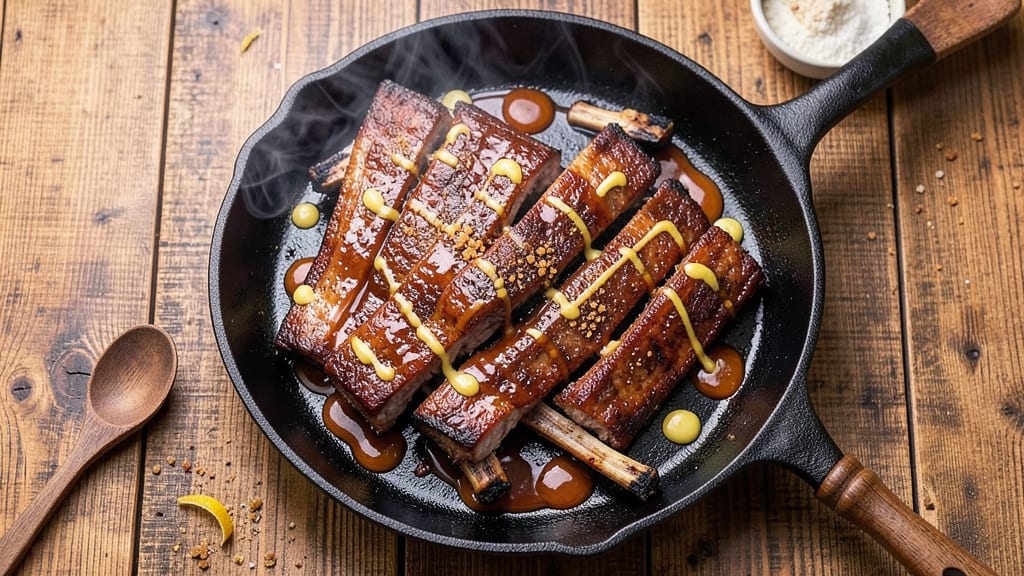
This 3-2-1 method for BBQ beef spare ribs delivers fall-off-the-bone tenderness that rivals any competition-style pitmaster. After years of perfecting my technique—including that infamous 2012 fire alarm incident in my college kitchen—I’ve cracked the code for restaurant-quality ribs at home.
The secret lies in precise timing, bark formation, and a slow cook that transforms tough meat into melt-in-your-mouth perfection.
What sets this recipe apart is the three-phase approach: a dry rub that builds flavor, a low-and-slow cook that tenderizes the meat, and a final high-heat sear for that coveted caramelized bark.
No fancy equipment needed—just patience and attention to temperature control. The ribs rest for 30 minutes before serving, allowing juices to redistribute for maximum tenderness.
By the time you’re done, you’ll have ribs so tender they nearly disintegrate at the touch, with a deep mahogany bark that locks in all that smoky, savory flavor.
Serve with classic sides like cornbread, coleslaw, or baked beans, and watch your guests beg for seconds. This is the kind of meal that turns weeknights into a celebration.
The beauty of this method is its flexibility—whether you’re smoking, grilling, or using an oven, the principles stay the same. Leftovers reheat beautifully, too, making this the ultimate crowd-pleaser for game days or family gatherings. Let’s get started on that fall-off-the-bone magic.
Ingredients for bbq beef spare ribs recipe barbecue
Four pounds of beef spare ribs plus a few pantry staples transform into competition-worthy BBQ.
| Ingredient | Amount | Notes |
|---|---|---|
| Beef Spare Ribs 🥩 | 4 lb | Bone-in, meaty ends included |
| Yellow Mustard 🍯 | ¼ cup | For sticky base layer |
| Brown Sugar 🍚 | ½ cup | Packed, light or dark |
| Smoked Paprika 🌶️ | 2 tbsp | For deep smoky flavor |
| Chili Powder 🌶️ | 1 ½ tbsp | Medium heat preferred |
| Garlic Powder 🧄 | 1 tbsp | Freshly ground preferred |
| Onion Powder 🧅 | 1 tbsp | For sweet depth |
| Ground Black Pepper 🌶️ | 1 tbsp | Freshly cracked |
| Kosher Salt 🧂 | 1 ½ tbsp | Diamond Crystal preferred |
| Apple Cider Vinegar 🍎 | ¼ cup | For tenderizing |
| Wood Chips 🌳 | 2 cups | Hickory or oak preferred |
| Beef Broth 🥫 | 1 cup | Low-sodium preferred |
| Apple Juice 🍎 | ½ cup | Sweetness balances smokiness |
The ribs are non-negotiable—look for meaty ends and good marbling. Costco or local butchers often have the best quality, but any grocery store will work. Trim excess fat if needed, but leave the membrane on for now—it helps with bark formation. For the dry rub, Penzeys or Trader Joe's carry excellent smoked paprika and chili powder. If you're using pre-cut ribs, check for even thickness—uneven pieces cook at different rates.
No yellow mustard? Dijon or whole-grain mustard works in a pinch. Substitute brown sugar with white sugar plus 1 tsp molasses for depth. The apple cider vinegar is key for tenderizing—if you don't have it, lemon juice or white vinegar will do, though flavor will shift slightly. For wood chips, hickory gives classic BBQ flavor, while oak adds a touch of sweetness. If you're short on time, smoke pellets are a great shortcut. The beef broth can be swapped for water plus 1 tbsp soy sauce for umami.
Store uncooked ribs wrapped in paper towels in the fridge for up to 2 days. The dry rub keeps for 3 months in an airtight container. Leftovers reheat beautifully—wrap ribs in foil and bake at 300°F for 20 minutes. For serving, I like to portion ribs into individual foil packets with extra sauce to keep them moist. The bark is best eaten fresh, but ribs stay tender for 4 days refrigerated or 3 months frozen.
Why You'll Love This Recipe
- One-Pan Magic: I swear by this recipe because it’s that easy—just ribs, a quick dry rub of smoked paprika and chili powder, then a sticky glaze of brown sugar and mustard. No flipping, no basting, no stress. Honestly, the hardest part is waiting for the oven to finish.
- Sweet-Smoky Bang: That balance of brown sugar caramelizing with the smoky paprika? It’s ridiculously good—like a cross between a BBQ joint and a cozy Sunday dinner. The yellow mustard ties it all together with a tangy kick that makes every bite addictive.
- Tailgate or Tuesday: Between us, these ribs work everywhere. Serve them at a backyard cookout with a cold beer, toss them in a wrap for a quick lunch, or freeze half for when you’re too tired to cook. My college kids devour them straight from the fridge—no judgment here.
- Budget-Friendly Feast: A full pack of spare ribs feeds six for under $20, and the glaze costs pennies. The leftovers? Even better the next day—crispy edges soften just enough, and the sauce soaks in like a dream. My wallet and my taste buds thank me every time.
Step-by-step instructions for perfectly smoked beef spare ribs
Master the 3-2-1 method for ribs that practically melt in your mouth.
Prepare the Ribs with Dry Rub and Mustard Base
Start by trimming any excess fat from the beef spare ribs, leaving about ¼ inch of fat cap for moisture. In a small bowl, combine the 0.5 cup brown sugar, 2 tbsp smoked paprika, 1.5 tbsp chili powder, 1 tbsp garlic powder, 1 tbsp onion powder, 1 tbsp ground black pepper, and 1.5 tbsp kosher salt. Mix thoroughly until evenly distributed.
Spread the 0.25 cup yellow mustard evenly over the ribs, then generously apply the dry rub to all surfaces, pressing it into the meat. This sticky-sweet base creates the perfect crust while the rub locks in flavor. Let the ribs sit at room temperature for 30 minutes before smoking—this ensures even cooking and better bark formation.
Smoke the Ribs Low and Slow for Maximum Tenderness
Set up your smoker using the 2 cups wood chips (hickory or oak preferred) and preheat to 225°F. Place the ribs bone-side down on the smoker grate, meaty ends toward the front. Smoke undisturbed for 3 hours, maintaining 225°F the entire time. The ribs are ready when they reach an internal temperature of 165°F—this is the "stall," where evaporation temporarily halts cooking.
Here's the thing—don't open the smoker during this phase. Every time you peek, you lose heat and moisture. If you must check, use a remote thermometer. The ribs should develop a dark, sticky bark and pull away from the bone slightly when lifted with tongs.
Wrap and Cook to Fall-Off-Bone Perfection
Remove the ribs from the smoker and wrap them tightly in heavy-duty aluminum foil. In a small bowl, mix the 1 cup beef broth and 0.5 cup apple juice, then pour this liquid into the foil with the ribs. Seal the foil completely, leaving no gaps. Return the wrapped ribs to the smoker and cook for 2 hours at 225°F. This step breaks down collagen and tenderizes the meat.
After 2 hours, unwrap the ribs and return them to the smoker, bone-side down, for 1 hour at 225°F. This final uncovered phase allows the bark to crisp up again. The ribs are done when they reach 203°F internally and the meat slides off the bone effortlessly. Real talk: if you cut into one and it looks perfect, you're golden.
Rest and Serve with Confidence
Transfer the ribs to a cutting board and let them rest for 15-20 minutes before serving. This resting period lets the juices redistribute, ensuring every bite is moist and flavorful. I know it's tempting to dig in immediately, but trust me—this step makes all the difference.
Slice between the bones to separate individual ribs, then serve with extra sauce from the foil packet. The combination of smoky, sweet, and tangy flavors will have everyone asking for seconds. These ribs deliver on the promise of fall-off-the-bone tenderness with a perfect balance of sweetness and heat.
Pro Tips For Making Bbq Beef Spare Ribs Recipe Barbecue
- Trim the Fat First: Beef spare ribs have a thick layer of fat on the bone side—scrape it off before cooking. I used to leave it, thinking it would render for flavor, but it just makes the ribs greasy and slows down the cooking process. A sharp knife and 5 minutes upfront save you from dealing with a sticky mess later.
- Dry the Ribs Thoroughly: Pat them completely dry with paper towels before applying the yellow mustard or dry rub. Wet ribs steam instead of sear, and that’s how you end up with bland, soggy bark. I learned this after my first batch turned out more like boiled ribs than smoked ones—yes, even with all that brown sugar in the mix.
- Baste with Mustard Early: Slather the yellow mustard on before the first hour of cooking, not just at the end. The acid in the mustard tenderizes the tough collagen while the ribs cook, and it caramelizes into a glossy crust that clings better than if you slap it on cold. Trust me, your ribs will taste deeper if you do this—it’s not just for looks.
- Watch the Sugar Burn: Brown sugar caramelizes fast, especially when mixed with chili powder and smoked paprika. Keep the heat under 275°F (135°C) during the first 2 hours of cooking, or you’ll end up with bitter, burnt spots. I’ve ruined ribs this way twice—now I set a timer to check the color every 30 minutes and adjust the heat if needed.
Wine and beer pairings for this recipe
Smoky Red Wine
For these rich, smoky ribs, I recommend a bold red wine like Cabernet Sauvignon or Syrah—both stand up to the intense flavors. A Napa Valley Cabernet with its dark fruit and oak notes complements the smoky bark beautifully.
If you prefer something fruitier, Malbec from Argentina adds juicy blackberry undertones that pair perfectly with the sweet-savory glaze. 🍷
Look for wines with at least 13% alcohol to match the ribs' robustness. I love a California Zinfandel for its spice and jammy notes, which echo the chili powder in the rub.
Avoid light whites or delicate rosés—they’ll get overwhelmed by the smokiness. Serve slightly chilled (around 60°F) to enhance the wine’s acidity and cut through the fat.
Hoppy Beer Pairings
A hoppy IPA is my go-to beer pairing for these ribs—its bitterness balances the sweetness of the bark. Try a West Coast IPA like Stone Ruination or Sierra Nevada Pale Ale for crisp citrus notes that refresh your palate. The hops also complement the smoky flavors without competing. 🍺
For a smoother option, a Belgian-style witbier like Hoegaarden adds a touch of spice and apple-like brightness that mirrors the apple juice in the cooking liquid.
If you’re grilling outdoors, a cold lager like Peroni or Corona works well—just avoid heavy stouts or dark ales, which can clash with the ribs’ sweetness.
Non-Alcoholic Options
Don’t drink? No problem. A smoky black cherry soda like Jarritos or Mott’s Spiced Apple mimics the ribs’ sweet-tangy profile. For something more sophisticated, try Fever-Tree Ginger Beer—its spicy kick pairs surprisingly well with the smoky flavors.
I also love sparkling hibiscus tea (chilled) for a refreshing, slightly tart contrast. 🍒
For a classic BBQ match, unsweetened iced tea with a splash of lemon juice and a pinch of cayenne echoes the ribs’ heat and acidity. Serve over ice with a mint sprig for garnish. The acidity helps cleanse your palate between bites of rich, smoky meat.
Sauce Enhancements
Want to elevate your pairing? Drizzle a balsamic reduction over the ribs before serving—its acidity pairs beautifully with both wine and beer. I like Bartles & Jaymes Balsamic Glaze for its deep, caramelized flavor.
For beer lovers, a honey-mustard glaze (mix 2 tbsp honey with 1 tbsp Dijon) adds a sweet-spicy contrast that works with IPA’s bitterness. 🍯
Pro tip: If using wine, deglaze the pan with ½ cup red wine after cooking to make a quick sauce. Reduce it with 1 tbsp butter and a pinch of smoked salt for a luxurious finish. This works especially well with Cabernet Sauvignon—just save a glass for yourself!
Nutrition facts
Frequently asked questions
Why does the 3-2-1 method work so well for beef spare ribs?
The 3-2-1 method creates the perfect balance of bark and tenderness. The 3 hours of initial smoking builds a flavorful crust while the 2 hours wrapped in foil breaks down collagen for melt-in-your-mouth texture. The final 1 hour uncovered lets that bark crisp up again. This slow-and-fast approach transforms tough meat into restaurant-quality ribs at home.
Can I cook these ribs in an oven instead of a smoker?
Use a low-temp oven set to 225°F with a water pan for moisture. Place ribs on a rack over the pan and follow the same 3-2-1 timing. For smoke flavor, add wood chips in a foil pouch with holes poked in it. The oven method works especially well if you don't have a smoker.
What's the best way to store leftover ribs?
Wrap ribs tightly in foil or place in an airtight container with a paper towel to absorb moisture. They'll stay tender for 4 days refrigerated or 3 months frozen. To reheat, bake at 300°F for 20 minutes wrapped in foil. The bark may get soggy if overcooked, so reheat gently.
Why do my ribs sometimes turn out dry?
Dry ribs usually happen from overcooking or opening the smoker too often. The internal temp should never exceed 203°F. Use a meat thermometer and avoid peeking! Wrapping the ribs in foil during the 2-hour phase locks in moisture. If they're still dry, try adding more apple juice or broth to the foil packet next time.
What's the difference between beef spare ribs and pork baby back ribs?
Beef spare ribs come from the plate section and have more fat and connective tissue, giving them a richer flavor but requiring longer cooking. Pork baby back ribs are leaner and cook faster (about 2-3 hours total). Beef ribs benefit more from the 3-2-1 method due to their tougher nature, while pork ribs can sometimes be overcooked using this approach. vs