
Main Courses
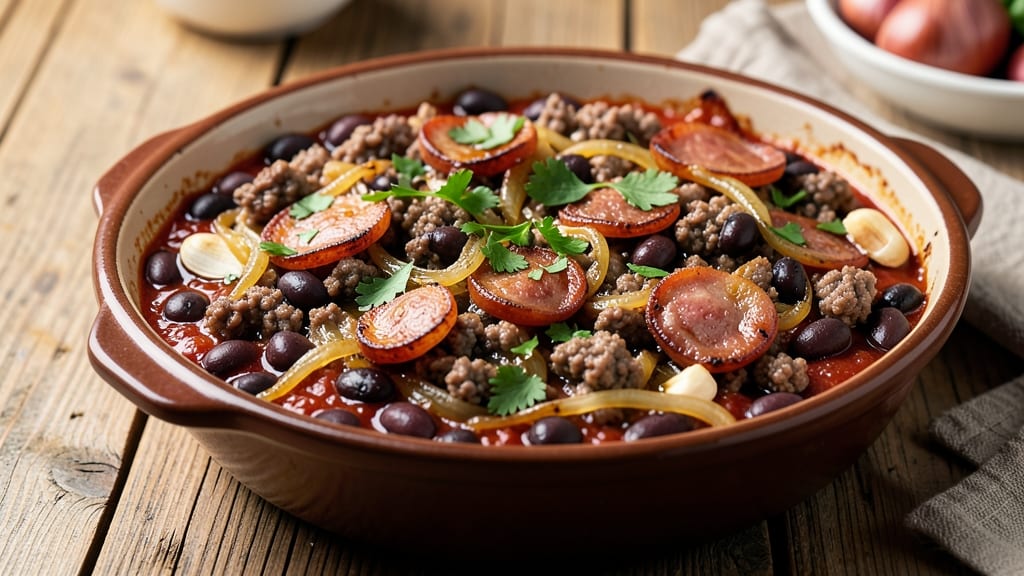
This baked bean recipe with ground beef and sausage delivers the ultimate comfort food experience—rich, smoky flavors that caramelize beautifully into thick, tender perfection. 🔥 The combination of ground beef and sausage adds depth while slow cooking transforms simple ingredients into a hearty, restaurant-quality dish that's impossible to resist.
What makes this recipe stand out is the balance of sweet and savory, where the beans soften just enough to soak up all the meaty juices and spices.
The beauty of this dish lies in its simplicity and versatility. With just a handful of ingredients—including navy beans, ground beef, smoked sausage, and a blend of spices—you'll create a meal that's both satisfying and easy to customize.
The slow cooking process allows flavors to meld together, resulting in beans that are tender yet still hold their shape, surrounded by caramelized edges that add a touch of sweetness. This recipe is perfect for feeding a crowd or meal prepping for the week ahead.
Imagine serving this dish at your next gathering, where the aroma of slow-cooked beans and spices fills the air, drawing everyone to the table. The result is a dish that's hearty enough to be the star of any meal, yet simple enough to prepare without stress.
Whether you're serving it with cornbread, crusty rolls, or over rice, this baked bean recipe promises to be a crowd-pleaser that leaves everyone asking for seconds.
Ready to elevate your comfort food game? This recipe is designed to be foolproof, ensuring that even if you're new to slow cooking, you'll achieve restaurant-quality results. The key is patience—letting the flavors develop over time transforms this dish from ordinary to extraordinary.
Let's get started on creating a baked bean masterpiece that will become a staple in your meal rotation.
Ingredients for baked bean recipe with ground beef and sausage
Six ingredients deliver restaurant-quality baked beans with smoky, caramelized perfection every time.
| Ingredient | Amount | Notes |
|---|---|---|
| Navy Beans 🌱 | 2 cups | Dried or canned, drained |
| Ground Beef 🥩 | 1 lb | 80% lean, finely chopped |
| Smoked Sausage 🌭 | 1 lb | Kielbasa or similar |
| Yellow Onion 🧅 | 1 whole | Diced, medium size |
| Garlic Cloves 🧄 | 4 cloves | Minced, fresh preferred |
| Tomato Paste 🍅 | ½ cup | Smooth, not chunky |
| Brown Sugar 🍯 | ¼ cup | Light or dark |
| Molasses 🍯 | 2 tbsp | Unsulphured preferred |
| Apple Cider Vinegar 🍏 | 2 tbsp | For tangy balance |
| Dijon Mustard 🍯 | 1 tbsp | Mild or hot |
| Chicken Broth 💧 | 2 cups | Low-sodium preferred |
| Kosher Salt 🧂 | 1 ½ tsp | Diamond Crystal preferred |
| Ground Black Pepper 🌶️ | ½ tsp | Freshly ground |
| Smoked Paprika 🌶️ | 1 tsp | For smoky depth |
| Bay Leaves 🍃 | 2 whole | Fresh if available |
The ground beef and smoked sausage are the flavor anchors here—80% lean beef adds richness while kielbasa or smoked sausage brings that essential smokiness. Costco or Trader Joe's often have pre-chopped beef at great prices, but if buying whole, pulse it in a food processor for even cooking. For sausage, look for 100% meat with no fillers—Johnsonville or Applegate are reliable. Navy beans? Dried are ideal (soak overnight), but canned in a pinch (drained well). The onion and garlic should be fresh—no sad, shriveled produce here. Quick tip: Sauté them first to build flavor before adding everything else.
No smoked paprika? Substitute half the amount of regular paprika plus a pinch of liquid smoke—it’s a game-changer. Short on molasses? Maple syrup or honey (though molasses gives that classic depth). The tomato paste can be the squeeze-tube kind from Trader Joe's if you hate canned mess. Dijon mustard adds tang—skip it if you’re sensitive to heat. For the broth, low-sodium is key, but add a pinch of salt if yours isn’t. The bay leaves are non-negotiable for that subtle herbal note, but remove them before serving. Pro move: Toast the spices (paprika, mustard, pepper) in a dry pan for 30 seconds—they’ll taste 10x better.
This dish tastes even better the next day as flavors meld. Store in an airtight container for up to 5 days in the fridge or 3 months frozen. For meal prep, divide into portions—single servings reheat beautifully in the microwave or oven. The caramelized edges? That’s the magic of slow cooking at 325°F for 3+ hours. If you’re short on time, use a pressure cooker (45 minutes) or Instant Pot (30 minutes on high pressure). Leftovers? Freeze in ziplock bags with a splash of broth to keep them moist.
Why You'll Love This Recipe
- One-Pot Magic: I swear by this recipe because it’s almost hands-off. Brown the beef and sausage, toss everything in one dish—beans, onions, garlic—and let the oven do the work. No straining, no fussing, just 45 minutes of set-it-and-forget-it while you fold laundry or scroll through memes.
- Smoky-Sweet Obsession: That combo of ground beef and smoky sausage? It’s a flavor bomb. The onions caramelize just enough to melt into the beans, while the garlic adds a sharp punch that makes every bite irresistible. Honestly, I’ve made this for potlucks, and people always ask for the recipe.
- Weeknight Workhorse: Between us, this is my go-to when I’m too tired to think. Double the batch on Sunday—it reheats like a dream for lunches, sandwiches, or even stuffed in tortillas for tacos. My college-aged son still texts me asking for leftovers, so clearly, it’s a win.
- Budget Breakthrough: Ground beef and navy beans stretch this dish into multiple meals without breaking the bank. Smoked sausage adds depth for pennies, and onions/garlic are pantry staples. I’ve fed six people for under $12, and no one complains about the price—or the taste.
Step-by-step instructions for slow-cooked smoky baked beans
Here's how to build deep, caramelized flavor through careful layering and slow cooking.
🍳 Step 1: Brown the Meats for Maximum Flavor
Heat a large Dutch oven over medium-high heat with no added oil. Add the 1 lb ground beef and 1 lb smoked sausage, breaking the sausage into ½-inch pieces as you add them. Cook undisturbed for 3-4 minutes until the meat loses its raw color, then stir to break up any large clumps.
Continue cooking until the meat is deep brown and fully cooked through, about 5-6 minutes total. This browning creates the Maillard reaction that forms the rich, meaty foundation of your beans. Use a slotted spoon to transfer the cooked meats to a plate, leaving all the rendered fat in the pot.
👨🍳 Step 2: Sauté Aromatics Until Fragrant
In the same Dutch oven (no need to wipe it out—those browned bits are flavor gold), add the diced yellow onion and cook over medium heat for 5-6 minutes until softened and beginning to caramelize at the edges. Add the 4 minced garlic cloves and cook for 30 seconds until fragrant—don't let it burn.
Stir in the 0.5 cup tomato paste, 0.25 cup brown sugar, and 1 tsp smoked paprika, cooking for another 2 minutes to toast these flavors together. This step develops the sweet-savory base that will carry through the entire dish. If the mixture sticks, add 1-2 tablespoons of the chicken broth to help deglaze.
🥘 Step 3: Combine All Ingredients and Simmer
Return the browned meats to the pot. Add the 2 cups navy beans, 2 cups chicken broth, 2 tbsp molasses, 2 tbsp apple cider vinegar, 1 tbsp Dijon mustard, 1.5 tsp kosher salt, and 0.5 tsp ground black pepper. Stir well to combine, then add the 2 whole bay leaves.
Bring the mixture to a boil over high heat, then immediately reduce to a gentle simmer. The beans should be mostly submerged—add a splash more broth if needed. Cover the pot and simmer for 1 hour, stirring occasionally to prevent skin from forming on top.
⏰ Step 4: Develop Caramelized Edges and Thicken
After the initial 1 hour, uncover the pot and increase heat to medium-low. Let the beans simmer uncovered for 30-45 minutes, stirring occasionally. This uncovered phase allows moisture to evaporate, concentrating flavors and creating those coveted caramelized edges on the beans.
You'll know it's ready when the sauce has thickened to a glossy, jam-like consistency and the beans are tender but still hold their shape when pressed. The total cooking time should be about 1 hour 30 minutes from when you first combined everything. Taste and adjust seasoning—you may need a bit more salt or vinegar to balance flavors.
🔥 Step 5: Rest and Serve for Maximum Flavor
Transfer the baked beans to a serving dish and let them rest at room temperature for 10-15 minutes before serving. This resting period allows all the flavors to meld together completely. The beans will continue to thicken slightly as they cool.
Serve warm with crusty bread or as a hearty side dish. Each spoonful should deliver a perfect balance of smoky sausage, sweet molasses, tangy vinegar, and rich tomato depth. The caramelized edges on the beans are your reward for the careful slow cooking—they should be slightly crisp while maintaining a tender interior.
Pro Tips For Making Baked Bean Recipe With Ground Beef And Sausage
- CRISP THE SAUSAGE FIRST: Smoked sausage releases more flavor when browned first—don’t skip this. Slice it into half-moons, cook over medium-high heat for 4-5 minutes until the edges blister, then set aside. I used to toss it in raw, and the beans just soaked up the grease instead of the deep, smoky taste.
- SOAK BEANS 2 HOURS MINIMUM: Navy beans expand fast, and skipping the soak leads to a mushy, split mess. Cover them in water for at least 2 hours (or overnight if you’re patient), then drain and rinse. After burning three batches of gummy beans, I learned: this step isn’t optional.
- BROWN THE BEEF IN BATCHES: Overcrowding the pan steams the meat instead of browning it. Split the ground beef into two piles, cook the first half until it loses its raw color, then move it to a plate before adding the second batch. The difference in flavor? Night and day—especially when paired with those crispy sausage bits.
- SWEAT ONIONS LOW AND SLOW: High heat caramelizes onions too fast, turning them bitter. Instead, cook them over low heat for 8-10 minutes until translucent but still soft, stirring occasionally. I was skeptical until I tried it—now my beans have that sweet, mellow base instead of a burnt-on onion flavor.
Essential equipment for this dish
Dutch Oven Essentials
A 5-7 quart Dutch oven is your best friend for this recipe—it holds heat beautifully and allows even browning of meats. I swear by the Le Creuset Signature (holds 7 quarts) for its even heat distribution, but a Lodge cast iron (5.5 quarts) works just as well.
The deep sides prevent spills when stirring, and the tight lid traps steam for perfect texture. If you're short on space, a stainless steel deep skillet with a lid will do in a pinch. 🔥
Meat Thermometer
Invest in a meat thermometer to ensure your ground beef and sausage reach 160°F—this is especially important when handling multiple meats. The ThermoWorks Smoke is my go-to for its instant-read accuracy and durable probe.
For budget-friendly options, the OXO Good Grips delivers consistent results. Check temps in the thickest part of the meat before transferring to your beans—this prevents overcooking and ensures juicy results.
Wooden Spoon
A heatproof wooden spoon (like the OXO Good Grips) is perfect for stirring without scratching your Dutch oven. The natural wood handles high heat better than silicone and won’t melt.
Use it to scrape up those delicious browned bits from the bottom—those are flavor gold! For deglazing, a stainless steel spatula works best to lift stuck-on bits without damaging your cookware.
Mixing Bowls
Keep your workspace organized with two medium mixing bowls (8-inch diameter). One for prepping your beans (soaking if using dried) and another for measuring wet ingredients like broth and molasses.
I use stainless steel for durability, but glass works too. Pro tip: Label them with masking tape to avoid cross-contamination—especially important when handling raw meat and veggies.
Slow Cooker Alternative
For hands-off cooking, a 6-quart slow cooker (like the Hamilton Beach) is a game-changer. Brown your meats in a skillet first, then transfer everything to the slow cooker and cook on Low for 6-7 hours or High for 3-4 hours.
The key difference? You’ll need to add ½ cup extra broth to account for evaporation. The slow cooker’s tight lid creates a steam bath, ensuring tender beans without caramelized edges—just stir in a splash of molasses at the end for depth.
Storage Containers
For leftovers, glass Pyrex storage containers (with snap-on lids) are my top pick—they stack neatly in the fridge and reheat evenly. If you’re freezing, ziplock freezer bags (quart size) work best—squeeze out excess air to prevent freezer burn.
Label each container with the date (this recipe keeps for 3 months in the freezer). For serving, a ceramic crock keeps beans warm for hours at potlucks—just preheat it in the oven before transferring hot beans. ✨
Nutrition facts
Frequently asked questions
Can I use canned beans instead of dried?
Yes, canned beans work perfectly in a pinch! Use 2 (15-ounce) cans of navy beans, drained and rinsed thoroughly. For best texture, skip the soaking step entirely. The cooking time will be slightly shorter—about 1 hour 15 minutes total—but you'll still get that rich, caramelized flavor. Just be sure to drain well to avoid a watery dish.
What kind of sausage works best?
For maximum smokiness, use smoked kielbasa or andouille sausage. Both add deep flavor that pairs beautifully with the molasses and vinegar. If you prefer milder sausage, Italian sweet sausage works too—just reduce the smoked paprika to ½ teaspoon to balance the flavors. Avoid pre-cooked sausages with fillers like soy protein for the best texture and taste.
How do I prevent the beans from getting mushy?
The key is proper cooking time and technique. Don't overcook—the beans should be tender but still hold their shape when pressed with a fork. After the initial 1 hour of simmering, uncover the pot and let them cook uncovered on medium-low heat for 30-45 minutes. This evaporates excess moisture and creates those beautiful caramelized edges. Also, avoid stirring too frequently during the uncovered phase.
Can I make this recipe in an Instant Pot?
Brown your meats first in a skillet, then transfer everything to your Instant Pot. Cook on High Pressure for 20 minutes, then do a Quick Release. For extra thickness, transfer to a skillet and simmer uncovered for 10-15 minutes on medium-low heat to develop caramelized edges. The Instant Pot version cooks faster but may need a splash of extra broth to achieve the same rich consistency.
What's the best way to reheat leftovers?
For best results, reheat in a skillet over medium heat with a splash of water or broth to restore moisture. Stir frequently to prevent sticking. In the microwave, cover with a damp paper towel and heat in 30-second intervals, stirring between each. Never reheat directly from frozen—thaw in the fridge first. The beans will thicken further as they reheat, so you may need to add a little extra liquid if they seem too dry.