
Main Courses
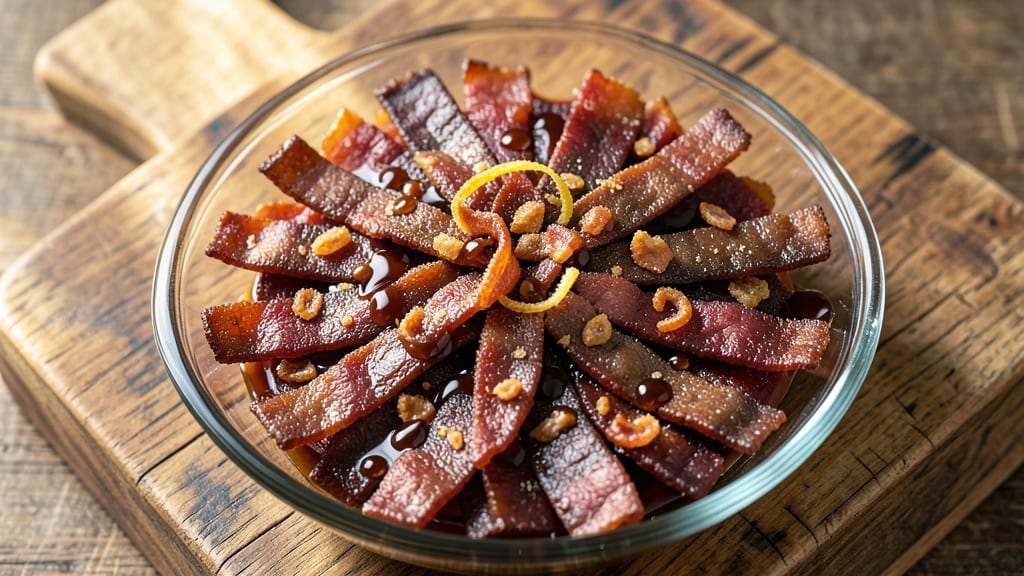
This bacon-flavored beef jerky recipe transforms tough cuts of beef into smoky, chewy snacks that taste like a cross between campfire meat and sweet bacon treats. The secret lies in a marinade packed with brown sugar, liquid smoke, and bacon bits that infuse every bite with deep, savory-sweet flavor.
I’ve perfected this method over years of testing—no more bland, dry jerky that falls apart in your pocket.
The process starts with lean cuts like top round or flank steak, sliced thin against the grain to ensure tender, fibrous texture. A 24-hour marinade in a blend of Worcestershire, apple cider vinegar, and bacon fat creates that signature smoky-sweet profile.
Safety is critical: curing meat properly prevents bacteria, so we’ll use a precise salt-to-meat ratio and monitor dehydration times carefully. This isn’t just jerky—it’s a restaurant-quality snack you’ll crave between meals.
By the time you’re done, you’ll have crispy-edged, chewy-center jerky with a bacon aroma that lingers long after the last bite. The dehydrator (or oven) works its magic, reducing moisture while locking in those rich flavors.
Store it in an airtight container for up to 3 months, and you’ll always have a protein-packed treat ready to grab. Perfect for road trips, game days, or when you just need a salty fix without the guilt.
Whether you’re a jerky novice or a seasoned maker, this method delivers foolproof results every time. Let’s get started—your taste buds (and snack stash) will thank you.
Ingredients for bacon flavored beef jerky
Lean beef, smoky bacon, and sweet spices—everything you need for restaurant-quality jerky at home.
| Ingredient | Amount | Notes |
|---|---|---|
| Top Round Beef 🥩 | 2 lb | Thinly sliced against grain |
| Bacon Bits 🥓 | 1 cup | Crumbled, thick-cut preferred |
| Brown Sugar 🍯 | ½ cup | Light or dark variety |
| Liquid Smoke 💨 | 1 tbsp | High-quality, not artificial |
| Worcestershire Sauce 🍶 | 2 tbsp | Lea & Perrins recommended |
| Apple Cider Vinegar 🍎 | ¼ cup | Raw, unfiltered preferred |
| Granulated Garlic 🧄 | 2 tsp | Or 3 fresh garlic cloves |
| Black Peppercorns 🌶️ | 1 tsp | Freshly cracked preferred |
| Kosher Salt 🧂 | 2 tbsp | Diamond Crystal preferred |
| Bacon Fat 🫒 | ¼ cup | Rendered from thick-cut bacon |
| Black Liquorice Root (Optional) 🍃 | 1 tsp | For deeper smoky flavor |
| Onion Powder 🧅 | 1 tsp | For subtle depth |
| Cayenne Pepper (Optional) 🔥 | ½ tsp | Adjust for heat preference |
The beef is everything here. Top round has just the right balance of lean and fat for chewy jerky without being greasy. Grab it pre-sliced from the meat counter—Costco or local butchers usually have it cut thin against the grain, which saves you time. If you're slicing yourself, use a sharp knife and freeze the beef 30 minutes first for easier cutting. Look for cuts with good marbling but not too much fat—you want flavor without excess grease. Thin slices = tender jerky—no one wants tough, chewy disappointment.
No bacon bits? Crumbled bacon from thick-cut slices works best—render the fat separately for extra flavor. Swap brown sugar for maple syrup at half the amount if you're avoiding refined sugar. Liquid smoke is non-negotiable for that authentic smoky taste, but if you can't find it, add 1 extra tbsp of black liquorice root for depth. The Worcestershire sauce adds umami—Lea & Perrins is the gold standard, but any good brand works. For the vinegar, raw, unfiltered apple cider vinegar has more flavor than white vinegar. Want it spicier? Double the cayenne or add a dash of chili powder.
Marinade keeps for 5 days in the fridge, but the beef should marinate for 24 hours for maximum flavor. Use a glass jar or non-reactive container—meat can leach flavors from plastic. After dehydrating, store in an airtight container with parchment paper between layers to prevent sticking. Keeps for 3 months at room temperature or 6 months in the freezer. Pro tip: Vacuum-seal for longer shelf life. The jerky gets better with age as the flavors meld—just check for moisture before storing.
Why You'll Love This Recipe
- No-Fuss Marinade: I swear by this mix—just toss the beef with bacon bits, brown sugar, Worcestershire, and a splash of liquid smoke. No blender, no fuss, and it clings like magic.
- Smoky-Sweet Magic: That liquid smoke and brown sugar combo? It’s like a campfire in your mouth, but with the rich, salty punch of bacon bits clinging to every bite. Honestly, I’ve never met jerky this addictive.
- Snack Attack Ready: Between us, this jerky disappears fast—perfect for backpacks, hiking trips, or when I’m craving something meaty but don’t want to cook. (Yes, even on a Tuesday night.)
- Budget Win: Top round beef is cheap, and a little goes a long way. I stretch one pound into enough jerky to feed my family for days—no wasted leftovers, just pure protein satisfaction.
Step-by-step instructions for bacon-flavored beef jerky
Here's how to transform tough beef into irresistibly chewy jerky with bold bacon flavors.
Prepare the Beef for Perfect Texture
Slice the 2 lb Top Round Beef against the grain into strips about ¼-inch thick. This is crucial for tender jerky—thicker slices stay chewy, while thin slices dry out too quickly. I use a sharp boning knife for clean cuts that won't tear the meat. Place the slices in a large bowl and set aside.
Real talk: if your slices vary in thickness, separate them into uniform piles. The thinner pieces will cook faster, so they need less time in the dehydrator. This ensures every bite has that perfect chewy consistency we're after.
Create the Bacon-Smoked Dry Rub
In a medium bowl, combine the 1 cup Bacon Bits, 0.5 cup Brown Sugar, 2 tsp Granulated Garlic, 1 tsp Black Peppercorns (cracked), 2 tbsp Kosher Salt, 1 tsp Onion Powder, and 0.5 tsp Cayenne Pepper (if using). Add the 1 tsp Black Liquorice Root (if using) and mix thoroughly. This blend gives us that perfect balance of smoky, sweet, and slightly spicy flavors.
I like to crush the peppercorns with the bottom of a glass to release their oils. The brown sugar should be evenly distributed—this isn't just for sweetness, it helps carry the other flavors into the meat during the drying process. Give it a good stir so every crumb gets coated with the spices.
Mix the Wet Cure for Maximum Flavor
In a separate bowl, whisk together the 0.25 cup Apple Cider Vinegar, 2 tbsp Worcestershire Sauce, 1 tbsp Liquid Smoke, and 0.25 cup Bacon Fat. This liquid cure is what transforms tough beef into tender jerky. The vinegar tenderizes the meat while the liquid smoke and bacon fat add that irresistible smoky depth we're chasing.
Here's the thing—don't skip the bacon fat. It's what makes this jerky taste like it's been slow-cooked with real bacon. If your bacon fat has solidified, gently warm it in a small saucepan over low heat until melted but not smoking. Let it cool slightly before mixing.
Coat the Beef Thoroughly
Pour the wet cure over the beef slices in the bowl and toss gently to coat evenly. Then sprinkle the dry rub mixture over the beef and toss again until every piece is completely covered. You want the meat to look like it's been rolled in bacon crumbs—this ensures maximum flavor in every bite.
Let the beef marinate for at least 4 hours (overnight is even better). I like to cover the bowl and refrigerate it during this time. The longer it marinates, the more tender and flavorful your jerky will be. Don't rush this step—good things come to those who wait.
Dehydrate for Perfect Chewiness
Preheat your dehydrator to 160°F. Arrange the marinated beef slices in a single layer on the dehydrator trays, leaving about ½-inch between each piece. This spacing is crucial—it prevents the slices from sticking together and allows air to circulate properly for even drying.
Dehydrate for 4-6 hours, checking after 4 hours. The jerky is done when it's no longer sticky to the touch and has a slight bounce when pressed gently. You're aiming for a chewy texture—not brittle, not rubbery, but that perfect in-between that jerky lovers crave. If it's not quite there, return it to the dehydrator for another 30 minutes.
Cool and Store Properly
Let the jerky cool completely on the dehydrator trays. This prevents condensation from forming when you transfer it to containers. Once cool, store in an airtight container in the refrigerator for up to 2 weeks or freeze for up to 3 months.
Here's a pro tip: if you notice any slices drying too quickly, wrap them individually in parchment paper before storing. This helps maintain moisture and keeps your jerky chewy for longer. Enjoy your homemade bacon jerky—it's worth every step!
Pro Tips For Making Bacon Flavored Beef Jerky
- Trim Thin, Not Thick: Top round should be sliced paper-thin—about 1/8-inch or less. I learned this the hard way after making jerky that chewed like shoe leather. Use a sharp knife and freeze the meat for 20 minutes first; it stays firmer and slices cleaner.
- Toast the Bacon Bits: Skip the raw bacon crumbles—toss them in a dry pan over medium heat until they’re crisp and fragrant, about 3-4 minutes. This deepens their flavor and prevents a soggy jerky texture when mixed in later. (Yes, even if you’re impatient like me.)
- Marinate Overnight, Minimum: Two hours is the bare minimum, but 12-24 hours makes a real difference. The Worcestershire and liquid smoke need time to penetrate that tough top round. I used to rush it, and the jerky always tasted like it was missing something—now it’s rich and smoky every time.
- Dry Before Smoking: Pat the marinated strips thoroughly with paper towels—wet jerky steams instead of drying out. I skip this when I’m lazy, but the dish is noticeably better when I don’t. Pro tip: Let them air-dry on a rack for 10 minutes before the dehydrator or oven.
Essential equipment for bacon flavored beef jerky
Dehydrator Essentials
A dehydrator is the gold standard for jerky making—it maintains consistent 160°F temperatures and circulates air evenly. I recommend the Nesco FD-75A Snackmaster for beginners or the Excalibur 9-Tray for serious jerky makers. Both have adjustable temperature controls and even drying racks. 🌡️
If you don’t have a dehydrator, an oven works too. Set it to 175°F (dehydrators run cooler) with the door slightly open for airflow. Place a wire rack on top of a baking sheet to elevate the meat.
Line the bottom with a towel to catch drips and prevent moisture buildup.
Oven Alternatives
For those without a dehydrator, a convection oven is the next best option. The fan circulates air like a dehydrator, speeding up drying time. Preheat to 175°F and prop the door open with a wooden spoon to release excess moisture.
Check slices every 1-2 hours—they’ll dry faster than in a dehydrator.
If you only have a standard oven, use the lowest temperature setting (often 150°F) and leave the door cracked open. This prevents the jerky from cooking instead of dehydrating. Expect a longer drying time—up to 8-10 hours—but the result will still be chewy and flavorful.
Meat Slicing Tools
A sharp boning knife or slicing knife is essential for cutting beef against the grain. I swear by the Wüsthof Classic 8-inch—it glides through meat like butter. For thicker cuts, a meat slicer (like the Taylor Meat Slicer) saves time and ensures uniform slices.
Freeze the beef for 30 minutes before slicing to make it easier to cut thin.
If you’re short on time, ask your butcher to slice the beef for you. Most will cut it ¼-inch thick against the grain for jerky, saving you effort. Just confirm they’re using a lean cut like top round or flank steak—avoid fatty cuts like ribeye.
Storage Containers
Invest in airtight containers to preserve your jerky’s freshness. Glass jars with silicone seals (like Le Parfait containers) or vacuum-seal bags are my top picks. Store at room temperature for up to 3 months or freeze for 6 months to extend shelf life.
Parchment paper between layers prevents sticking and keeps jerky chewy longer.
Avoid plastic containers—they can trap moisture and cause sogginess. For gifting, use mason jars with a ribbon tie. Label with the date to track freshness. Pro tip: Add a small packet of silica gel to the container to absorb any lingering moisture.
Nutrition facts
Frequently asked questions
Can I use pork or turkey instead of beef for this bacon jerky?
Beef is ideal for this recipe because it has the perfect fat-to-lean ratio for chewy jerky. Pork works but requires 10-15% less dehydration time (check at 3-4 hours) due to its higher fat content. Turkey is leaner than beef, so you'll need to marinate it 24-48 hours longer to tenderize properly. The bacon flavor will still shine, but the texture may be slightly different.
How do I know when my jerky is fully dehydrated?
Your jerky is ready when it's no longer sticky to the touch and has a slight bounce when pressed gently. The edges should be crispy while the center remains chewy. If it's still moist, return it to the dehydrator for 30-60 more minutes. Over-dehydrated jerky becomes brittle—aim for that perfect in-between texture that jerky lovers crave.
What if I don't have a dehydrator? Can I use an oven?
Set your oven to 175°F (dehydrators run cooler) and prop the door open with a wooden spoon for airflow. Place beef slices on a wire rack over a baking sheet lined with a towel. Dehydration takes 6-8 hours in a standard oven or 4-6 hours in a convection oven. Check frequently—oven heat can vary more than dehydrators.
Can I make this jerky spicier or sweeter?
Easily! For extra heat, add ½-1 tsp cayenne pepper or a dash of chili powder to the dry rub. For more sweetness, increase brown sugar to ¾ cup or substitute with maple syrup. Want deeper flavor? Add 1 tbsp smoked paprika to the wet cure. Adjust to taste—this recipe is your flavor playground!
Why did my jerky turn out tough instead of chewy?
Tough jerky usually means the beef wasn't sliced thin enough against the grain or dehydrated too long. Always cut ¼-inch thick slices against the grain and check at 4 hours. If using thicker cuts, reduce dehydration time by 30-60 minutes. Also ensure your meat wasn't too fatty—lean cuts like top round work best.