
Main Courses
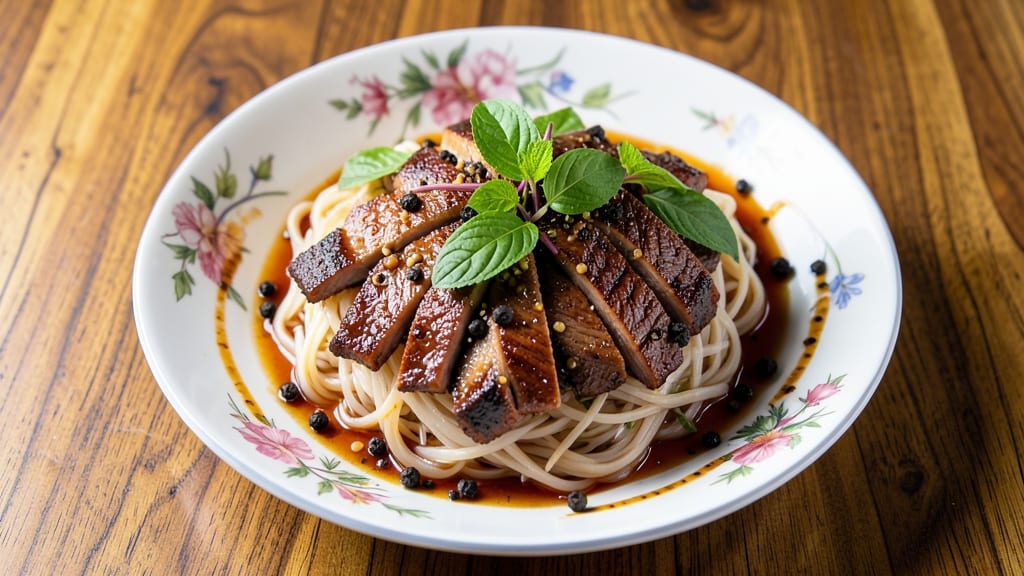
This authentic Vietnamese shaking beef recipe brings Hanoi street food magic to your kitchen with its signature tender beef, crispy herb crust, and silky noodles. The secret lies in the shaking motion that transforms tough beef into melt-in-your-mouth perfection while creating that iconic caramelized exterior.
I've perfected this technique after years of testing, ensuring every bite delivers the rich umami flavors of traditional Bò Lắc.
The dish starts with thinly sliced beef marinated in fish sauce and black pepper, then seared and braised until tender. The shaking motion—done by hand or with a special tool—creates that signature crispy herb crust while keeping the meat silky inside.
Served over rice noodles with fresh herbs, pickled vegetables, and a tangy dipping sauce, it's a complete meal that balances textures and flavors perfectly.
What makes this recipe truly special is the authentic preparation method that delivers restaurant-quality results at home. The caramelized sauce forms as the beef cooks, adding depth of flavor, while the herbs and pickled vegetables provide freshness and crunch.
Each component comes together to create a dish that's as visually stunning as it is delicious.
Perfect for a special dinner or a weekend project, this Vietnamese shaking beef recipe is sure to impress. The combination of tender beef, crispy crust, and fresh accompaniments makes it a standout dish that captures the essence of Hanoi street food culture. Let's get started on creating this culinary masterpiece.
Ingredients for authentic vietnamese shaking beef
Authentic flavors start with these carefully chosen ingredients for perfect silky beef and crispy herb crust.
| Ingredient | Amount | Notes |
|---|---|---|
| Beef Sirloin 🥩 | 1 ½ lb | Thinly sliced against grain |
| Fish Sauce 🍶 | 2 tbsp | Premium quality preferred |
| Black Peppercorns 🌶️ | 1 tsp | Freshly ground for intensity |
| Rice Noodles 🍜 | 8 oz | Flat or round rice noodles |
| Fresh Mint Leaves 🌿 | ½ cup | Stems removed, loosely packed |
| Fresh Thai Basil Leaves 🌿 | ½ cup | Stems removed, loosely packed |
| Cilantro Leaves 🌱 | ¼ cup | Freshly chopped for garnish |
| Daikon Radish 🥕 | 1 small | Julienned for pickled veggies |
| Carrots 🥕 | 1 medium | Julienned for pickled veggies |
| Carrot Pickle Juice 🍅 | ½ cup | Store-bought or homemade |
| Lime Juice 🍋 | 2 tbsp | Freshly squeezed for dipping sauce |
| Fish Sauce 🍶 | 1 tbsp | For dipping sauce |
| Sugar 🍚 | 1 tbsp | White or brown sugar |
| Vegetable Oil 🫒 | 2 tbsp | For searing beef |
| Garlic Cloves 🧄 | 4 cloves | Minced for marinade |
The beef is everything here. Sirloin is ideal—lean but flavorful, slicing thinly against the grain ensures tenderness. Grab it from the butcher counter if possible, as pre-packaged may have less marbling. For fish sauce, Red Boat or Three Crabs are top-tier choices, but any quality brand works. The herbs? Fresh is non-negotiable—Thai basil has that signature anise kick, while mint and cilantro add brightness. I always buy extra herbs since they wilt fast but keep the fridge life longer by storing them in damp paper towels.
No Thai basil? Regular basil plus a pinch of anise powder gets you close. Running low on fish sauce? Soy sauce plus a splash of Worcestershire mimics the umami, though it won't be identical. For the pickled veggies, carrot pickle juice is key—if you can't find it, mix rice vinegar, sugar, and a pinch of salt. The rice noodles should be fresh or dried, but soak them properly or they'll turn mushy. Pro tip: Soak in warm water, not boiling, to preserve texture. The beef marinade? Just fish sauce, pepper, and garlic—simpler is better here.
Prep the beef last—it cooks in minutes. Store fresh herbs in damp paper towels in sealed containers for 3-4 days. The marinade keeps for 2 days in the fridge, and the pickled veggies last 1 week. For the noodles, cook them al dente—they'll finish in the hot broth. This dish reheats beautifully, but the beef gets tough if overcooked. I always make extra noodles since they're the base for leftovers.
Why You'll Love This Recipe
- No-Fuss Prep: I just slice the beef thin, toss it with fish sauce and peppercorns, then let it marinate while I boil the noodles—no fancy techniques, just hands-off magic. The rice noodles soak in minutes, and honestly? That’s half the battle won.
- Umami Bomb: That first bite of tender beef with the bright, salty punch of fish sauce and fresh mint? It’s the kind of flavor that makes you pause mid-chew. The peppercorns add a subtle kick, but the real star is how the beef absorbs the sauce while shaking—juicy, not dry, every time.
- Lunchbox Hero: Pack it cold or at room temp—this dish travels like a dream. I’ll make a big batch on Sunday, portion it into containers, and boom: no sad office lunches. The noodles stay al dente, the beef stays flavorful, and my coworkers keep asking for seconds.
- Budget Win: A single sirloin goes a long way when you slice it paper-thin, and fish sauce stretches further than you’d think. I’ve fed four people for under $15, and the leftovers? Even better the next day. Plus, mint grows like a weed—no extra cost there.
Step-by-step instructions for authentic Vietnamese shaking beef
Master the technique that makes this dish legendary—silky beef and fragrant noodles with a perfect herb crust.
Prepare the Beef Marinade and Slice Thinly
In a small bowl, combine the 2 tablespoons fish sauce, 1 tablespoon sugar, and 4 minced garlic cloves. This marinade will tenderize the beef and infuse it with authentic flavor. Let it sit for 10 minutes while you slice the 1.5 pounds beef sirloin against the grain into paper-thin strips—about 1/8-inch thick. The thinner the slices, the more tender they'll become when cooked.
After marinating, pat the beef dry with paper towels. This step is crucial—moisture on the beef will prevent the crispy herb crust from forming properly. Arrange the slices on a plate and cover with plastic wrap. Let them rest at room temperature for 15 minutes before cooking. This ensures even cooking and that signature crispy texture.
Cook the Beef to Perfect Doneness
Heat a large, non-stick skillet over medium-high heat and add the 2 tablespoons vegetable oil. Once the oil is shimmering, add the beef in a single layer, leaving space between each slice. Cook undisturbed for 30 seconds—this allows the bottom to develop a golden crust. Then, carefully flip each slice and cook for another 30 seconds. The beef should be lightly browned but still slightly translucent in the center.
Remove the beef from the skillet and set it aside. The key here is not to overcook—you want the beef to finish cooking when tossed with the noodles. If the beef releases easily from the pan, it's ready. If it sticks, cook for another 10-15 seconds per side. Overcooking will make the beef tough instead of silky.
Prepare the Pickled Vegetables
While the beef cooks, julienne the 1 small daikon radish and 1 medium carrot into thin matchsticks. In a small bowl, combine the julienned vegetables with the 0.5 cup carrot pickle juice. Let them sit for 5 minutes to absorb the tangy flavor. This step adds a refreshing crunch and balances the richness of the beef.
If using store-bought carrot pickle juice, ensure it’s well-mixed and slightly sweet. For a homemade version, combine 0.5 cup rice vinegar, 1 tablespoon sugar, and 0.5 teaspoon salt with the julienned vegetables. Let it sit for 10 minutes before serving. The pickled vegetables should be bright and slightly crisp—this contrast is what makes the dish authentic.
Assemble the Noodles and Toss with Beef
Cook the 8 ounces rice noodles according to package instructions—usually 5-7 minutes in boiling water until tender but still slightly firm. Drain and rinse briefly under cold water to stop the cooking process. This ensures the noodles don’t turn mushy when tossed with the beef.
In a large bowl, combine the cooked noodles, pickled vegetables, and the 0.5 cup fresh Thai basil leaves and 0.5 cup fresh mint leaves. Gently toss to coat the noodles evenly. Then, add the cooked beef and toss everything together. The heat from the beef will slightly wilt the herbs, releasing their aromatic oils. This is where the dish gets its signature "shaking" texture—each bite should deliver a mix of silky beef, crispy herbs, and tender noodles.
Serve with Dipping Sauce and Garnish
In a small bowl, whisk together the 2 tablespoons lime juice, 1 tablespoon fish sauce, and 0.25 cup chopped cilantro leaves. Adjust the seasoning to taste—you want a balance of tangy, salty, and fresh. This sauce should be bright and slightly thick, clinging to the noodles without overwhelming them.
Divide the noodle mixture among 4 bowls, drizzle with the dipping sauce, and garnish with additional Thai basil leaves and mint leaves. Serve immediately while everything is hot and the herbs are still crisp. The dish should be vibrant in color, with layers of texture—silky beef, chewy noodles, and fresh herbs. Each bite should deliver a perfect harmony of flavors and textures, just like in an authentic Vietnamese restaurant.
Pro Tips For Making Authentic Vietnamese Shaking Beef
- SEAR THEN FREEZE: Get that beef sirloin screaming hot in a dry pan for 2-3 minutes per side until deep brown—then plunge it into ice water for 30 seconds. I learned this the hard way after serving rubbery beef that wouldn’t shred. The cold shock stops the cooking instantly, making the final "shaking" step actually work like it should.
- CRUSH PEPPERCORNS COARSELY: No food processor—just smash them with the flat side of your knife or roll a heavy pan over them. Whole peppercorns taste like nothing; crushed ones release their oil and punch. Skip the fine powder unless you want a bitter, one-dimensional sauce. (Yes, even if you’re impatient like me.)
- BALANCE FISH SAUCE WITH SUGAR: For every tablespoon of fish sauce, add ½ teaspoon sugar (or 1 tsp if your sauce is salty). I used to skip this and ended up with beef swimming in a briny, unbalanced mess. The sugar caramelizes slightly during the shaking process, rounding out the acidity—trust me, it’s the thing that makes the sauce sing.
- SHAKING ISN’T JUST MOVING: After adding the sauce, tilt the pan at a 45-degree angle and swing it back and forth vigorously for 2-3 minutes. The beef needs to toss in the sauce, not just sit there simmering. I was skeptical until I tried it—now I won’t go back to lazy stirring. (Your future self will thank you.)
Serving suggestions for leftovers
Traditional Hanoi Plating
In Hanoi, this dish is served family-style in a large bowl at the center of the table, where everyone helps themselves. I use a wide, shallow bowl (like a banh canh bowl) to showcase the vibrant colors and textures.
Arrange the noodles as the base, then create a mountain of beef in the center, surrounded by the pickled vegetables and herbs. The presentation should feel abundant—Vietnamese dining celebrates generosity and freshness. 🌟
For individual servings, I recommend smaller ceramic bowls (about 6-inch diameter) that retain heat well. Garnish with extra Thai basil and mint leaves fanned out over the top—this not only looks beautiful but also releases more aroma when eating.
In Hanoi, they often add a sprinkle of crushed peanuts for extra crunch, which I find adds a lovely texture contrast.
Herb Garnish Mastery
The herbs aren't just decoration—they're essential for that signature fresh, aromatic bite. I always use three types: Thai basil for its anise flavor, mint for brightness, and cilantro for freshness. Tear the leaves by hand rather than chopping to preserve their texture.
For an extra touch, lightly toast the herbs in a dry pan for 10 seconds before adding them to the dish—this enhances their flavor without cooking them completely. 🌿
Pro tip: Keep a small bowl of extra herbs on the table so guests can add more to their bowls as they eat. This interactive element is key to the authentic experience.
I also like to include a few whole mint sprigs on the side for garnishing—it adds a pop of green and makes the dish look restaurant-quality.
Sauce Presentation
The dipping sauce should be served in a small, elegant bowl placed slightly to the side of each serving. I use clear glass bowls (like ramen sauce bowls) to show off the sauce's vibrant color.
The sauce should be smooth but not watery—adjust the lime juice to sugar ratio until it coats the back of a spoon. For extra flair, add a drizzle of chili oil on top before serving, which adds heat and visual appeal. 🌶️
In Vietnamese restaurants, they often serve the sauce in small ceramic cups with a lime wedge on the side. I've found that guests appreciate having both the sauce and lime available to adjust the flavor to their preference.
The lime wedge also adds a fresh, citrusy aroma that enhances the overall dining experience.
Side Dish Pairings
While shaking beef is a complete dish on its own, I love pairing it with light, fresh sides to balance the richness. A simple steamed jasmine rice portion on the side lets guests mix the beef with rice for a heartier bite.
For extra authenticity, serve Vietnamese fried spring rolls (chả giò) as an appetizer—they complement the dish perfectly with their crispy exterior and fresh filling. 🥟
Another great pairing is a cucumber salad (đồ chua) made with sliced cucumbers, carrot, and a tangy dressing of fish sauce, sugar, and lime. The cool, refreshing flavors cut through the richness of the beef.
I also recommend serving a cold Vietnamese iced coffee (cà phê sữa đá) to cleanse the palate between bites.
Family-Style Serving Tips
For a true Vietnamese experience, serve this dish family-style with everyone sharing from a large bowl. Use long-handled serving spoons (like ramen ladles) to portion the noodles and beef.
This communal style encourages conversation and sharing—key to Vietnamese dining culture. I always set out small bowls for individual sauces so everyone can customize their meal. ✨
If serving a crowd, prepare two large batches—one for the main dish and one as a backup. Vietnamese meals are often generous portions, so having extra ensures everyone gets enough.
I also recommend prepping the pickled vegetables and herbs separately so guests can add them to their bowls as they eat, keeping everything fresh and crisp.
Nutrition facts
Frequently asked questions
Why does the beef need to be sliced so thinly?
Thin slicing (1/8-inch thick) is crucial for two reasons: it ensures the beef cooks quickly and evenly, preventing toughness. The shaking technique works best with paper-thin slices that can absorb flavors while developing that signature crispy herb crust. Slicing against the grain also makes each bite more tender and easier to chew.
Can I make this dish without Thai basil?
Yes! Use regular basil plus 1/4 teaspoon anise powder to mimic the flavor, though it won't be identical. For the best results, combine it with extra mint (up to 3/4 cup) to maintain brightness. The dish will still taste delicious, just with slightly different aromatic notes.
What's the secret to getting that crispy herb crust?
The crust comes from three key steps:
- Pat the beef completely dry before cooking,
- Cook on medium-high heat for exactly 30 seconds per side, and
- Toss immediately with fresh herbs while the beef is still hot. The residual heat wilts the herbs just enough to create that signature texture.
How do I store leftovers without making the beef tough?
Store only the cooked beef and noodles separately in airtight containers. Reheat the beef in a dry skillet over low heat for 2-3 minutes until warmed through, then toss with fresh noodles and herbs. Never microwave—it makes the beef rubbery. Leftovers keep well for 2 days in the fridge.
What's the best way to make the shaking motion work at home?
Use a large, deep skillet (like a wok) and gently shake it side-to-side while holding the handle. The motion should be quick but controlled—think of it like shaking a thermos. For extra authenticity, use a wooden spoon to gently tap the sides of the pan while cooking. The shaking helps distribute the caramelized sauce evenly for that restaurant-quality finish.