
Main Courses
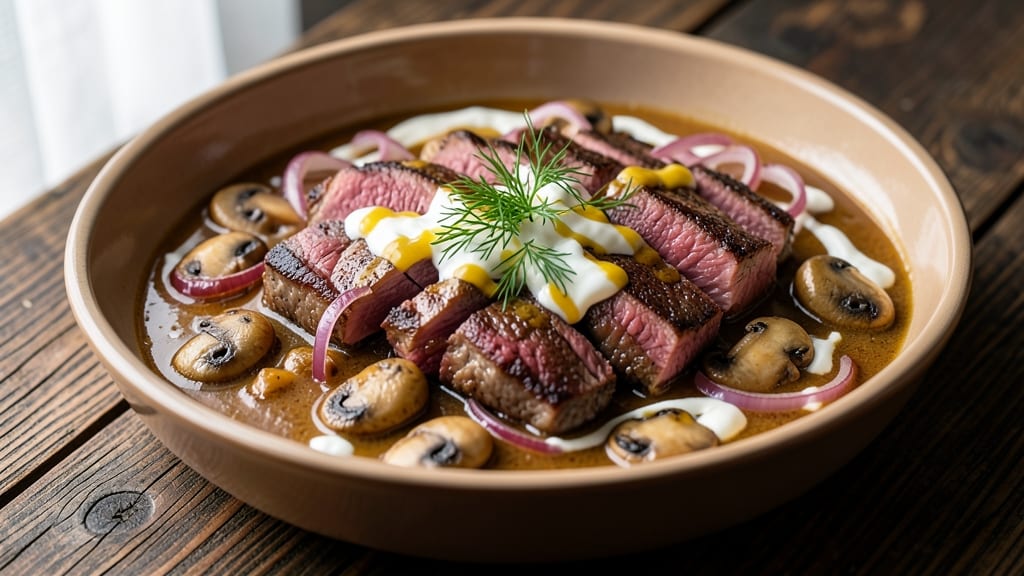
This authentic German beef stroganoff delivers rich, savory flavors that transport you straight to a Munich tavern. The secret lies in slow-cooked beef, earthy mushrooms, and a velvety sour cream sauce that perfectly balances tangy mustard and caramelized onions.
I developed this recipe after years of perfecting the balance between German comfort food traditions and home-cooking practicality.
The dish begins with tender beef strips seared to a golden brown, then simmered until fork-tender in a fragrant sauce. Fresh mushrooms and onions create a deep umami foundation, while a touch of dark beer adds authentic depth that elevates this beyond standard stroganoff.
The sauce thickens beautifully as it reduces, creating that signature German sauce consistency that clings perfectly to egg noodles.
What makes this version truly authentic is the technique: no heavy cream here—just high-quality sour cream and a splash of beer for complexity. The result is a dish that's equally satisfying as a weeknight dinner or special occasion meal, with flavors that develop even better the next day.
The egg noodles absorb the rich sauce while maintaining their delicate texture, making every bite a harmonious blend of comfort and sophistication.
Serve with crusty dark rye bread or roasted potatoes to complete the German experience. This recipe delivers restaurant-quality results with straightforward steps that any home cook can master. Let's get started on creating your own taste of Germany in your kitchen.
Ingredients for authentic german beef stroganoff
Pantry staples meet German tradition—just 13 ingredients for restaurant-worthy stroganoff.
| Ingredient | Amount | Notes |
|---|---|---|
| Ribeye Steak 🥩 | 1 ½ lb | Thinly sliced against grain |
| Yellow Onions 🧅 | 2 whole | Thinly sliced, 1/4-inch thick |
| White Button Mushrooms 🍄 | 16 oz | Sliced into 1/4-inch pieces |
| Dark Lager Beer 🍺 | ½ cup | German-style, like Paulaner |
| Dijon Mustard 🍯 | 2 tbsp | High-quality, like Maille |
| Sour Cream 🥛 | 1 cup | Full-fat, not low-fat |
| Unsalted Butter 🧈 | 3 tbsp | European-style preferred |
| All-Purpose Flour 🌾 | 2 tbsp | For thickening sauce |
| Fresh Thyme Leaves 🌿 | 1 tbsp | Or 1 tsp dried thyme |
| Garlic Cloves 🧄 | 3 cloves | Minced, not powdered |
| Egg Noodles 🍝 | 12 oz | Fresh or dried, 1/4-inch wide |
| Diamond Crystal Kosher Salt 🧂 | 1 ½ tsp | Adjust to taste |
| Freshly Ground Black Pepper 🌶️ | ½ tsp | Cracked peppercorns preferred |
The beef is non-negotiable—ribeye delivers that rich, beefy flavor German stroganoff craves. Look for pre-sliced steak at specialty butchers or ask them to cut it paper-thin against the grain. Costco or Whole Foods often carry the right cuts. If you're buying whole, freeze it for 30 minutes first to make slicing easier. The mushrooms should be fresh and firm—none of that slimy grocery store sadness. Trader Joe's sells great pre-sliced mushrooms in bulk, which saves time. For the beer, dark lager is key—avoid light beers or IPAs, they'll overpower the dish.
No dark beer? Stout or porter works in a pinch, but add an extra splash of balsamic vinegar for depth. Running low on Dijon? Whole-grain mustard thinned with water mimics the texture. The sour cream is where this dish shines—full-fat is mandatory (low-fat separates and tastes bland). For extra richness, stir in 1 tbsp melted butter at the end. Fresh thyme is ideal, but dried works at half the amount. If you're using dried, toast it in the pan with the onions for 30 seconds to wake up the flavor. The egg noodles? Fresh is better—they absorb sauce like sponges, but dried works fine if that's what you've got.
This reheats beautifully—actually tastes better the next day as flavors meld. Store leftovers in an airtight container for up to 4 days in the fridge. For longer storage, freeze portions for 3 months. I like to portion mine into individual containers so I can grab and reheat for quick lunches. The sauce thickens as it cools, so add a splash of warm water or milk if it seems too stiff when reheating. Always keep the sour cream refrigerated until ready to serve—it curdles if warmed too long.
Why You'll Love This Recipe
- One-Pan Magic: I swear by this recipe—just sear the ribeye, toss in onions and mushrooms, then let the dark lager and Dijon work their magic while you stir. No extra pots, no fuss, and the pan sauce practically makes itself.
- Beer-Braised Richness: That dark lager isn’t just flavor—it’s the secret to a deep, savory depth you won’t find in lighter stroganoffs. The Dijon cuts through the richness, and the mushrooms soak it all up like a sponge. Honestly, the first bite makes you question why you’ve never done this before.
- Weeknight to Dinner Party: Make it for Tuesday takeout or impress guests—same recipe, different vibes. Serve it over egg noodles for a hearty weeknight meal or plop it on crusty bread with a side salad for a restaurant-worthy spread. (Yes, even on a Tuesday night.)
- Leftovers That Don’t Suck: Most stroganoffs turn dry in the fridge, but this one? Better the next day. The flavors meld even more, and reheating it with a splash of beer keeps it luscious. I’ve fed my family leftovers for three days straight—no complaints, just seconds.
Step-by-step instructions for authentic German beef stroganoff
Here's how to make this rich, creamy stroganoff with proper German technique and bold flavors.
Sear the Ribeye for Maximum Flavor
Pat the 1.5 lb ribeye steak completely dry with paper towels - this ensures a perfect sear. Heat 2 tbsp unsalted butter in a large skillet over medium-high heat until foaming. Add the steak slices in a single layer and let them cook undisturbed for 2-3 minutes per side until they develop deep brown crusts.
This initial sear creates the Maillard reaction that builds the foundation for our rich sauce. I like to work in batches if needed - don't overcrowd the pan or you'll steam the meat instead of searing. Once golden brown, remove the steak to a plate and tent loosely with foil to keep warm.
Build the Mushroom and Onion Base
In the same skillet (no need to clean it - those browned bits are flavor gold), add 1 tbsp unsalted butter and reduce heat to medium. Add 2 whole yellow onions (thinly sliced) and 16 oz white button mushrooms (sliced) and cook for 8-10 minutes until the onions turn translucent and mushrooms release their moisture.
Stir in the 3 cloves minced garlic and 1 tbsp fresh thyme leaves, cooking for another 30 seconds until fragrant. This aromatic base forms the heart of our German stroganoff - the mushrooms add earthy depth while the onions provide natural sweetness that balances the richness.
Deglaze with Beer and Mustard
Pour in the 0.5 cup dark lager beer and scrape up all those delicious browned bits from the bottom of the pan. Let it simmer for 3-4 minutes until reduced by half. Then add the 2 tbsp Dijon mustard and stir well to combine.
The beer adds authentic German character while deglazing captures all the meaty flavors we seared earlier. The mustard provides that signature tang that cuts through the richness. Here's where the magic happens - this step transforms our simple ingredients into something truly special.
Create the Creamy Sauce
Reduce heat to low and sprinkle in the 2 tbsp all-purpose flour, stirring constantly for 1-2 minutes until smooth. Gradually whisk in the 1 cup sour cream and let the mixture simmer gently for 3-4 minutes until slightly thickened but still velvety.
Season with 1.5 tsp diamond crystal kosher salt and 0.5 tsp freshly ground black pepper, then return the seared steak to the skillet. Toss everything together and let it simmer for 2-3 minutes so the steak absorbs all that creamy goodness.
Finish with Perfect Noodles
While the stroganoff simmers, cook the 12 oz egg noodles in salted boiling water until al dente (about 8-10 minutes). Drain and immediately toss with 1 tbsp unsalted butter to prevent sticking.
To serve, divide the noodles among plates and ladle the beef stroganoff generously over the top. The creamy sauce should coat every strand of noodle with tender ribeye slices peeking through. Garnish with extra thyme leaves if desired - this authentic German version delivers rich, comforting flavors without being overly heavy.
Pro Tips For Making Authentic German Beef Stroganoff
- SEAR THE STEAK FIRST: Take that ribeye out of the fridge 30 minutes before cooking—cold meat releases juices like a leaky faucet. Then, hit it with a screaming-hot pan (no oil yet) for 2 minutes per side until it’s deep brown, not just pink. That crust is what holds the stroganoff together when the beer gets added later.
- SWEAT THE ONIONS LOW AND SLOW: I used to rush this, and the onions ended up bitter. Instead, cook them on medium-low with a pinch of salt for 10-12 minutes until they’re translucent and caramelized at the edges. No need to rush—this is where the base flavor lives.
- USE FULL-STRENGTH DIJON: Skip the "mild" Dijon—authentic German stroganoff relies on the sharp, tangy kick of the real stuff. Mix 1-2 tablespoons directly into the beer sauce while deglazing, not just as a garnish. It cuts through the richness and balances the beer’s maltiness.
- DEGLAZE WITH BEER IN BATCHES: Pouring all the lager at once dilutes the pan’s flavor. Instead, add ¼ cup at a time, scraping up browned bits between each splash. Let it reduce slightly before adding more—this concentrates the umami and keeps the sauce from turning watery. (Yes, it means more scraping, but it’s worth it.)
Storing and reheating this authentic german beef stroganoff
Refrigerator Storage
Let your stroganoff cool completely before transferring to airtight containers—I use glass Pyrex with snap-on lids. Store at 40°F or below for up to 4 days, where the flavors actually deepen as the spices meld.
The sauce thickens as it cools, so add a splash of warm water or milk when reheating if it seems too stiff. 💫
For best texture, portion the noodles separately from the sauce in the container. This prevents them from becoming mushy when reheated. I like to keep the sour cream refrigerated until serving to maintain its creamy consistency.
Freezer Storage
This stroganoff freezes beautifully for up to 3 months without losing its rich flavors. Use quart-sized freezer bags with 1 inch of headspace for expansion, and squeeze out excess air to prevent freezer burn. Label with the date—trust me, you'll want to track this!
Thaw overnight in the refrigerator before reheating. For quick meals, microwave individual portions covered with a damp paper towel on 70% power for 2-3 minutes, stirring halfway. The sauce may separate slightly, so give it a good stir before serving.
Stovetop Reheating
My preferred method for restaurant-quality results! Pour the stroganoff into a heavy-bottomed pot and add ¼ cup warm water or beef broth to help loosen the sauce. Heat over medium-low heat for 10-15 minutes, stirring occasionally, until reaching 165°F internal temperature. 🔥
Taste and adjust seasonings—reheated stroganoff often needs a pinch of salt or a splash of lemon juice to brighten the flavors. If the sauce thickens too much, whisk in 1-2 tablespoons of warm water to restore its velvety consistency.
Oven Reheating
For a gentler reheat, spread the stroganoff evenly in an oven-safe dish and cover tightly with aluminum foil. Bake at 325°F for 20-25 minutes, stirring once halfway through. This method preserves the sauce's creaminess better than microwave reheating.
If reheating with noodles, add them to the dish in the last 5 minutes of cooking to prevent them from becoming soggy. The residual heat will finish cooking them perfectly while warming through the sauce.
Nutrition facts
Frequently asked questions about authentic German beef stroganoff
Why does this recipe use beer instead of cream?
German stroganoff relies on beer for authentic depth and complexity. The dark lager adds malty richness that balances the tangy mustard and creamy sauce, creating that signature German flavor profile. Unlike Russian versions, this adaptation keeps the dish lighter while maintaining bold character.
Can I substitute ribeye with another cut?
Yes, but choose tender cuts like sirloin or tenderloin. Avoid tough cuts like flank steak—they need longer cooking that can make the sauce watery. Thinly slice against the grain for best texture. For budget options, chuck roast works if cooked low and slow first.
What if my sauce gets too thick?
Simmer uncovered for 2-3 extra minutes to evaporate excess moisture, or whisk in 1-2 tablespoons warm water or milk gradually. For a more authentic fix, stir in ½ cup warm beef broth while heating. Never add cold liquid—it can cause the sour cream to curdle.
Is this dish gluten-free?
Not traditionally, but you can adapt it! Replace the egg noodles with gluten-free pasta or cauliflower rice. For the sauce, use cornstarch instead of flour to thicken. The beer and mustard are naturally gluten-free, but check labels if sensitive.
How do I make this extra creamy?
For a velvety texture, stir in 2 extra tablespoons sour cream at the end or replace ¼ cup of the beer with heavy cream. For richness without heaviness, whisk in 1 tablespoon melted butter while simmering. Let the sauce reduce longer for a thicker, more luxurious consistency.