
Main Courses
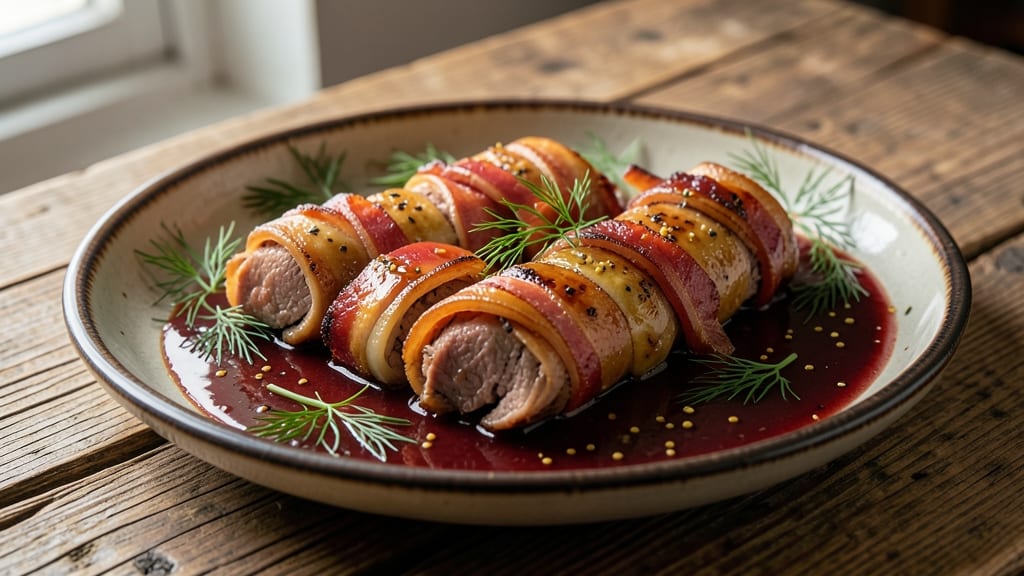
This authentic German beef rouladen recipe brings a taste of Bavaria to your dinner table with tender beef rolls stuffed with tangy mustard, sweet pickled onions, and smoky bacon.
The secret lies in thinly sliced beef that develops crispy edges while staying juicy inside—a technique perfected in German kitchens for generations. What makes this dish special is how the flavors meld during slow cooking, creating a rich, savory filling that holds together beautifully.
Traditional rouladen requires patience: thinly sliced beef is layered with mustard, pickles, and bacon before being rolled tightly and seared in a hot pan. The real magic happens during braising, where the flavors deepen and the beef becomes fork-tender while maintaining that satisfying crispness.
This isn't just a recipe—it's a celebration of German comfort food that feels like a home-cooked hug.
The result is a dish that's hearty enough for a family dinner but elegant enough for special occasions. Each bite delivers layers of flavor: the sharp tang of mustard, the sweet crunch of pickled onions, and the smoky richness of the bacon.
Served with red cabbage or potato dumplings, it becomes a complete meal that transports you to a Bavarian beer garden.
Whether you're recreating a childhood memory or introducing German cuisine to your table, this rouladen recipe delivers restaurant-quality results with a touch of homemade love. The crispy edges and tender filling make every bite worth the effort—trust me, your taste buds will thank you.
Ingredients for authentic german beef rouladen
Here’s what you’ll need to recreate this classic German dish with crispy edges and rich flavors.
| Ingredient | Amount | Notes |
|---|---|---|
| Top Round Beef 🥩 | 2 ½ lb | Thinly sliced against grain |
| Dijon Mustard 🍯 | ½ cup | High-quality, tangy variety |
| Sweet Pickled Onions 🧅 | 1 ½ cups | Homemade or store-bought |
| Thick-Cut Bacon 🥓 | 12 oz | Smoked, cut into strips |
| Yellow Mustard 🍯 | ¼ cup | For extra tanginess |
| Fresh Dill 🌿 | ¼ cup | Chopped, for freshness |
| All-Purpose Flour 🌾 | ½ cup | For dredging beef |
| Olive Oil 🫒 | ¼ cup | For searing |
| Beef Broth 💧 | 2 cups | Low-sodium preferred |
| Red Wine 🍷 | 1 cup | Dry, like Cabernet |
| Tomato Paste 🍅 | 2 tbsp | For depth of flavor |
| Bay Leaves 🌿 | 2 whole | For aromatic depth |
| Salt 🧂 | 1 ½ tsp | Kosher or sea salt |
| Black Pepper 🌶️ | 1 tsp | Freshly ground |
The beef is the star—top round sliced paper-thin against the grain (ask your butcher to do this). Costco or Kroger usually have pre-sliced rouladen beef, but if not, grab a whole top round and use a sharp knife. The mustard should be Dijon-style—none of that sweet grocery store stuff. For the pickled onions, homemade (with vinegar, sugar, and a pinch of cloves) elevates the dish, but Heinz or Vlasic work in a pinch. Bacon matters too—thick-cut smoked gives that authentic smoky flavor.
No Dijon mustard? Yellow mustard plus a splash of vinegar gets you close. Fresh dill wilting? Dried dill at half the amount works, but fresh is ideal. Running low on beef broth? Water plus a bouillon cube saves the day. The red wine is non-negotiable—Cabernet or Merlot adds depth, but if you’re avoiding alcohol, use extra broth. For the tomato paste, squeeze tubes from Trader Joe’s are perfect—they’re concentrated and last forever. And if you’re short on time, pre-cook the bacon to save steps during assembly.
Store the raw beef rolls (unassembled) in the fridge for up to 2 days, wrapped tightly in plastic. The pickled onions keep for weeks in the fridge, so make extra. Once cooked, rouladen reheats beautifully—350°F for 20 minutes brings it back to life. Leftovers freeze for 3 months if portioned in airtight containers. Pro tip: Serve with red cabbage or potato dumplings for the full Bavarian experience—trust me, it’s worth the effort.
Why You'll Love This Recipe
- Minimal Chopping Required: I swear by this recipe because the beef is thinly pounded—no fancy knife skills needed. Just a mallet and 10 minutes of work, then you’re rolling those bad boys up like a pro.
- That Crispy-Savory Magic: The bacon-wrapped beef with Dijon and mustard? It’s the kind of dish where every bite has that perfect contrast—juicy, tangy, and just enough smoky crunch. Honestly, the pickled onions tie it all together like a flavor hug.
- Weeknight Dinner Hero: Between us, this is my go-to when I need something hearty but not labor-intensive. Serve it with mashed potatoes or crusty bread, and suddenly you’ve got a meal that feels fancy but took less time than ordering takeout.
- Leftovers That Don’t Suck: Unlike some recipes, rouladen actually improves the next day. The flavors meld even more, and it reheats beautifully—whether you’re packing lunches or feeding a crowd. (Yes, even on a Tuesday night.)
Step-by-step instructions for authentic German beef rouladen
Here's how to create restaurant-quality German beef rouladen with perfectly balanced flavors and crispy edges.
Prepare the Beef and Filling
Start by slicing the 2.5 lb Top Round Beef against the grain into thin strips about ¼-inch thick. You want them pliable enough to roll but still sturdy enough to hold their shape. Lay each strip flat on your cutting board and spread ½ tablespoon of Dijon mustard evenly across the surface, leaving a ¼-inch border along one long edge.
Next, layer ¼ cup of sweet pickled onions along the unspread edge of each strip, followed by 2 slices of thick-cut bacon (cut from the 12 oz total). Sprinkle with 1 teaspoon of yellow mustard and 1 teaspoon of chopped fresh dill for brightness. Roll tightly from the edge with no filling showing, securing each roulade with a toothpick to keep it compact. Repeat with all beef strips.
Dredge and Sear for Crispy Edges
Place the 0.5 cup all-purpose flour in a shallow dish. Lightly dredge each roulade in the flour, tapping off any excess. This creates a golden crust that seals in juices. Heat 0.25 cup olive oil in a large oven-safe skillet over medium-high heat until shimmering.
Working in batches, add the roulades to the skillet and sear for 2-3 minutes per side until deep golden brown and crispy. You'll see the edges develop a beautiful caramelization—this is what gives authentic rouladen their signature texture. Transfer the seared roulades to a plate and set aside.
Build the Rich Sauce
Reduce heat to medium and add 2 tablespoons tomato paste to the skillet, stirring to coat the bottom. Pour in the 1 cup red wine and scrape up any browned bits from the pan—this is where all the flavor hides. Let it simmer for 3-4 minutes until reduced by half.
Add 2 cups beef broth, 2 whole bay leaves, and bring to a gentle simmer. Stir in 1.5 teaspoons salt and 1 teaspoon black pepper, then return the roulades to the skillet. Cover and cook for 10 minutes to let the flavors meld and the filling soften slightly.
Finish with Crispy Bacon and Fresh Dill
Remove the roulades and arrange them on a serving platter. Increase heat to medium-high and let the sauce reduce slightly until it coats the back of a spoon. Return the roulades to the skillet just to warm through, then transfer to the platter.
Garnish each roulade with a sprinkle of remaining fresh dill and any crispy bacon bits that formed during cooking. The contrast of tender beef, tangy mustard, sweet pickled onions, and crispy bacon makes every bite authentic and satisfying. Serve immediately with buttered egg noodles or mashed potatoes to soak up the rich sauce.
Pro Tips For Making Authentic German Beef Rouladen
- USE COLD MEAT FOR ROLLING: Take that top round beef right out of the fridge—cold meat holds its shape way better than warm. I used to struggle with the fillings spilling out until I realized this simple trick. Just let it sit uncovered for 10 minutes first so it’s firm but not frozen.
- DRY THE BACON WELL: Pat those thick-cut bacon slices with paper towels before wrapping—wet bacon steams instead of crisps. I learned this the hard way when my first batch came out soggy. A quick dry and a hot pan later, you’ve got that perfect crunch every German rouladen deserves.
- SEAR IN BATCHES: Don’t crowd the pan when searing your rouladen—give them space to brown properly. I used to rush this and ended up with uneven cooking and pale edges. Start with a hot, dry skillet and work in two batches if needed.
- REST BEFORE SLICING: Let the rouladen sit under foil for 5-10 minutes after cooking—this keeps the juices inside where they belong. I skipped this once and ended up with dry, stringy slices. Patience here makes all the difference for that tender, restaurant-quality bite.
Perfect pairings for this dish
Traditional German Sides
No Bavarian meal is complete without red cabbage (Rotkohl)—its sweet-tart flavor cuts through the richness of the rouladen beautifully. I love making it with apple cider vinegar, cinnamon, and a splash of port wine for depth.
For a heartier option, potato dumplings (Kartoffelknödel) soak up every drop of that rich sauce. If you're short on time, buttered egg noodles or mashed potatoes work perfectly too. 🥬
Beverage Pairings
A dark lager like Paulaner or Ayinger is the classic choice—its malty sweetness complements the mustard and bacon. For wine lovers, a medium-bodied German red like Spätburgunder (Pinot Noir) from the Pfalz region balances the dish's richness.
If you prefer white, a crisp Riesling with its bright acidity refreshes your palate between bites. Avoid heavy, tannic reds that might overpower the delicate flavors. 🍺
Crispy Garnishes
Finish your rouladen with crispy fried onions for extra crunch—sauté ½ cup thinly sliced yellow onions in butter until golden. A sprinkle of fresh parsley adds brightness, while crumbled blue cheese (like Gorgonzola) gives a tangy kick.
For a traditional touch, top each roll with a bacon leaf that's been crisped in the pan. These garnishes elevate the dish from homey to restaurant-worthy. 🥓
Modern Twists
Want to update this classic? Swap the mustard for spicy brown mustard and add caramelized shallots for sweetness. For a fusion twist, serve with creamy polenta instead of potatoes.
A drizzle of truffle oil adds luxury, while pickled jalapeños bring heat. These variations keep the dish authentic while making it feel fresh and exciting. 🌶️
Sauce Variations
The rich red wine-braised sauce is traditional, but you can adapt it. For a creamy version, stir in ½ cup sour cream at the end. A white wine reduction (using Chardonnay) brightens the flavors.
For a spicy kick, add 1 tsp smoked paprika to the sauce. Each variation keeps the rouladen's hearty character while offering something new. ✨
Nutrition facts
Frequently asked questions
What's the secret to getting crispy edges on rouladen?
Lightly dredging the rolled beef in flour before searing creates that golden crust. Use medium-high heat and sear for 2-3 minutes per side until deep brown. The key is patience—don't rush, or the edges will burn before crisping.
Can I make rouladen ahead of time?
Assemble the rolls (uncooked) and refrigerate for up to 2 days. For best results, sear them fresh before braising. Leftovers reheat beautifully at 350°F for 20 minutes—just add a splash of broth to keep the sauce from drying out.
What's the best way to slice the beef?
Ask your butcher to slice top round against the grain into ¼-inch thick strips. If slicing yourself, use a sharp knife and work slowly to avoid tearing. The slices should be pliable but not too thin—about the thickness of a dollar bill.
Can I substitute the red wine?
Yes, but choose carefully. Use dry white wine (like Chardonnay) for brightness or beef broth + 1 tsp vinegar for a non-alcoholic version. Avoid sweet wines—they'll make the sauce cloying. The wine adds depth that's hard to replicate!
How do I prevent the rouladen from falling apart?
Roll them tightly with no filling showing, and secure each with a toothpick. Don't overfill—stick to ¼ cup filling per roulade. When searing, work in batches to avoid crowding, which causes steam and makes them soggy.