
Sauces & Condiments
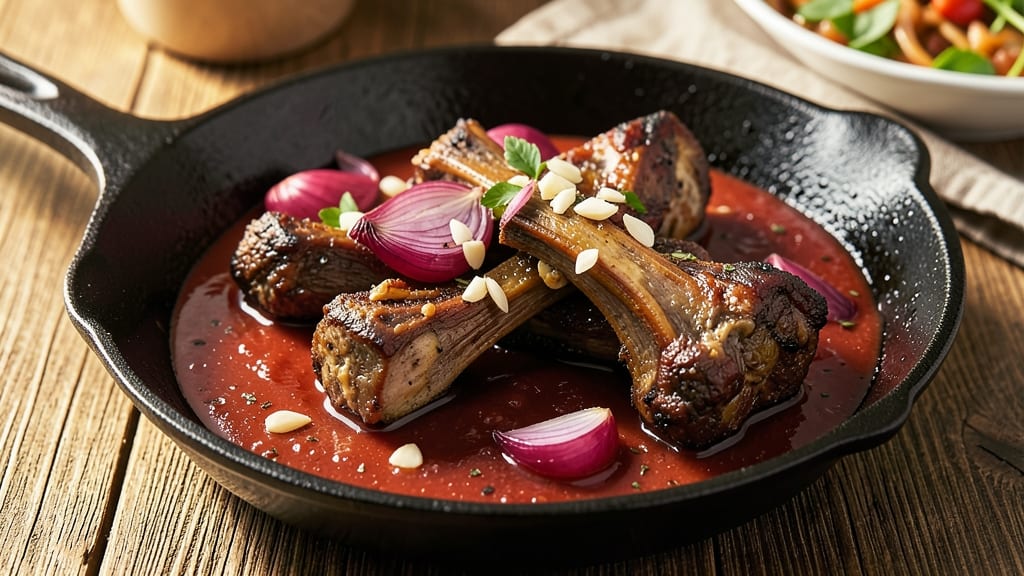
This au jus recipe with beef bones transforms humble bones into a velvety, deeply flavorful sauce that elevates every steak dinner. The secret lies in slow simmering—extracting collagen-rich gelatin and umami from the bones while building layers of savory depth with aromatics.
No fancy techniques required, just patience and a single pot.
Professional chefs rely on this method to create restaurant-quality au jus without store-bought shortcuts. The bones release natural gelatin as they simmer, thickening the sauce into a glossy, mouth-coating consistency.
Aromatics like onions and garlic infuse the liquid with warmth, while a splash of red wine adds brightness that cuts through richness.
What you'll end up with is a clear, golden sauce that's perfect for dipping roasted potatoes, drizzling over steak, or serving as a base for gravy. The beauty of this recipe is its versatility—use it immediately or refrigerate for up to 5 days, where the flavors deepen overnight.
It's the kind of sauce that makes ordinary meals feel like a special occasion.
For an extra-smooth finish, strain through cheesecloth after simmering. The result? A silky sauce that clings to every bite, turning simple proteins into something extraordinary. Ready to master this timeless technique?
Ingredients for au jus recipe with beef bones
Transform humble beef bones into a restaurant-worthy sauce with these carefully selected ingredients.
| Ingredient | Amount | Notes |
|---|---|---|
| Beef Bones 🦴 | 2 lb | Marrow and knuckle bones preferred |
| Yellow Onions 🧅 | 1 whole | Large, sliced into half-moons |
| Garlic Cloves 🧄 | 6 cloves | Peeled, smashed for maximum aroma |
| Red Wine 🍷 | 1 cup | Bold dry variety like Cabernet Sauvignon |
| Beef Stock 🥫 | 4 cups | Homemade or high-quality store-bought |
| Tomato Paste 🍅 | 2 tbsp | San Marzano preferred for depth |
| Fresh Thyme 🌿 | 2 sprigs | Stems removed, leaves only |
| Fresh Parsley 🌿 | ¼ cup | Chopped, for finishing |
| Black Peppercorns 🌶️ | 10 whole | Crushed lightly for aroma |
| Kosher Salt 🧂 | 1 ½ tsp | Diamond Crystal preferred |
| Cold Water 💧 | 2 cups | For initial bone rinsing |
| Cheesecloth 🧵 | 1 sheet | For ultra-smooth finish |
The bones are the foundation—marrow and knuckle bones release the most gelatin and collagen for that signature velvety texture. Butcher sections or specialty stores like Whole Foods carry them pre-cut, but if buying whole, ask for beef neck bones or knuckles—they're packed with flavor. Freshness matters: bones should be moist, not dried out, and smell clean, not rancid. For maximum yield, roast the bones at 400°F for 20 minutes before simmering to deepen the flavor. Costco or local butchers often sell them at bulk prices, making this a cost-effective luxury for home cooks.
No red wine? Dry sherry or beef broth with a splash of balsamic vinegar delivers similar depth. Fresh thyme is ideal, but dried thyme at one-third the amount works in a pinch. The tomato paste can be skipped entirely if you prefer a lighter, more traditional au jus, though it adds a subtle sweetness that balances acidity. For a richer sauce, substitute half the beef stock with red wine reduction—simmer 1 cup of wine until reduced by half before adding. The cheesecloth is optional but worth the effort for that silky, professional finish. If you don't have it, fine-mesh strainer works, though you'll lose some of that luxurious mouthfeel.
This sauce develops overnight—flavors deepen and thicken as it rests. Store in an airtight container in the fridge for up to 5 days, where the gelatin fully sets. To reheat, gentle warmth is key: simmer on low or use a double boiler to prevent skin formation. For long-term storage, freeze in ice cube trays—thaw quickly in the fridge before using. The sauce thickens as it cools, so add a splash of water or stock if it becomes too stiff. Portion into ramekins for individual servings, perfect for drizzling over steak or roasted vegetables.
Why You'll Love This Recipe
- Pantry-to-Pot Magic: I swear by this—no fancy prep, just sear the bones, toss in chopped onions and garlic, deglaze with red wine, then simmer. That’s it. The bones do all the heavy lifting while I sip my coffee.
- Deep Umami Love: The red wine and beef stock create this rich, almost smoky depth—like a hug in a bowl. Honestly, the first time I tasted it, I wondered why I’d ever bought store-bought au jus before.
- Leftovers That Shine: This stuff only gets better the next day. I freeze batches to toss into stews or use as a dip—my kids beg for it on sandwiches. (Yes, even on a Tuesday night.)
- Budget-Friendly Luxury: Beef bones are cheap, and a little wine goes a long way. I make a big batch, stretch it over multiple meals, and still feel like I’m serving something special—not just getting by.
Step-by-step instructions for bone-brewed au jus
Transform humble beef bones into a velvety, restaurant-quality au jus with this precise technique.
Extract Maximum Flavor from the Bones
Preheat your oven to 450°F and place the 2 lb beef bones on a rimmed baking sheet. Roast for 20-25 minutes until they develop a deep golden-brown crust. This caramelization creates layers of flavor that will infuse your au jus.
While the bones roast, prepare a large Dutch oven by rinsing the bones with the 2 cups cold water to remove any impurities. This step ensures your au jus won't have a bitter aftertaste from blood or debris. Drain the water completely after rinsing.
Build the Flavor Base
Return the roasted bones to the Dutch oven and add the 1 whole yellow onion sliced into half-moons, the 6 smashed garlic cloves, and the 10 lightly crushed black peppercorns. Pour in the 1 cup red wine and scrape the bottom of the pot to release all those precious browned bits - this is where the magic happens.
Bring the mixture to a simmer over medium-high heat, then reduce to a gentle bubble. Add the 4 cups beef stock and the 2 sprigs fresh thyme. Cover partially and simmer for 2 hours until the bones are tender and the liquid has reduced by about one-third. You'll know it's ready when you can easily pull the bones from their sockets with tongs.
Create a Silky Texture
Remove the bones from the pot and set them aside for later use. Strain the liquid through the sheet of cheesecloth lined over a fine-mesh strainer for an exceptionally smooth texture. This step is crucial - the cheesecloth catches any remaining particles that would make your au jus cloudy.
Return the strained liquid to the pot and stir in the 2 tbsp tomato paste and 1.5 tsp kosher salt. Simmer gently for 15 minutes to allow the flavors to meld completely. The sauce should now coat the back of a spoon and have a glossy sheen - this indicates proper reduction.
Finish with Fresh Herbs
Remove the pot from heat and stir in the 0.25 cup chopped fresh parsley. This final step brightens the flavors and adds a touch of freshness that balances the richness. Taste and adjust the seasoning if needed - you may need a touch more salt or pepper to achieve perfect balance.
For serving, you can either strain the sauce through the cheesecloth one final time for absolute clarity, or leave it slightly textured for added body. The au jus should be rich enough to coat the back of a spoon but still pour easily. Serve immediately with the reserved bones for maximum flavor impact, or refrigerate for up to 5 days for future use.
Pro Tips For Making Au Jus Recipe With Beef Bones
- Char the Bones First: Skip the gentle simmer and sear those beef bones raw over high heat until they’re deep brown—almost black in spots. This isn’t just for flavor; it’s the only way to unlock the collagen and caramelized depth that turns a basic au jus into something rich and complex. (Yes, it’s messy, but scrape that crust into the pot—every bit counts.)
- Sweat, Don’t Sauté Onions: After the bones come out, cook the onions with garlic in a dry pot until they’re translucent, not golden. Add a splash of wine immediately to deglaze—this stops them from burning and keeps the au jus from tasting bitter. I used to rush this, and the whole dish suffered for it.
- Simmer Low and Long: Once everything’s in the pot, reduce heat to a bare simmer—just enough to see tiny bubbles, not a rolling boil. Three to four hours is the sweet spot; rushing it leaves the stock cloudy and weak. My grandmother called it “the lazy cook’s patience,” and she wasn’t wrong.
- Strain Twice, Reduce Once: Use a fine-mesh strainer first to catch debris, then a cheesecloth-lined colander for a silky finish—no one wants gummy bits in their au jus. After straining, reduce the liquid by half over medium heat; this concentrates the flavor without overcooking. (And yes, taste it as you go—adjust salt and acidity now, not later.)
Essential equipment for this dish
Dutch Oven Essentials
Your Dutch oven is the workhorse of this recipe—look for a 5-6 quart model with a tight-fitting lid. I swear by Le Creuset for its even heat distribution, but All-Clad or Lodge cast iron are excellent budget-friendly alternatives.
The deep sides prevent spills during simmering, and the heavy base maintains steady temperatures. Avoid nonstick Dutch ovens—they can't handle the high heat needed for caramelization. 🔥
Cheesecloth for Clarity
For that restaurant-quality smoothness, invest in double-layered cheesecloth (available at Williams Sonoma or Amazon). If you're pinching pennies, muslin fabric works too—just fold it into a square and secure it over a fine-mesh strainer with a rubber band.
Pro tip: Wet the cheesecloth first to help it cling to the strainer. Without this step, your au jus might look cloudy, but the flavor will still be incredible.
Instant-Read Thermometer
A thermometer ensures your bones reach the perfect 185-195°F internal temperature for maximum collagen extraction. The ThermoWorks Smoke or Meater models are my go-tos—they're fast and accurate. Check the thickest part of the bone near the joint.
If it's not hot enough, extend the simmer time by 30 minutes and recheck. This small investment prevents undercooked bones and ensures a rich, gelatinous sauce.
Fine-Mesh Strainer
While cheesecloth removes fine particles, a fine-mesh strainer (like OXO Good Grips) catches larger debris after simmering. Use it to strain the sauce before the final cheesecloth pass for extra clarity.
For a quick shortcut, nest two strainers—one coarse, one fine—to speed up the process. Just don't skip this step if you want that silky texture! ✨
Wooden Spoon & Tongs
A heat-resistant wooden spoon (I love OXO's beechwood) helps scrape up those flavorful browned bits from the pot's bottom—fond—without scratching. For handling bones, tongs with silicon tips (like JYF brand) are a game-changer—they grip slippery bones securely.
Avoid metal utensils that can react with acidic ingredients like wine or tomato paste.
Measuring Cups & Spoons
Precision matters here! Use stainless steel measuring cups (like Farberware) for liquids and spoon rests (like OXO's) to keep your spoons clean. For the tomato paste, a small offset spatula ensures you scrape every last bit from the tube.
A digital scale (for bones) isn’t mandatory, but it’s helpful if you’re scaling the recipe up or down. 💡
Nutrition facts
Frequently asked questions
Can I use chicken or pork bones instead of beef?
While you can technically use chicken or pork bones, beef bones are ideal for au jus because they contain more collagen, which creates that signature velvety texture. Chicken bones will give you a lighter sauce, and pork bones may add too much fat. For a beef-free alternative, try lamb bones—they work beautifully and create a rich, robust flavor.
How do I know when the bones are fully cooked?
Bones are done when they're tender enough to pull apart easily with tongs and the meat slips from the bone. For precise results, use an instant-read thermometer—they should reach 185-195°F internally. If they're not tender enough after 2 hours, add 30 minutes more and check again. Overcooking won't ruin the sauce, but it may make the bones brittle.
What if I don't have cheesecloth for straining?
No problem! Use a fine-mesh strainer lined with a clean kitchen towel or even double-layered coffee filters as a substitute. For extra clarity, strain the sauce twice—first through the strainer, then through a clean cloth. The texture won't be as silky, but the flavor will still be rich and delicious. Just don't skip this step entirely—it removes impurities that could make your sauce cloudy.
Can I make this au jus in a slow cooker? Roast the bones first, then transfer everything to a 6-quart slow cooker and cook on low for 6-8 hours instead of simmering on the stove. The slow cooker method is hands-off and works well for busy days. Just
How can I use leftover au jus?
This versatile sauce is perfect for so many dishes! Use it as a dipping sauce for roasted potatoes or steak fries, drizzle it over grilled steaks, or reduce it further to make a glossy gravy. It also works beautifully in pasta dishes—toss it with fettuccine and fresh herbs. For extra richness, stir in a splash of heavy cream or a dollop of butter. Store leftovers in an airtight container for up to 5 days in the fridge.