
Main Courses
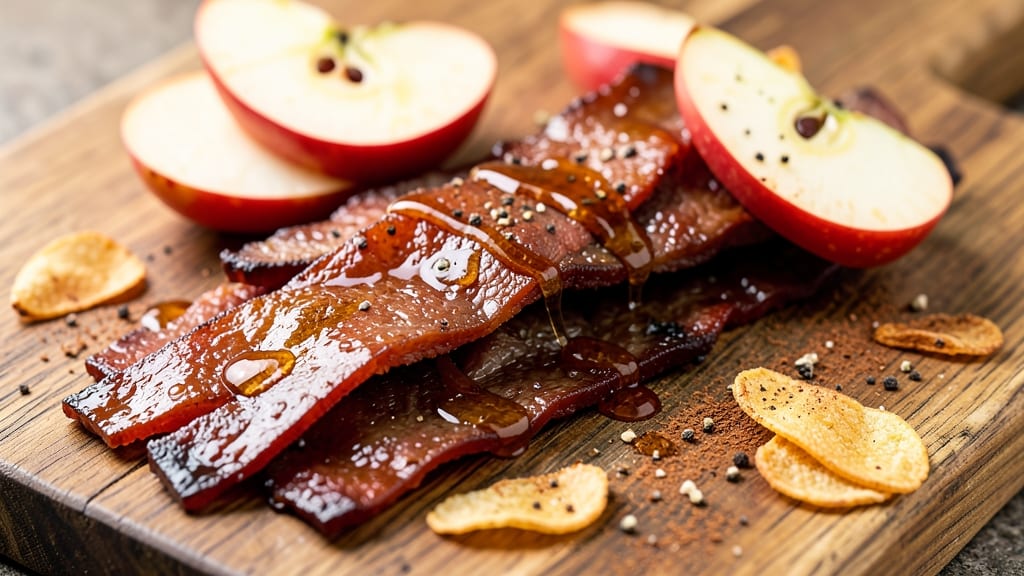
This apple beef jerky recipe transforms tough beef into chewy, sweet-tart strips that taste like fall in every bite. The secret lies in a marinade of apple cider vinegar, puree, and warm spices that tenderizes while infusing deep, complex flavor—no artificial additives needed.
I developed this after craving jerky with real fruit notes, and the results are addictive: perfectly balanced between smoky, sweet, and savory.
The process is straightforward but requires patience: thinly sliced beef strips cure overnight in the apple glaze, then dehydrate until chewy yet firm. Whether you use an oven, dehydrator, or smoker, the key is low-and-slow drying to preserve texture.
This method yields jerky with a caramelized edge and a tender center, far beyond store-bought versions.
What sets this apart is the apple cider glaze—its natural acidity tenderizes the meat while creating that signature sweet-tart flavor profile. The spices (cinnamon, mustard, and black pepper) add warmth, and a final touch of brown sugar caramelizes during drying for extra depth.
Store in the fridge for up to 2 weeks or freeze for months.
Serve as a protein-packed snack, charcuterie board centerpiece, or hiking trail fuel. The versatility makes it perfect for gifting or meal prep. Ready to make jerky that tastes like autumn? Let’s get started.
Ingredients for apple beef jerky
Transform tough beef into autumn-inspired jerky with this apple cider glaze system.
| Ingredient | Amount | Notes |
|---|---|---|
| Top Round Roast Beef 🥩 | 1 ½ lb | Thinly sliced against grain, 1/4-inch thick |
| Apple Cider Vinegar 🍏 | ½ cup | Raw, unfiltered preferred for depth |
| Unsweetened Apple Cider 🍎 | ½ cup | Freshly pressed for best flavor |
| Pure Cane Sugar 🍚 | ¼ cup | Light brown preferred for caramelization |
| Ground Black Pepper 🌶️ | 1 tbsp | Freshly cracked for bold flavor |
| Ground Cinnamon 🌿 | 1 tsp | Ceylon preferred for subtle warmth |
| Dijon Mustard 🍯 | 1 tbsp | High-quality, no additives |
| Smoked Paprika 🌶️ | ½ tsp | For subtle smoky depth |
| Kosher Salt 🧂 | 1 ½ tsp | Diamond Crystal preferred |
| Granulated Garlic 🧄 | ½ tsp | Freshly ground preferred |
| Extra-Virgin Olive Oil 🫒 | 1 tbsp | For even coating |
| Fresh Rosemary 🌿 | ¼ tsp | Finely chopped, for herbal notes |
The beef cut matters most—top round roast delivers the perfect balance of lean meat and connective tissue for chewiness. Look for well-marbled beef at Whole Foods or your local butcher; ask for slices cut against the grain for maximum tenderness. If you can't find top round, sirloin tip works well too, though it may require slightly longer curing. The apple cider vinegar should be raw and unfiltered—Bragg or Texas Pete brands excel here, but any quality raw vinegar will do. Freshly pressed apple cider adds depth, so avoid canned versions with added sugar.
No raw apple cider? Unsweetened apple juice works in a pinch, though flavor will be milder. Substitute brown sugar with maple syrup at a 1:1 ratio for deeper caramel notes. For heat-sensitive cooks, reduce smoked paprika to 1/4 tsp or omit entirely. The Dijon mustard is non-negotiable—it tenderizes while adding complexity. If you prefer a sweeter profile, increase the pure cane sugar to 1/3 cup. For storage, keep all dry spices in airtight containers away from light—they lose potency quickly once opened. Penzeys bulk spices are ideal for frequent jerky makers.
Pre-sliced beef should be used within 2 days for optimal texture. The apple cider glaze keeps in the fridge for 1 week if stored properly, though fresh is always best. Once dehydrated, jerky lasts 2 weeks refrigerated or 6 months frozen in airtight containers. For gifting, portion into vacuum-sealed bags with a parchment-lined box to prevent stickiness. The caramelized edges develop best during the final drying phase—don't rush this step, as patience ensures that signature texture.
Why You'll Love This Recipe
- Fridge-to-Table Speed: I swear by this recipe when I forget to meal prep—just slice the beef, toss it in the marinade of apple cider vinegar and sugar, and let it sit overnight. No chopping, no fuss, and no last-minute stress.
- Sweet-Savory Magic: That balance of tangy apple cider vinegar and just enough sweetness from the cane sugar? It’s like a fall flavor party in your mouth, but with real meat. Honestly, it’s the kind of jerky that makes you forget it’s not spicy.
- Snack or Meal: Between us, this jerky is perfect for hiking snacks or a quick protein boost in salads. I’ve even wrapped it around pretzels for a kid-friendly lunch—no complaints, just empty plates.
- Budget Stretch: A single top round roast makes enough jerky to feed my family for days, and the ingredients? Basic. No specialty items, just pantry staples that won’t break the bank. Plus, it keeps for weeks in the fridge.
Step-by-step instructions for apple cider beef jerky
Transform lean top round beef into chewy, sweet-tart jerky with this precise method.
🔪 Step 1: Prep and Slice the Beef Against the Grain
Start with the 1.5 lb top round roast beef—this lean cut works perfectly for jerky. Place it on a cutting board and identify the grain direction by looking for the natural muscle fibers running through the meat. Using a sharp boning knife, slice the beef ¼-inch thick against the grain. This thin, cross-grain cut ensures maximum tenderness in the final product.
As you slice, arrange the strips in a single layer on a rimmed baking sheet. The uniform thickness guarantees even drying and cooking. If any strips feel uneven, use kitchen shears to trim them to consistent size. Keep the meat refrigerated until ready to use—this prevents premature drying before marinating.
👨🍳 Step 2: Create the Apple Cider Marinade
In a medium bowl, whisk together the 0.5 cup unsweetened apple cider, 0.5 cup apple cider vinegar, 0.25 cup pure cane sugar, 1 tbsp Dijon mustard, 0.5 tsp smoked paprika, 0.5 tsp granulated garlic, 1.5 tsp kosher salt, and 0.25 tsp finely chopped fresh rosemary. The sugar will begin to dissolve immediately, creating a syrupy base that will caramelize during cooking.
Next, add the 1 tbsp extra-virgin olive oil and 1 tbsp ground black pepper. Stir well to emulsify the oil into the liquid mixture. The acidity from the vinegar and cider will tenderize the beef while the sugar creates a beautiful glaze. Let the marinade sit at room temperature for 10 minutes to allow the flavors to meld before using.
🥘 Step 3: Marinate the Beef for Maximum Flavor
Transfer the sliced beef strips to a resealable plastic bag or glass container. Pour the prepared marinade over the beef, ensuring each strip is fully coated. Seal the bag and gently massage the beef to distribute the marinade evenly. Place the bag in the refrigerator and marinate for at least 12 hours, or up to 24 hours for deeper flavor penetration.
During marinating, the acidity will begin breaking down the muscle fibers, while the sugar and spices infuse the beef. For best results, flip the bag occasionally to ensure even coating. The beef should absorb the marinade completely, becoming slightly sticky to the touch. This step is crucial for achieving that perfect sweet-tart flavor profile.
🔥 Step 4: Dehydrate Until Chewy Perfection
Preheat your dehydrator to 160°F—this low temperature ensures the beef dries slowly and retains moisture for that signature chewy texture. Arrange the marinated beef strips in a single layer on dehydrator trays, ensuring they don't overlap. Leave space between each strip for proper air circulation.
Dehydrate for 6-8 hours, checking periodically after the first 4 hours. The jerky is done when it's no longer sticky to the touch and has a slight sheen but feels firm when pressed. You'll notice the edges begin to curl slightly—that's your signal it's nearly ready. For a more intense flavor, you can increase the drying time to 10 hours, but monitor closely to prevent over-drying.
⏰ Step 5: Rest and Store for Maximum Freshness
Once fully dehydrated, remove the jerky from the dehydrator and let it cool completely on a wire rack. This resting period allows the flavors to fully develop and the texture to set properly. The jerky should be flexible but not brittle—it should bend slightly without breaking when you fold a strip in half.
Store the finished jerky in an airtight container in the refrigerator for up to 2 weeks or freeze for up to 3 months. The apple cider marinade creates a beautiful caramelized glaze on the outside while keeping the interior tender and juicy. Each bite should deliver a perfect balance of sweet, tart, and savory flavors with a satisfying chew.
Pro Tips For Making Apple Beef Jerky
- Trim the Fat First: Top round beef has pockets of fat that’ll turn your jerky greasy instead of tender. Grab a sharp knife and trim every visible fat line—even the thin ones—before slicing. I learned this the hard way when my first batch tasted like a beefy oil slick.
- Marinate Overnight, Not Hours: The apple cider vinegar and sugar need time to break down the beef’s fibers, not just a quick soak. Aim for 12–24 hours in the fridge—any less, and the flavor won’t penetrate evenly. (Yes, even if you’re impatient like me.)
- Slice Thin, Slice Even: Uneven slices mean uneven cooking—some will dry out, others stay chewy. Use a meat slicer or sharp knife to cut strips about ¼-inch thick, and stack them neatly before marinating. Crowding the slicer? Rotate the beef halfway for consistency.
- Low and Slow, Not Fast and Furious: Your dehydrator or oven should hit 95°F (35°C) max—any hotter, and the sugar in the marinade will caramelize into a sticky mess. If using an oven, prop the door open with a wooden spoon to let moisture escape. I burned through three batches before I cracked this.
Regional styles of these flavors
Southern Apple Cider Style
In the South, apple beef jerky often gets a smoky twist using applewood chips in the dehydrator or smoker. I like adding ½ cup apple cider to the marinade and 1 tsp smoked salt for that campfire-inspired depth.
Serve with honey butter for dipping—it’s a hit at tailgates and BBQs. The key is balancing the sweetness with a dash of cayenne for heat. 🌶️
Pacific Northwest Twist
Up in Washington or Oregon, jerky makers often blend apple cider with local pear nectar for a fruity, earthy profile. Add 1 tsp fresh thyme and ½ tsp fennel seeds to the marinade for a Pacific Northwest touch.
The cool climate here means slower drying—extend the dehydrating time to 8-10 hours for extra chewiness. Pair with sharp cheddar and marinated olives for a charcuterie board. 🍎
Midwest Apple Butter Fusion
The Midwest loves apple butter, so why not incorporate it into jerky? Mix 2 tbsp apple butter into the marinade along with 1 tsp cinnamon and ½ tsp cloves for warmth. Use sirloin tip instead of top round for a richer texture.
This version works great with peanut butter or maple syrup dips. The slow-cooked apple butter adds a caramelized depth that’s pure comfort food. 🍯
Texas-Style Spicy Apple
Texans crank up the heat with apple cider jerky by adding 1 tbsp chipotle powder and 1 tsp crushed red pepper flakes to the marinade. For extra smokiness, dehydrate over hickory wood chips in a smoker at 165°F.
Serve with cool ranch dressing or pickled jalapeños for contrast. This version is a crowd-pleaser at rodeos and food trucks. 🔥
New England Maple-Apple
In New England, maple syrup takes center stage. Replace half the apple cider with maple syrup and add ½ tsp allspice for a cozy, autumnal flavor. The maple caramelizes beautifully during drying, creating a sticky, glossy finish.
Pair with aged cheddar and dried cranberries for a Thanksgiving-inspired snack. The slow, cool climate here makes this jerky extra tender. 🍁
Nutrition facts
Frequently asked questions
Can I use pre-sliced beef for this apple beef jerky?
Pre-sliced beef works, but it’s best to slice it yourself against the grain for maximum tenderness. If using store-bought slices, trim any thick edges with kitchen shears to ensure even drying. The ¼-inch thickness is critical—any thicker, and the jerky may dry unevenly.
What’s the best way to store apple jerky if I make a big batch?
For short-term storage, keep it in an airtight container in the fridge for 2 weeks. For longer shelf life, freeze in vacuum-sealed bags or heavy-duty freezer bags for up to 3 months. The apple cider glaze keeps it moist, so avoid plastic wrap—it traps humidity and causes sogginess.
Can I substitute apple cider vinegar with another acid?
Yes, but the flavor will change. For a similar tartness, use white wine vinegar or lemon juice at a 1:1 ratio. Avoid balsamic or apple juice vinegar—they add unwanted sweetness. The acidity is key for tenderizing, so never skip it entirely.
Why did my jerky turn out too chewy or too dry?
Too chewy? Your strips were likely too thick or didn’t dry long enough (160°F for 6-8 hours is ideal). Too dry? Over-dehydrating or using a higher temp. Check doneness by pressing a strip—it should bend slightly without breaking. For extra chew, slice thinner next time.
How can I make this jerky spicier?
Add ½ tsp cayenne or 1 tsp chili powder to the marinade, or sprinkle crushed red pepper flakes on the strips before dehydrating. For smoky heat, dehydrate over hickory wood chips in a smoker. Start with small amounts—apple’s sweetness balances heat well.