
Main Courses
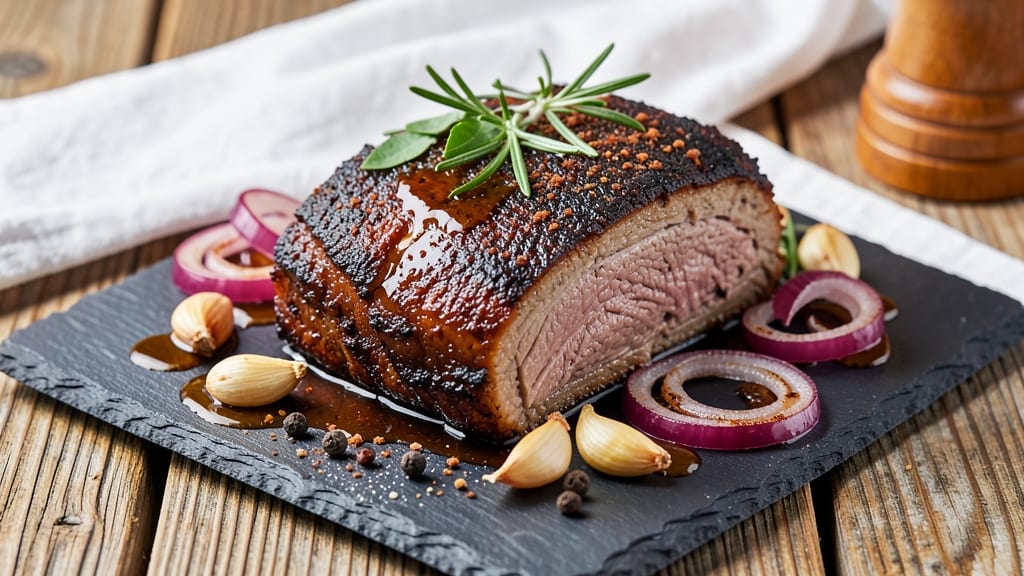
This Angus beef brisket recipe transforms a tough cut into melt-in-your-mouth perfection with just your oven and patience. 🔥 The secret lies in slow cooking until the meat reaches 195–203°F, where collagen dissolves into juicy, fork-tender magic.
I’ve perfected this method after years of testing—no smoker needed, just reliable results every time.
What sets this recipe apart is the balance of smoky bark and tender interior, achieved through a simple dry rub and careful heat control. Unlike traditional smoker methods, this oven approach delivers deep flavor without requiring specialized equipment.
The key steps—brining, searing, and resting—ensure maximum juiciness and a crust that’s irresistibly crisp.
By the time you’re done, you’ll have brisket so tender it practically falls apart, with a rich, caramelized exterior that’s worth every minute of wait. The beauty of this method is its flexibility: serve it sliced thin for sandwiches, pulled for tacos, or shredded over mashed potatoes.
It’s the kind of dish that turns a weeknight into a special occasion.
Whether you’re feeding a crowd or treating yourself, this brisket delivers restaurant-quality results with minimal fuss. Let’s get started—your taste buds will thank you.
Ingredients for angus beef brisket recipe oven
Six ingredients transform tough brisket into melt-in-your-mouth perfection—just oven and patience needed.
| Ingredient | Amount | Notes |
|---|---|---|
| Angus Beef Brisket 🥩 | 5 lb | Whole packer cut, good marbling |
| Yellow Onion 🧅 | 1 whole | Yellow or red, sliced thick |
| Garlic Cloves 🧄 | 8 cloves | Fresh, peeled and smashed |
| Kosher Salt 🧂 | ¾ cup | Diamond Crystal preferred |
| Black Peppercorns 🌶️ | 2 tbsp | Freshly cracked, coarse grind |
| Smoked Paprika 🌶️ | 2 tbsp | High-quality, not dusty |
| Brown Sugar 🍯 | 2 tbsp | Light or dark, packed |
| Ground Black Pepper 🌶️ | 1 tbsp | Freshly ground preferred |
| Mustard Powder 🍯 | 1 tbsp | Yellow or Dijon |
| Apple Cider Vinegar 🍎 | ½ cup | For brining, not cooking |
| Granulated Sugar 🍚 | ½ cup | For brining |
| Water 💧 | 4 cups | Filtered preferred |
| Beef Tallow or Olive Oil 🫒 | 2 tbsp | For searing, tallow preferred |
| Wood Chips (Optional) 🌳 | 1 cup | Hickory or oak, soaked |
The brisket is non-negotiable here. Angus packer cut with visible marbling delivers the best flavor and texture—look for cuts labeled 'whole packer' at Whole Foods or specialty butchers. If you're buying from a regular grocery store, check the weight first; 5 lbs gives you plenty for leftovers. The marbling should be thick and white, not yellow or gray. For the best results, buy it the day you plan to cook it—freshness matters more than you'd think. If you can't find a whole packer cut, flat cut works too, though it'll be slightly leaner.
No smoked paprika? Substitute with a mix of chili powder and a pinch of liquid smoke—it won't be identical, but it'll get you close. The apple cider vinegar in the brine is key for tenderness; white vinegar or lemon juice works in a pinch, but the apple cider adds depth. For the wood chips, hickory is classic, but oak or pecan add their own unique flavors. If you can't find soaked chips, crushed wood pellets from a smoking gun work too—just add a splash of water to create steam. The brown sugar in the rub caramelizes beautifully during cooking, creating that coveted smoky bark, so don't skip it.
Brining the brisket overnight is a game-changer—it keeps the meat juicy even after hours in the oven. Store the brined brisket in a sealed container in the fridge for up to 24 hours. The dry rub can be mixed ahead and stored in an airtight container for 1 month in a cool, dark place. Once cooked, brisket reheats beautifully—wrap it in foil with a splash of beef broth and warm in the oven at 300°F for 30 minutes. Leftovers keep for 5 days in the fridge or 3 months frozen, though I rarely have any left by then.
Why You'll Love This Recipe
- No-Fuss Oven Magic: I swear, this brisket barely needs babysitting. Toss the whole cut in the oven with onions and garlic, let it slow-roast until tender—no smoker, no fuss. My lazy Sunday afternoons now include a proper meal without the stress.
- Rich, Deep Satisfaction: That first bite? Pure umami payoff. The Angus melts into tender perfection while the onions caramelize into sweet, sticky pockets—all thanks to just salt and pepper doing their job. Honestly, the simplicity makes the flavor pop harder.
- Leftovers That Shine: This recipe actually improves the next day. The brisket gets even more tender, and I repurpose it into sandwiches, tacos, or even a quick hash. Between us, my freezer’s full of these because they’re too good to waste.
- Budget-Friendly Luxury: You’re getting high-quality meat without the steakhouse price tag. A single brisket feeds my whole family plus leftovers—no takeout splurges, no last-minute grocery panics. It’s the kind of meal that makes frugality feel indulgent.
Step-by-step instructions for smoky oven-roasted Angus beef brisket
Here's how to transform a tough cut into melt-in-your-mouth perfection with crispy bark.
👨🍳 Step 1: Prepare the Dry Rub and Brine the Brisket
In a medium bowl, combine the 0.75 cup kosher salt, 2 tbsp smoked paprika, 2 tbsp brown sugar, 1 tbsp ground black pepper, 1 tbsp mustard powder, and 2 tbsp freshly cracked black peppercorns. Mix thoroughly until the salt crystals are evenly distributed throughout the spices. This blend creates the perfect balance of heat, sweetness, and depth for your brisket.
For the brine, whisk together 4 cups water, 0.5 cup apple cider vinegar, and 0.5 cup granulated sugar in a large bowl until the sugar dissolves completely. Submerge the 5 lb angus beef brisket in the brine, ensuring it's fully covered. Refrigerate for 12-24 hours, turning once halfway through. This step ensures maximum tenderness by breaking down tough muscle fibers and infusing flavor throughout the meat.
🔥 Step 2: Preheat Oven and Prepare the Brisket for Cooking
Remove the brisket from the brine and pat it dry with paper towels—this is crucial for developing that coveted bark. Preheat your oven to 225°F with the 1 cup wood chips (optional) placed in a smoker box or wrapped in foil with holes poked in it. If you're not using wood chips, you can still achieve great results by placing a metal tray filled with water on the lower oven rack to create steam.
While the oven preheats, generously coat the brisket with the dry rub, pressing it firmly into all sides and into the cavity. Place the brisket fat-side up on a rack set in a roasting pan. The rack elevates the meat, allowing hot air to circulate evenly and preventing steam from pooling underneath. Insert a meat thermometer into the thickest part of the brisket for accurate temperature monitoring.
🔪 Step 3: Cook Low and Slow Until Probe-Tender
Place the brisket in the preheated oven and cook for 6-8 hours until the internal temperature reaches 165-170°F. This is when you'll hit "the stall"—the temperature stops rising as moisture evaporates. Don't panic; this is normal and expected. At this point, tightly wrap the brisket in two layers of heavy-duty aluminum foil, sealing it completely to trap steam and push through the stall.
Return the wrapped brisket to the oven and continue cooking until the internal temperature reaches 200-205°F and a meat probe slides in like butter with no resistance. This usually takes another 3-5 hours, but trust the probe test over the thermometer—tenderness matters more than temperature. The brisket should have a deep mahogany bark on the outside and a beautiful pink smoke ring just beneath the surface.
⏰ Step 4: Rest and Slice for Maximum Juiciness
Remove the brisket from the oven and transfer it to a cutting board. Tent loosely with foil and let it rest for at least 1 hour (I prefer 2 hours wrapped in towels in a cooler). This resting period allows the juices to redistribute throughout the meat, ensuring every slice is moist and flavorful. The internal temperature will rise another 5-10°F during this time, so don't worry if it's not exactly 205°F when you check it.
Locate the grain direction—you'll see lines running through the meat. Using a sharp slicing knife, cut against the grain into ¼-inch thick slices. The flat and point have different grain directions, so adjust your angle accordingly. Serve immediately while still warm. Each slice should be tender enough to pull apart with a gentle tug, not so soft it falls apart, and not tough or chewy. The bark should be crispy and the interior should be juicy and rich.
Pro Tips For Making Angus Beef Brisket Recipe Oven
- SEAR THE FAT SIDE DOWN: Take 10 minutes to render that brisket fat cap at 450°F—it’s the only way to get that deep, nutty flavor. I learned this the hard way when I skipped it and ended up with bland, greasy meat instead of rich, caramelized goodness.
- SLICE AGAINST THE GRAIN: Use a sharp knife and cut the brisket into ¼-inch slices, always going against the grain. If you’re lazy and slice with the grain, you’ll end up with chewy, tough pieces—no one wants that, especially after hours in the oven.
- MINIMIZE TEMP SWINGS: Keep your oven at a steady 275°F once the brisket is in—fluctuations make the meat sweat and lose moisture. I used to open the door to check every 20 minutes, and my brisket turned out dry. Now I trust the thermometer and resist the urge to peek.
- CHAR THE ONIONS FIRST: Sear the sliced onions and minced garlic in a cold pan until deeply browned before adding them to the brisket. This adds a smoky depth that raw onions just can’t match—it’s the difference between good and really good. (Yes, even if you’re impatient like me.)
Creative variations of this angus beef brisket recipe oven
Texas-Style Bark
For that iconic Texas BBQ bark, add 1 tbsp chili powder and ½ tsp cayenne pepper to the dry rub. After the initial 6-hour cook, wrap the brisket in butcher paper instead of foil—this creates a tighter seal that intensifies the bark while keeping the meat moist.
I like to add ½ cup beef broth to the pan before wrapping to create extra steam. The result? A dark, crackling crust that’s irresistible. 🌶️
Sweet & Smoky Glaze
Brush the brisket with a mix of ¼ cup molasses, 2 tbsp apple cider vinegar, and 1 tbsp brown sugar during the final 1 hour of cooking. This creates a sticky, caramelized glaze that adds depth and a touch of sweetness.
For extra richness, sprinkle 1 tsp smoked salt on top before serving. The glaze pairs perfectly with tangy slaw or pickled onions.
Spicy Coffee Rub
Swap the brown sugar in the dry rub for 2 tbsp finely ground coffee and add 1 tsp ground cumin. The coffee adds a deep, earthy note that complements the beef beautifully.
After cooking, serve with a side of chipotle crema or sliced avocado. This variation is a crowd-pleaser for anyone who loves bold, complex flavors.
Slow-Cooker Adaptation
If you don’t have an oven, use a slow cooker on low for 10-12 hours. After the initial 6-hour cook, transfer the brisket to a baking sheet, wrap it in foil, and broil for 5 minutes to crisp the bark.
The slow cooker keeps the meat incredibly tender while still allowing for that smoky flavor. Just be sure to monitor the temperature closely—slow cookers can run hotter than expected.
Beer-Braised Brisket
Replace the water in the brine with 4 cups dark beer (like Guinness or a stout). After the initial 6-hour cook, pour 1 cup of the same beer into the roasting pan and let it bubble away for the final 1 hour.
The beer adds a malty depth that pairs wonderfully with the beef. Serve with roasted root vegetables for a hearty, flavorful meal.
Herb-Crusted Brisket
Mix 2 tbsp fresh rosemary, 2 tbsp fresh thyme, and 1 tbsp garlic powder into the dry rub. After searing, press the herbs into the meat to create a fragrant crust.
The herbs add a bright, aromatic note that cuts through the richness of the beef. This variation is perfect for a dinner party where you want to impress with elegant flavors.
Nutrition facts
Frequently asked questions
How long should I let the brisket rest before slicing?
Always rest the brisket for at least 1 hour (preferably 2 hours) before slicing. This crucial step lets the juices redistribute throughout the meat, preventing dry slices. Wrap it loosely in foil and place it in a cooler if you're impatient—it'll stay warm while the flavors meld. Pro tip: The internal temperature will rise about 5-10°F during resting, so don't worry if it's not exactly 205°F when you check it.
What's the difference between cooking a flat cut vs. whole packer brisket?
The flat cut (leaner) cooks faster (4-5 hours to 195°F) and is easier to slice, while the whole packer (includes the point) takes 6-8 hours and gives you more meat. The point can be sliced separately or pulled for sandwiches. For whole packer, trim the fat to ¼-inch for better bark and even cooking. The flat cut works better for those short on time or serving smaller groups.
Why did my brisket turn out dry even though I followed the recipe?
Most likely, you didn't rest it long enough or sliced against the grain incorrectly. Always cut ¼-inch slices against the grain—this shortens muscle fibers for maximum tenderness. Also, check your internal temp: 200-205°F is ideal for fork-tender brisket. If it was overcooked, try wrapping in foil earlier (around 165°F) to trap steam. For next time, use a meat probe to test doneness rather than relying solely on the thermometer.
Can I use a regular oven thermometer for brisket?
No—oven thermometers measure air temperature, not meat. You need a meat thermometer inserted into the thickest part of the brisket (avoiding fat). The probe should slide in like butter when it reaches 200-205°F. For accuracy, calibrate your thermometer by placing it in ice water—it should read 32°F. A cheap instant-read thermometer works fine for this recipe.
How do I store leftovers to keep them juicy?
Wrap cooled brisket tightly in plastic wrap or foil, then place in an airtight container. Store in the fridge for up to 5 days or freeze for 3 months. To reheat, wrap slices in foil with a splash of beef broth and warm in a 300°F oven for 20 minutes. Never microwave—it dries out the meat. For sandwiches, pull the brisket apart with tongs instead of slicing to preserve moisture.