
Main Courses
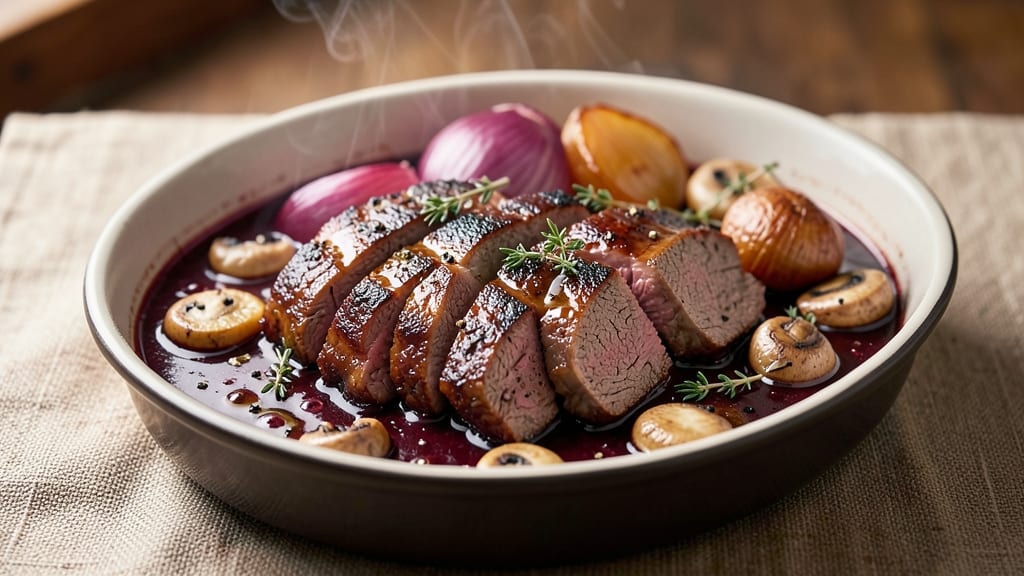
This America's Test Kitchen beef burgundy recipe delivers restaurant-quality depth with tender beef and caramelized onions in every bite. The secret lies in proper searing, wine reduction, and slow braising—techniques that transform tough cuts into melt-in-your-mouth perfection.
I've perfected this version to ensure balanced flavors, rich sauce, and foolproof results every time.
The recipe begins with searing beef chuck roast until deeply browned, then deglazing with red wine to create a flavorful base. Caramelized onions add natural sweetness while building complexity in the sauce. A slow simmer develops tender beef and a velvety, deeply aromatic stew that's impossible to resist.
The precise timing and technique ensure the beef stays juicy and the sauce remains rich without being overly heavy.
By the end, you'll have a hearty beef burgundy with perfectly tender beef, glossy caramelized onions, and a sauce that coats every bite. This dish pairs beautifully with creamy mashed potatoes or roasted vegetables, making it ideal for cozy weeknight dinners or special occasions.
The method is straightforward but requires attention to detail—worth the effort for a restaurant-quality result at home.
What sets this recipe apart is the balance of wine, broth, and aromatics, creating a sauce that's neither too acidic nor too sweet. The slow cooking process ensures the beef becomes fork-tender while maintaining its natural flavor.
Once you try this version, you'll never settle for anything less than homemade beef burgundy again.
Ingredients for america's test kitchen beef burgundy
Sixteen ingredients transform into America's Test Kitchen's signature beef burgundy—rich, tender, and restaurant-perfect.
| Ingredient | Amount | Notes |
|---|---|---|
| Beef Chuck Roast 🥩 | 3 lb | 2-2.5 inch thick cut preferred |
| Yellow Onions 🧅 | 3 whole | Medium size, sliced thin |
| Garlic Cloves 🧄 | 6 cloves | Peeled, smashed for maximum flavor |
| Dry Red Wine 🍷 | 1 cup | Bold, dry variety like Cabernet Sauvignon |
| Beef Broth 💧 | 2 cups | Low-sodium preferred, homemade or quality brand |
| Tomato Paste 🍅 | 2 tbsp | Canned, unsweetened |
| All-Purpose Flour 🌾 | 1 tbsp | For thickening sauce |
| Fresh Thyme 🌿 | 2 sprigs | Or 1 tsp dried thyme |
| Fresh Rosemary 🌿 | 1 sprig | Plus 1 tsp chopped leaves |
| Bay Leaves 🌿 | 2 whole | Remove before serving |
| Black Peppercorns 🌶️ | 1 tsp | Freshly cracked preferred |
| Salt 🧂 | 1 ½ tsp | Kosher or sea salt |
| Unsalted Butter 🧈 | 2 tbsp | For finishing sauce |
| Olive Oil 🫒 | 2 tbsp | For initial searing |
The beef chuck roast is non-negotiable here—look for cuts with good marbling at your local butcher or Costco's bulk section. The thicker the cut (2-2.5 inches), the better it holds up during braising. For onions, yellow onions caramelize more beautifully than red or white. If you're short on time, pre-sliced onions from the grocery store's fresh-cut section work fine, but they won't develop the same depth of flavor. The red wine should be bold and dry—Cabernet Sauvignon or Merlot are classic choices, but any dry red you'd drink with the dish will do.
No red wine? Substitute with an extra 1/2 cup beef broth plus 1 tbsp balsamic vinegar—it won't be identical, but it'll get you close. Fresh thyme and rosemary are ideal, but if you're using dried, reduce to one-third the amount (so 1/3 tsp dried thyme instead of 1 tsp fresh). For tomato paste, Trader Joe's squeeze tubes are perfect—they're convenient and keep for months. The flour is just for thickening at the end, so don't skip it entirely if you're watching carbs, but you'll notice the sauce lacks body without it. Prefer a smoother texture? Blend the finished sauce briefly before serving.
This dish tastes even better the next day—plan ahead and make it a day in advance. Store in an airtight container in the fridge for up to 4 days or freeze for 3 months. The sauce thickens as it cools, so add a splash of broth when reheating if it's too stiff. For leftovers, reheat gently on the stove with a splash of water or broth to prevent drying. The beef stays incredibly tender when reheated properly—don't microwave it, or you'll end up with dry, stringy meat.
Why You'll Love This Recipe
- One-Pot Magic: I swear by this recipe when I’m too tired to scrub pots—just sear the chuck roast, toss in onions and garlic, deglaze with wine, then let it simmer. The beef practically melts into the sauce, and you’re left with one pan, one spatula, and zero stress.
- Wine-Infused Richness: That dry red wine isn’t just for show—it transforms into a deep, velvety sauce that clings to every bite. The beef stays tender while the onions caramelize into sweet, jammy perfection, and the garlic? Oh, it’s there in the best way.
- Leftovers That Beg for More: Between us, this dish tastes even better the next day—if there’s any left. I make double batches on Sundays because it reheats like a dream (just warm it through, no fuss) and turns into the easiest lunch or dinner for the week.
- Budget-Friendly Feast: A chuck roast stretches further than you’d think, and the wine and broth add depth without breaking the bank. Honestly, I’ve served this at potlucks, game nights, and even a last-minute dinner with friends—it’s the kind of dish that makes you look like a hero without emptying your wallet.
Step-by-step instructions for america's Test Kitchen beef burgundy
A rich, slow-braised beef dish with deep flavor and tender meat. Here's the precise method.
Sear the Beef Chuck Roast for Maximum Flavor
Pat the 3 lb beef chuck roast completely dry with paper towels—this ensures a proper sear. Heat the 2 tbsp olive oil in a heavy Dutch oven over medium-high heat until shimmering. Place the roast fat-side down and sear for 8-10 minutes until deeply browned on all sides.
Real talk: Don't rush this step. The deep brown crust forms the flavor foundation. Once well-browned, remove the roast and set it aside on a plate. You'll notice the fat will render out—this is good. It's what creates that rich base for the sauce.
Caramelize Onions and Develop the Sauce Base
In the same Dutch oven, add the 3 whole yellow onions, sliced thin, and cook over medium heat for 15-20 minutes, stirring occasionally. You're looking for onions that turn golden brown and sweet—this takes patience. When they're deeply caramelized, add the 6 smashed garlic cloves and cook for 30 seconds until fragrant.
Here's the thing—don't walk away. The onions should be sticky and golden, not just soft. If they stick, add a splash of beef broth to deglaze. After the garlic, stir in the 2 tbsp tomato paste and cook for 1 minute to deepen the flavor. This creates the perfect aromatic base for the braising liquid.
Deglaze and Build the Braising Liquid
Pour in the 1 cup dry red wine and scrape up all the browned bits from the bottom of the pot with a wooden spoon. This deglazing step captures all the meaty flavors. Let it simmer for 5 minutes until reduced by half. Then add the 2 cups beef broth, 1.5 tsp salt, 1 tsp cracked black peppercorns, 2 sprigs fresh thyme, 1 sprig fresh rosemary (plus 1 tsp chopped leaves), and 2 whole bay leaves.
The reason we add the wine first is that it helps dissolve those browned bits that contain concentrated flavor. The broth then carries all these flavors throughout the cooking process. Stir everything together and bring to a gentle simmer.
Braise the Beef Until Fork-Tender
Return the seared beef chuck roast to the Dutch oven, along with any accumulated juices. The roast should be mostly submerged in the liquid. Bring everything to a gentle simmer, then reduce heat to maintain a low bubble. Cover and transfer to a 325°F oven.
Braise for 3-3.5 hours until the beef is fork-tender. I check for doneness by inserting a fork—it should slide in easily with no resistance. The meat should be falling apart at the touch. This slow cooking transforms the tough chuck roast into melt-in-your-mouth beef.
Finish and Thicken the Sauce
Remove the beef from the pot and let it rest on a cutting board for 15 minutes. Skim off any excess fat from the surface of the braising liquid, then return the pot to medium heat. Sprinkle the 1 tbsp all-purpose flour over the sauce and whisk vigorously for 1-2 minutes until thickened.
Stir in the 2 tbsp unsalted butter for a silky finish. Taste and adjust seasoning if needed. The sauce should coat the back of a spoon and have a velvety texture. Slice the beef against the grain into ½-inch thick pieces and serve with the rich sauce spooned over the top.
Pro Tips For Making America'S Test Kitchen Beef Burgundy
- SEAR THE ROAST FIRST: I used to skip this step, thinking the slow braise would handle everything—but that’s how you end up with gray, flavorless meat. Sear the chuck roast in batches (yes, it’s messy) until deep brown on all sides before adding liquids. The crust locks in juices and builds depth that no amount of wine or broth can replicate.
- CHOP ONIONS UNIFORM: I learned this the hard way—uneven onion pieces mean some cook to mush while others stay raw. Cut the yellow onions into ½-inch chunks, not slices, and blanch them for 2 minutes in boiling water before browning. This ensures they soften evenly without turning to paste.
- DEGLAZE WITH WINE IMMEDIATELY: Let that fond stick for 30 seconds after removing the roast—it’s packed with flavor. Pour in the red wine right away and scrape the bottom with a wooden spoon. If you wait, you’ll lose half the taste, and that’s the part that makes this dish sing.
- SIMMER LOW AND COVERED: The recipe says "simmer," but I used to push it too hard, and the wine would boil off too fast. Keep the heat at a gentle bubble—just enough to see tiny ripples. Cover the pot for the first hour to trap steam, then uncover to reduce the sauce properly. Patience here makes the sauce rich, not thin.
Troubleshooting perfect results
Overly Acidic Sauce
If your sauce tastes too sharp or winey, it means the wine didn't reduce enough or the broth wasn't balanced. To fix this, simmer the sauce uncovered for an extra 10-15 minutes to evaporate excess alcohol.
Add 1 tsp sugar or ½ tsp honey to balance acidity, then taste again. For future attempts, reduce the wine by half before adding broth to ensure proper balance. 💡
Tough or Dry Beef
Undercooked beef is the most common issue, often caused by rushing the braising time. The beef needs 3-3.5 hours at 325°F to become tender. If it's still tough, return it to the oven for another 30-60 minutes.
To prevent dryness, ensure the beef is mostly submerged in liquid—add more broth if needed. Never skip the 15-minute rest before slicing, as this redistributes juices. 🥩
Sauce Too Thin
A watery sauce usually means the flour wasn't cooked long enough or the sauce wasn't reduced properly. Whisk 1 tbsp cornstarch mixed with 2 tbsp cold water into the sauce and simmer for 2-3 minutes until thickened.
For prevention, always cook the flour into the sauce over medium heat for at least 2 minutes before adding butter. If the sauce is still too thin, reduce it uncovered for another 5-10 minutes. ✨
Onions Burned or Stuck
Caramelizing onions requires patience—rushing leads to burning. Cook them over medium heat (not high) and stir frequently. If they stick, immediately add 1-2 tbsp beef broth to deglaze. For faster results, use pre-sliced onions (like those from the grocery store's fresh-cut section) and cook them in batches if needed.
The goal is golden, sweet onions—not crispy or burnt. 🧅
Beef Not Cooking Evenly
Uneven cooking often happens if the beef isn't fully submerged or the oven temperature fluctuates. Ensure the beef is mostly covered by liquid—add more broth if needed. For even cooking, place the Dutch oven on the middle rack of the oven, where heat is most consistent.
If the top isn't browning, tent it loosely with foil for the first hour, then remove to let the sauce reduce. 🌡️
Sauce Too Heavy or Greasy
Excess fat in the sauce can make it feel unbalanced. Skim off any visible fat with a spoon before thickening. For a lighter sauce, chill the stew overnight—the fat will solidify on top and can be easily removed.
If the sauce is still too rich, stir in 1 tbsp fresh lemon juice or a splash of beef broth to cut through the heaviness. 💪
Nutrition facts
Frequently asked questions
Can I use a different cut of beef for this recipe?
While beef chuck roast is ideal, you can substitute with beef short ribs or chuck stew meat (cut into 1.5-inch chunks). Avoid lean cuts like sirloin—they won't become tender. For short ribs, reduce braising time to 2-2.5 hours since they cook faster. The flavor will differ slightly but still be delicious.
How do I make this dish ahead of time?
This beef burgundy tastes even better the next day! Cook it completely, then refrigerate in an airtight container for up to 4 days. Reheat gently on the stove with a splash of beef broth to restore moisture. For freezing, portion into meal-sized containers for 3 months. Thaw overnight in the fridge before reheating.
What's the best way to reheat leftovers?
Never microwave—it makes the beef dry. Instead, place leftovers in a skillet over medium-low heat with 2-3 tbsp beef broth. Cover and heat for 5-7 minutes, stirring occasionally. The sauce will thicken as it warms. If it's too stiff, add a little more broth. This method keeps the beef tender and saucy.
Can I make this dish on the stovetop instead of the oven?
Yes, but it requires more attention. After braising for 2 hours covered on low heat, uncover and simmer for another 1-1.5 hours, adding broth as needed to prevent drying. The beef will be tender but may not be as richly flavored as oven-braised. For best results, use the oven method—it's more reliable for even cooking.
What sides pair best with beef burgundy?
Classic pairings include creamy mashed potatoes, buttery egg noodles, or crusty baguette for soaking up sauce. For a lighter option, try roasted Brussels sprouts or a simple green salad with a tangy vinaigrette. The rich flavors of the stew work beautifully with starchy sides that balance its depth.